
Sterilization integrity in gravity-displacement steam sterilizers depends on the complete displacement of ambient air by saturated steam.
When operating compact units like the BKM-P18I portable autoclave, achieving repeatable thermal equilibrium requires strict control over thermodynamic behavior during the initial purge phase.
Trapped ambient air forms insulating pockets, creating localized zones where temperatures fail to reach required lethality thresholds despite nominal pressure readings on the Bourdon gauge.
Preventing cold spots demands a precise understanding of non-condensable gas behavior, manual exhaust valve manipulation, and load configuration.
Standardizing purge protocols eliminates biological indicator failures and guarantees compliance with CDC steam sterilization guidelines.
Thermodynamic Physics of Cold Spot Formation in Gravity Autoclaves
Gravity displacement relies entirely on the natural density differential between ambient air and saturated steam. At 100°C, dry air has a density of approximately 0.946 kg/m³, whereas saturated steam at atmospheric pressure has a density of roughly 0.598 kg/m³.
Because ambient air is roughly 1.6 times denser than pure water vapor, steam entering the upper vessel floats above the air volume, gradually forcing it downward toward the chamber base and exhaust port.
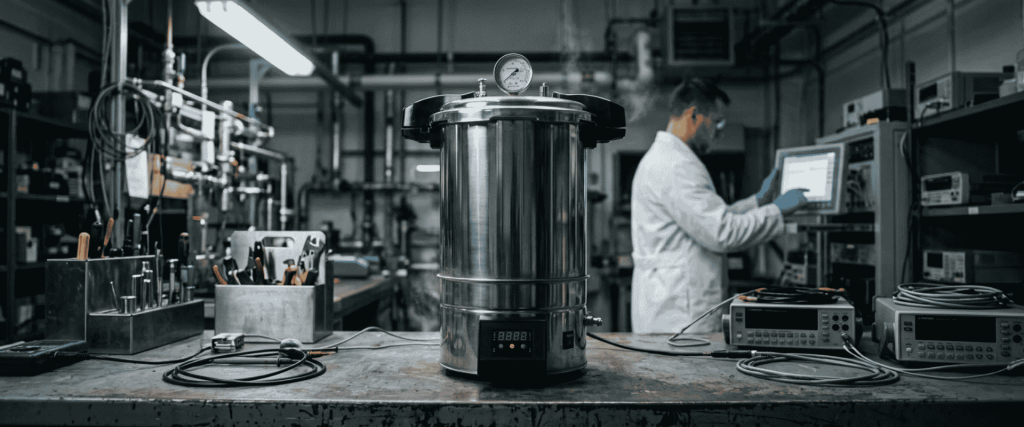
Failure to vent this air creates stratified thermal zones. Dalton’s Law of Partial Pressures governs the gaseous mixture inside the vessel: the total pressure measured by the autoclave gauge represents the sum of the partial pressure of steam and the partial pressure of trapped air.
When air remains trapped inside the chamber, the partial pressure of steam drops below the total measured system pressure. Consequently, the temperature of the gaseous mixture remains lower than that of pure saturated steam at that designated gauge pressure.
Density Differentials and Non-Condensable Gas Stratification
Non-condensable gases (NCGs) do not merely hover at the chamber bottom; they actively migrate into low-permeability zones. Surgical pack wraps, narrow-lumen cannulas, and dense fabric packs act as mechanical filters that trap air while impeding steam ingress.
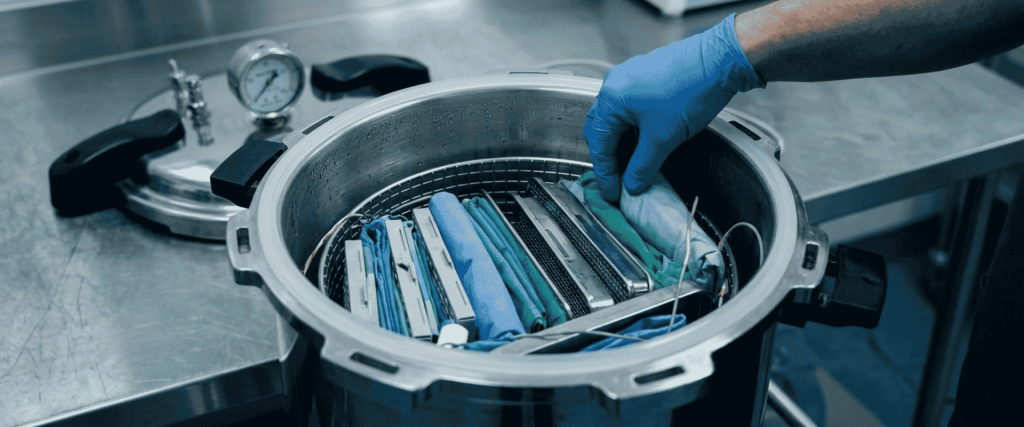
Residual air forms a microscopic barrier around the instrument surfaces. Because dry air transfers heat via conduction and convection at a fraction of the thermal transfer efficiency of condensing steam (latent heat of vaporization: ~2,257 kJ/kg), dry spots inside the load experience severe thermal lag.
Thermocouple Verification and Biological Indicator Inconsistencies
Thermocouple mapping across vertical top-loading vessels regularly exposes temperature variations exceeding 12°C between the upper headspace and the lower quadrant when purge cycles are truncated.
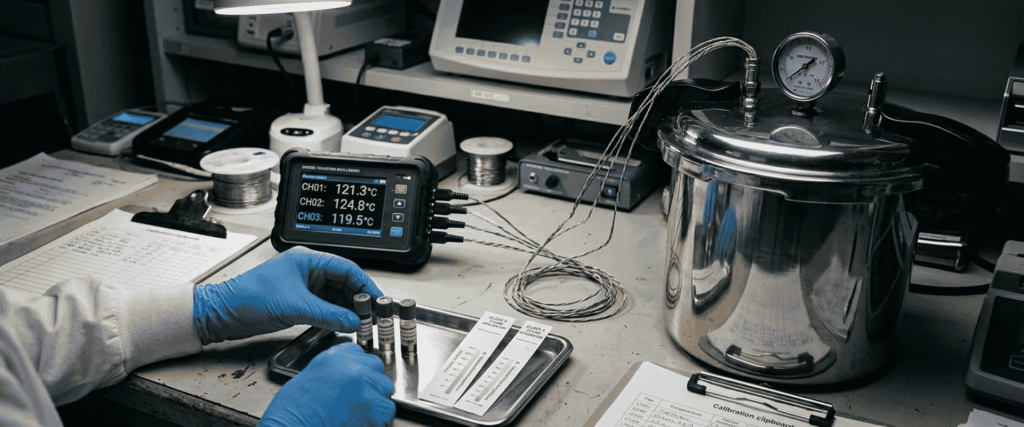
Biological indicators containing Geobacillus stearothermophilus spores placed near the vessel base or buried inside wrapped trays survive cycles that the operator logged as successful based solely on exterior dial readings. Regulating bodies emphasizing ISO 17665 standards require validated physical steam contact across all load surfaces, rendering unverified gravity cycles non-compliant.
Mechanical Steam Purge Dynamics in the BKM-P18I
The BKM-P18I utilizes an 18-liter cylindrical stainless steel pressure chamber with a bottom-mounted electric immersion heating element, complemented by external gas-heating capability for mobile deployment. Because the unit operates without active vacuum pumps, air evacuation is driven purely by thermodynamic expansion and operator-controlled venting.
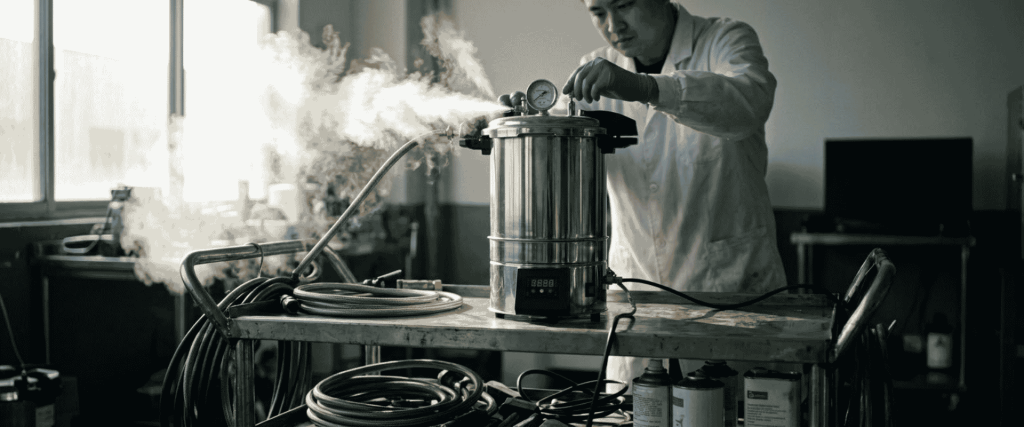
Immersion heating tubes submerged in the lower water reservoir boil feedwater rapidly, generating upward convective vapor plumes. The chamber design utilizes a top-mounted exhaust needle valve connected to an internal downpipe or direct exhaust port. When heating initiates, boiling water releases steam that expands up to 1,600 times its liquid volume, displacing ambient air upward and outward through the open exhaust port.
Immersion Heating Element Thermodynamics
The electric immersion element delivers direct thermal transfer to the water reservoir, creating rapid localized nucleate boiling. Operators must maintain the water volume exactly at the designated fill line.
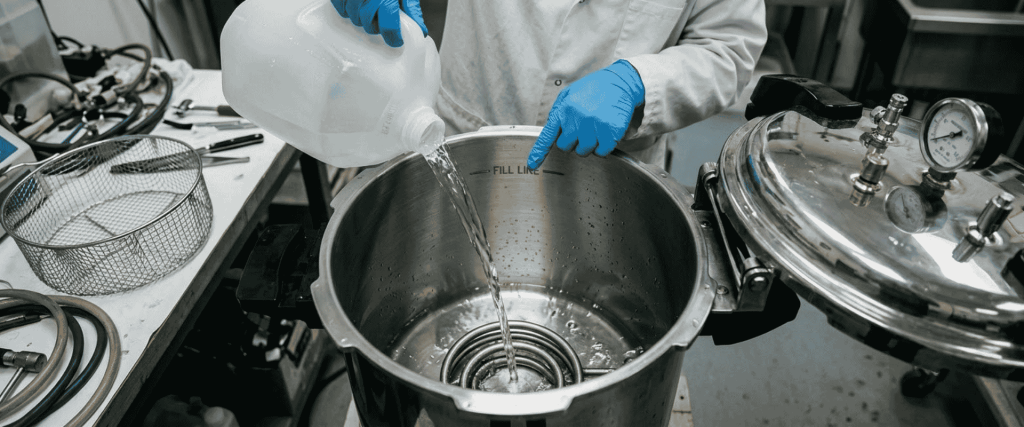
Overfilling reduces the vapor expansion chamber volume, causing liquid water entrainment into the exhaust stream and generating wet steam. Underfilling risks element exposure, localized burn-out, and uneven thermal generation that compromises displacement velocity.
Manual Exhaust Valve Timing and Flow Velocity
Purge efficacy depends on exhaust orifice management. Opening the manual exhaust valve fully allows high-velocity displacement but can lead to premature water depletion if extended too long. Throttling the valve too early creates backpressure, trapping dense air pools around the lower basket perimeter.
Achieving continuous laminar displacement requires venting the chamber until a solid, steady plume of saturated steam discharges without sputtering, indicating that the atmospheric air column has exited completely.
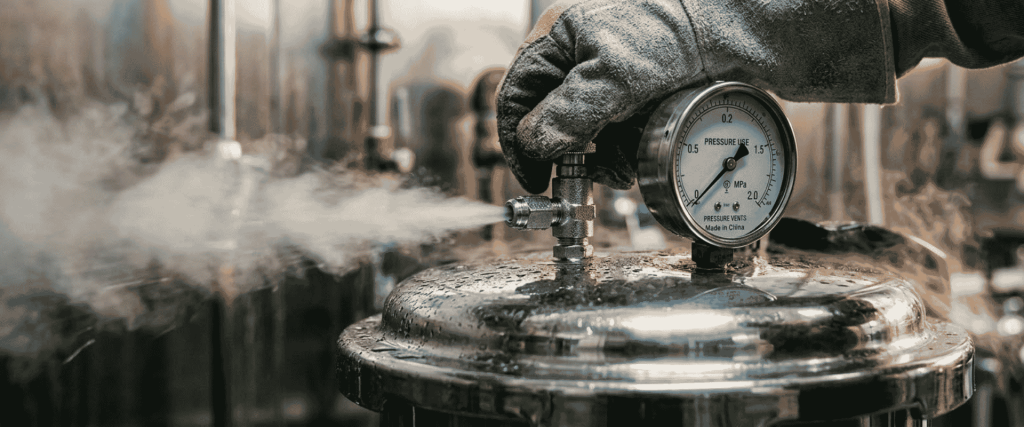
Reviewing technical workflows across our technical publications demonstrates that mechanical steam purging requires active monitoring rather than passive timer reliance. Similar to how aerodynamic visualization identifies dead zones through smoke testing strategies, autoclave steam displacement requires visual and physical verification of fluid transition.
Operational Validation and Thermodynamic Parameter Comparison
Evaluating operating parameters between truncated and fully vented cycles highlights why unvalidated gravity sterilization fails.
| Parameter | Truncated Purge Protocol | Validated Dynamic Purge Protocol | Target Engineering Specification |
| Purge Duration | 2–3 minutes from initial boil | Continuous vent until pure steam column (7–10 min) | Complete air expulsion through exhaust port |
| Chamber Temperature at 0.14 MPa | 114°C – 118°C (Cold Spots Present) | 126°C ± 0.5°C (Uniform Thermal Equilibrium) | 126.0°C saturated steam curve |
| Biological Indicator Survival Rate | 15% – 35% G. stearothermophilus survival | 0% survival (Complete 6-log bioburden reduction) | Verified 6-log sporicidal lethality |
| Partial Air Pressure (P_air) | 0.02 – 0.04 MPa residual air | < 0.002 MPa residual air | Negligible non-condensable gas fraction |
| Thermal Transfer Mechanism | Mixed dry gas conduction / poor condensation | Rapid latent heat transfer via phase change | 2,257 kJ/kg condensation release |
| Packaging Post-Cycle Condition | Damp / moisture retention from uneven heat | Uniform dryness via controlled post-vent flashing | Dry sterile barrier maintenance |
Standard Operating Procedures to Eliminate Residual Air Pockets
Eliminating cold spots requires systematic execution before, during, and after heating. Standardized protocols prevent air retention and guarantee uniform cycle lethality in compliance with WHO medical device decontamination frameworks.
Pre-Cycle Feedwater Degassing and Water Level Maintenance
Dissolved gases in municipal tap water release non-condensable bubbles upon boiling, adding fresh air fractions into the closed system. Technicians must use deionized or distilled water with electrical conductivity below 5 µS/cm.
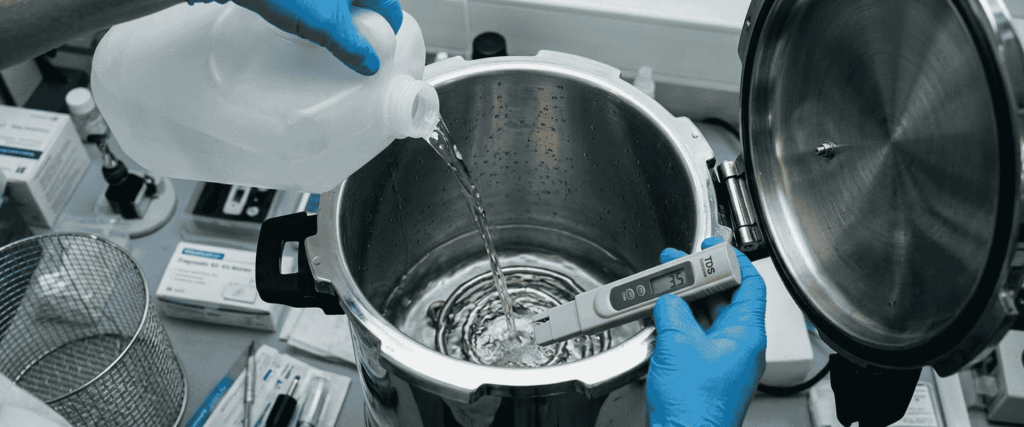
Maintaining pure feedwater prevents dissolved carbon dioxide and oxygen from contaminating the vapor phase while protecting the immersion heater from calcium carbonate crusting.
Chamber Packing Density and Porous Load Orientation
Overloading the internal 18-liter basket restricts downward air drainage. Technicians must adhere to strict loading rules:
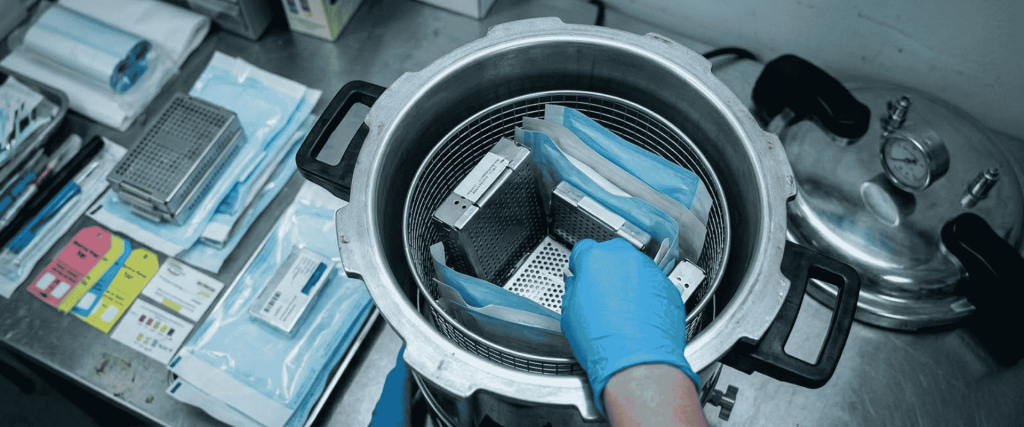
- Vertical Orientation: Position surgical cassettes, instrument pouches, and flat packs vertically rather than stacking them horizontally like sheets of paper. Vertical orientation creates open air-drainage chimneys.
- Perimeter Spacing: Maintain a minimum 25 mm clearance between instrument packs and the internal chamber wall to prevent perimeter heat sinking.
- Porous Load Stratification: Place dense fabric wraps, dressings, and porous goods in the upper basket tier, leaving non-porous solid metallic instruments in the lower basket to prevent dense items from trapping air below them.
Exhaust Valve Throttling and Equilibrium Verification
Initiate the heating cycle with the manual exhaust stopcock completely open. Allow the water to reach a rolling boil. Observe the discharge nozzle:
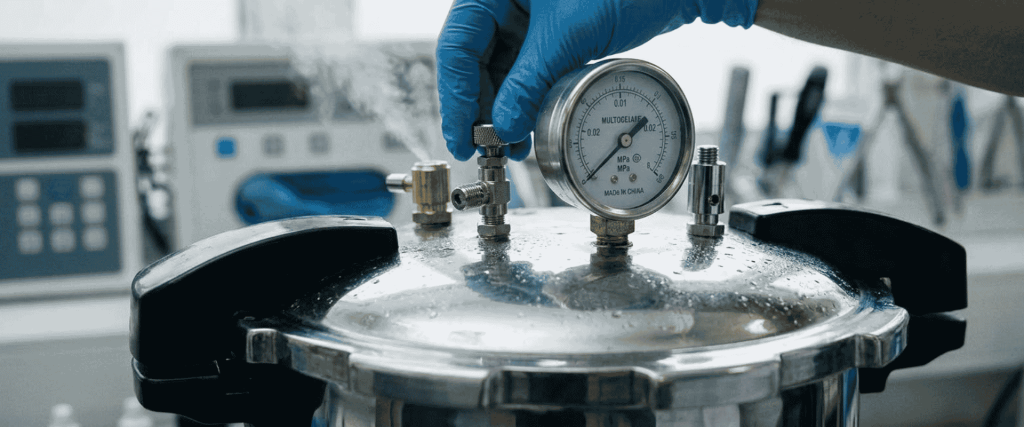
- Phase 1 (Initial Discharge): Sputtering, intermittent vapor clouds mixed with cool condensation droplets indicate active air flushing.
- Phase 2 (True Steam Transition): The plume transitions into a quiet, continuous, translucent vapor cone that becomes visible roughly 25 mm away from the nozzle tip.
- Phase 3 (Valve Closure): Once this steady, dense steam column flows continuously for a full 5 minutes, seal the exhaust valve. The pressure gauge will begin climbing rapidly toward the rated operating pressure of 0.14–0.165 MPa.
Diagnostic Protocols for Field Technicians and Lab Operators
Relying on pressure gauges alone creates blind spots during facility audits. Facilities executing high-containment decontamination protocols and field sterilization require physical and chemical validation to identify cold pockets before releasing loads for clinical use.
Chemical Indicator Strips and Lumen PCD Placement
Deploy Class 5 chemical integrators or Class 6 emulating indicators inside every sterilization run. Unlike simple Class 1 process indicator tapes that react merely to dry heat exposure, Class 5 integrators mirror the kill curve of biological indicators by measuring time, saturated steam quality, and temperature simultaneously. Place integrators in the known cold zone: the bottom center of the lower basket and inside the core of the densest wrapped pack.
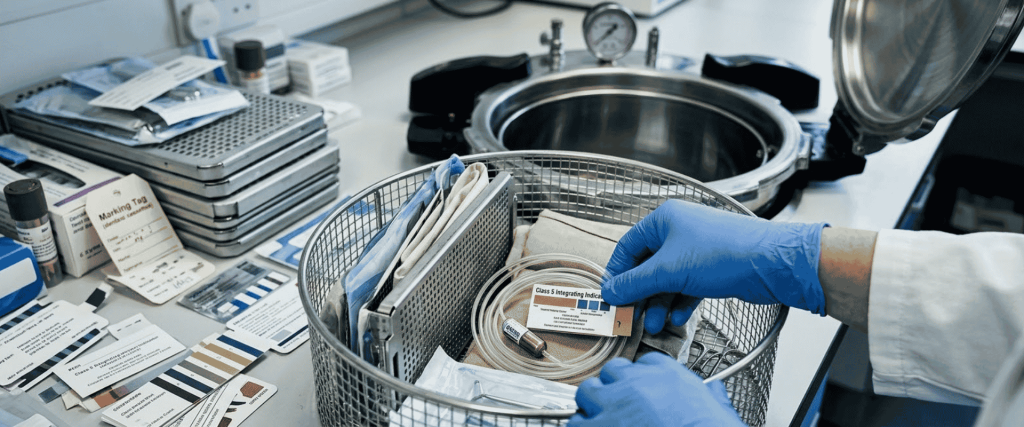
For cannulated instruments, use process challenge devices (PCDs) simulating narrow lumens to confirm that steam successfully penetrates the lumen interior, satisfying FDA reprocessing guidance.
Identifying Scale-Induced Thermal Transfer Delays
Mineral scaling on the immersion element reduces heat transfer to the water column, prolonging warm-up phases and creating erratic boiling currents. Sluggish boiling fails to generate the volumetric displacement velocity necessary to purge air from the lower chamber corners. Routine descaling cycles using a 10% citric acid solution restore base heat-transfer rates, maintaining sharp vapor expansion profiles.
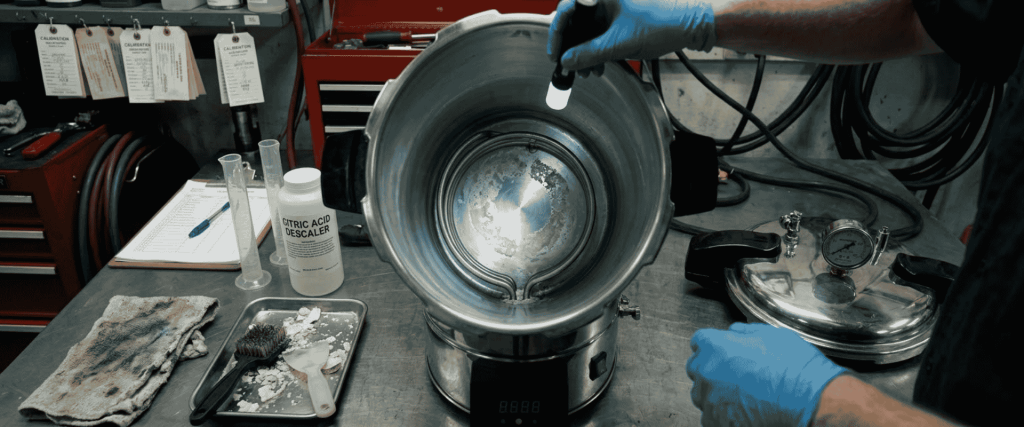
Integrating these verification procedures matches the rigorous testing standards applied across cleanroom validation and controlled environments, ensuring repeatable sterility assurance regardless of field operating conditions.
Conclusion
Cold spots inside gravity-displacement sterilizers are physical consequences of incomplete air displacement, not unavoidable equipment defects.
By applying Dalton’s Law, standardizing manual exhaust venting intervals, and organizing load geometries to facilitate downward air evacuation, operators can achieve uniform 126°C sterilization throughout the BKM-P18I chamber.
Precise adherence to thermodynamic principles protects patient safety, maintains instrument integrity, and ensures compliance with global sterile processing directives.
Facilities seeking to refine their clinical sterilization pathways or source calibrated thermal processing hardware can consult the engineering specialists at us Corporation to select the appropriate equipment configurations.
Frequently Asked Questions (FAQs)
1. What causes cold spots in the BKM-P18I portable autoclave?
Incomplete air purging causes cold spots. Ambient air is denser than steam and sinks to the lower chamber. If this air is not vented completely, it forms insulating barriers around instrument packs that prevent saturated steam contact and keep local temperatures well below 126°C.
2. Why does the pressure gauge read 0.14 MPa if the chamber is under-temperature?
Trapped air and steam combine to generate total vessel pressure according to Dalton’s Law. The mechanical gauge registers this total pressure, masking the fact that the steam partial pressure and actual thermodynamic temperature are lower than required for sterilization.
3. When should the manual exhaust valve be closed during the purge cycle?
Close the valve only after a steady, quiet column of pure steam discharges continuously for 5 to 7 minutes. Sputtering or intermittent vapor indicates air and water droplets are still exiting. Closing the valve prematurely locks residual air inside the chamber.
4. Where is the primary cold spot located inside the BKM-P18I?
The coldest zone is located at the bottom center of the internal basket, directly above the water reservoir. Because non-condensable air is heavier than steam, it naturally drains downward and pools in this lower quadrant if the purge cycle is interrupted.
