
Overcoming Sedimentation and Agglomeration in 2.0 Micron PSL Sphere Calibration

The physical behavior of monodisperse 2.0-micrometer polystyrene latex suspensions is governed by a critical hydrodynamic transition in which gravitational sedimentation, dictated by Stokes’ Law, rapidly supersedes Brownian kinetic diffusion, while short-range London-van der Waals attraction overcomes electrokinetic double-layer repulsion, accelerating irreversible agglomeration. Fluid Dynamics, Aerosol Physics, and Colloidal Mechanics of the 2.0 µm Boundary Calibrating […]
Safe Handling and Unboxing Guide for Particle Standards
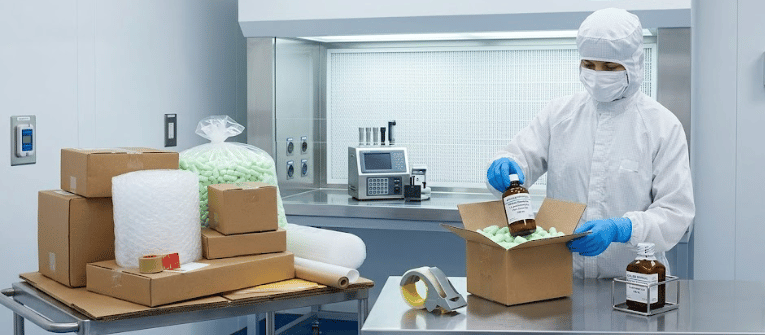
Unlike standard laboratory supplies, unboxing a NIST-traceable particle standard is a high-stakes procedure where a single speck of ambient dust can instantly ruin a critical calibration baseline. The moment you break the shipping seal, sensitive PSL spheres face immediate risks from static aggregation, thermal shock, and cleanroom cross-contamination. Safeguarding your data accuracy requires a strict, […]
Guide to Selecting the Right PSL Sphere Sizes for Testing
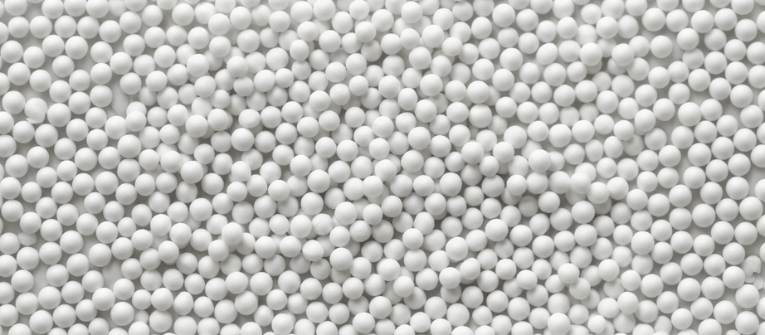
Polystyrene Latex (PSL) spheres are the industry standard for calibrating airborne particle counters (LPCs), testing HEPA filters, and validating cleanroom environments. Selecting the correct sphere size ensures that your instrumentation provides accurate, repeatable data that aligns with international cleanliness standards. Using the wrong particle size can lead to faulty calibration curves, missed contamination risks, and […]
The Science of PSL Spheres: Improving SSIS Accuracy in Metrology
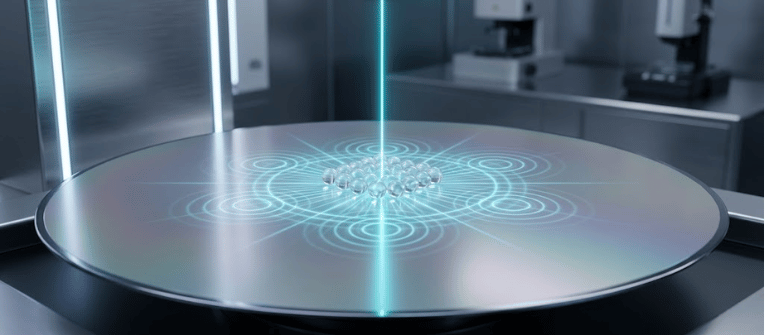
In the world of semiconductor manufacturing and cleanroom validation, the margin for error is nonexistent. As microchips become smaller and more complex, the ability to detect and quantify sub-micron particles on silicon wafers is critical. This is where PSL (Polystyrene Latex) Spheres, the gold standard for metrology calibration, play a pivotal role. Understanding the science […]
How to Detect Airborne Contamination Using a Micron Particle Counter
Introduction Maintaining ultra-clean environments is essential in highly sensitive industries like semiconductor manufacturing, pharmaceuticals, and biotechnology. Monitoring airborne particles as small as 0.1 microns is crucial to prevent defects, contamination, and compromised product quality. This guide explains how to effectively detect airborne contamination using a Micron Particle Counter, covering features, setup, usage, and best practices. […]