
The BKCB-V500 is a compact vertical-flow clean bench intended to reduce airborne particulate contamination of nonhazardous materials. It provides product protection, not biological containment for personnel or the environment. Do not use it for blood specimens, cell cultures or other potentially infectious or hazardous materials.
This guide reviews the BKCB-V500’s listed features, specifications and application limits. Confirm the current configuration, installation requirements and suitability for the intended work with the supplier before purchase.
A vertical laminar flow cabinet directs HEPA-filtered air downward across the work area to help control particulate contamination. Filtration does not make the workspace sterile or eliminate every contaminant.
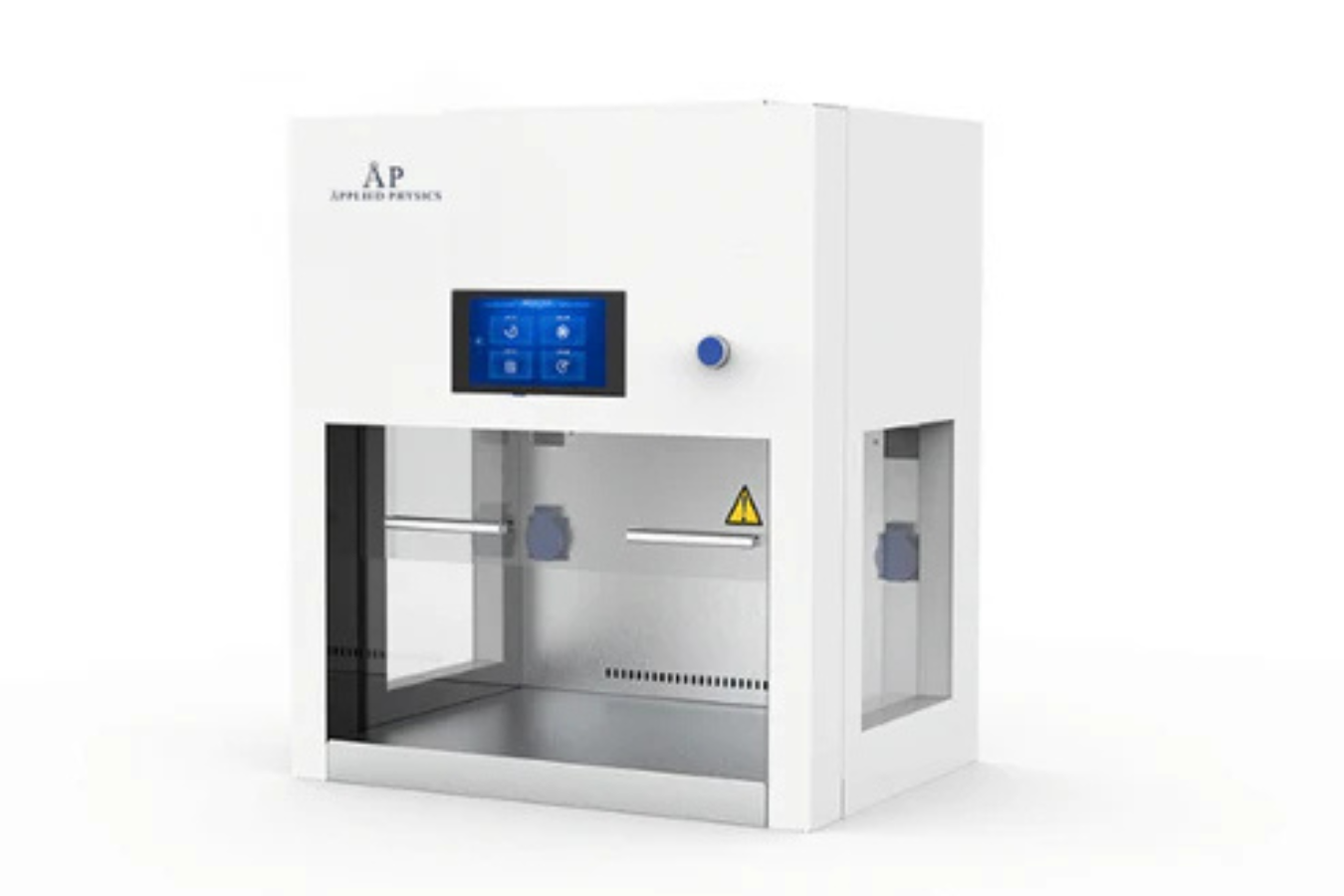
CDC/NIH BMBL guidance distinguishes both vertical and horizontal clean benches from biological safety cabinets. Vertical airflow is not inherently superior for every task and does not provide biological containment merely because the cabinet has a front sash.
An H14 HEPA filter with efficiency ≥99.995% at 0.3 µm. This is a manufacturer-stated filtration specification, not a guarantee of a sterile work area or protection from hazardous material handled inside.
The cabinet supplies filtered air from above to support product cleanliness. Work placement and operator technique should avoid obstructing or disrupting the airflow.
These readouts and controls, but its brochure depicts different control panels for V500 and V600. Confirm which functions are included with the quoted V500:
Two UV lamps, timer functions and window/lighting interlocks. UV is an adjunct that requires the specified operating conditions; it does not establish complete cabinet sterilization or replace cleaning. Prevent eye and skin exposure and follow the unit’s instructions.
The manufacturer lists 5 mm tempered glass for the front and side windows. These panels provide visibility and a physical barrier; they do not convert the clean bench into biological containment.
The listed limits are ≤65 dB(A) for noise and ≤5 µm RMS for vibration. Assess these specifications against the room and task requirements.
These are supplier specifications, not an installed-unit test report. Current English material lists V500 at 120 VA; another manufacturer-language listing gives 620 VA including a 500 VA outlet load. Confirm the supplied configuration and nameplate.
Parameter | Specification |
|---|---|
External dimensions, W × D × H (mm) | 550 × 460 × 700 |
Internal workspace, W × D × H (mm) | 480 × 340 × 370 |
Weight (Net / Gross) | 45 kg / 57 kg |
Power Supply | 220 V ±10%, 50 Hz standard; 110 V ±10%, 60 Hz optional |
Rated apparent power (verify configuration) | 120 VA in the current English listing and brochure; confirm the supplied unit’s nameplate and any outlet-load allowance. |
Air Velocity | 0.2 to 0.45 m/s |
Noise Level | ≤ 65 dB(A) |
Vibration Level | ≤5 µm RMS |
Lighting | ≥ 300 lux |
Air cleanliness (manufacturer-stated) | ISO Class 5 (manufacturer also uses “Class 100”); this is not a sterility or biological-containment rating |
Front-window operating height / maximum opening | 200 mm operating height; 260 mm maximum opening. The maximum opening is not the operating setpoint. |
UV lamps | 2 × UV Lamps |
LED Lighting | 1 × LED Lamp |
Filter Type | HEPA H14 with pre-filter |
Work surface | 304 stainless steel |
Display System | Confirm the supplied V500 display and functions; a 7-inch touchscreen is not consistently documented |
Select applications by the hazards of the material and procedure, not by the name of the laboratory. The examples below are limited to nonhazardous work needing product cleanliness.
Limit use to nonhazardous preparation or clean-component work. Blood-sample handling, cell culture and potentially infectious microbiological procedures require appropriate containment selected through a biosafety risk assessment.
Consider only nonhazardous support tasks, such as clean-component preparation. Do not infer suitability for drug formulations, active-ingredient weighing or batch production from an ISO Class 5 claim; those processes need separately qualified equipment and procedures.
May help limit airborne particulate contamination during assembly of sensitive electronic components. Confirm any additional requirements, such as electrostatic-discharge controls, for the process.
May support selected nonhazardous preparation tasks, such as preparation of noninfectious nucleic-acid reagents. It is not a general-purpose hood for cell culture, infectious samples or hazardous chemistry.
Suitable teaching examples are nonhazardous clean-handling demonstrations with trained supervision. The cabinet’s presence does not make an otherwise hazardous experiment safe.
HEPA-filtered downward airflow can reduce airborne particulate contamination of work materials when the cabinet is correctly installed, maintained and used. It cannot guarantee contamination-free samples.
Confirm the supplied control panel and functions. The manufacturer describes a manual front window; users need training in the specified sash position, airflow-preserving work practices, alarms and UV precautions.
Do not treat the published VA rating as a measurement of routine energy consumption. Confirm the configured electrical load, any outlet allowance and actual operating pattern before estimating running costs or making environmental comparisons.
A coated cold-rolled steel cabinet and a 304 stainless-steel work surface. Check cleaning-agent compatibility for each surface, including glass, seals and controls; stainless steel is not resistant to every chemical.
Listed features include front-window position alarms, filter-resistance and filter-life alerts, and fan/window/UV interlocks. These operating safeguards do not provide personnel or environmental containment for hazardous work.
Review the BKCB-V500 product listing on the Applied Physics website and request confirmation of current availability, configuration and quotation terms before ordering.
For any supplier, verify authorization, the scope of after-sales support and responsibility for installation or performance checks. Compare the written offer rather than assuming a particular purchasing route guarantees support.
For a quotation or configuration questions, contact the sales team with the intended nonhazardous application, available space and electrical requirements.
Use the instructions supplied for the exact unit and keep service records. The public product listing does not establish universal filter-replacement or UV-lamp life intervals.
The BKCB-V500 offers a compact, HEPA-filtered work area for appropriate nonhazardous tasks. Confirm the supplied configuration and installed performance, and maintain the cabinet according to its instructions. Its clean-bench airflow and ISO Class 5 claim do not make it a biological safety cabinet or guarantee sterile work.
What is the primary purpose of a vertical laminar flow cabinet?
It reduces airborne particulate contamination of work materials using downward HEPA-filtered airflow. A clean bench provides product protection; it does not create a guaranteed sterile environment or provide biological containment.
Is the BKCB-V500 suitable for medical labs?
Only for suitable nonhazardous work after assessing the procedure. It should not be used for blood specimens, cell cultures or other potentially infectious materials. An ISO Class 5 claim or UV lamps do not establish personnel protection.
How often should the HEPA filter be replaced?
There is no universal 6–12-month replacement interval established by the public specification. Use the manufacturer’s instructions and qualified assessment of filter condition and performance to determine replacement.
Can I install it in a small lab?
Its listed footprint is compact, but suitability depends on service clearances, access, support, electrical supply and room airflow. Check the installation instructions and proposed location before purchase.
Does it require professional installation?
Confirm the supplier’s installation and commissioning requirements. Have competent personnel verify the setup and required performance checks before use; do not assume pre-assembly removes those steps.
APPLIED PHYSICS TECHNICAL RESOURCE
Pathology workflow, containment, sterilization, biological safety and clinical-laboratory equipment selection. Product and standards references should be interpreted for the actual instrument, facility, protocol and configuration.

Enter your details below to save your shopping cart for later. And, who knows, maybe we will even send you a sweet discount code :)
Allow notifications to get real-time updates about your shopping cart and who knows, you may even receive a sweet discount code 😊