
Maintaining ultra-clean environments is essential in highly sensitive industries like semiconductor manufacturing, pharmaceuticals, and biotechnology. Monitoring airborne particles as small as 0.1 microns is crucial to prevent defects, contamination, and compromised product quality. This guide explains how to effectively detect airborne contamination using a Micron Particle Counter, covering features, setup, usage, and best practices.
A Micron Particle Counter is a precision instrument designed to detect and count airborne particles ranging from 0.1 to 0.3 microns.
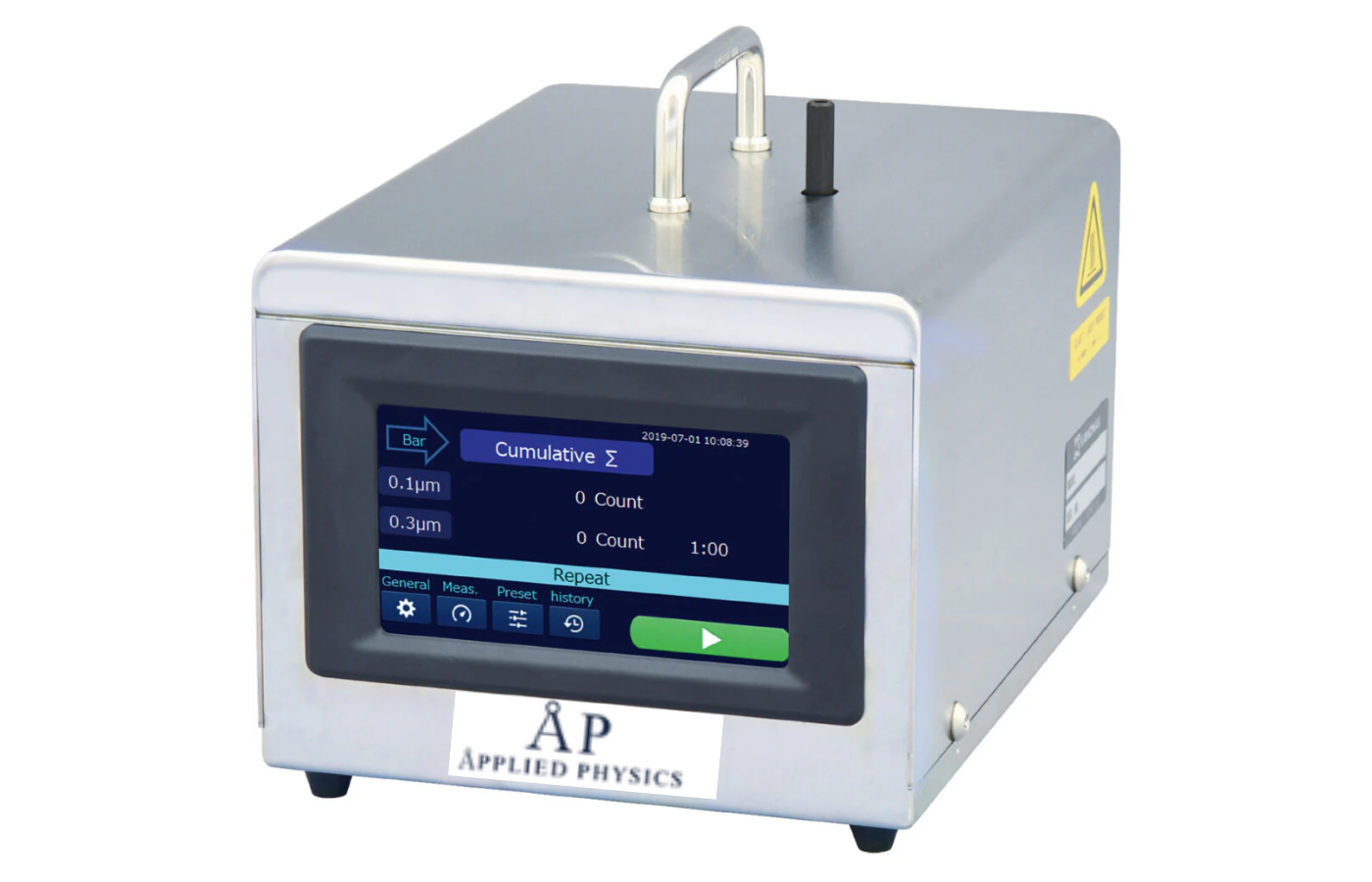
This advanced device is vital for stringent contamination control in cleanrooms, labs, and high-end manufacturing environments.
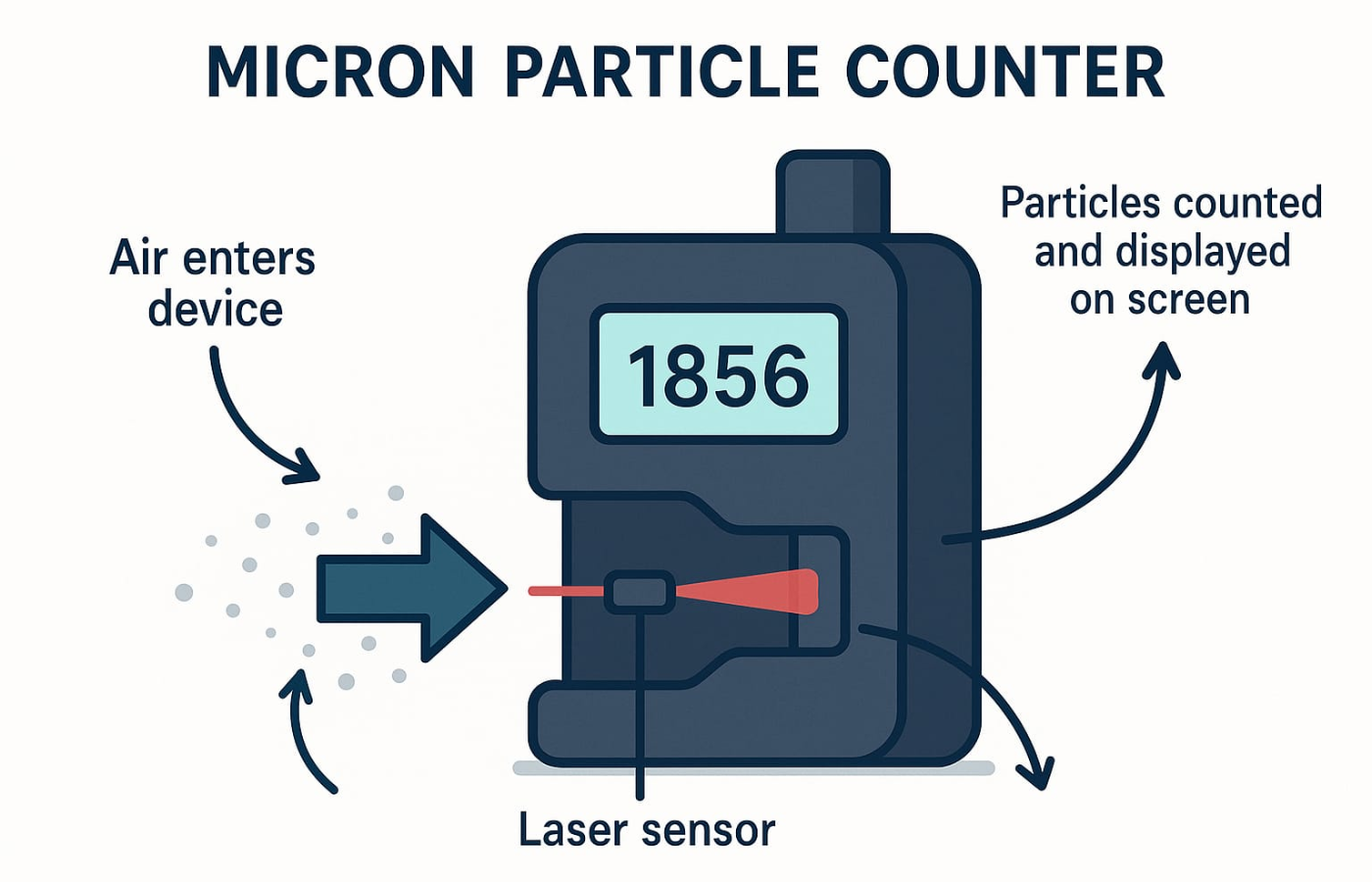
It helps you “see” invisible contaminants in the air, ensuring the environment meets cleanliness standards.
| Feature | Benefit |
|---|---|
| Detects 0.1-0.3 micron particles | Captures even the smallest contaminants |
| Ultra-lightweight (7.5 lbs) | Highly portable; easy to move between monitoring locations |
| 4.3” LCD color touchscreen | Intuitive navigation and real-time data visualization |
| Up to 10,000 record storage | Retain extensive data for audits and reporting |
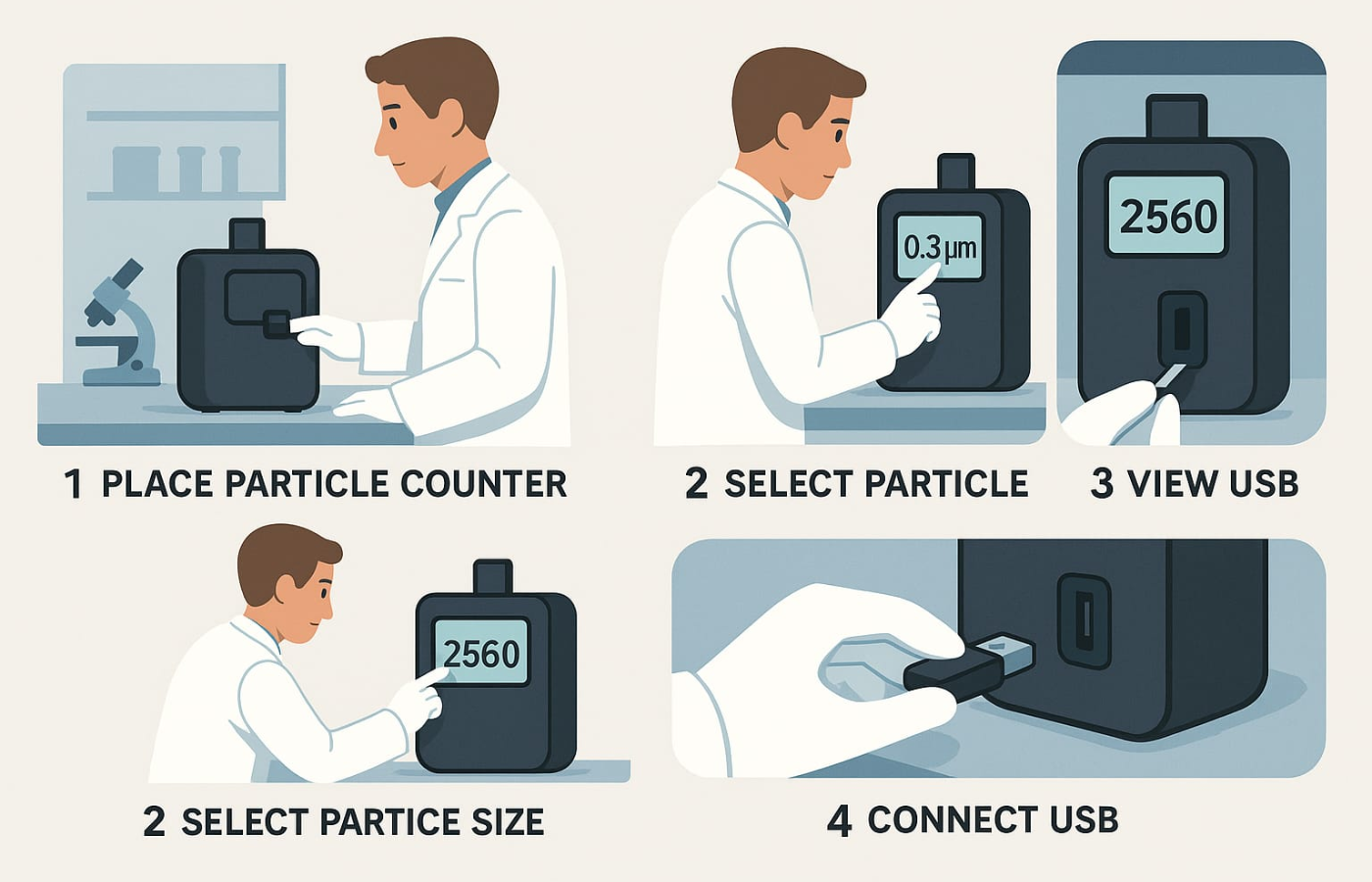
| USB data transfer | Seamless export of measurement records |
| Standalone or integrated use | Flexible implementation in any monitoring system |
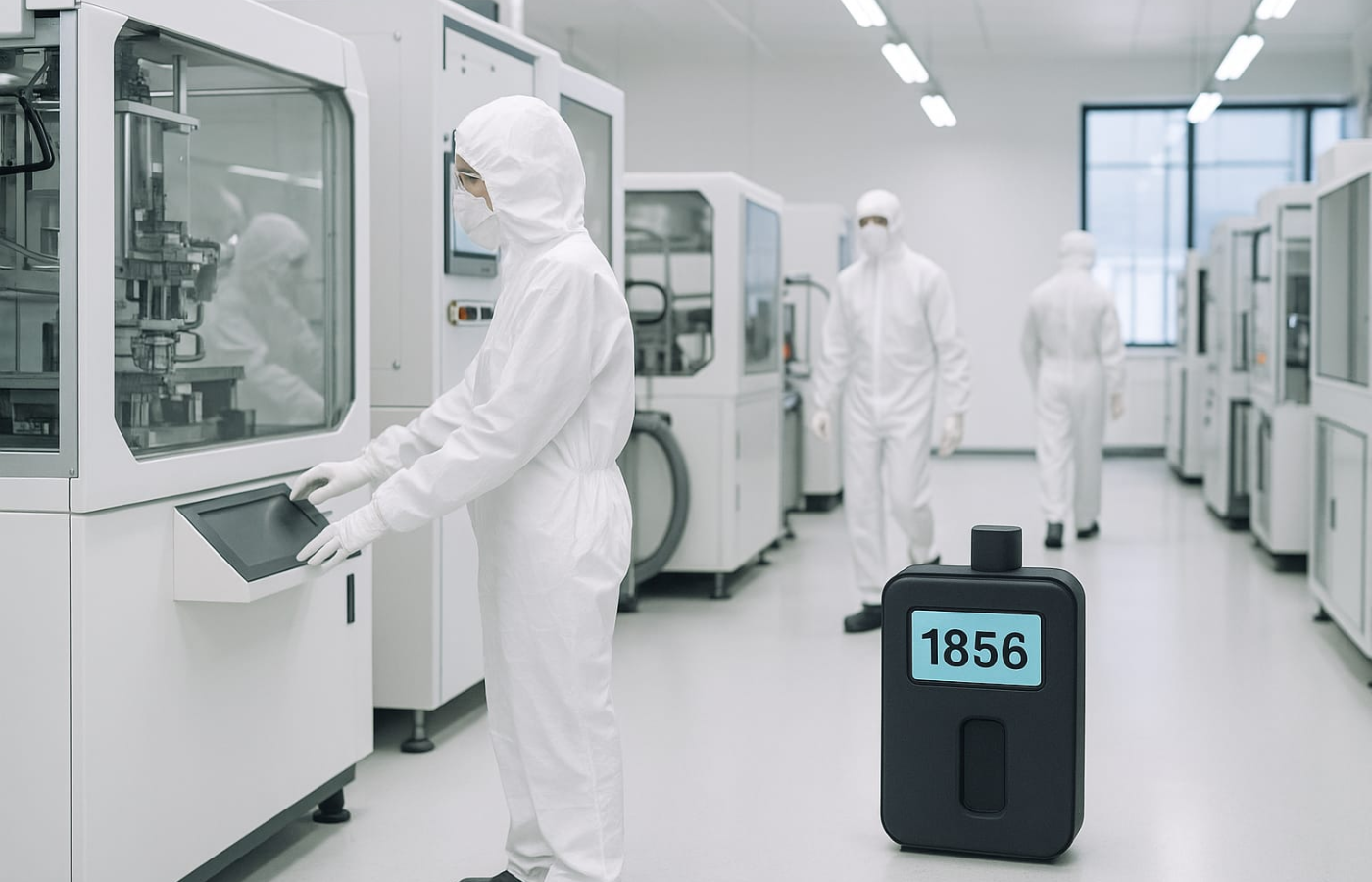
Any airborne particle, even as small as 0.1 microns, can cause defects in semiconductors or biological products. Regular monitoring with an advanced counter ensures you meet ISO and industry-specific air quality standards.
| Technology Name | Description |
|---|---|
| Laser Scattering Technology | Detects particles using light scatter; highly accurate for small particles. |
| Condensation Particle Counters (CPC) | Counts nano-size particles by condensing them with liquid vapor (as small as 10nm). |
| Digital Imaging Particle Analysis | Captures images of particles and analyzes their size and shape (AI-assisted). |
| Optical Particle Counters (OPC) | Detects particles passing through a light beam; offers fast response time. |
| Time-of-Flight (TOF) Spectrometry | Measures particle speed and size using laser pulses; high-end technology. |
| Remote Particle Counters (IoT-Based) | Devices connected via WiFi/Bluetooth that send real-time data to the cloud. |
| Electrostatic Detection | Charge-based detection—measures particles using their electric charge. |
| LIDAR-Based Particle Detection | A laser radar system that remotely measures airborne particles over large areas. |
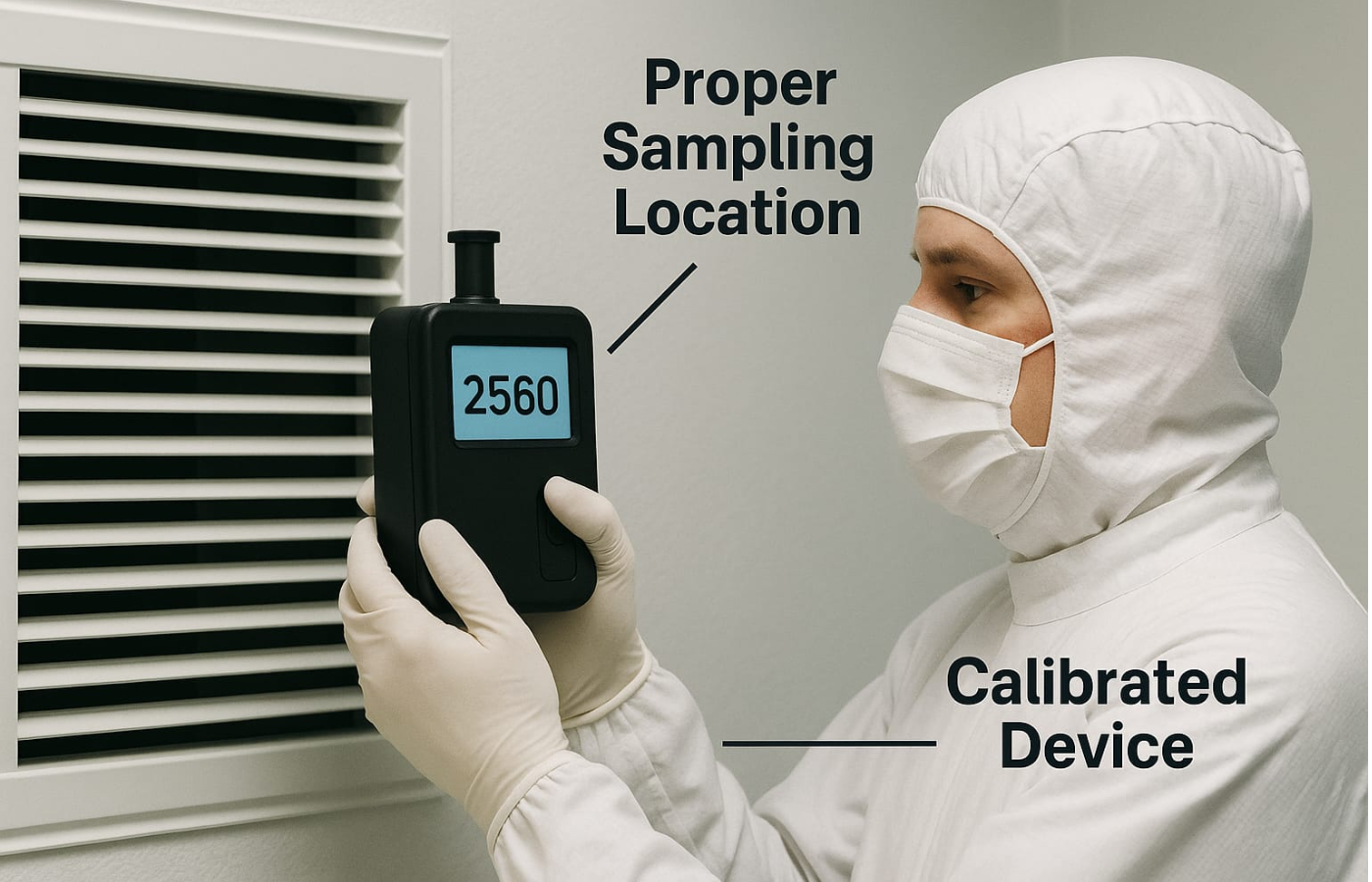
Maintaining and calibrating your particle counter is very important for its accuracy and long-term performance. Regular maintenance includes keeping the device clean, inspecting the sampling probes, and replacing the filters on time. After each use, the device should be stored in a clean and dust-free place.
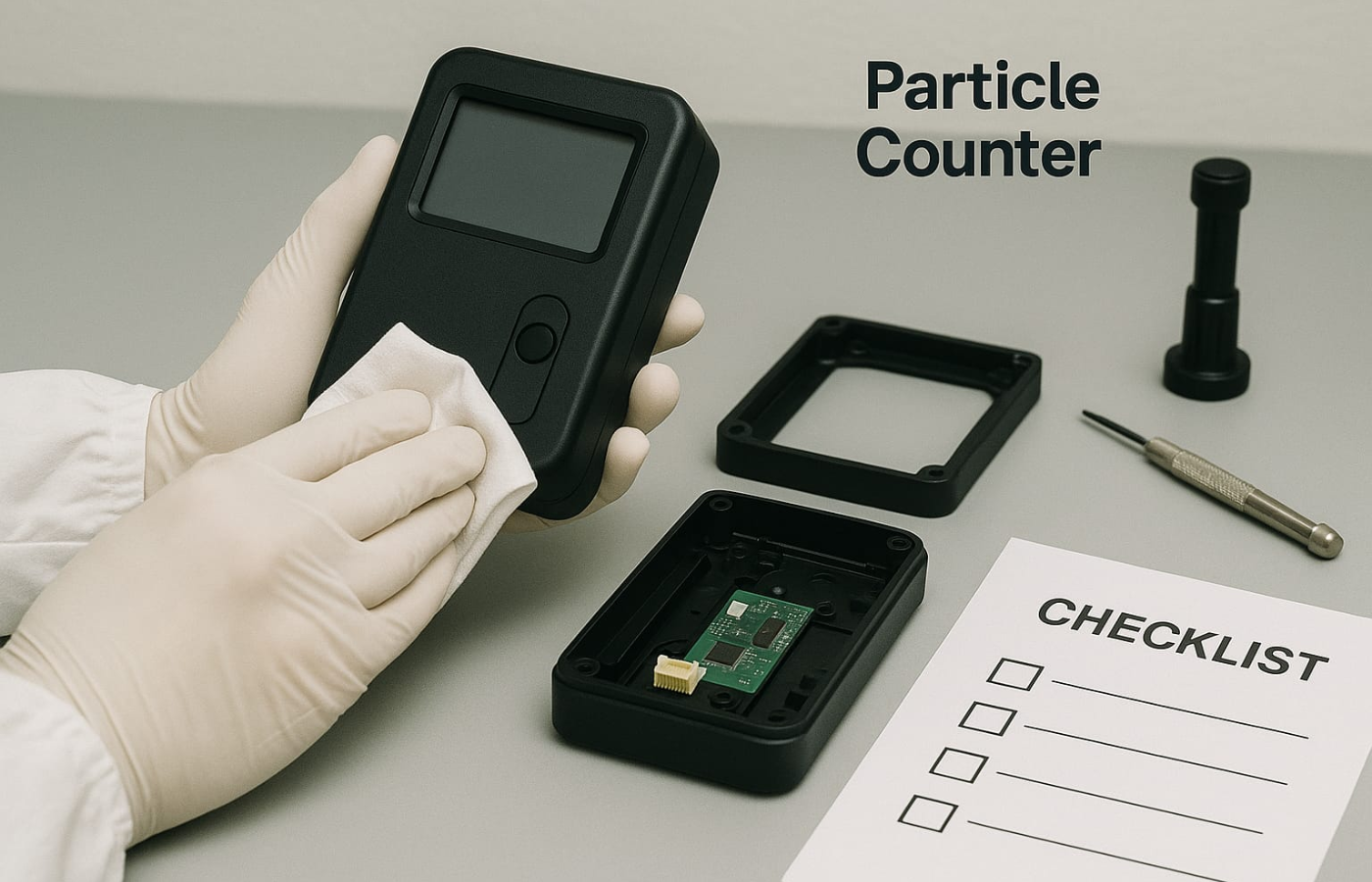
The calibration process typically follows the manufacturer’s guidelines, which may involve using certified calibration equipment or getting verification from a third-party lab—this should be done every 6 months or once a year. Accurate calibration ensures that the particle counter gives correct readings, which is crucial for cleanroom compliance and quality control.
First of all, always store the device in a clean and dry environment, and after use, gently wipe it with a soft cloth to prevent dust or contamination buildup. Inspect the sampling inlets and sensors at least once a week and replace or clean them if necessary.
Regularly check the power cable and battery, and install firmware updates if provided by the manufacturer. Changing the filters on time is also very important—it protects the device from blockage and sensor damage.
Also, never miss the calibration schedule; certified calibration should be done every 6 months or according to the manufacturer’s guidelines. These simple steps not only extend your device’s lifespan but also ensure accurate results.
| Issue | Possible Cause | Solution |
|---|---|---|
| Device not turning ON | The battery is dead or loose power connection | Charge the battery, check the power cable |
| Inaccurate readings | Outdated calibration or a dirty sensor | Renew calibration, gently clean the sensor |
| Data not saving | Storage full or software issue | Delete old data, update firmware |
| The screen is frozen | Software glitch or overheating | Restart the device, and contact the manufacturer if it happens repeatedly |
| Zero count error repeating | Sensor blocked or contaminated air | Clean air filter and inlets, rerun the zero count test |
| WiFi/Bluetooth not connecting | Network settings issue or outdated firmware | Reset settings, update firmware |
| Device overheating | Ventilation problem or prolonged usage | Let the device rest after use, and keep it in a cool and dry place |
| Unexpected shutdowns | Battery fault or hardware issue | Replace the battery, and have a technician inspect the device |
Detecting airborne contamination with the help of a Micron Particle Counter is a proactive step that protects your facility’s quality and compliance. With this device, you can detect ultrafine particles very accurately, it has easy controls, and strong data management. This device is essential for modern contamination control.
1. How can airborne contamination be detected using a Micron Particle Counter?
This device takes air samples and uses its sensor technology to measure the size and quantity of particles. The results are instantly displayed on the touchscreen, allowing immediate assessment of air quality.
2. Where is it most important to use a Micron Particle Counter?
This counter is most essential in places where air quality is highly critical, such as semiconductor fabs, cleanrooms, hospitals, biotechnology labs, and pharmaceutical plants.
3. How often should a Micron Particle Counter be maintained and calibrated
Every device requires regular maintenance and calibration according to the manufacturer’s recommendations to ensure accurate readings and maintain device longevity.
4. What advantages does a Micron Particle Counter have over traditional counters?
This advanced device is lightweight, capable of detecting ultra-fine particles, and offers modern features like USB data transfer and touchscreen functions often missing in traditional counters.
5. Can the Micron Particle Counter’s data be integrated into a monitoring system?
Yes, this device can operate as a standalone unit or be integrated into your existing monitoring system, enabling real-time air quality data across an entire facility.
APPLIED PHYSICS TECHNICAL RESOURCE
Airflow visualization, smoke studies, tracer delivery, particle monitoring and controlled-environment validation. Product and standards references should be interpreted for the actual instrument, facility, protocol and configuration.

Enter your details below to save your shopping cart for later. And, who knows, maybe we will even send you a sweet discount code :)
Allow notifications to get real-time updates about your shopping cart and who knows, you may even receive a sweet discount code 😊