Table of Contents
- What Are the 5 P’s of cGMP?
- 1. People: Training, Competency, and Qualification
- 2. Products: Quality Control and Batch Release
- 3. Processes: Validation and Production Controls
- 4. Procedures: SOPs, Documentation, and Data Integrity
- 5. Premises: Facility Design, Airflow, and ISO 14644-1 standards
- cGMP compliance requirements: What Inspectors Actually Check
- The 6th P: Performance and Digital Transformation
- Implementation Checklist: Turning the 5 P’s of cGMP Into Daily Practice
- Frequently Asked Questions
Last Updated: September 25, 2026
What Are the 5 P’s of cGMP?
The 5 P’s of cGMP are People, Products, Processes, Procedures, and Premises. This framework gives manufacturers a practical way to organize quality systems under Current Good Manufacturing Practices, the enforceable standard that governs how drugs, biologics, and medical devices are made. At Applied Physics, we work with cleanroom and quality teams who use this structure every day to prepare for inspections and keep production consistent. Below, we break down each pillar, show how it maps to federal regulation, and give you a checklist you can put to work this week.
The Food and Drug Administration enforces cGMP through Title 21 of the Code of Federal Regulations, and the “current” in cGMP is the part most teams underestimate. It means the standard moves as technology and expectations move. A process that satisfied an inspector five years ago is not automatically compliant today.
The 5 P’s of cGMP are not a memory trick. They are the five areas an inspector will actually walk through, ask about, and review on paper.
GMP vs. cGMP: Why the ‘Current’ Matters
GMP is the baseline set of manufacturing practices designed to ensure product safety and quality. The cGMP version adds an expectation of staying up to date with evolving methods, equipment, and controls. In practice, that difference shows up in how often you revisit your validation work, your training records, and your monitoring data.
A facility can pass an audit and still fall behind if its systems never change. The FDA expects manufacturers to adopt improved technology and methods as they become available. That is why the 5 P’s of cGMP reward continuous improvement rather than a one-time setup.
How the 5 P’s Map to 21 CFR 210 and 211
The framework maps cleanly onto 21 CFR Parts 210 and 211, the regulations covering drug manufacturing. Part 210 sets the general requirements for buildings, equipment, and personnel. Part 211 drills into production, quality control, and records for finished pharmaceuticals. The FDA’s guidance on current good manufacturing practice for finished pharmaceuticals lays out these expectations in detail.
Each P corresponds to a section of that regulation. People connect to personnel qualifications. Premises connect to facility design. Processes, Procedures, and Products connect to production controls, documentation, and quality control testing. When you organize your quality management system around the 5 P’s, you are essentially building a map of the regulation itself.
1. People: Training, Competency, and Qualification
People are the first pillar because even the best facility fails without qualified staff. Regulatory compliance depends on documented training, demonstrated competency, and clear role definitions. An inspector will ask who performed a task, what training they had, and how you proved they were qualified.
The PMC review of the GMP inspection process describes inspections as a systematic review of a company’s premises, procedures, processes, people, and products. Note that people sit at the center of that review, not off to the side.
Documented Training and Competency Records
Training records are where many facilities get caught. A common mistake is treating a sign-in sheet as proof of competency. Inspectors want evidence that a person can perform the task correctly, not just that they attended a session.
Build your records around three layers:
- Initial qualification before a person works independently
- Periodic retraining tied to a defined schedule
- Competency checks that observe the actual task
Keep these records current and retrievable. If an inspector asks for a specific operator’s file and it takes twenty minutes to find, that itself becomes a finding.
2. Products: Quality Control and Batch Release
Products are the output the entire system exists to protect, so quality control and batch release sit at the center of this pillar. Under 21 CFR 211.165, every batch must be tested to confirm it meets final specifications for identity, strength, quality, and purity before release. Under 21 CFR 211.192, a qualified quality control unit must review the batch record and either approve or reject the batch. No product moves forward without both steps.
What Batch Release Actually Requires
A defensible release decision rests on four documented elements:
- Specifications and test methods, written, validated, and tied to the product’s approved application
- A complete batch record, every material, piece of equipment, in-process check, and operator signature accounted for
- A deviation review, any out-of-specification result investigated under 21 CFR 211.192 before release
- A formal release signature, the quality unit, not production, makes the final call
Quality control testing verifies identity, strength, purity, and other specified attributes. Batch records tie the finished product back to the materials, equipment, and personnel involved. Without that traceability, you cannot defend a release decision during an inspection.
Stability, Reserve Samples, and Post-Release Obligations
Release is not the end of the story. Under 21 CFR 211.166, you must maintain an ongoing stability program that supports the expiration date on the label. Under 21 CFR 211.170, reserve samples of each lot must be retained for at least one year after the lot’s expiration date, or one year after the last distribution date if the expiration is less than one year. Inspectors routinely pull reserve samples and stability data during a for-cause inspection, so a missing or degraded reserve sample becomes a finding on its own.
Common Product-Pillar Findings
Most product-related findings trace back to a handful of patterns:
- Incomplete batch records, a missing in-process check, an unsigned step, or a correction without a documented reason
- Out-of-specification results released anyway, an investigation closed with a conclusion that does not match the data
- Reserve samples not retained or not stored correctly, temperature excursions, missing inventory, or samples discarded early
- Stability program gaps, pull points missed, or stability data not reviewed before extending a shelf life
A practical rule: never let production pressure shorten a release review. If a batch record has gaps, hold it. Releasing a product with incomplete documentation creates a far larger problem than a delayed shipment.
Releasing a batch with an unresolved out-of-specification result is one of the fastest ways to convert a routine inspection into a warning letter. The investigation must be closed, documented, and defensible before the batch moves.
3. Processes: Validation and Production Controls
Processes must be validated to show they consistently produce the intended result. Validation is not a one-time event. It includes initial qualification, ongoing monitoring, and revalidation when something changes.
Production controls keep the process inside its validated range. That means defined parameters, in-process checks, and clear action limits. When a reading drifts outside the range, your team needs a defined response, not a judgment call.
Skipping revalidation after an equipment or process change is one of the most common causes of audit findings. Even a small change to a filling line or a mixing parameter can invalidate your original data.
4. Procedures: SOPs, Documentation, and Data Integrity
Standard operating procedures turn intent into repeatable action. Every critical task in a cGMP facility should have a written procedure that a trained person can follow the same way every time.
Documentation is where data integrity lives. The FDA expects records that are accurate, complete, and traceable, often summarized as attributable, legible, contemporaneous, original, and accurate. Batch records, logbooks, and electronic entries all fall under this expectation.
A common mistake is allowing “informal” practices to drift from the written SOP. If operators do the task one way and the SOP says another, you have a compliance gap whether or not anyone notices during routine work. Review your procedures against actual practice at least annually, and correct whichever one is wrong. Aligning these internal workflows with a comprehensive HACCP compliance checklist ensures that your operational consistency remains robust enough to withstand the scrutiny of evolving regulatory standards.
5. Premises: Facility Design, Airflow, and ISO 14644-1 standards
Premises cover the physical environment: layout, surfaces, air handling, and contamination control. Facility design must prevent cross-contamination, support cleaning, and maintain the air quality each product requires.
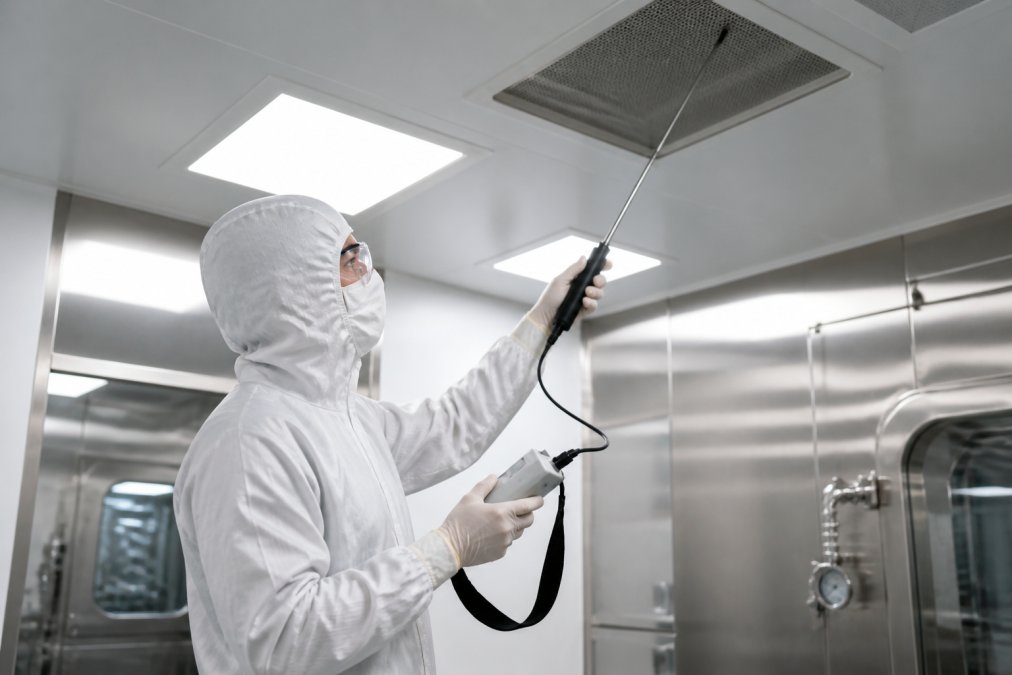
Airflow is the part that separates a compliant cleanroom from one that merely looks clean. The ISO 14644-1 standard for cleanroom classification defines how cleanrooms are classified by airborne particle concentration. Your monitoring and validation work should align with the class your process requires.
Class Limits and What They Mean for Your Cleanroom
Each ISO class sets a maximum permitted concentration of particles at a given size. A lower class number means a cleaner environment. Your process determines which class you need, and your design, filtration, and monitoring must hold that class consistently.
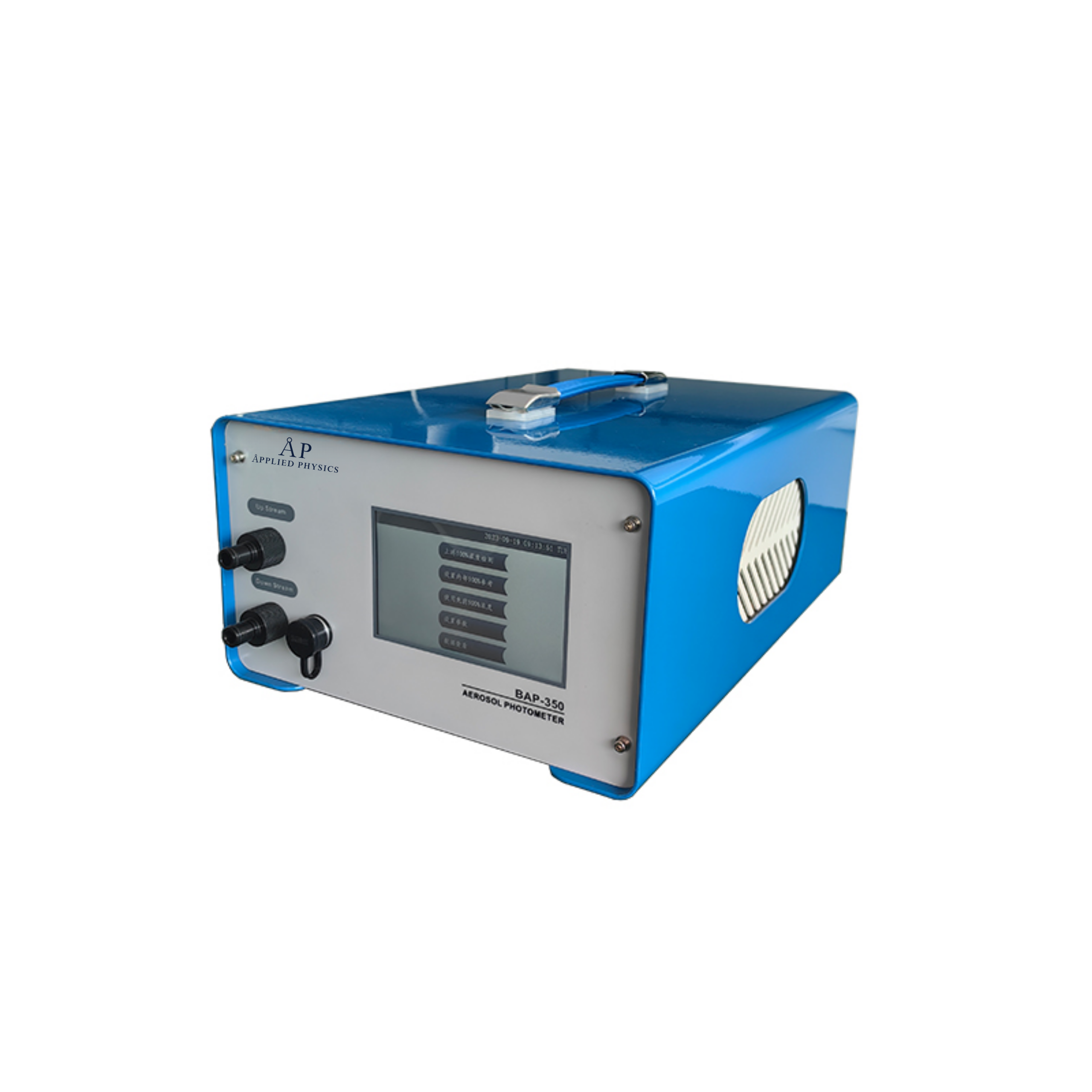
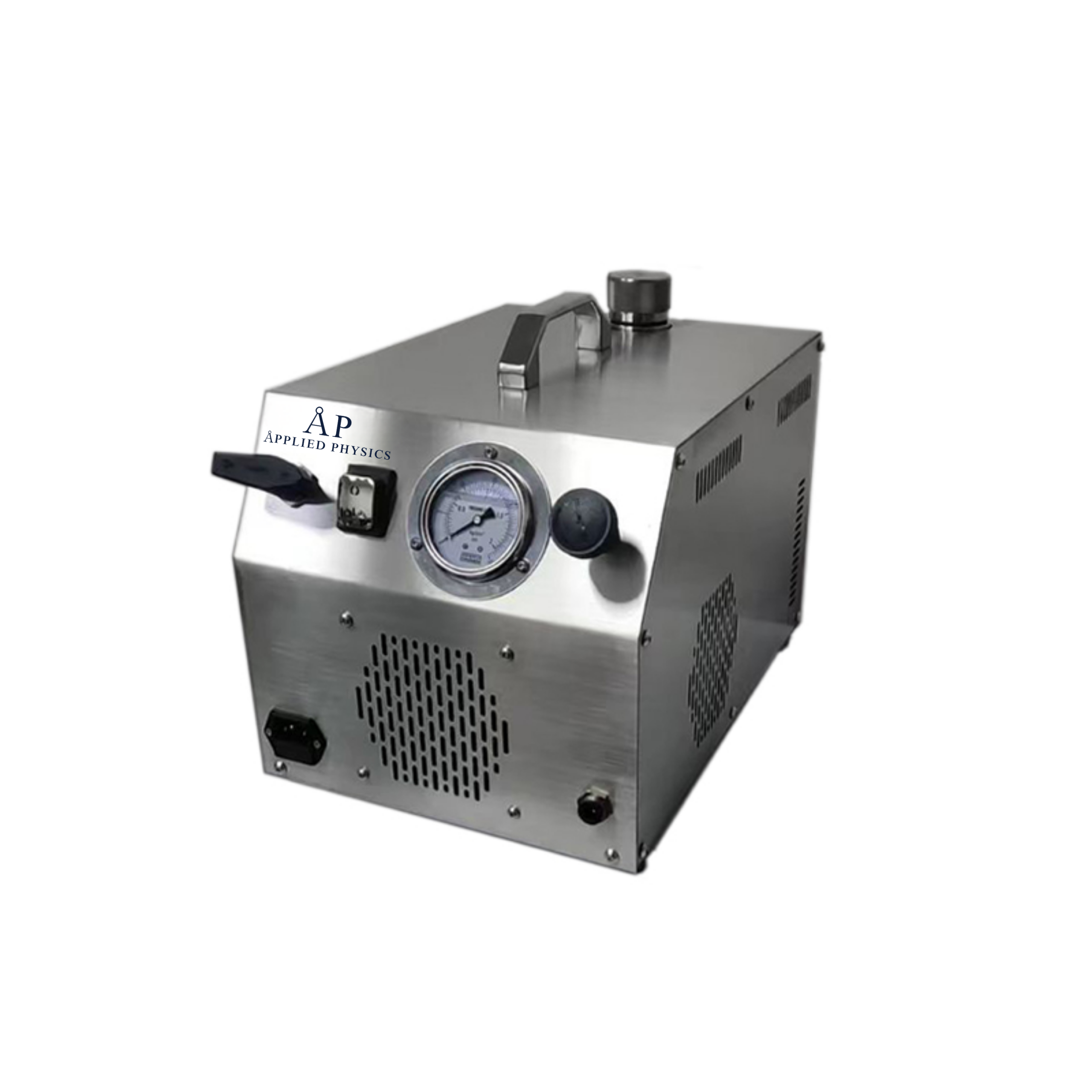
HEPA filter integrity testing is central to this. A filter that passes on paper but leaks in practice will pull your particle counts out of range. Tools such as the Aerosol Photometer BAP-350 and the Aerosol Generator-Cold Type BAG-6D from Applied Physics support leak detection and HEPA validation across cleanrooms, laminar flow tables, and biosafety cabinets.
cGMP compliance requirements: What Inspectors Actually Check
Inspectors check whether your systems work in practice, not whether they exist on paper. They follow the 5 P’s through the facility, review records, and interview staff. A clean binder means little if the floor tells a different story.
The FDA conducts these inspections under its compliance program for drug manufacturing, and investigators are trained to trace a single product lot from raw material receipt through release. That trace is the mechanism behind most findings: the investigator picks one batch, then follows the paper and the people who touched it.
How an Inspection Actually Unfolds
A typical inspection follows a predictable sequence:
- Opening meeting, the investigator states the scope and requests a facility walk-through
- Walk-through, the investigator observes the 5 P’s in operation, from gowning to equipment status labels
- Document review, batch records, SOPs, training files, validation reports, and deviation logs are pulled
- Employee interviews, operators are asked to explain the task they perform, then the investigator compares the answer to the SOP and the training record
- Closing meeting, observations are discussed, and any Form 483 items are issued in writing
Expect questions that connect the pillars. An inspector may ask an operator to explain a step, then pull the SOP, then check the training record, then review the batch record for that day. Any mismatch between those four sources becomes a finding.
The Recurring 483 Observation Categories
FDA Form 483 observations cluster into recognizable patterns year after year. The most common categories map directly onto the 5 P’s:
| 483 Category | Typical Citation | Which P It Hits |
|---|---|---|
| Failure to follow written procedures | 21 CFR 211.100 | Procedures |
| Incomplete or missing batch records | 21 CFR 211.188 | Products |
| Inadequate investigation of discrepancies | 21 CFR 211.192 | Products / Processes |
| Training not documented or not performed | 21 CFR 211.25 | People |
| Cleaning and maintenance deficiencies | 21 CFR 211.67 | Premises |
| Process not validated | 21 CFR 211.110 | Processes |
Common Audit Findings and How to Avoid Them
Most findings cluster around a handful of recurring problems. The table below pairs each with a practical fix.
| Common Finding | Why It Happens | Practical Fix |
|---|---|---|
| Incomplete training records | Sign-in sheets treated as proof | Add observed competency checks |
| SOPs not followed | Procedures drifted from practice | Annual SOP-to-floor review |
| Missed revalidation | Change not assessed for impact | Formal change control trigger |
| Data integrity gaps | Backdated or missing entries | Contemporaneous recording rules |
| Airflow out of range | Filter leaks or blocked returns | Scheduled HEPA integrity testing |
| Unclosed OOS investigations | Root cause not identified | Defined investigation timeline and CAPA |
The pattern is consistent: findings come from drift, not from bad intentions. Systems that stay current catch that drift early.
What Happens After a 483
A Form 483 is not itself a penalty, but the response matters. Manufacturers typically have 15 business days to respond in writing with corrective actions. An inadequate response can escalate to a Warning Letter, which is published publicly and often triggers import alerts or holds on new product approvals. The practical takeaway is that the 5 P’s are not just an inspection-preparation framework, they are the structure of your response when something goes wrong.
The fastest way to survive an inspection is to run your own version of it first. Pick a lot, trace it end to end, and see whether the paper matches the floor.
The 6th P: Performance and Digital Transformation
A growing number of quality teams now add Performance as a sixth pillar. This reflects a shift toward measuring how well the system actually works, not just whether it exists. Performance covers metrics like deviation rates, on-time release, and monitoring trends.
Digital tools support this shift. Electronic batch records, automated monitoring, and connected calibration systems reduce manual entry errors and make trends visible earlier. Teams that adopt these tools tend to catch problems before they become findings.
Start with one data stream, such as particle counts or environmental monitoring, and connect it before expanding. Facilities that digitize everything at once usually stall halfway through.
Implementation Checklist: Turning the 5 P’s of cGMP Into Daily Practice
The 5 P’s of cGMP only help if they become daily habits rather than an annual audit scramble. Use this checklist to move from framework to practice.
- Map each of the 5 P’s to your current SOPs and note gaps
- Confirm every operator has a documented competency record
- Verify batch release steps are followed without shortcuts
- Review validation status for all critical processes
- Audit SOPs against actual floor practice
- Confirm HEPA integrity testing is scheduled and current
- Check that records are contemporaneous and traceable
- Assign an owner to each pillar with a review cadence
Run this review quarterly. The goal is to find your own gaps before an inspector does.
Building a durable cGMP program means keeping all five pillars in view at once, and the physical environment is often where the gaps hide. Applied Physics has supported cleanroom, semiconductor, and medical manufacturers since 1992 with precision contamination control, airflow visualization, and particle metrology tools. Our Aerosol Photometer BAP-350, Aerosol Generator-Cold Type BAG-6D, and FFU (Fan Filter Unit) line help quality teams validate HEPA performance and hold their ISO class with confidence. Contact Applied Physics to see how our validation and metrology equipment fits your facility’s compliance work.
Frequently Asked Questions
What are the five pillars of cGMP?
The five pillars are People, Products, Processes, Procedures, and Premises. People covers documented training and competency. Products covers quality control and batch release. Processes covers validation and production controls. Procedures covers SOPs, documentation, and data integrity. Premises covers facility design, airflow, and environmental monitoring. Together, these pillars form the backbone of any quality management system in FDA-regulated manufacturing, and every regulatory inspection touches all five.
What is the difference between GMP and cGMP?
GMP sets the baseline requirements for manufacturing quality. The ‘c’ in cGMP stands for ‘current,’ meaning manufacturers must use up-to-date technology and methods rather than relying on practices that were acceptable years ago. Under 21 CFR 210 and 211, the FDA expects continuous improvement. A process validated in 2015 may need revalidation in 2026 if equipment, materials, or methods have changed. The 5 P’s of cGMP apply to both, but cGMP adds the expectation of staying current.
How do the 5 P’s apply to cleanroom environments?
In a cleanroom, the 5 P’s converge on environmental control. Premises covers facility design, air changes per hour, and pressure differentials. Procedures covers gowning SOPs and cleaning schedules. People covers gowning qualification and aseptic technique training. Processes covers airflow validation and HEPA filter integrity testing. Products covers environmental monitoring results and batch disposition. ISO 14644-1 standards define the particle concentration limits that tie all five together during a regulatory inspection.
Why are the 5 P’s critical for FDA compliance?
The FDA’s inspection process systematically reviews premises, procedures, processes, people, and products, the same five categories the 5 P’s framework organizes. A weakness in any one pillar can trigger a Form 483 observation. For example, missing training records (People) or incomplete batch records (Procedures) are among the most common citations. Building your quality management system around the 5 P’s ensures no area falls through the cracks during a regulatory inspection.