
Table of Contents
- What Is ISO 14644 Classification? A Plain-English Answer
- From Federal Standard 209E to ISO 14644-1: Why the Switch Matters
- Cleanroom Particle Count Limits Explained (ISO 1 to ISO 9)
- Particle Size Measurement: What 0.1 to 5.0 Microns Actually Means
- ISO 14644-2 Testing Frequency: How Often Do You Validate?
- Cleanroom Monitoring Equipment Every Beginner Should Know
- Common Mistakes Beginners Make With ISO 14644 Classification
- What ISO 14644 Classification Costs (and Why Class Matters)
- Frequently Asked Questions
Last Updated: September 25, 2026
What Is ISO 14644 Classification? A Plain-English Answer
ISO 14644 classification is the global system for rating how clean a cleanroom is, based on the number of airborne particles allowed per cubic meter of air. At Applied Physics, we’ve helped cleanroom teams apply these standards since 1992. This guide breaks it down for beginners.
The standard matters because regulators, auditors, and customers all speak this language. If you make drugs, chips, or medical devices, your cleanroom’s ISO class is part of your compliance story.
Here’s the good news: the system is simpler than it looks. Once you understand a few core ideas, you can read any classification table with confidence.
Below, we’ll walk through the nine classes, the particle limits behind them, and the mistakes that trip up most newcomers.
ISO 14644-1 is the part of the standard that defines cleanroom classes by particle concentration. It replaced the older US Federal Standard 209E, which many veteran engineers still reference out of habit. The switch moved the industry toward one global metric, measured in particles per cubic meter rather than per cubic foot. Maintaining these stringent particle counts often requires specialized techniques for removing construction dust during the transition from a raw build to a certified controlled environment.
The Nine Cleanliness Classes at a Glance
The standard defines nine classes, from ISO Class 1 (the cleanest) to ISO Class 9 (the least strict). Each class sets a maximum allowed particle count at specific sizes.
| Class | Typical Use | Relative Strictness |
|---|---|---|
| ISO 1-2 | Advanced research | Most stringent |
| ISO 3-4 | Semiconductor fab | Very strict |
| ISO 5 | Sterile compounding | Strict |
| ISO 6-7 | Pharma production | Moderate |
| ISO 8 | Medical devices | Lighter |
| ISO 9 | General controlled space | Least strict |
Most beginners work in ISO 5 through ISO 8. That’s where the day-to-day action is.
From Federal Standard 209E to ISO 14644-1: Why the Switch Matters
The old Federal Standard 209E measured particles per cubic foot and used class numbers like “Class 100.” ISO 14644-1 measures per cubic meter and uses ISO numbers instead.
That change wasn’t cosmetic. According to Applied Physics coverage of ISO 14644 vs Federal Standard 209E, ISO 14644-1 replaced Federal Standard 209E and expanded the classification system to include two cleaner standards and one dirtier standard than the original six.
So the new system covers more ground. It also aligns with international practice, which matters if you sell into global markets.
Here’s what most guides miss: the numbers don’t convert neatly. A “Class 100” room and an “ISO 5” room are close cousins, but the math behind them is different. Don’t assume a one-to-one match when you’re comparing old documents to new ones.
Cleanroom Particle Count Limits Explained (ISO 1 to ISO 9)
Each ISO class sets a maximum number of particles allowed at a given size. The limits get tighter as the class number drops.
At ISO Class 5, for example, the allowed particle count is far lower than at ISO Class 8. That gap drives everything: how much filtration you need, how often you test, and what your room costs to run.
How to Read a Particle Concentration Table
A particle concentration table lists classes down one side and particle sizes across the top. Each cell shows the maximum allowed count per cubic meter.
Read it like this:
- Find your target class in the left column
- Move across to the particle size you care about
- The number in that cell is your limit
The standard allows classification against a single specified particle size threshold rather than the full set of sizes, provided at least one size is tested. That flexibility helps smaller facilities avoid unnecessary testing.
When you read a concentration table, check the units first. Older documents may list counts per cubic foot, while ISO 14644-1 uses per cubic meter. Mixing the two is one of the most common beginner errors.
Particle Size Measurement: What 0.1 to 5.0 Microns Actually Means
A micron is one millionth of a meter. For scale, a human hair is roughly 70 microns wide, so a 0.5-micron particle is far smaller than anything you can see.
Cleanroom standards focus on particles from 0.1 to 5.0 microns. Why that range? Because these are the sizes that matter most for contamination control.
- 0.1 microns: Relevant for advanced semiconductor work
- 0.3 microns: The size HEPA filters are rated against
- 0.5 microns: The classic benchmark size for many classes
- 5.0 microns: Larger particles like skin flakes and dust
Airborne particulate at these sizes can ruin a semiconductor wafer or contaminate a sterile drug product. That’s why the standard tracks them so closely.
ISO 14644-2 Testing Frequency: How Often Do You Validate?
ISO 14644-2 sets the rules for testing and monitoring. It tells you how often to check your cleanroom and what to test.
Cleanroom Monitoring System – Model CRMS →
Most facilities run a formal validation on a set schedule, then monitor continuously between tests. The exact frequency depends on your class and your industry’s rules.
A practical baseline looks like this:
- Initial validation: Before you operate the room
- Periodic testing: On a schedule set by your class and regulator
- Continuous monitoring: Ongoing particle counts during operation
- Re-validation: After major changes or repairs
For regulated work, your industry rules may be stricter than the standard alone. Always check both.
Skipping periodic testing because “the room passed last year” is a common and costly mistake. Particle counts drift as filters load up and equipment moves. A room that passed in January can fail by summer without any obvious warning.
Cleanroom Monitoring Equipment Every Beginner Should Know
You can’t classify a cleanroom without the right tools. Particle counters do the heavy lifting, sampling air and counting particles by size.
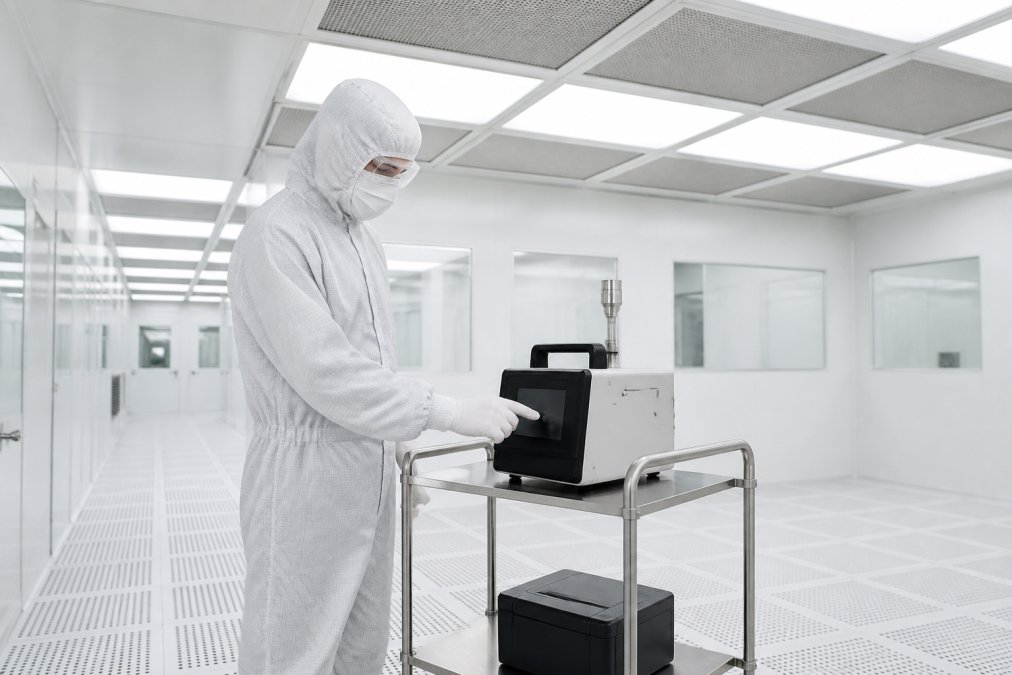
Beyond counters, a few other tools round out a basic setup:
- Particle counters for classification and routine checks
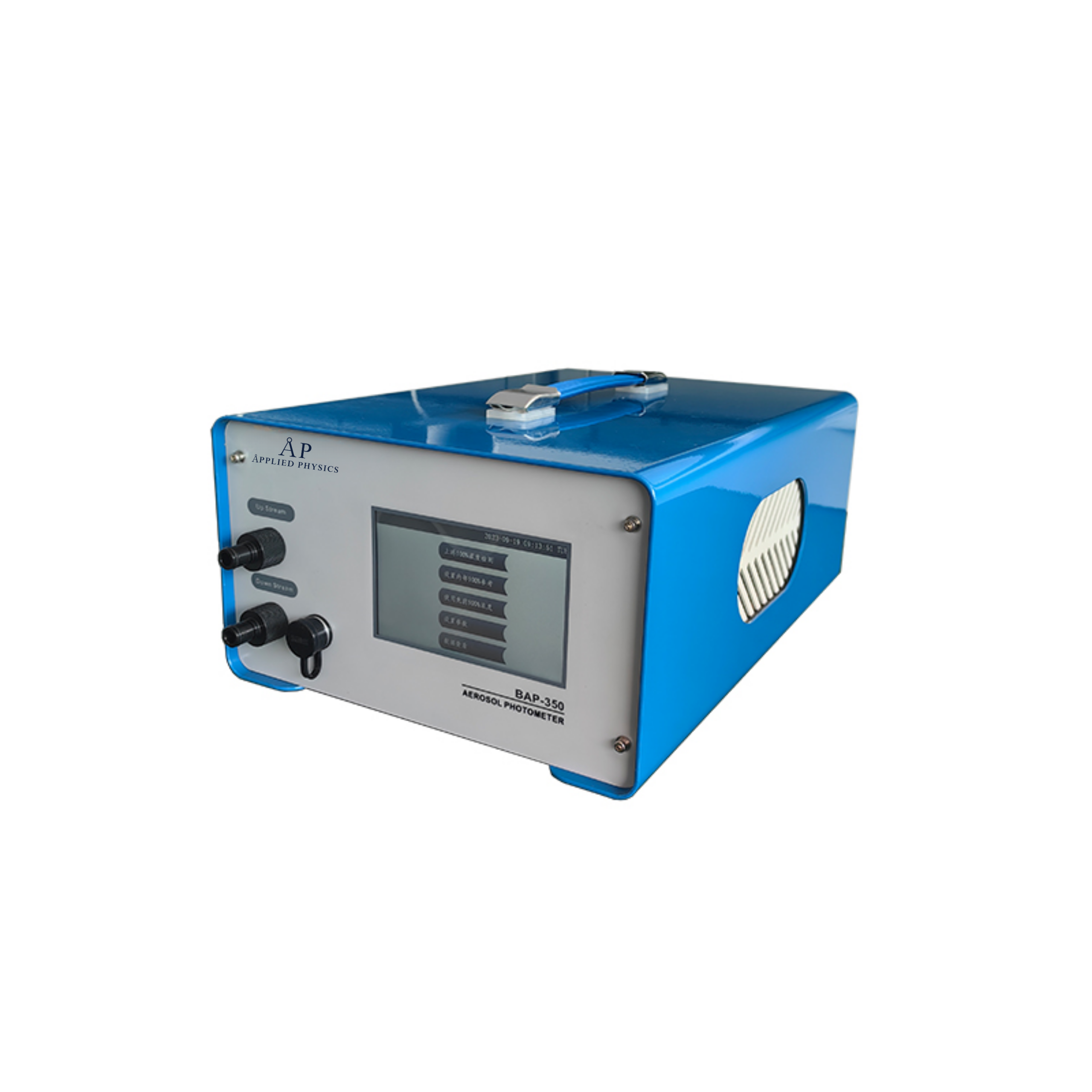
- Aerosol photometers for HEPA filter leak testing
- Microbial air samplers for contamination control in pharma
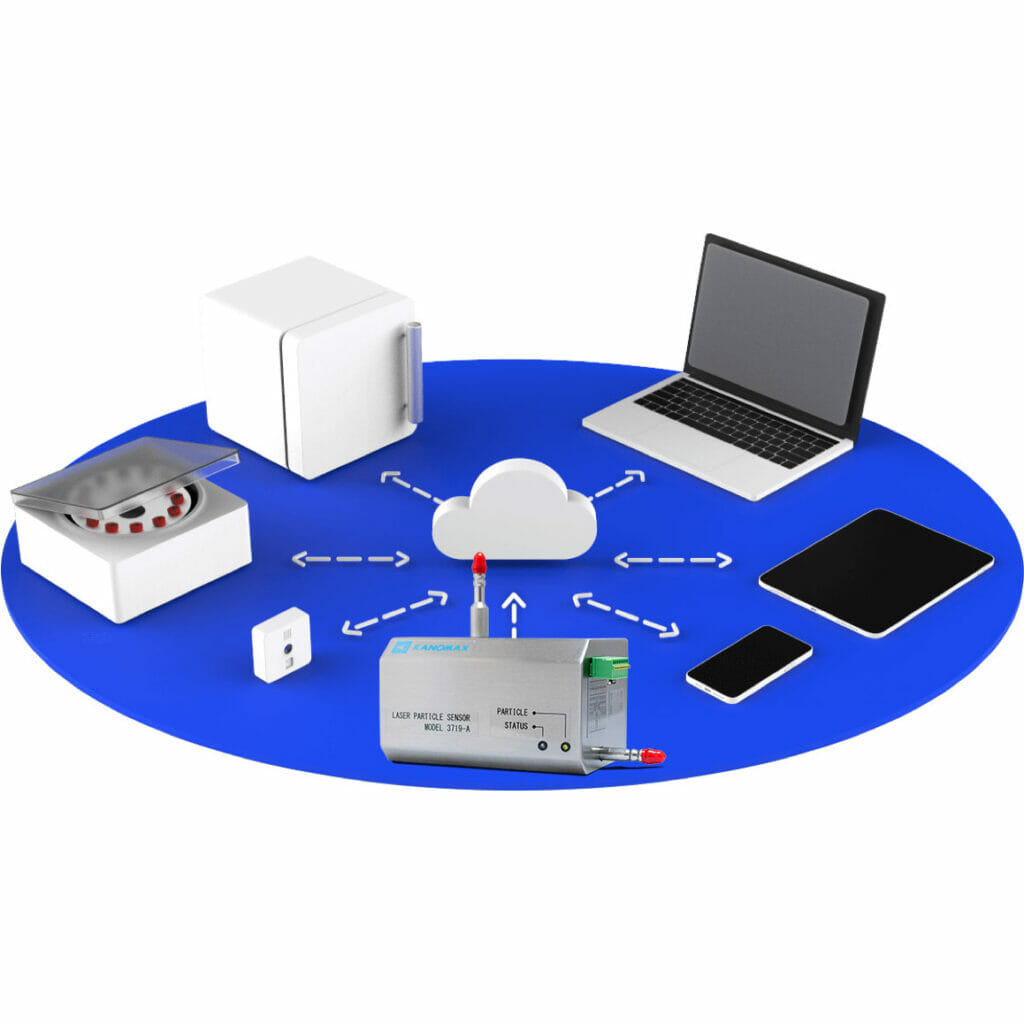
- Monitoring systems that log data continuously
Applied Physics supplies a range of these tools, including the Cleanroom Monitoring System – Model CRMS, which monitors particle counts, pressure, temperature, and humidity for ISO and GMP compliance. The Aerosol Photometer BAP-350 handles HEPA validation and leak detection.
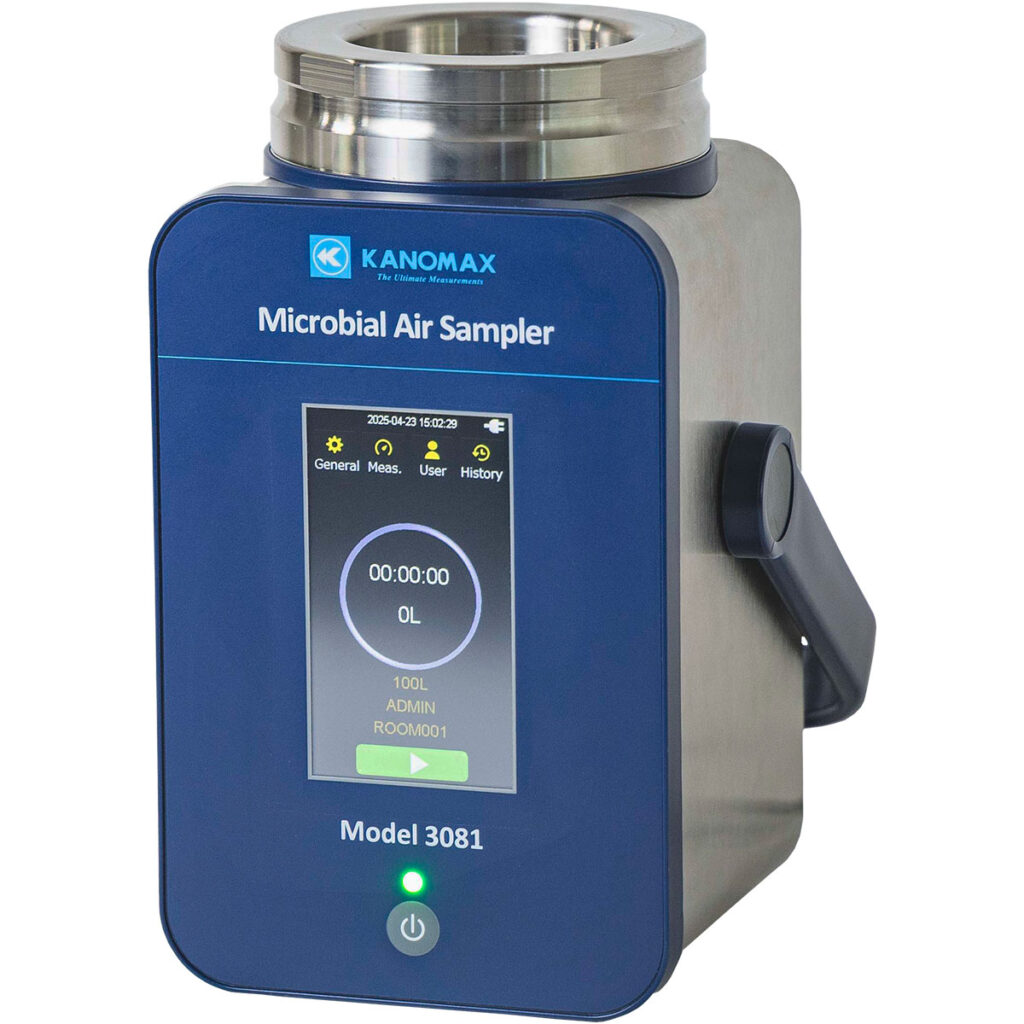
For teams that need microbial data, the Microbial Air Sampler – 3080 Series draws air at a stable flow rate and directs organisms onto culture media.
Common Mistakes Beginners Make With ISO 14644 Classification
Newcomers tend to make the same handful of errors. Catching them early saves time and money.
- Confusing old and new class numbers. Class 100 is not the same as ISO 5, even if they’re close.
- Mixing units. Particles per cubic foot and per cubic meter are not interchangeable.
- Testing too rarely. A single annual test won’t catch drift between runs.
- Ignoring particle size. A room can pass at 0.5 microns and fail at 0.3.
- Forgetting airflow. Classification is about particles, but airflow patterns drive where they land.
The last one trips up more people than you’d expect. A room can hit its particle targets and still fail an airflow visualization test. According to industry guidance on ISO 14644-1 classification, classification is determined by measuring particle concentration with optical particle counters, and the standard allows testing against a single size.
The biggest beginner mistake isn’t a math error. It’s treating classification as a one-time event instead of an ongoing process. Cleanrooms drift, and your testing schedule should reflect that.
What ISO 14644 Classification Costs (and Why Class Matters)
Tighter classes cost more to build and run. That’s the trade-off every facility faces, and it’s the single biggest decision a beginner will be asked to weigh in on.
What Actually Drives the Cost
Four physical factors scale with class tightness, and each one shows up on your budget:
- Air changes per hour (ACH). An ISO 8 room might run 10-25 air changes per hour. An ISO 5 room can run 240-600. Every additional air change means more fan energy, more filter surface, and more conditioned air you’re pushing through the room.
- HEPA and ULPA filter coverage. Higher classes need a larger percentage of the ceiling covered by filters, often 25% for ISO 7, 50% for ISO 6, and near 100% for ISO 5. More filter area means higher first cost and higher replacement cost.
- Testing and monitoring frequency. ISO 14644-2 sets the framework, but regulated industries layer their own requirements on top. A tighter class typically means more sample locations, larger sample volumes, and more frequent re-validation.
- Energy and HVAC load. Moving more air through tighter filters costs real money every hour the room runs. For a room operating around the clock, energy is often the largest lifetime cost, larger than the initial build.
The Practical Rule: Don’t Over-Specify
If your process only needs ISO 7, building to ISO 5 wastes money on energy, filters, and validation time, and it doesn’t make your product safer. The class should match the work, not the other way around.
A common pattern is that a facility inherits an old specification, builds to it, and then spends years paying to maintain a class it never needed. Before you commit, ask: what particle size actually threatens my process, and at what concentration? That answer, not a habit, should set your class.
When a Smaller Footprint Beats a Full Room
Not every operation needs a whole classified room. For teams weighing options, a modular clean zone, a downflow booth or clean booth, can deliver ISO 5 (Class 100) conditions in a limited footprint at a lower running cost than a full cleanroom, because you’re only conditioning and filtering the air over the work area. That’s useful when you need a clean zone for a specific process without rebuilding the whole facility.
The Clean Booth (Down Flow Booth) is one example of this approach.
The Standard Keeps Moving
The standard itself continues to evolve. ISO 14644-14 links cleanroom classification to equipment suitability, so the class you choose should match the tools you run inside it. If you buy equipment rated for a cleaner class than your room, you’re paying for capability you can’t use. If you buy equipment rated for a dirtier class, you may be the source of your own contamination.
Class choice is a cost decision as much as a technical one. The cheapest compliant room is the one rated for the work you actually do, not the one rated for the work you might do someday.
Frequently Asked Questions
What does ISO classification mean for a cleanroom?
ISO classification is a standardized way to state how clean the air is inside a controlled environment. ISO 14644-1 defines nine classes, from ISO Class 1 (the cleanest) to ISO Class 9 (the least filtered), based on the maximum allowable concentration of airborne particles at specified sizes. A facility earns its class by measuring particle counts with an optical particle counter and comparing the results to the concentration limits in the standard. The class number tells suppliers, auditors, and regulators exactly what level of contamination control the room delivers.
What is the difference between ISO Class 1 and ISO Class 9 cleanrooms?
ISO Class 1 is the most stringent level in the ISO 14644-1 system, permitting only a handful of particles at 0.1 microns per cubic meter. ISO Class 9 is the least stringent, roughly equivalent to a well-filtered ordinary room. Most pharmaceutical sterile filling operations run at ISO Class 5, while semiconductor fabrication can require ISO Class 1 to ISO Class 3. The gap between the two extremes is enormous, which is why matching your class to your process, not to a competitor’s spec sheet, is the right starting point.
How often should cleanroom validation occur according to ISO standards?
ISO 14644-2 sets the framework for testing frequency, and the most common baseline is every 6 to 12 months for classification testing, with continuous or daily monitoring of critical parameters in between. The exact interval depends on your class, your process risk, and any industry-specific rules such as GMP or USP 797/800. Many facilities run a formal revalidation annually and rely on continuous particle, differential pressure, temperature, and humidity monitoring to catch drift before the next scheduled test.
What are the primary requirements for maintaining an ISO 8 cleanroom?
An ISO 8 cleanroom allows far more particles than an ISO 5 space, but the maintenance discipline is similar. You need HEPA filtration, controlled air changes, positive pressure relative to adjacent areas, regular particle counting, and documented cleaning procedures. Personnel must follow gowning protocols, and any equipment brought in should be wiped down. Monitoring airborne particle counts, differential pressure, temperature, and humidity continuously makes it easier to prove compliance at audit time and to spot filter loading or airflow problems early.