

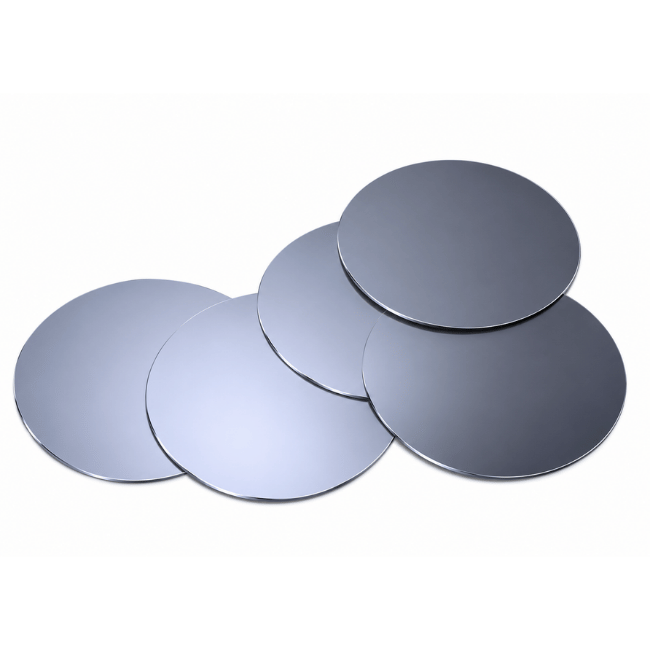
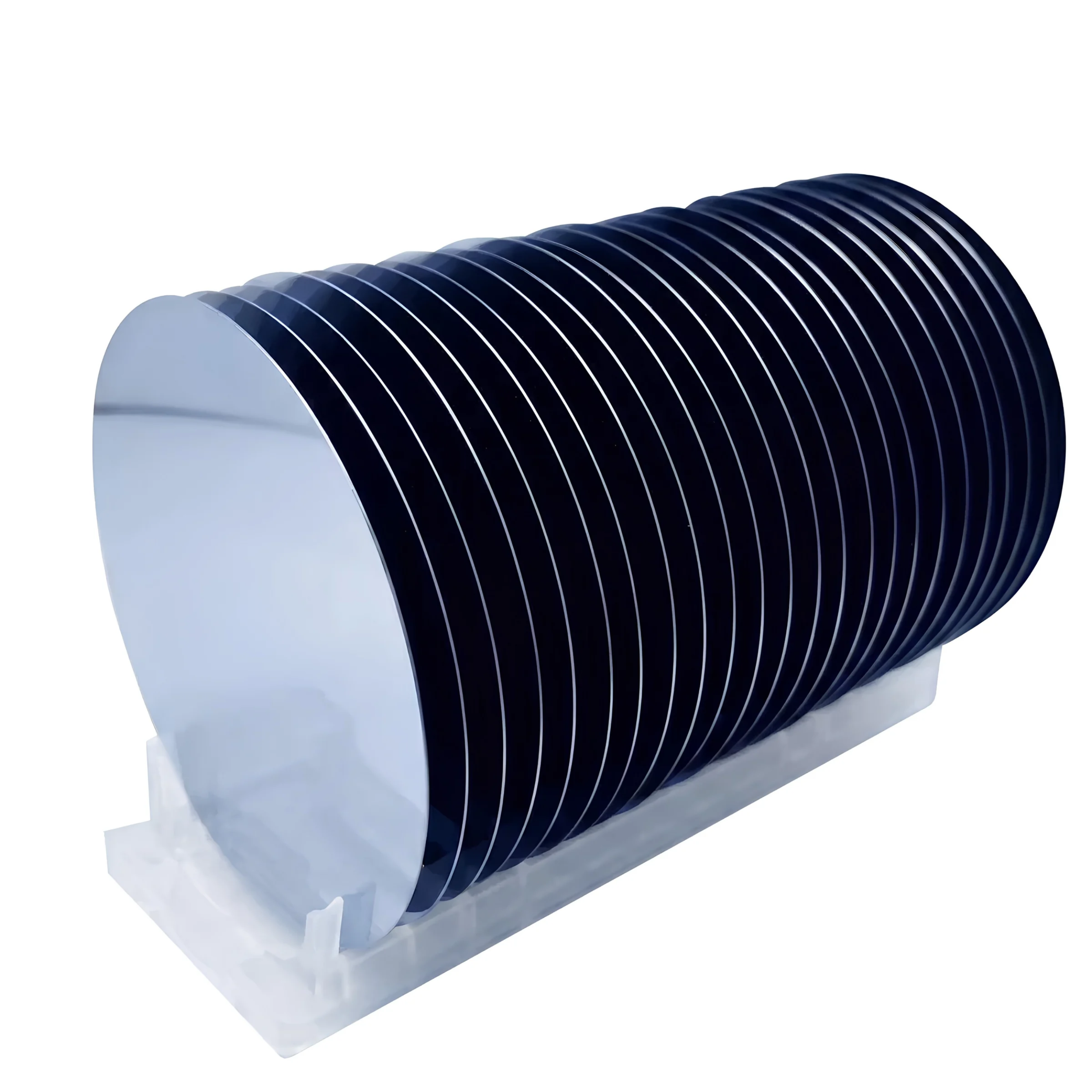
Description
In 200 mm semiconductor manufacturing, accurate defect measurement has a direct economic impact; incorrect sizing can lead to misclassified products, unnecessary rework, or defective chips reaching the market. The 200 mm Calibration Wafer Standard supplies known, highly stable, and NIST-traceable reference baselines to prevent these issues.
Designed for compatibility with KLA-Tencor Surfscan (SP1 through SPx) and equivalent platforms, they are primarily used to calibrate inspection tool size responses, document tool qualifications (Qual-Dep™), optimize cleaning processes through Particle Removal Efficiency (PRE) evaluations, and develop advanced inspection recipes (Dev-Dep™).
Deposition Variations
The 200 mm standards can be customized based on the complexity of the calibration required:
-
Full Deposit: Features particles deposited across the entire 200 mm surface. This is essential for comprehensive tool qualification to verify the total optical sweep, detector uniformity, and center-to-edge radial response.
-
1-Spot Deposit: A single targeted zone with one specific particle size. It is ideal for rapid baseline checks, routine drift monitoring, or single-threshold recipe validation.
-
2-Spot Deposit: Contains two distinct particle sizes in separate zones, enabling a 2-point sizing calibration and dual-threshold verification in a single scan.
-
3-Spot Deposit: Features three separate sizes (e.g., low, mid, and high range) to establish a multi-point size response curve without the need to swap out multiple wafers.
-
4-Spot Deposit: Uses four calibrated particle sizes to provide broad size-channel qualification and verify detector linearity, often used for quarterly tool certifications.
-
5-Spot Deposit: Delivers deep diagnostic coverage across five sensitivity channels, supporting advanced recipe setup and multi-tool matching across the fab.
-
6-Spot Deposit: The maximum density configuration for the 200 mm format, featuring six distinct sizes. This generates a high-resolution, full-range sizing curve in a single scan, making it critical for global fab campaigns where cross-tool measurement consistency is required.