
Quick Summary
Compare culture-based sampling, rapid microbial methods and supporting environmental measurements by what each detects and the evidence available for your intended use. Some biofluorescent instruments provide real-time airborne viable-particle indications. These results are not interchangeable with culture counts or organism identification; suitability requires application-specific evaluation by qualified microbiology and QA personnel.
- Nonviable particle counters measure airborne particles by size and cannot distinguish live bacteria from dust.
- Rapid method results are only as good as their validation for your product, matrix, and organism panel.
- Define intended use in one sentence before shopping, including sample type, organism panel, and decision supported.
- Total cost of ownership includes consumables, calibration, training, data systems, and validation staff time.
- Continuous sensors track particles, pressure, temperature, and humidity but do not replace viable sampling.
Table of Contents
- Why Real-Time Microbial Monitoring Matters in Biotech
- Culture-Based Microbial Monitoring: The Validated Baseline
- Rapid Microbial Methods: What They Can and Cannot Do
- Viable and Nonviable Particle Counting: Know the Difference
- Comparison Table: Microbial Monitoring Methods at a Glance
- Biotech Environmental Monitoring: Matching Method to Workflow
- Validation and Regulatory Acceptance: What Qualifies a Method
- Detection Limits, False Results, and Organism Coverage
- Total Cost of Ownership and Implementation Reality
- Contamination Monitoring vs. Process-State Monitoring
- Your Practical Requirements Checklist Before Selecting Equipment
- Frequently Asked Questions
Why Real-Time Microbial Monitoring Matters in Biotech
Microbial monitoring is the practice of sampling and quantifying microorganisms in controlled environments and processes, and the demand for faster answers keeps growing. At Applied Physics, we supply the equipment and standards that support these programs, and we field the same question repeatedly: can any method deliver viable microorganism results in real time? Method suitability and validation for any such technology belong to qualified microbiology and QA personnel.
That gap matters because biotech processes move faster than incubation cycles. A batch can be released, a bioreactor can run to completion, and a cleanroom can host a full shift of work before a culture plate shows a single colony. The pressure to shorten that feedback loop is real.
Here is what most guides get wrong: they blur together three different questions. Is a particle present? Is a viable organism present? Is the process drifting? Each question needs a different tool.
Compare the method categories below by intended use, detection principle, time to result and validation evidence before selecting equipment.
Culture-Based Microbial Monitoring: The Validated Baseline
Culture-based microbial monitoring is the reference method that regulators and quality teams already understand. An air sampler draws a known volume over a culture medium, the plate incubates, and colonies are counted and identified.
The strengths are hard to argue with. The method is widely understood and gives you organism recovery, not just a count.
The weakness is time. Incubation takes days, and some organisms grow slowly or not at all on standard media. You get a retrospective answer, not a live one.

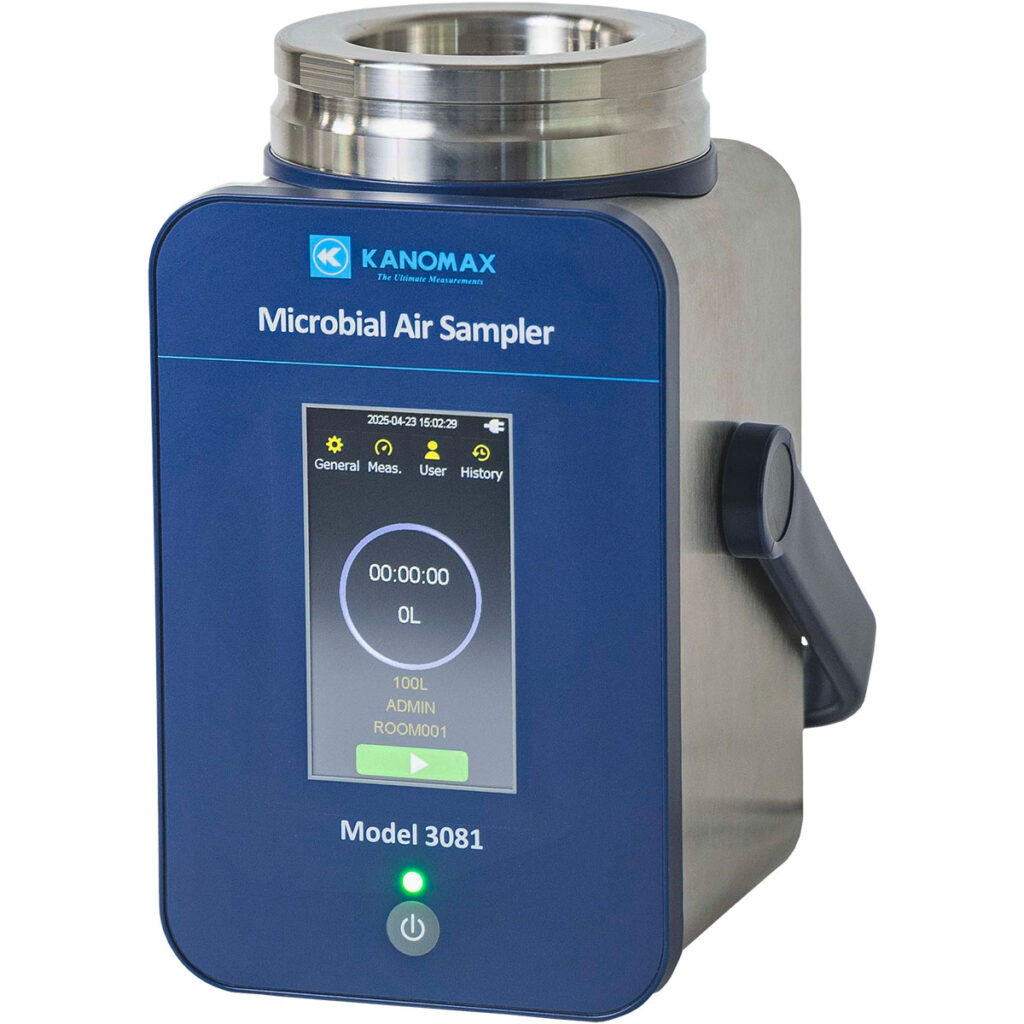
The Kanomax 3080 Series collects airborne microorganisms onto culture media using inertial impaction. Kanomax specifies a nominal 100 L/min sampling flow with ±2.5% accuracy. Culture processing and interpretation follow the laboratory’s qualified procedures.
Rapid Microbial Methods: What They Can and Cannot Do
Rapid microbial methods, often shortened to RMMs, aim to detect or enumerate microorganisms faster than incubation allows. Their suitability for any given use depends on validation for that use.
Here is the line that matters: an RMM result is only as good as its validation for your specific product, matrix, and organism panel. A method that detects one organism quickly may miss another entirely.
Suitability and validation of any rapid method belong to your qualified microbiology and QA personnel, not to the equipment vendor.
If you are weighing a rapid approach against your current workflow, it helps to see the sampling hardware in context. Our Microbial Air Sampler – 3080 Series page shows its flow and data features.
Viable and Nonviable Particle Counting: Know the Difference
Viable and nonviable particle counting answer two different questions, and confusing them is one of the most common mistakes we see. A nonviable particle counter measures airborne particles by size, using light scattering. It cannot tell you whether a particle is a live bacterium, a dead one, or a fleck of dust.
A viable count, by contrast, requires a method that detects living organisms, typically culture or a validated rapid method.
Conventional light-scattering-only particle counting provides particle-size and number data for classification and trend monitoring, not a determination of viability. Biofluorescent systems use additional detection capabilities and require method-specific interpretation and validation.
Watch out: presenting a nonviable particle count as evidence of microbial control, or as proof that a surface is sterile, is a claim your QA team cannot defend. Keep the two metrics separate in your reports and your SOPs.
Comparison Table: Microbial Monitoring Methods at a Glance
The table below summarizes how the main method categories differ on detection principle and operational fit.
|
Method |
Detection Principle |
What It Measures |
Typical Time to Result |
Sample Type |
Relative Sensitivity and Organism Coverage |
Operational Fit and Validation Burden |
Replaces Culture? |
|---|---|---|---|---|---|---|---|
|
Culture-based sampling |
Growth on nutrient media |
Viable organisms that grow under your conditions |
Days |
Air, surface, water, product |
Recovers culturable organisms; slow or non-culturable organisms may be missed |
Well understood; high audit familiarity; validation is the baseline |
Baseline method |
|
Growth-based rapid methods |
Faster detection of growth or metabolic activity |
Viable organisms, faster detection |
Hours to days |
Air, surface, water, product |
Depends on organism panel and matrix; comparability to culture must be shown |
Moderate validation burden; intended use must be defined |
Only after validation |
|
Viability staining |
Live vs. dead cell discrimination |
Live vs. dead cells |
Hours |
Liquid samples, process streams |
Detects viable but non-culturable cells; organism coverage depends on stain and panel |
Moderate validation burden; matrix effects can interfere |
Only after validation |
|
Nucleic acid methods |
Amplification of genetic material |
Genetic material from target organisms |
Hours |
Air, surface, water, product |
Highly specific for target sequences; does not distinguish live from dead without additional steps |
Higher validation burden; contamination and inhibition controls needed |
Only after validation |
|
Nonviable particle counting |
Light scattering by particles |
Airborne particles by size |
Near-instant |
Air |
Cannot distinguish viable from nonviable; no organism coverage |
Low validation burden for particle counting; not a microbiological method |
No |
|
Continuous environmental monitoring |
Sensors for particles, pressure, temperature, humidity |
Environmental parameters |
Continuous |
Air, facility |
Indirect; no viable organism detection |
Low validation burden for parameters; supports oversight, not sterility |
No |
Culture and validated rapid methods address microbiological questions. Conventional light-scattering-only counters and facility-parameter sensors provide different measurements. Biofluorescent systems can add real-time viable-particle indications; evaluate each technology separately rather than treating every optical or continuous instrument as equivalent.
When you compare methods, ask which detection principle each one uses, what sample type it accepts, and what evidence exists for organism coverage in your matrix. Those three questions will eliminate most options before you spend time on validation planning.
Biotech Environmental Monitoring: Matching Method to Workflow
Biotech environmental monitoring works best when the method matches the workflow it feeds. A continuous monitoring system tracks facility conditions around the clock, while grab samples answer the point-in-time question a batch record needs.
In practice, most biotech facilities run a layered program. Continuous sensors watch particle counts, differential pressure, temperature, and humidity. Periodic viable sampling confirms the microbiological state. Rapid methods, where validated, shorten specific decision loops.
The mistake is treating these layers as interchangeable. They are not. Each answers a different question, and each has a different validation burden.
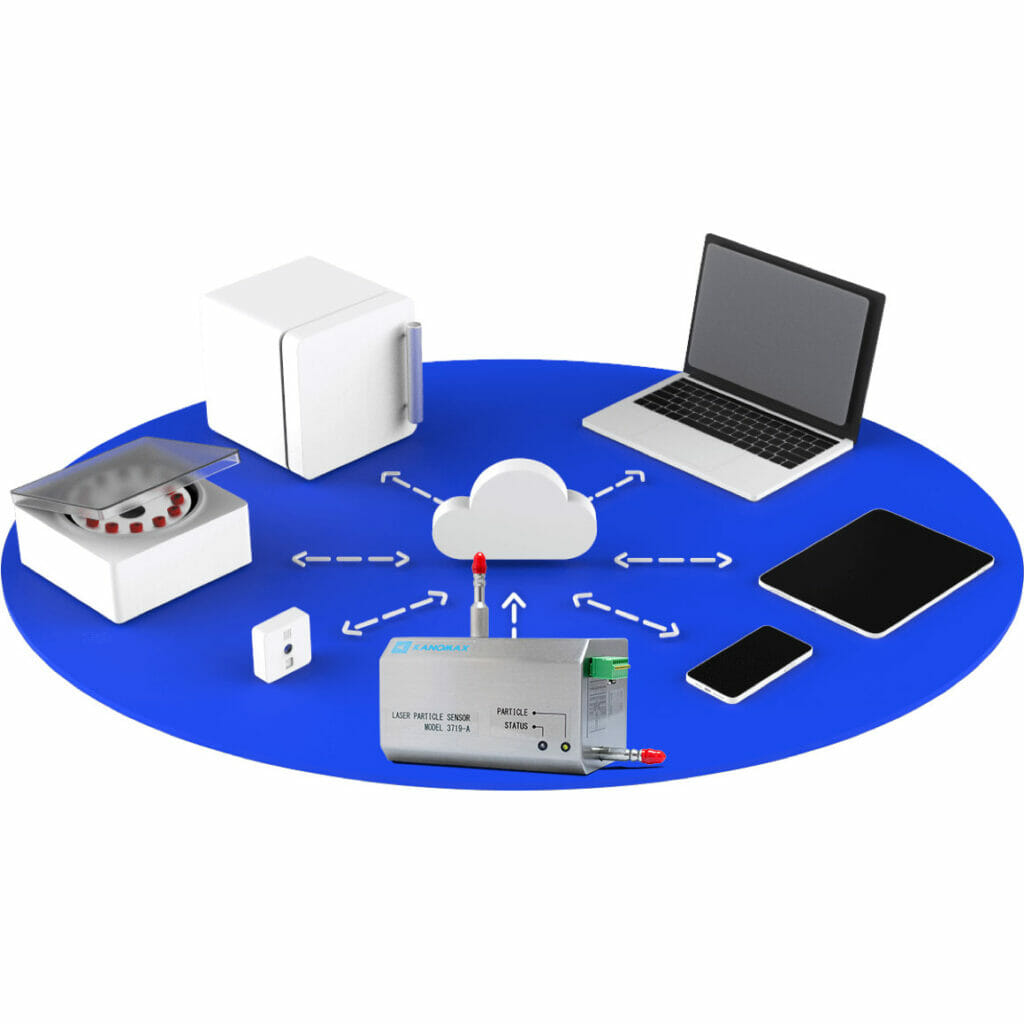
The Kanomax CRMS, available through Applied Physics, can be configured to monitor airborne particle counts, differential pressure, temperature and humidity. Confirm sensors, reporting, alarms and deployment scope in the quotation. Environmental measurements alone do not establish microbial control or regulatory compliance.
Validation and Regulatory Acceptance: What Qualifies a Method
Validation determines whether a method is suitable for its intended use. That is a microbiology and QA judgment, and no vendor or equipment purchase can make it for you.
Cleanroom Monitoring System – Model CRMS →
A practical way to frame the work is to separate three questions: intended use, comparability, and quality-system fit. Each has its own evidence expectations, and each is owned by your qualified microbiology and QA personnel.
Intended use must be defined first. A method validated for environmental monitoring is not automatically fit for product release testing. Write the intended use in one sentence, including sample type, organism panel, and the decision the result will support. If the intended use changes, the validation evidence may need to change with it.
Comparability to the reference method needs evidence. Your team decides what that evidence looks like, but a common pattern is to compare the new method against your current culture-based method across a panel of organisms and sample types. The comparison should address sensitivity, specificity, time to result, and false positive and false negative behavior. Equivalency is not a single number; it is a body of evidence that your team can defend in an audit.
Documentation must survive audit. Data integrity, traceability, and change control all factor in. Records should show who ran the method, when, on what sample, and with what result. Access control and audit trails matter because a result that cannot be traced is a result that cannot be defended.
Three practical points shape acceptance:
- Define the intended use before you shop. A method that fits environmental monitoring may not fit product testing, and the validation burden follows the intended use.
- Plan the comparability evidence with your QA team. Decide in advance which organisms, matrices, and acceptance criteria will be used to judge the new method against the reference method.
- Map the change control path. Decide how the new method enters the quality system and how the old one exits, including any parallel running period.
FDA guidance on process validation frames validation around documented evidence that a process consistently delivers the intended result, which is the same logic your method validation follows. For teams building out the validation case, our article on how to validate cleanroom contamination controls walks through the control-side questions that sit alongside method validation.
A common mistake is to treat a vendor’s validation package as your validation. It is not. The vendor can supply data, but the suitability decision belongs to your qualified personnel, and the evidence has to fit your facility, your product, and your organism panel. Keep that boundary clear in your planning documents and in your conversations with suppliers.
Detection Limits, False Results, and Organism Coverage
Detection limits, false results, and organism coverage are where method comparisons get honest. Every method has a limit below which it cannot reliably see what you are asking it to find, and every method produces some false positives and false negatives.
Organism coverage is the quieter problem. Culture methods recover what grows under your conditions. Rapid and optical methods detect what they were designed to detect. Neither is universal.
Ask three questions of any method:
- What is the smallest amount it can reliably detect, and was that established for your matrix?
- What does a positive result mean, and what does a negative result fail to rule out?
- Which organisms were included in the validation panel, and which were left out?
A common mistake is assuming a faster method is a more sensitive one. Speed and sensitivity are separate properties, and a rapid method can trade one for the other.
Total Cost of Ownership and Implementation Reality
Total cost of ownership for a monitoring method runs well past the purchase price. It includes consumables, calibration, training, data systems, and the staff time that validation and routine operation demand.
Implementation reality adds two more costs that budgets often miss. The first is the validation effort itself, which can tie up microbiology and QA resources for an extended period. The second is the change control work of retiring or running parallel with an existing method.
We would rather you plan for these openly than discover them mid-project. A method that looks affordable on a quote can carry a heavy operational tail.
The practical move is to cost the full lifecycle before you compare options. Consumables per sample, calibration intervals, and the labor hours behind each result usually decide the comparison, not the sticker price.
Contamination Monitoring vs. Process-State Monitoring
Contamination monitoring and process-state monitoring are different jobs, and treating them as one leads to bad equipment decisions. Contamination monitoring asks whether microorganisms are present in your environment or product. Process-state monitoring asks whether your process parameters are where they should be.
Process-state monitoring leans on sensors for pH, dissolved oxygen, temperature, and pressure. An oxygen sensor or pH electrode tells you about the process, not about microbial contamination. Those signals can correlate with conditions that favor growth, but correlation is not detection.
This is where a lot of real-time microbial monitoring alternatives for biotech get oversold. For a deeper look at the control-side strategy, see our article on cleanroom contamination control strategies for biotech. Continuous process data is genuinely useful for bioprocess control. It does not tell you whether live bacteria are present.
ISPE guidance on contamination control strategy treats contamination control as a deliberate, documented strategy rather than a single instrument reading, which is the right frame for separating these two functions.
Your Practical Requirements Checklist Before Selecting Equipment
Use this checklist to define what you need before you talk to any vendor. When you reach the equipment selection stage, our cleanroom testing equipment buyer’s guide for labs walks through the options. Fill it in with your microbiology and QA leads, and treat it as the brief that shapes every equipment conversation.
- Intended use stated in one sentence. Environmental monitoring, process support, or facility oversight.
- Organism panel defined. Which organisms must the method detect, and which are out of scope.
- Detection limit requirement documented. What the smallest detectable amount must be for your matrix.
- Validation owner named. The qualified person accountable for suitability and validation.
- Comparability evidence plan. How you will show the method performs against your reference method.
- Data integrity requirements listed. Records, traceability, access control, and audit trail needs.
- Workflow fit confirmed. Sampling location, frequency of use, and who operates the equipment.
- Lifecycle cost modeled. Consumables, calibration, training, and staff time across the full term.
- Change control path mapped. How the new method enters and how the old one exits.
- Regulatory basis checked against current sources. Confirm requirements against the official text, not a summary.
Selecting a monitoring method is a decision your microbiology and QA teams own, and the equipment has to serve that decision rather than lead it. Applied Physics supplies contamination control equipment and standards, including microbial air samplers and cleanroom monitoring systems. If you are defining requirements for a sampling or monitoring setup, contact us to discuss the equipment that fits your workflow, with the understanding that method suitability and validation remain with your qualified personnel.
Frequently Asked Questions
What are the alternatives to culture-based microbial monitoring in biotech?
Rapid microbial methods can support defined microbiological uses when appropriately validated. Conventional light-scattering particle counting is a complementary environmental measurement, not a direct substitute for viable sampling. Qualified microbiology and QA personnel should determine suitability.
Can rapid microbial methods provide real-time results?
Some biofluorescent instruments provide real-time airborne viable-particle indications. These results are not interchangeable with culture counts or organism identification. Evaluate detection limits, organism coverage, interference and validation evidence for the intended use.
Can optical particle counters detect viable microorganisms?
Conventional light-scattering-only particle counters measure particle size and number but do not determine viability. Biofluorescent systems add a different detection capability; their results require method-specific interpretation and validation.
What should biotech teams consider when selecting a microbial monitoring method?
Consider detection limits, organism coverage, time to result, validation requirements, workflow fit, and total cost of ownership. Also evaluate whether the method is for contamination monitoring or process-state monitoring, and whether it supports your biotech environmental monitoring program. Involve qualified microbiology and QA personnel early to ensure the method is suitable and can be validated. Applied Physics supplies equipment such as the Microbial Air Sampler 3080 Series, but we do not claim regulatory compliance or validation outcomes.