
A Portable Particle Counter is a specialized device used to detect and measure airborne particles in different environments, such as cleanrooms, laboratories, hospitals, and industrial settings.
These devices help monitor air quality by identifying contaminants that can affect sensitive processes, human health, or product quality. Equipped with advanced laser-based sensors, they can accurately count particles of varying sizes in real-time, providing crucial data for contamination control.
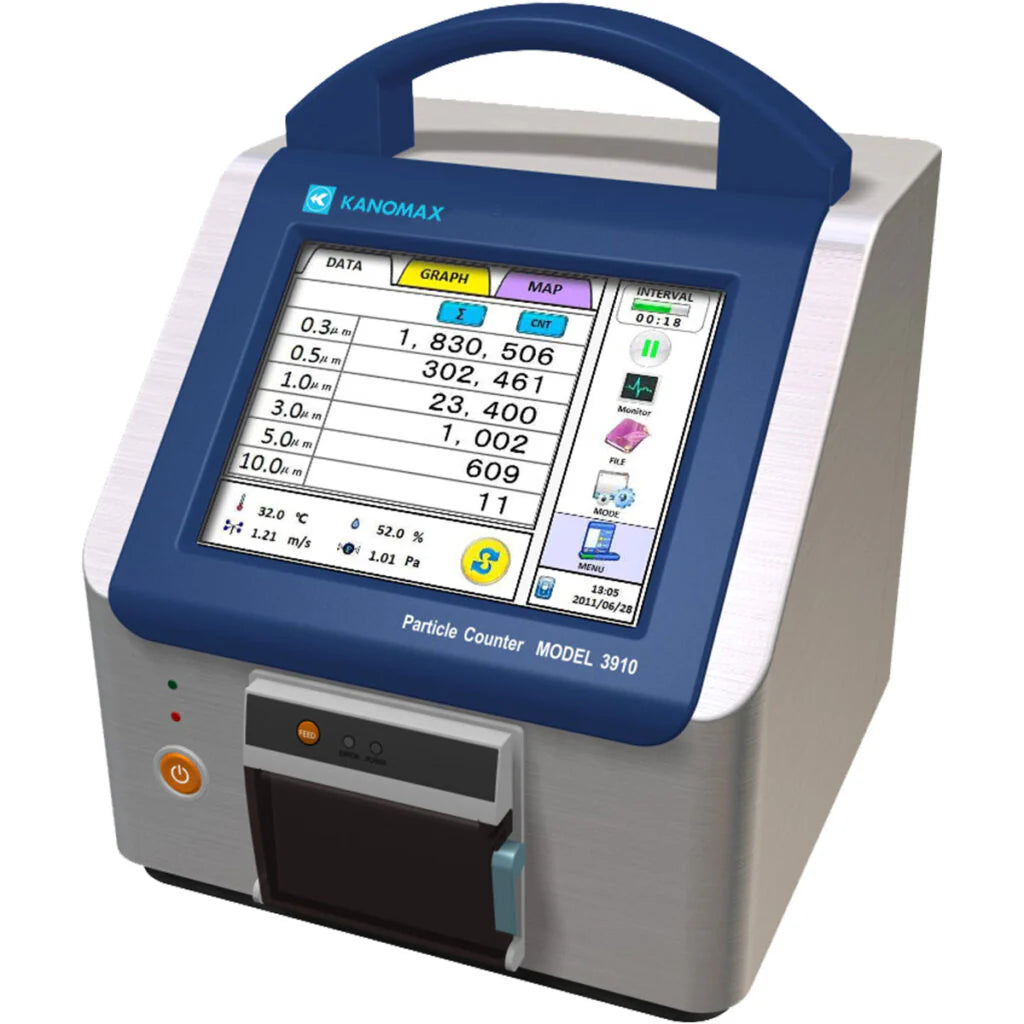
Many models include touchscreens, data logging, and compliance with industry standards like ISO 21501-4, making them essential for industries requiring strict environmental monitoring. Portable and easy to use, these devices ensure efficient air cleanliness validation and help maintain high-quality standards in controlled environments.
It draws in air through an internal pump and passes it through a laser-based optical sensor. As the air flows through the detection chamber, the particles present in it scatter the laser light.
The device measures this scattered light to determine the number and size of airborne particles. Advanced sensors and algorithms analyze the light intensity and angle to categorize the particles into different size ranges, typically measured in microns (µm).
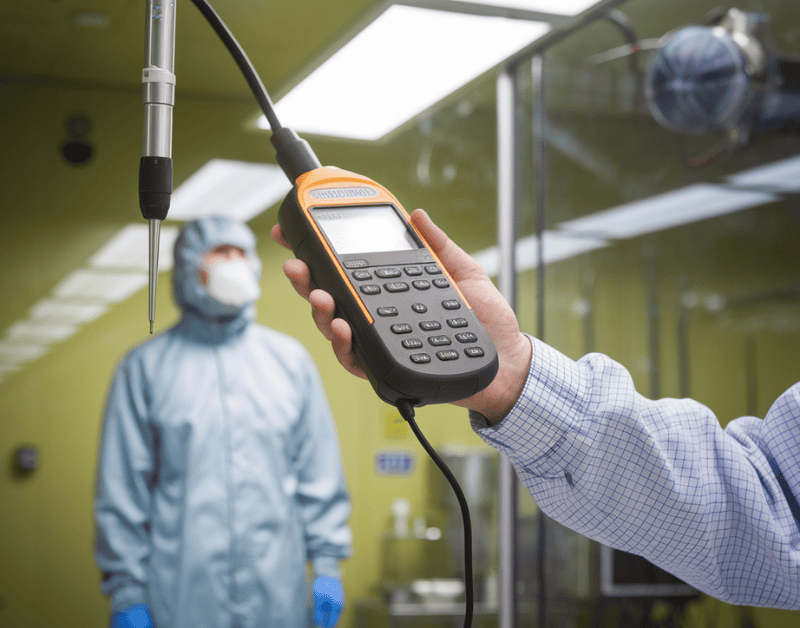
The collected data is displayed on a screen and can also be stored for further analysis. Modern portable particle counters come equipped with real-time monitoring, data logging, and compliance with industry standards like ISO 21501-4.
These features make them essential for detecting contamination in cleanrooms, pharmaceutical manufacturing, hospitals, and HVAC systems.
High Sensitivity and Accuracy – Portable particle counters use advanced laser-based sensors to detect and measure airborne particles as small as 0.1 microns, ensuring precise air quality monitoring.
Multiple Particle Size Detection – These devices can measure and classify particles in multiple size ranges (e.g., 0.3 µm, 0.5 µm, 1.0 µm, 5.0 µm), providing detailed contamination analysis.
Real-Time Monitoring & Data Logging – Built-in data storage and real-time monitoring allow users to track particle levels continuously. Many models offer USB, Ethernet, or Wi-Fi connectivity for easy data transfer.
User-Friendly Interface – Most modern units feature large touchscreen displays, intuitive navigation, and programmable settings for quick operation and customization.
Compliance with Industry Standards – Designed to meet international standards like ISO 21501-4, GMP, and 21 CFR Part 11, ensuring reliable and regulatory-approved measurements for cleanrooms and controlled environments.
Portable & Lightweight Design – Compact and ergonomic designs make these counters easy to transport and operate in different locations, from laboratories and hospitals to industrial cleanrooms.
Battery-Powered Operation – Many models feature long-lasting rechargeable batteries, enabling field use without constant power supply dependency.
Environmental Monitoring Capabilities – Some models include additional sensors to measure temperature, humidity, and air velocity, providing a more comprehensive air quality assessment.
Customizable Alarm & Alert System – Built-in alarms notify users when particle levels exceed predefined thresholds, helping ensure immediate corrective actions in contamination-sensitive environments.
Data Export & Remote Access – Advanced units support cloud integration and remote monitoring, allowing users to access reports and analysis from anywhere.
Choose a model that can detect the smallest particles required for your environment. For cleanrooms and pharmaceutical industries, a 0.1 – 0.3 µm sensitivity is ideal, while general air quality monitoring may only need 0.5 – 5.0 µm detection.
The higher the flow rate, the faster the device can analyze air samples. A 1.0 CFM (28.3 LPM) unit is sufficient for most applications, but industries requiring rapid sampling may prefer a 50 LPM or higher model.
More channels allow for simultaneous detection of different particle sizes, providing a detailed contamination profile. Most advanced counters offer six or more channels for comprehensive analysis.
Ensure the device meets regulations like ISO 21501-4, GMP, and 21 CFR Part 11, especially for pharmaceutical, medical, and semiconductor applications.
If mobility is important, opt for a lightweight model with a long battery life (4–8 hours or more) to support extended field use.
Choose a counter with built-in memory, USB, Wi-Fi, or cloud integration for easy data storage and remote monitoring. This feature is crucial for regulatory documentation and analysis.
Some models offer additional sensors for temperature, humidity, and air velocity, making them more versatile for complete air quality assessment.
A large touchscreen display, intuitive navigation, and customizable settings improve ease of use, reducing training time and operational errors.
Look for models with programmable visual and audio alarms to quickly identify contamination spikes and ensure proactive response.
A robust design with easy-to-clean and maintain components ensures longevity and reliability, even in demanding environments.
| Feature | LaserAir 100 | PureCount Pro | CleanScan 200 | AirCheck X1 |
|---|---|---|---|---|
| Particle Size Sensitivity | 0.1 µm – 5.0 µm | 0.3 µm – 10.0 µm | 0.1 µm – 5.0 µm | 0.2 µm – 25.0 µm |
| Flow Rate | 28.3 LPM (1.0 CFM) | 50 LPM (1.77 CFM) | 28.3 LPM (1.0 CFM) | 100 LPM (3.53 CFM) |
| Particle Size Channels | 6 channels | 4 channels | 8 channels | 6 channels |
| Compliance Standards | ISO 21501-4, GMP | ISO 21501-4 | ISO 21501-4, 21 CFR | ISO 21501-4, GMP |
| Battery Life | 6 hours | 8 hours | 4 hours | 10 hours |
| Data Logging | 10,000 samples | 5,000 samples | 20,000 samples | 15,000 samples |
| Connectivity | USB, Wi-Fi | USB | USB, Ethernet | USB, Wi-Fi, Cloud |
| Environmental Sensors | Temperature, Humidity | None | Temperature | Temperature, Humidity |
| Alarm System | Visual & Audio | Visual | Visual & Audio | Visual & Audio |
| Weight | 1.5 kg | 2.0 kg | 1.2 kg | 2.5 kg |
When measuring airborne particles, several essential specifications determine the accuracy and efficiency of a Portable Particle Counter. Particle size sensitivity is crucial, as high-precision models detect particles as small as 0.1 microns, essential for cleanrooms and pharmaceutical environments.
Flow rate capacity affects sampling speed, with 1.0 CFM (28.3 LPM) or higher ensuring fast and reliable measurements. Some particle size channels allow for the simultaneous detection of different particle sizes, providing a detailed contamination profile.
Industry compliance, such as ISO 21501-4 and 21 CFR Part 11, ensures regulatory-approved accuracy. Data logging and connectivity features, including USB, Wi-Fi, and cloud integration, enable real-time monitoring and efficient data transfer.
Battery life and portability are key for field applications, allowing extended use without a constant power supply. Lastly, additional environmental sensors for temperature, humidity, and air velocity provide a comprehensive air quality assessment for precise contamination control.
Compliance is crucial when selecting a Particle Counter because it ensures accuracy, reliability, and adherence to industry standards. Certifications like ISO 21501-4, GMP, and 21 CFR Part 11 guarantee that the device meets regulatory requirements for pharmaceutical, cleanroom, and industrial applications.
A compliant particle counter provides consistent, traceable, and validated measurements, reducing the risk of contamination and regulatory penalties. Choosing a certified model helps maintain quality control, data integrity, and environmental monitoring precision in sensitive industries.
Particle counters are essential tools for monitoring airborne contaminants and ensuring quality control in industries where cleanliness and air purity are critical. In the pharmaceutical and biotechnology sectors, they help maintain sterile environments by detecting microscopic particles that could compromise drug safety and production quality.
Semiconductor and electronics manufacturers rely on them to prevent contamination that can cause defects in microchips and circuits. Hospitals and healthcare facilities use particle counters to monitor air quality in operating rooms, isolation wards, and laboratories, reducing the risk of airborne infections.

In the HVAC industry, they assess indoor air quality, ensuring compliance with safety standards and improving ventilation systems. The food and beverage industry utilizes them to maintain hygiene standards by detecting potential contaminants in packaging and processing areas.
Aerospace and automotive industries require precise air quality control in manufacturing processes to prevent defects in sensitive components. Additionally, environmental monitoring agencies use particle counters to track air pollution levels, ensuring compliance with air quality regulations.
With their ability to provide real-time data, regulatory compliance, and contamination control, particle counters are indispensable across industries that demand precision, safety, and high-quality standards
Particle Counters are used in cleanrooms to monitor air cleanliness and particle contamination. These devices detect particles of various sizes in the air and ensure compliance with ISO 14644-1 cleanroom standards.
Portable counters are used for routine air quality checks, while fixed or remote systems provide real-time monitoring. During cleanroom validation, they verify the efficiency of HEPA and ULPA filters. They are crucial in the pharmaceutical, semiconductor, and biotechnology industries for maintaining contamination control and GMP compliance.
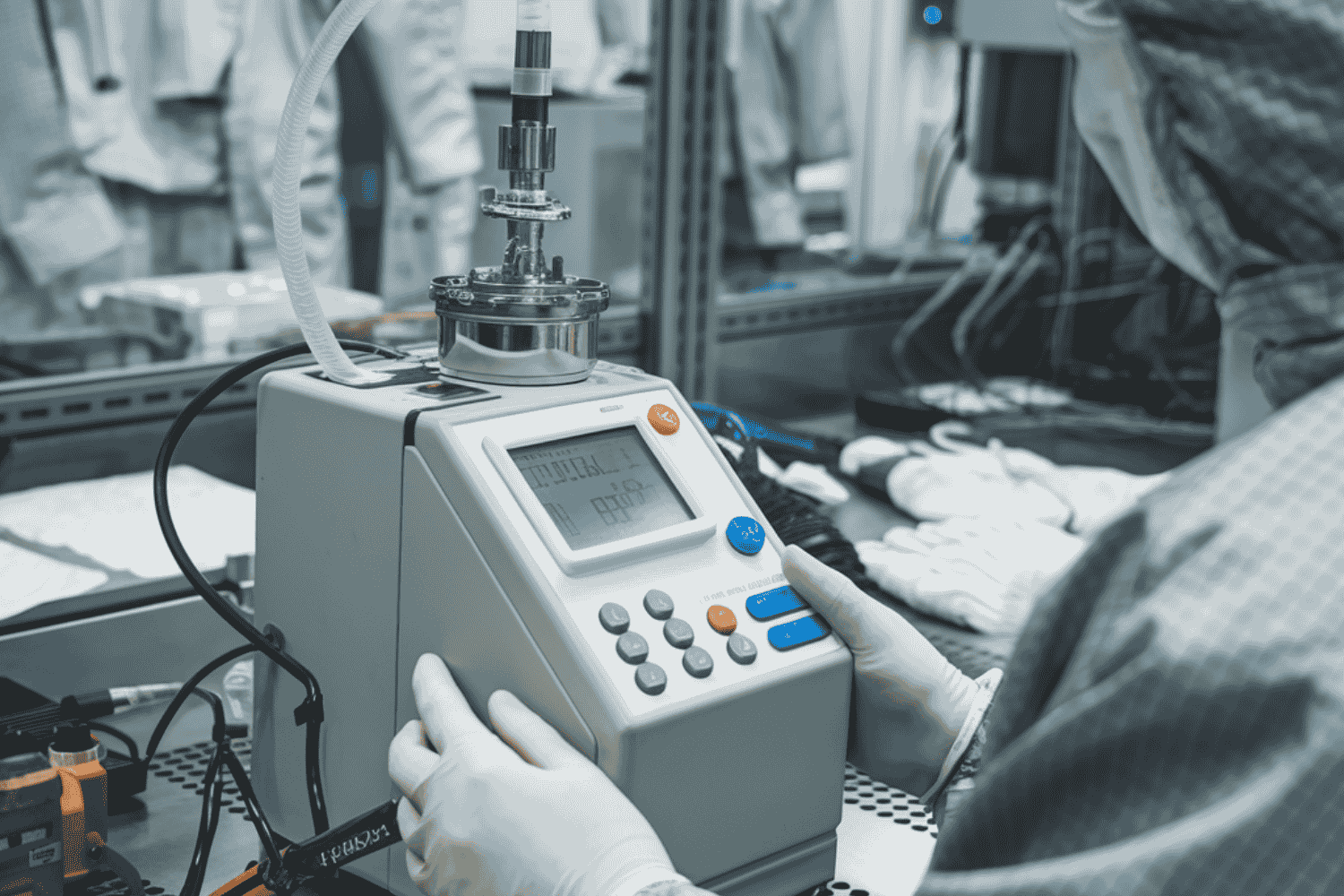
Additionally, they detect leaks in air handling systems and assess the effectiveness of cleaning protocols. Particle Counters are essential tools for maintaining controlled environments in cleanrooms.
Particle Counters in pharmaceutical manufacturing monitor air cleanliness and particle contamination to ensure compliance with GMP and FDA standards. These devices detect airborne particles in cleanrooms, reducing the risk of contamination during drug production. Additionally, they verify the efficiency of HEPA filters and help maintain a controlled environment for sensitive processes
Handheld Particle Counters have many advantages, especially in places where monitoring air quality is crucial. These are small, portable devices that can be used easily without needing a large setup.
Their biggest benefit is that they provide real-time data, allowing instant detection of the number of particles present in the air. They are widely used in industrial, medical, and cleanroom environments as they help assess air cleanliness and control pollution.
Their sensitivity is also high, enabling them to detect even the smallest impurities. Additionally, they have a user-friendly interface, making them easy to use even for people without technical knowledge.
The field of particle counting is rapidly evolving with cutting-edge technologies enhancing accuracy and efficiency. Advanced laser sensors now detect ultrafine particles as small as 0.1 µm, while AI and machine learning algorithms analyze data patterns to predict contamination risks.
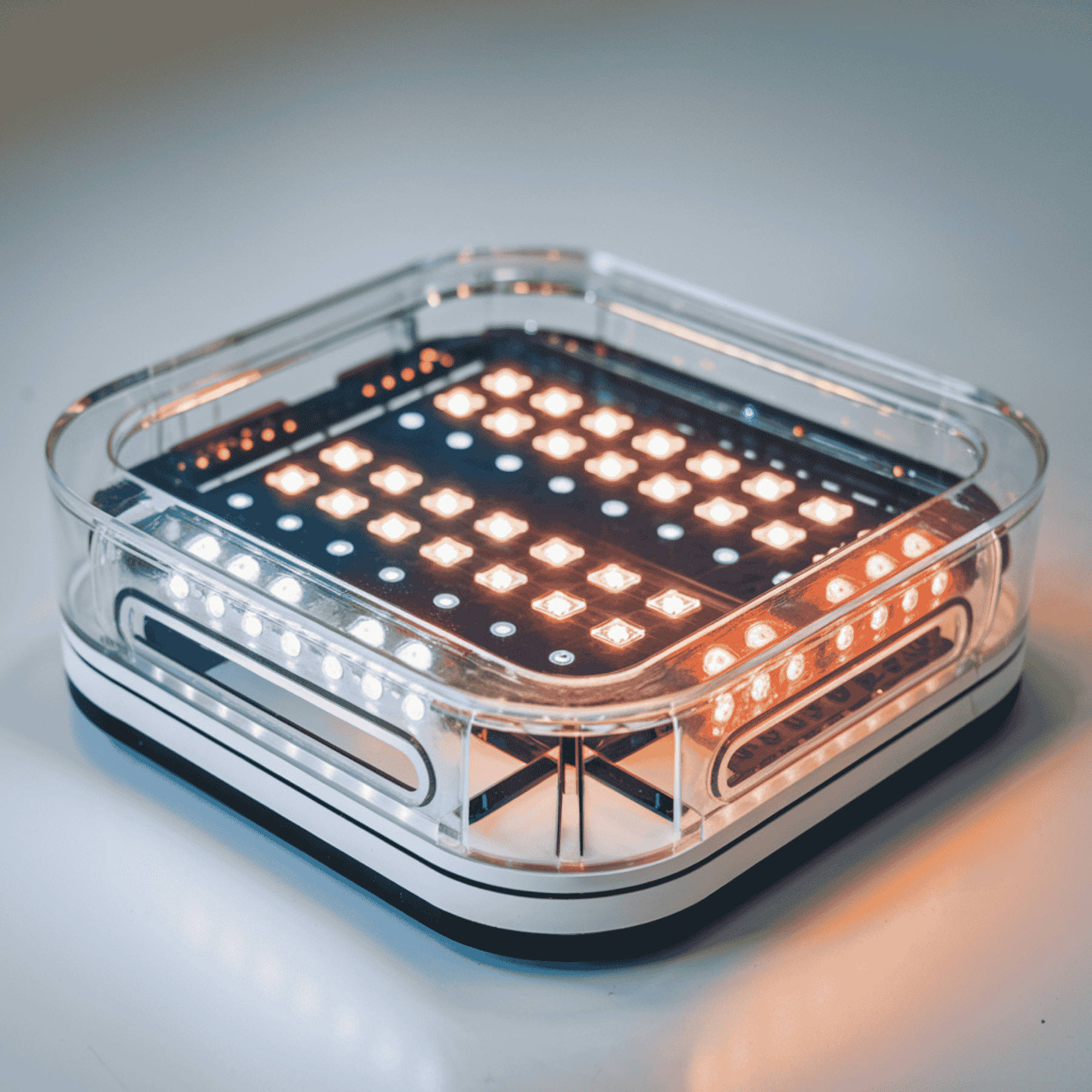
IoT-enabled devices offer real-time monitoring and cloud integration, allowing remote access and seamless data sharing. Portable and handheld models with multi-parameter capabilities measure not only particles but also temperature, humidity, and air velocity.
User-friendly interfaces and mobile apps simplify operation, making particle counters more accessible. These innovations are revolutionizing industries like pharmaceuticals, semiconductors, and healthcare, ensuring higher precision in contamination control and compliance with global standards
Regular maintenance of particle counters is crucial to ensure their longevity and optimal performance. Start by cleaning the sampling inlet and sensor chamber frequently to prevent dust buildup and contamination.
Inspect and replace filters and tubing periodically to maintain proper airflow and avoid blockages. Always store the device in a clean, dry environment to protect it from damage. Ensure that the battery is charged and replaced as needed to avoid disruptions during operation.

Train staff on proper handling techniques to minimize wear and tear. Document all maintenance activities for compliance and audit purposes. By following these steps, you can extend the lifespan of your particle counter and maintain its accuracy in critical environments like cleanrooms and laboratories.
Calibration is a critical process to ensure the accuracy and reliability of particle counters. It should be performed annually or as per the manufacturer’s guidelines, using certified calibration aerosols.
Calibration verifies that the device meets industry standards like ISO 21501-4 and GMP. Always follow the manufacturer’s instructions for calibration procedures to avoid errors. Document calibration results and maintain a record for regulatory compliance and audits.
If the device shows inconsistent readings, recalibrate it immediately. Proper calibration ensures that the particle counter provides precise data, which is essential for maintaining air quality in sensitive environments like pharmaceutical manufacturing and cleanrooms.
Each particle counter comes with specific guidelines from the manufacturer. Generally, annual (yearly) calibration is recommended.
Calibration frequency is often determined by standards like ISO 21501-4 and GMP.
If the device is used daily, calibration may be required every 6 months.
In industries like cleanrooms, pharmaceutical manufacturing, or semiconductor production, quarterly (every 3 months) calibration might be necessary.
If the device undergoes repairs or maintenance, it should be calibrated before reuse.
If the device shows inconsistent or abnormal readings, immediate calibration is required.
Some industries have regulatory bodies that mandate specific calibration schedules.
If the device is used in harsh environments (e.g., high humidity, dust, or extreme temperatures), more frequent calibration may be needed.
Regularly clean the sampling inlet and sensor chamber.
Inspect and replace filters and tubing.
Store the device in a clean, dry environment.
Check and replace the battery as needed.
Train staff on proper handling.
Document all maintenance activities.
Portable particle counters are essential tools for accurate air quality monitoring, offering real-time data on particulate matter (PM) levels in various environments. Whether for industrial, commercial, or personal use, these devices help ensure compliance with air quality standards and promote healthier living and working conditions.
When choosing the best portable particle counter, consider factors such as accuracy, range of particle sizes measured, ease of use, data logging capabilities, and portability. Some of the top models on the market include the Fluke 985, TSI AeroTrak 9306, and Met One Instruments GT-526S. Investing in a reliable particle counter can significantly enhance your ability to monitor and improve air quality effectively.
1. How often should I calibrate my portable particle counter?
Calibration frequency depends on the manufacturer’s recommendations and usage intensity. Generally, it is advised to calibrate the device every 6 to 12 months to ensure accurate and reliable measurements. Always refer to the user manual for specific guidelines.
2. Why is accurate air quality monitoring important?
Accurate air quality monitoring is crucial for ensuring a healthy environment, especially in workplaces, hospitals, and homes. It helps in identifying pollutants, complying with regulations, and taking necessary actions to improve air quality.
3. What particle sizes can portable particle counters measure?
Portable particle counters can measure a range of particle sizes, typically from 0.3 microns up to 10 microns. Some advanced models can measure even smaller particles, providing more detailed air quality data.
4. How do I choose the best portable particle counter?
When choosing a portable particle counter, consider factors such as accuracy, the range of particle sizes it can measure, ease of use, data logging capabilities, battery life, and portability. Also, consider the specific environment where it will be used.
5. Can portable particle counters be used in different environments?
Yes, portable particle counters are versatile and can be used in various environments, including industrial settings, cleanrooms, offices, hospitals, and homes. However, it’s essential to choose a model that suits the specific requirements of the environment you intend to monitor.
APPLIED PHYSICS TECHNICAL RESOURCE
Airflow visualization, smoke studies, tracer delivery, particle monitoring and controlled-environment validation. Product and standards references should be interpreted for the actual instrument, facility, protocol and configuration.

Enter your details below to save your shopping cart for later. And, who knows, maybe we will even send you a sweet discount code :)
Allow notifications to get real-time updates about your shopping cart and who knows, you may even receive a sweet discount code 😊