Description
Count Precision Standards provide a stable, pre-diluted reference standard for calibrating, verifying, and qualifying liquid optical particle counters without manual dilution errors. Accurate particle counter validation requires both precise size calibration and exact concentration verification; these standards deliver both in an ultra-clean aqueous matrix.
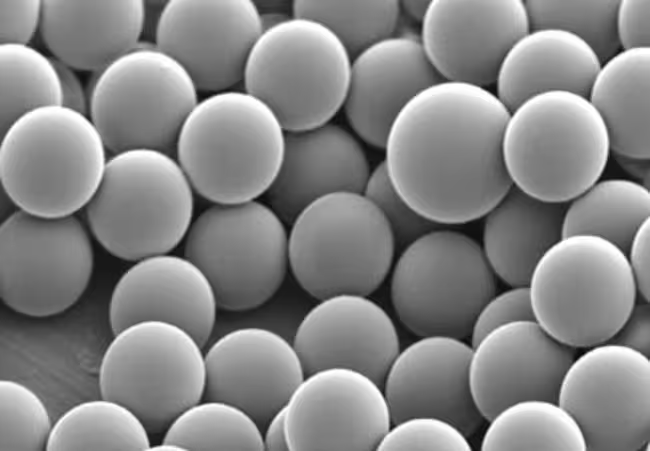
Each size standard uses highly uniform spherical polystyrene microspheres calibrated directly against National Institute of Standards and Technology (NIST) Standard Reference Materials. Suspensions are packaged in low-particulate dispensing bottles to eliminate background particle contamination. Because they require no tare measurements, serial dilutions, or specialized dispersants, these standards ensure batch-to-batch repeatability across cleanroom monitoring, pharmaceutical injection testing (USP <788>), and fluid power analysis.
Key Features
Direct NIST Traceability: Mean diameter and particle count concentrations are certified traceable to NIST reference materials.
Pre-Diluted & Ready-to-Use: Formulated at a precise particle concentration (~2,000 particles/mL) to eliminate manual dilution steps and operator-induced variance.
Monodisperse Size Uniformity: Ultra-low coefficient of variation (CV) produces sharp calibration peaks for accurate channel threshold setting.
Low-Background Matrix: Prepared in 0.2 µm filtered deionized water containing trace dispersing surfactant to minimize particle agglomeration and false-positive background counts.
Compliance Ready: Designed to meet regulatory validation protocols, including USP <788>, USP <789>, EP, JP, ISO 11171, and cleanroom fluid cleanliness audits.
Specifications
| Parameter | Specification |
| Particle Material | Polystyrene / Polymer Microspheres |
| Available Diameters | 2 µm, 5 µm, 10 µm, 15 µm, 20 µm, 25 µm, 30 µm, 50 µm, 70 µm |
| Nominal Concentration | ~2,000 particles/mL (pre-diluted count standard) |
| Carrier Fluid | Filtered deionized water with surfactant and preservative |
| Particle Density | 1.05 g/cm³ |
| Refractive Index | 1.59 @ 589 nm ($25^\circ\text{C}$) |
| Calibration Method | Calibrated against NIST Standard Reference Materials (SRM) |
| Packaging | 100 mL pre-cleaned dropper/pour bottle |
| Particle Shape | Spherical, solid, non-porous |
Diameter & Variant Cross-Reference
| Nominal Diameter | Certified Tolerance | Matrix / Packaging | Primary Testing Standard |
| 2 µm | Calibrated Size Standard | 100 mL Aqueous Suspension | Micro-contamination & semiconductor DI water systems |
| 5 µm | Calibrated Size Standard | 100 mL Aqueous Suspension | Fluid power, hydraulic oils, and filter testing |
| 10 µm | 10.00 ± 0.08 μm | 100 mL Aqueous Suspension | USP <788> / EP injectable particulate verification |
| 15 µm | 10.00 ± 0.08 μm | 100 mL Aqueous Suspension | USP <788> / ISO calibration threshold validation |
| 20 µm | Calibrated Size Standard | 100 mL Aqueous Suspension | Liquid particle counter sizing & resolution verification |
| 25 µm | Calibrated Size Standard | 100 mL Aqueous Suspension | USP <788> threshold verification (large particle limit) |
| 30 µm | Calibrated Size Standard | 100 mL Aqueous Suspension | Optical sensor calibration & fluid qualification |
| 50 µm | Calibrated Size Standard | 100 mL Aqueous Suspension | Coarse particulate detection & hydraulic fluid cleanliness |
| 70 µm | Calibrated Size Standard | 100 mL Aqueous Suspension | Upper-channel liquid particle sensor range verification |
Applications
USP <788> & <789> Verification: Setting threshold channels and validating counting accuracy for light obscuration particle counters used in parenteral drug release.
Liquid Optical Particle Counter (LPC) Calibration: Calibrating sensor resolution, sampling flow rate accuracy, and count efficiency.
High-Purity Water Monitoring: Validating in-line and batch particle counters in semiconductor fabrication and pharmaceutical UPW distribution loops.
Hydraulic & Lubrication Metrology: Verifying liquid counter channels configured for ISO 4406 and ISO 11171 contamination standards.
Handling & Storage
Storage Conditions: Store upright at 2°C to 8°C when not in use. Do not freeze. Freezing destabilizes the suspension and causes permanent agglomeration.
Homogenization: Invert the bottle gently 10 to 15 times or roll slowly before sampling. Avoid vigorous shaking to prevent microbubble formation, which registers as false counts on optical sensors.
Usage: Dispense directly into clean sample beakers or connect directly to the particle counter sampler intake. Do not insert unwashed pipettes or reusable probes into the stock bottle.
Product relationship
Available Through Applied Physics
Applied Physics supplies and supports quotation of this product. Product branding and manufacturer information, where stated on the product page or supporting documentation, remain authoritative.
Applied Physics portfolio: Particle
Catalog relationship: Available Through Applied Physics
Related Applied Physics resources
Continue through the Particle portfolio
Use these technical and portfolio pages to compare applications and related equipment. To keep this exact product attached to an RFQ, use the product’s existing Request a Quote or Add To Order control.