
Description
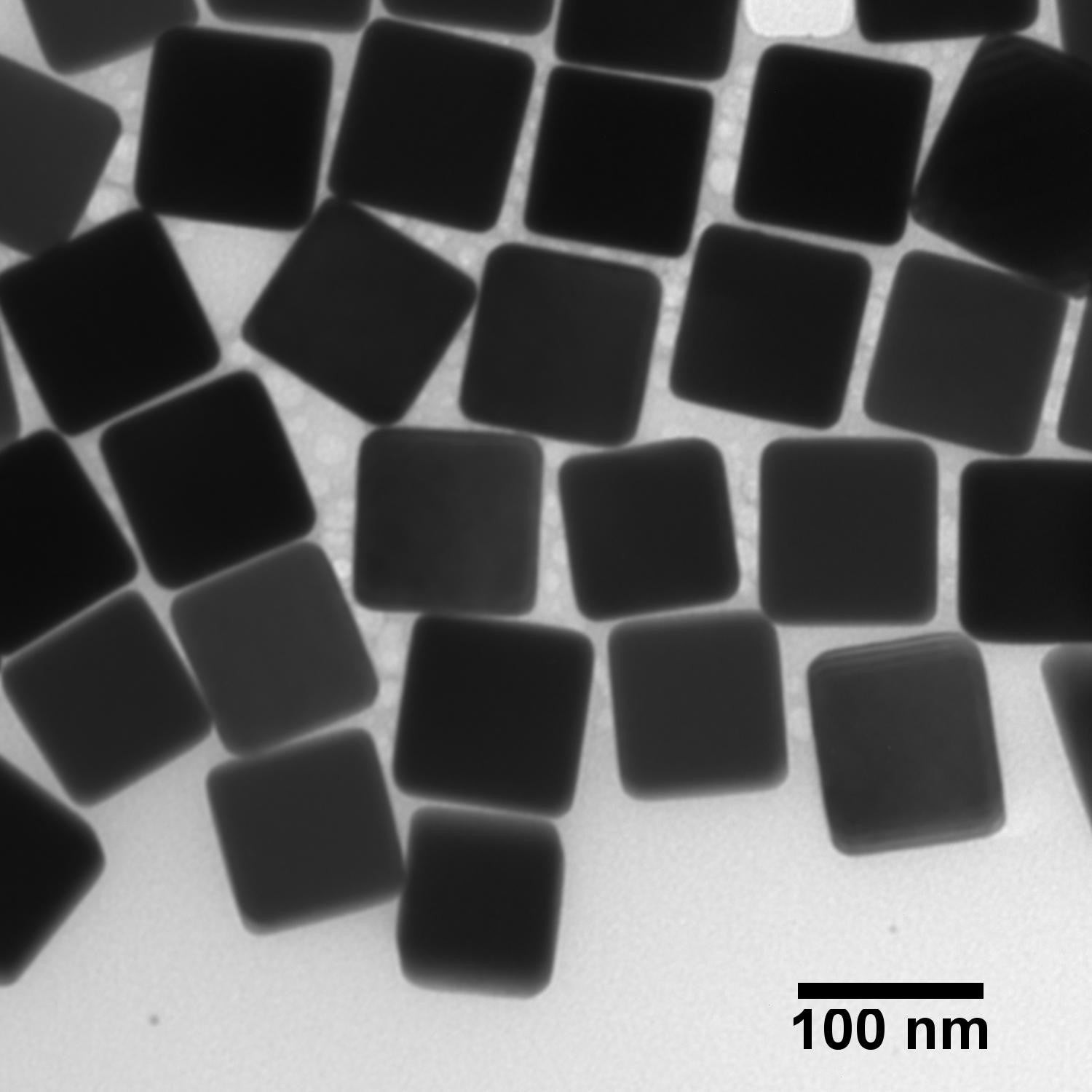
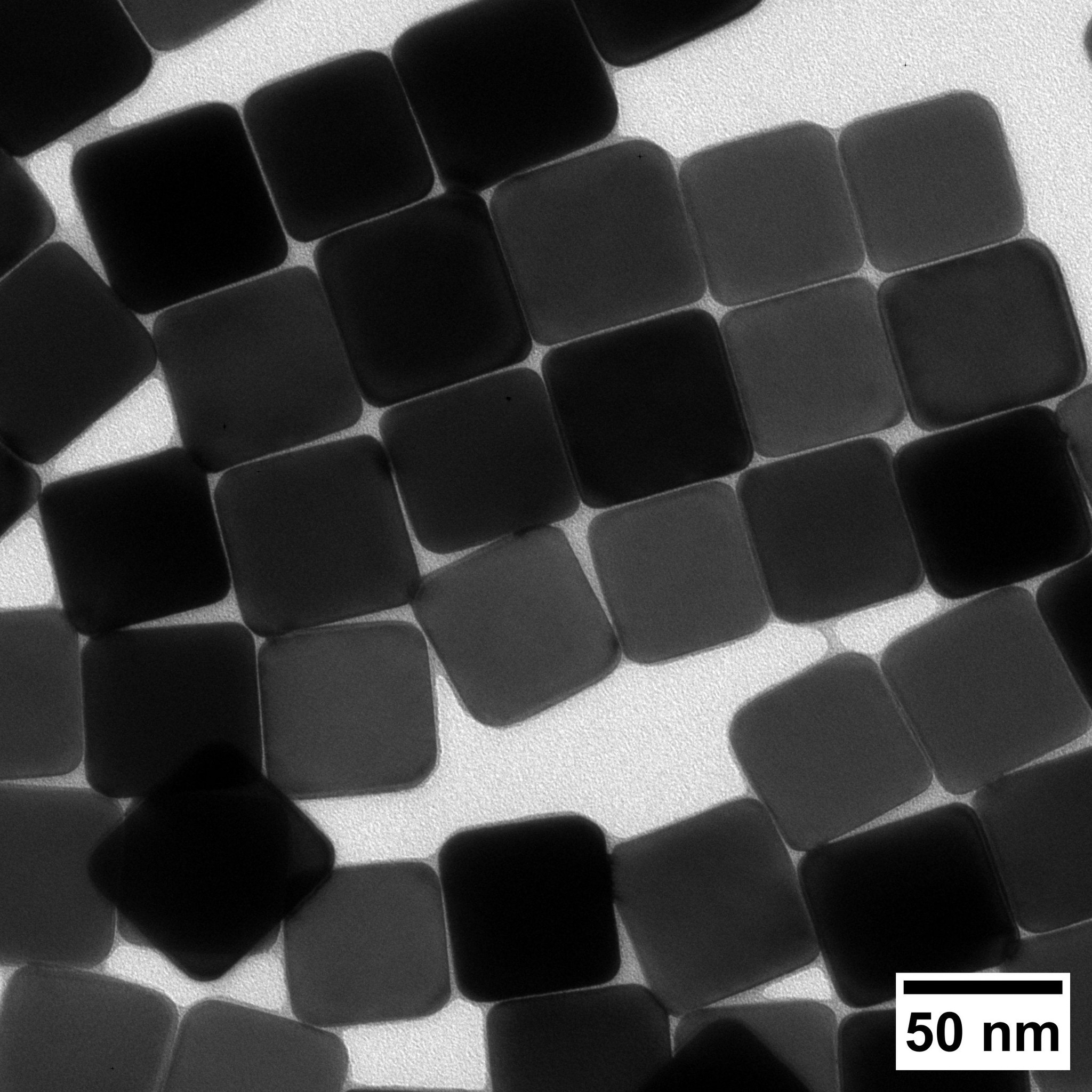
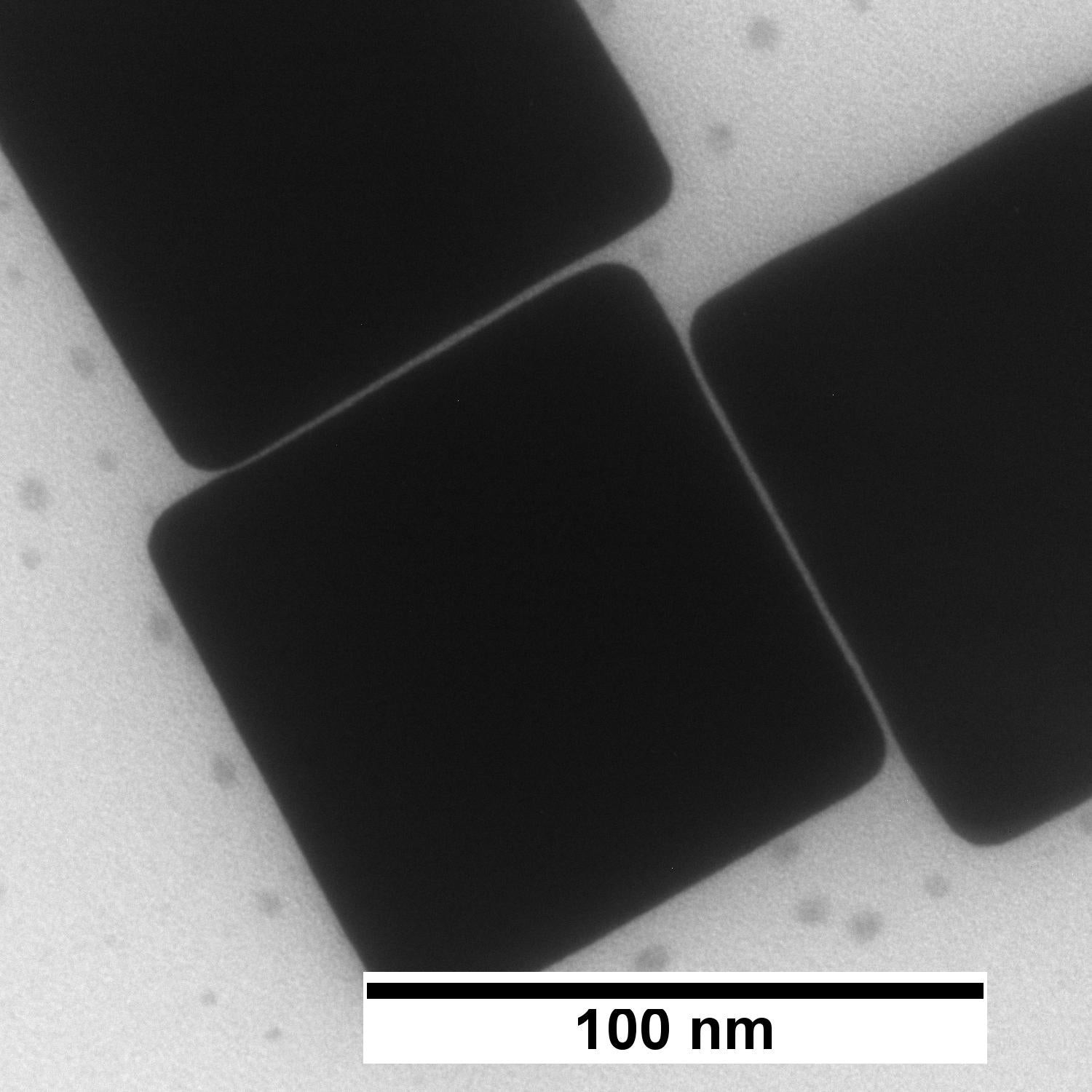
Silver Nanocubes – PVP (55 nm – 100 nm) combine uniform cubic geometry with the superior plasmonic efficiency of metallic silver. Unlike spherical nanoparticles that exhibit a single dipolar plasmon resonance mode, anisotropic nanocubes feature sharp edges and vertices that concentrate electromagnetic fields into high-intensity plasmonic hot spots and support distinct dipolar and quadrupolar resonance modes.
By selecting among the 55 nm, 75 nm, and 100 nm nominal edge lengths, researchers can precisely tune the primary Localized Surface Plasmon Resonance (LSPR) extinction band across the visible spectrum—from 420–470 nm (55 nm cubes) and 440–510 nm (75 nm cubes) up to 460–570 nm (100 nm cubes). Because anisotropic plasmonic modes are highly sensitive to local dielectric changes, these nanocubes deliver exceptional refractive-index sensitivity for label-free molecular sensing and high enhancement factors for SERS substrates.
Each batch is sterically stabilized with a 55 kDa polyvinylpyrrolidone (PVP) polymer coating and supplied at 1.0 mg/mL in pure ethanol. The neutral, high-molecular-weight PVP shell prevents corner rounding, oxidative etching, and irreversible aggregation, maintaining single-particle dispersion across ethanol, polar organic solvents, and aqueous buffer transfers. Every shipment includes a batch-specific Certificate of Analysis (CoA) with Transmission Electron Microscopy (TEM), Dynamic Light Scattering (DLS), Zeta Potential, and UV-Vis characterization data.
Specifications by Size Variant
| Parameter | 55 nm Variant | 75 nm Variant | 100 nm Variant |
| Core Material | Pure Metallic Silver | Pure Metallic Silver | Pure Metallic Silver |
| Particle Morphology | Anisotropic Nanocubes | Anisotropic Nanocubes | Anisotropic Nanocubes |
| Surface Chemistry | Polyvinylpyrrolidone (PVP, 55 kDa) | Polyvinylpyrrolidone (PVP, 55 kDa) | Polyvinylpyrrolidone (PVP, 55 kDa) |
| Nominal Edge Length (TEM) | 55 ± 6nm | 75 ± 6nm | 100 ± 6nm |
| Size Distribution (CV) | ≤15% | ≤15% | ≤15% |
| Hydrodynamic Diameter (DLS) | TEM edge length + 30–60 nm | TEM edge length + 40–70 nm | TEM edge length + 50–80 nm |
| LSPR Peak Wavelength ($\lambda_{\text{max}}$) | 420 – 470 nm | 440 – 510 nm | 460 – 570 nm |
| Zeta Potential | ≤ −5mV | ≤ −5mV | ≤ −5mV |
| Silver Concentration | 1.0 mg/mL | 1.0 mg/mL | 1.0 mg/mL |
| Suspending Solvent | Ethanol (EtOH) | Ethanol (EtOH) | Ethanol (EtOH) |
| Available Fill Volumes | 1 mL, 5 mL, 10 mL, 25 mL | 1 mL, 5 mL, 10 mL, 25 mL | 1 mL, 5 mL, 10 mL, 25 mL |
| Storage Conditions | 2°C to 8°C, dark (Do not freeze) | 2°C to 8°C, dark (Do not freeze) | 2°C to 8°C, dark (Do not freeze) |
Primary Applications
-
Surface-Enhanced Raman Spectroscopy (SERS): Creating dense electromagnetic hot spots at cube corners and face-to-face junctions for ultra-trace chemical, environmental, and biomarker detection.
-
LSPR Refractive-Index Biosensors: Detecting real-time molecular binding events via spectral peak shifts induced by subtle changes in the surrounding refractive index.
-
Plasmonic Photocatalysis & Energy Conversion: Enhancing light harvesting, hot-electron injection, and catalytic reaction rates on semiconductor and thin-film surfaces.
-
Optical Metamaterials & Self-Assembly: Assembling ordered two-dimensional and three-dimensional superlattices, nanoscale waveguides, and anti-counterfeiting optical films.
-
Galvanic Replacement Templates: Serving as sacrificial cubic cores for synthesizing hollow gold-silver nanocages and porous multimetallic nanostructures.
Handling, Storage & Solvent Exchange
-
Storage Conditions: Store upright in tightly sealed amber vials at 2°C to 8°C away from direct light and heat. Do not freeze. Freezing disrupts the polymer hydration layer and induces irreversible particle aggregation.
-
Resuspension Protocol: Larger silver nanocubes (especially 75 nm and 100 nm) settle gradually under gravity during storage. Gently invert or swirl the vial before sampling until fully homogeneous. Avoid prolonged or high-power ultrasonic horn treatment, which can round sharp cube corners and shift the LSPR peak.
-
Oxidation & Chloride Sensitivity: Silver nanostructures are sensitive to dissolved halides (such as chloride ions in PBS) and strong oxidants, which can etch sharp vertices into rounded spheres. Maintain in ethanol or transfer into halide-free aqueous buffers (e.g., deionized water or borate/HEPES buffer) immediately prior to use.
-
Evaporation Control: Because the carrier medium is volatile ethanol, keep vials tightly capped between aliquots to prevent solvent evaporation and concentration drift.
Product relationship
Available Through Applied Physics
Applied Physics supplies and supports quotation of this product. Product branding and manufacturer information, where stated on the product page or supporting documentation, remain authoritative.
Applied Physics portfolio: General
Catalog relationship: Available Through Applied Physics
Related Applied Physics resources
Continue through the General portfolio
Use these technical and portfolio pages to compare applications and related equipment. To keep this exact product attached to an RFQ, use the product’s existing Request a Quote or Add To Order control.

Reviews
There are no reviews yet.