
Best Practices for Storing, Sonicating, and Dispersing 47 nm Aqueous Microspheres
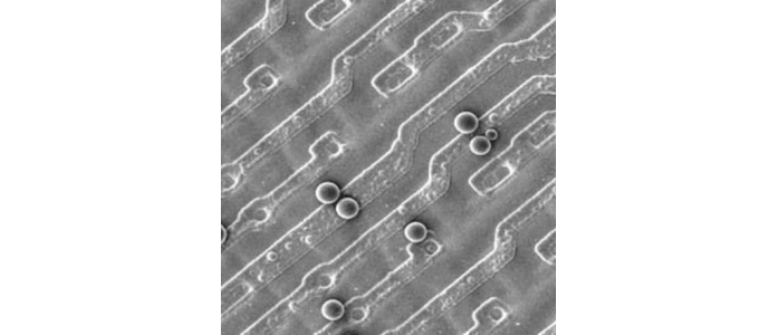
Maintaining strict measurement precision in semiconductor metrology, cleanroom validation, and optical particle counter calibration requires highly reliable reference materials. Among these, 47 nm polystyrene microspheres serve as a critical nanometer-scale baseline for Surface Inspection Systems (SSIS) and aerosol research. However, working with monodisperse particles at the sub-50 nm threshold presents distinct technical challenges. Because of […]
Weak Test Lines in Lateral Flow Assays: How Dyed Microspheres Affect Results
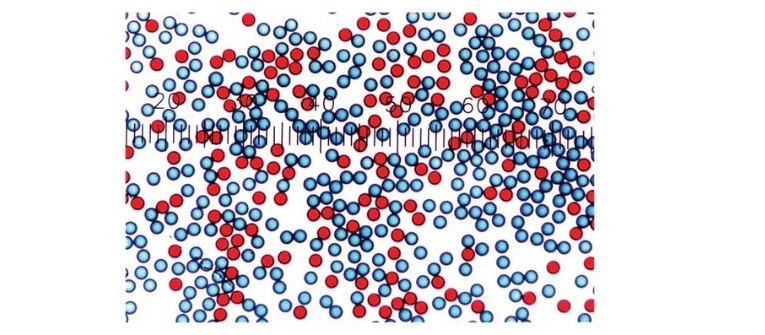
A weak test line can make a lateral flow assay difficult to interpret, especially when the target is present at a low concentration. The problem may involve the sample, antibodies, membrane, or the colored particles that carry the detection reagent. Dyed polystyrene microspheres can produce visible lines in lateral flow assays, but their color alone […]
Red Fluorescent Polystyrene Microspheres: Common Problems and Practical Solutions
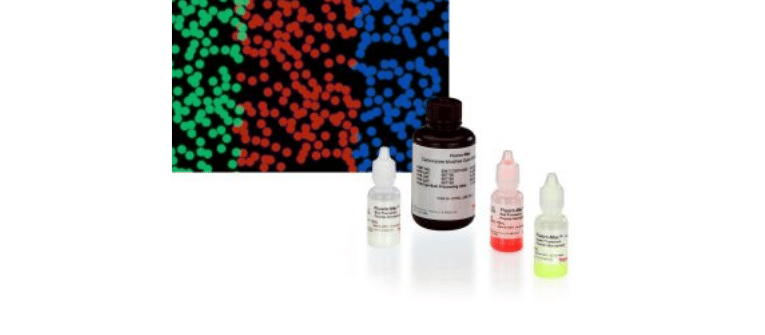
Red fluorescent polystyrene microspheres help researchers visualize particles, develop bead-based assays, and study transport in biological and fluid systems. Their usefulness depends on more than brightness: the particles must remain dispersed, retain their fluorescent dye, and behave predictably in the working medium. When beads clump, bind where they should not, or lose dye, results can […]