
Extracting intact, functionally active intracellular proteins requires fully disrupting rigid cellular boundaries without destroying the fragile biomolecules inside.
While probe sonication remains the benchmark method for lysing tough bacterial walls, fungal matrices, and mammalian cell membranes, it presents a fundamental thermodynamic conflict: acoustic cavitation generates substantial thermal energy.
When thermal accumulation exceeds critical thresholds, proteins undergo irreversible structural unfolding, aggregate into non-functional precipitates, and lose enzymatic activity.
Preventing this thermal denaturation requires precise governance over acoustic energy delivery.
Calibrated pulse-width modulation, balancing active cavitation bursts with discrete cooling intervals, enables high lysis efficiency while safeguarding the structural integrity of sensitive proteins.
Probe-type ultrasonic homogenizers function by converting electrical energy into high-frequency mechanical vibrations via piezoelectric transducers.
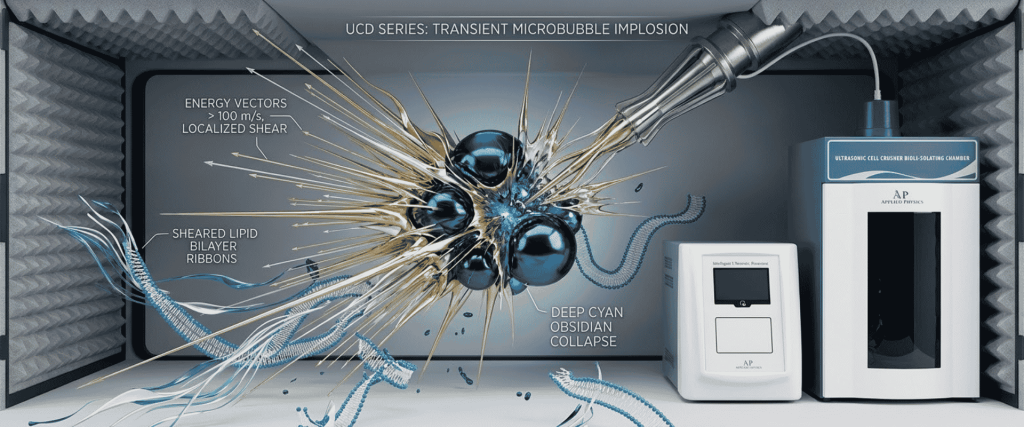
These oscillations, typically cycling between 19.5 kHz and 25 kHz, propagate through a titanium horn into the liquid sample.
As the horn tip expands and contracts, it creates alternating localized pressure cycles:
This phenomenon, known as transient cavitation, produces localized shockwaves, intense hydrodynamic shear forces, and liquid micro-jets traveling at speeds exceeding 100 meters per second. These physical shear forces mechanically shear cell walls and rupture lipid bilayers.
Although cavitation is mechanical in its disruptive action, the physics of bubble collapse generates extreme localized thermodynamic hotspots exceeding 5,000 K and pressures above 1,000 atmospheres on a micro-scale.
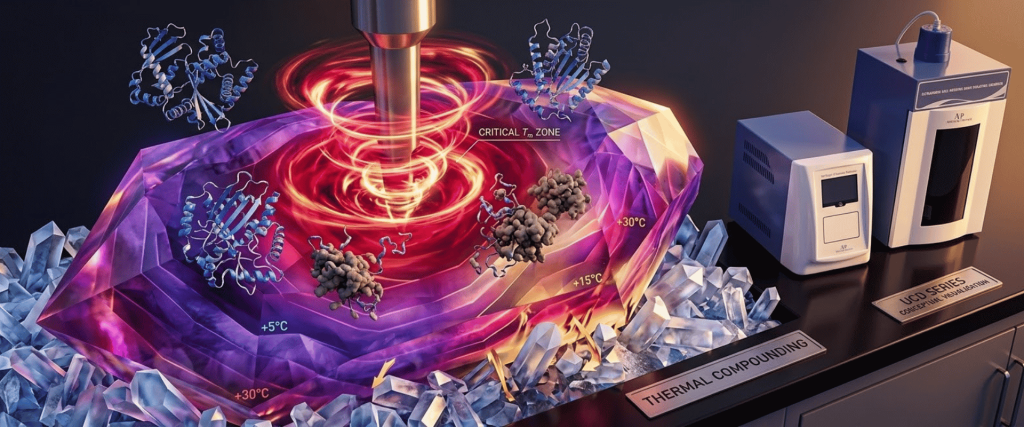
While these micro-regions rapidly equilibrate with the bulk solution, sustained energy input during continuous sonication rapidly elevates the bulk liquid temperature.
Without an operational pause, bulk temperatures can rise by 5°C to 15°C every 30 seconds in microcentrifuge tubes and small beakers. Once the temperature reaches the melting transition threshold ($T_m$) of a target protein:
Continuous acoustic irradiation creates a compounding thermal curve that rapidly outpaces passive heat transfer, even when samples sit in crushed ice baths.
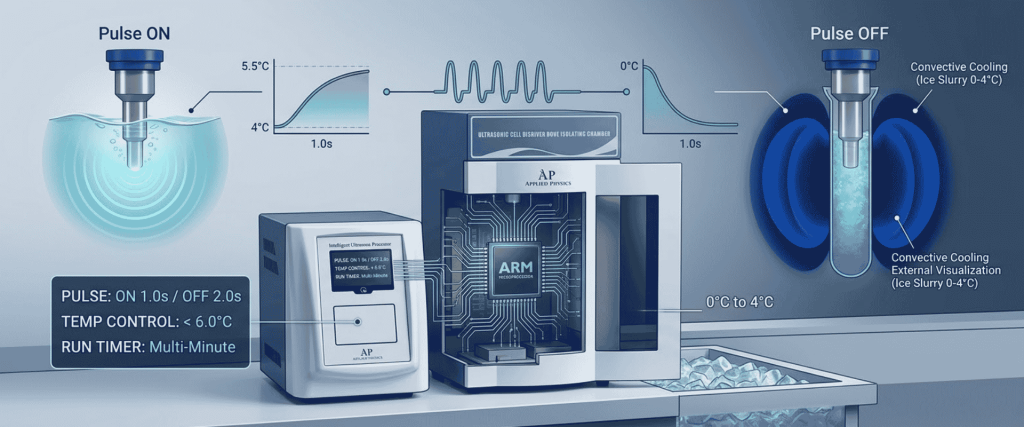
Precision pulse control overcomes this limitation by dividing the total acoustic run time into distinct operational cycles: Pulse ON time and Pulse OFF time.
During the Pulse ON phase, cavitation occurs, rupturing membranes and dispersing cellular components. During the Pulse OFF phase, the acoustic transducer ceases excitation. This momentary cessation allows:
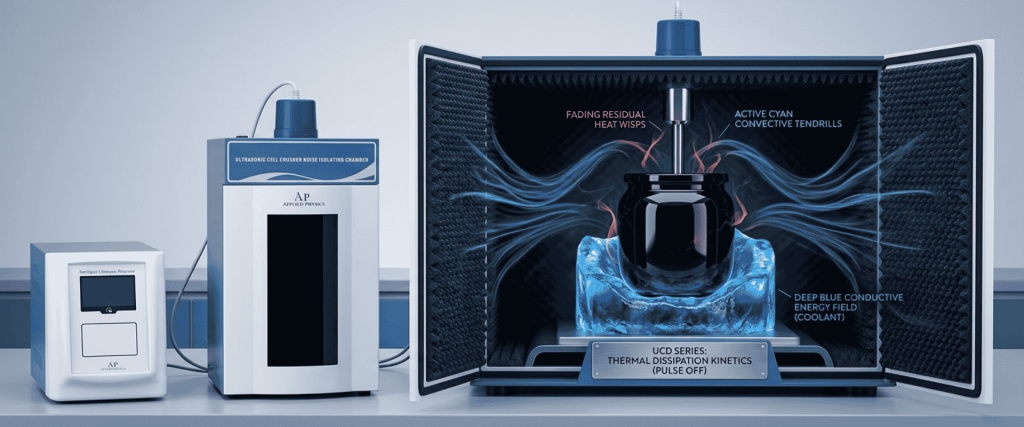
A typical conservative duty cycle operates on a 1:2 or 1:3 ratio (for example, 1.0 second ON followed by 2.0 or 3.0 seconds OFF). This profile maintains the bulk processing temperature safely below 6°C throughout a multi-minute total run.
Sustained continuous sonication frequently causes acoustic decoupling at the liquid surface, especially as proteins begin releasing and altering the solution’s surface tension. This decoupling produces vigorous surface churning and foaming.
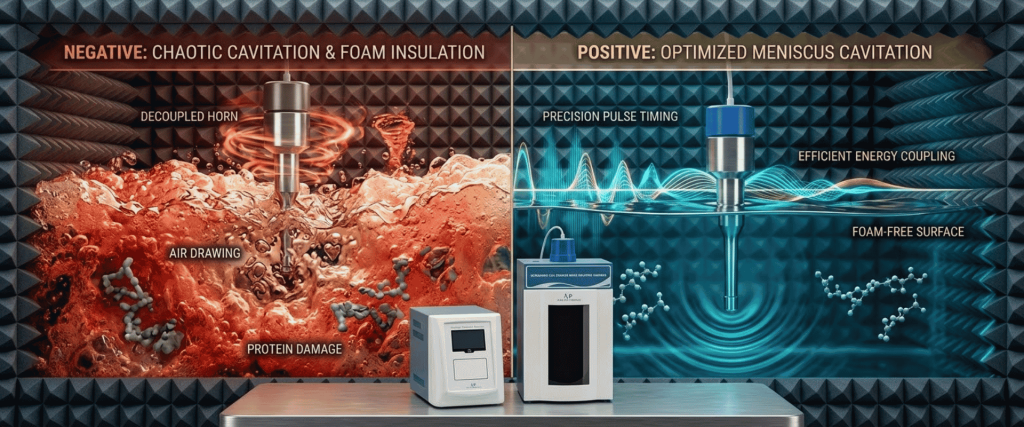
Foam creates an insulating air-liquid barrier that dampens acoustic wave propagation, reducing lysis efficiency. More critically, the interfacial tension within foam bubbles physically shears and denatures fragile native enzymes.
Programmed pulse timing interrupts surface resonance waves, preventing standing vortex formations and keeping the liquid coupled to the horn tip.
Reliable protein extraction demands equipment that pairs acoustic power with precise microsecond-level timing control.

The UCD Series Ultrasonic Cell Disruptor integrates hardware and digital architecture designed to prevent thermal degradation during high-throughput and sensitive workflows.
The UCD Series features an ARM microcomputer processing core coupled to a 5-inch TFT color touchscreen, enabling precise parameter configuration:
Operating probe sonicators at high energy creates harsh acoustic sub-harmonics. UCD Series units house the sample stage within a soundproof isolation chamber lined with high-density acoustic foam and sealed with magnetic gaskets, lowering operational noise to safe laboratory levels.
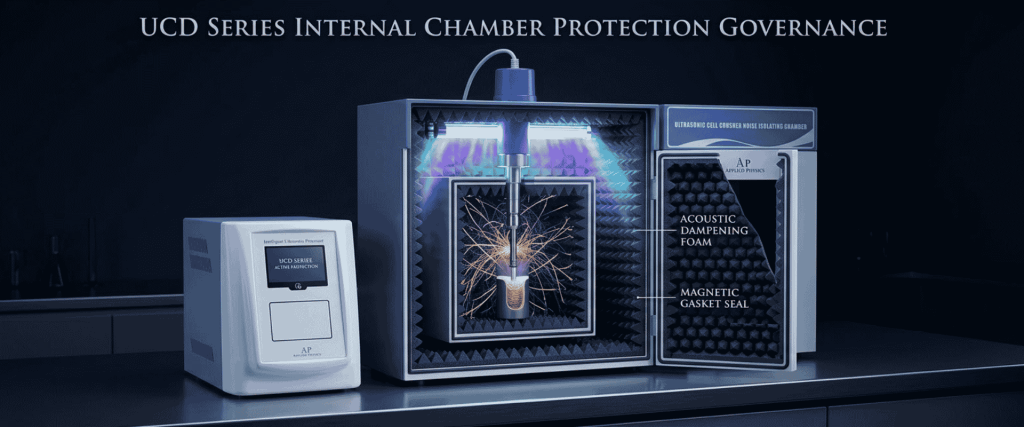
The chamber also incorporates an internal UV germicidal lamp, allowing rapid decontamination between sample batches to prevent biological cross-contamination.
Matching probe tip geometry, amplitude percentage, and duty-cycle timing to sample volume ensures effective cavitation while preventing thermal damage.
| Target Volume | Recommended UCD Model | Probe Tip Diameter | Amplitude Setting | Recommended Pulse Ratio (ON / OFF) | Typical Processing Target |
| 0.1 – 5 mL | UCD-150 / UCD-250 | 2 mm – 3 mm | 20% – 35% | 0.5s ON / 2.0s OFF | Phosphorylated proteins, RNA, mammalian cell suspensions |
| 5 – 50 mL | UCD-500 / UCD-650 | 6 mm | 35% – 55% | 1.0s ON / 2.0s OFF | Bacterial pellets (E. coli), recombinant enzyme purification |
| 50 – 250 mL | UCD-950 / UCD-1200 | 10 mm – 15 mm | 50% – 70% | 2.0s ON / 3.0s OFF | Dense fungal mycelia, yeast lysis (S. cerevisiae) |
| 250 – 1,000 mL | UCD-1500 / UCD-1800 | 20 mm – 22 mm | 60% – 80% | 3.0s ON / 4.0s OFF | Pilot-scale batch protein isolation, dense biomass extracts |
| 1,000 – 2,000 mL | UCD-2000 | 25 mm | 70% – 90% | 4.0s ON / 5.0s OFF | Industrial enzyme extraction, high-volume homogenates |
Maintaining protein activity requires rigorous physical setup alongside digital parameter control:
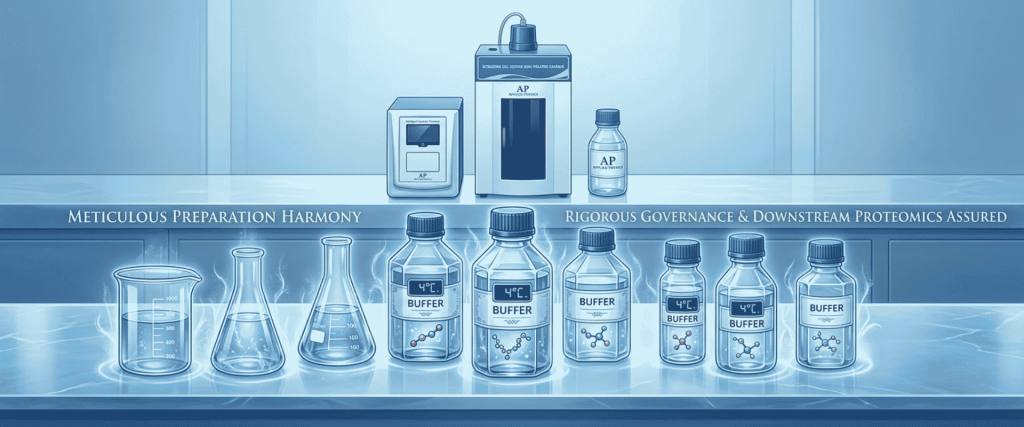
Position the titanium tip between one-third and one-half the total fluid depth from the container bottom.
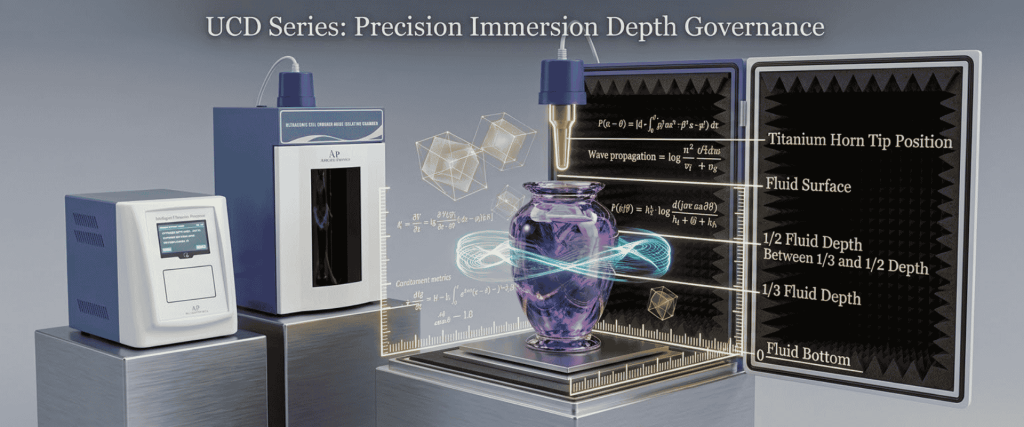
Placing the horn too close to the surface induces immediate air drawing and foaming; positioning it directly against the container base risks probe erosion and vessel fracture.
Crushed ice alone creates uneven air pockets with poor thermal conductivity. Use an ice-water slurry to maintain uniform conductive contact across the exterior wall of the processing vessel.
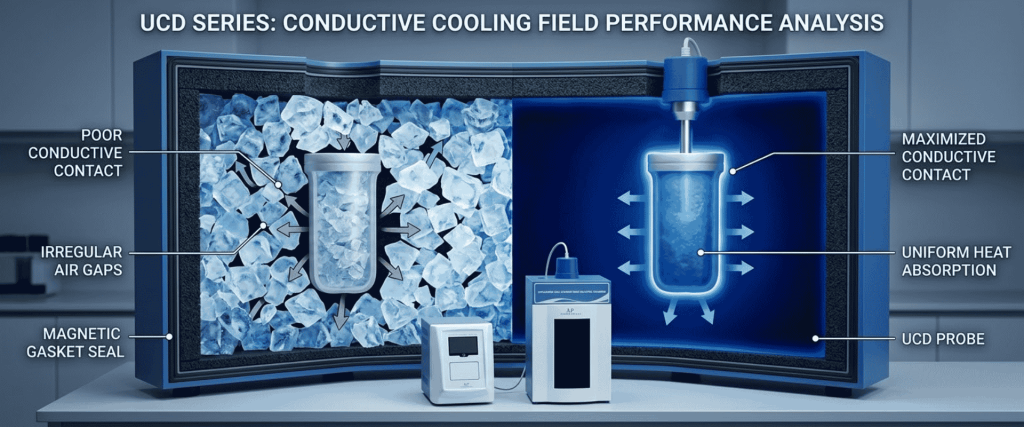
Equilibrate all extraction buffers, vessel walls, and centrifuge tubes to 4°C prior to processing. Incorporate target-specific protease and phosphatase inhibitor cocktails directly into the cold buffer before initiating cell disruption.
Over prolonged operation, cavitation erosion creates microscopic pits on the probe tip surface. Pitted horns decrease acoustic transmission efficiency and shed sub-micron titanium debris into the sample, interfering with optical density measurements and mass spectrometry.
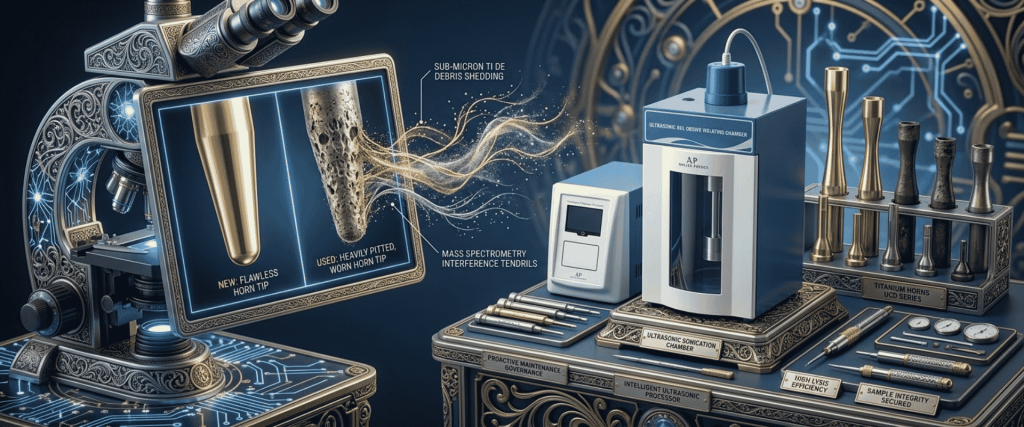
Replace or polish worn horns as part of standard instrument maintenance.
Preserving native protein structures during mechanical lysis requires balancing disruptive shear forces against thermal accumulation. Continuous acoustic energy inputs inevitably degrade heat-labile biomolecules, lower extraction yields, and introduce experimental inconsistency.
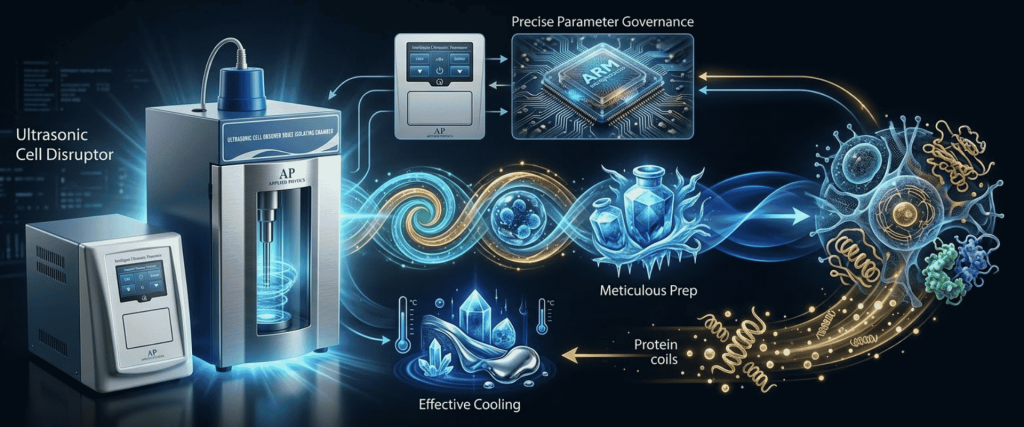
By leveraging the digital pulse-width modulation, controlled amplitude parameters, and acoustic isolation of the UCD Series Ultrasonic Cell Disruptors, laboratory teams can establish reproducible, temperature-controlled lysis protocols.
This balance between cavitation energy and thermal recovery ensures high-yield protein recovery while safeguarding the structural and functional integrity required for downstream proteomics, structural biology, and enzymatic assays.
Preserving native protein conformation during ultrasonic lysis requires strict regulation of acoustic energy rather than brute-force mechanical disruption.
Utilizing microsecond-precision pulse control allows localized thermal spikes to dissipate into cooling baths between cavitation bursts, eliminating heat denaturation and interfacial foaming.
Systems like the UCD Series integrate programmable amplitude scaling, recipe storage, and acoustic isolation to standardize extraction parameters across variable sample volumes.
Balancing hydrodynamic shear forces with discrete thermal recovery ensures high-yield protein recovery while maintaining full biological and enzymatic activity for downstream assays.
A 1:2 or 1:3 duty cycle, such as 1.0 second active pulse followed by 2.0 or 3.0 seconds off, provides an effective baseline for delicate proteins. This pause allows heat to dissipate into the external ice bath, maintaining bulk sample temperatures below 4°C to 6°C throughout processing.
Continuous sonication creates steady-state surface standing waves that pull atmospheric air into the liquid meniscus. As lysed cells release amphiphilic proteins and lipids into solution, surface tension drops, leading to stable foam that dampens cavitation and denatures native proteins at bubble interfaces.
Immerse the horn tip to approximately one-third or halfway into the liquid column. The tip must remain fully submerged throughout all processing cycles, maintaining at least 5 mm to 10 mm of clearance from the vessel bottom to avoid container damage and acoustic reflection interference.
No. Circulating jackets effectively remove bulk heat from the perimeter of a vessel, but localized thermal transfer at the probe tip remains instantaneous. Without programmed pulse pauses to allow convective mixing, the fluid immediately surrounding the vibrating titanium tip will still overheat, denaturing proteins before they can circulate to the vessel walls.

Enter your details below to save your shopping cart for later. And, who knows, maybe we will even send you a sweet discount code :)
Allow notifications to get real-time updates about your shopping cart and who knows, you may even receive a sweet discount code 😊