
Table of Contents
- Laminar vs Turbulent Airflow: Core Differences
- Why Laminar Airflow Is Mandatory for ISO 5 Cleanrooms
- Cleanroom Airflow Visualization: Validating Your Pattern
- ISO 5 Cleanroom Air Change Rates and Velocity Requirements
- Regulatory Compliance: Annex 1 and GMP Standards
- Common Mistakes in Airflow Validation and How to Avoid Them
- Professional Validation vs. Routine Monitoring
- Cost-Benefit Analysis: Investment in Proper Airflow Control
- Frequently Asked Questions
Last Updated: August 18, 2026
Laminar vs Turbulent Airflow: Core Differences
Laminar and turbulent airflow represent two fundamentally different patterns of air movement. In ISO 5 cleanrooms, this distinction determines whether you maintain sterility or risk contamination. Laminar airflow moves in parallel layers at uniform velocity, while turbulent airflow swirls and eddies unpredictably. In pharmaceutical manufacturing and semiconductor fabrication, choosing the wrong pattern compromises product integrity and regulatory compliance.
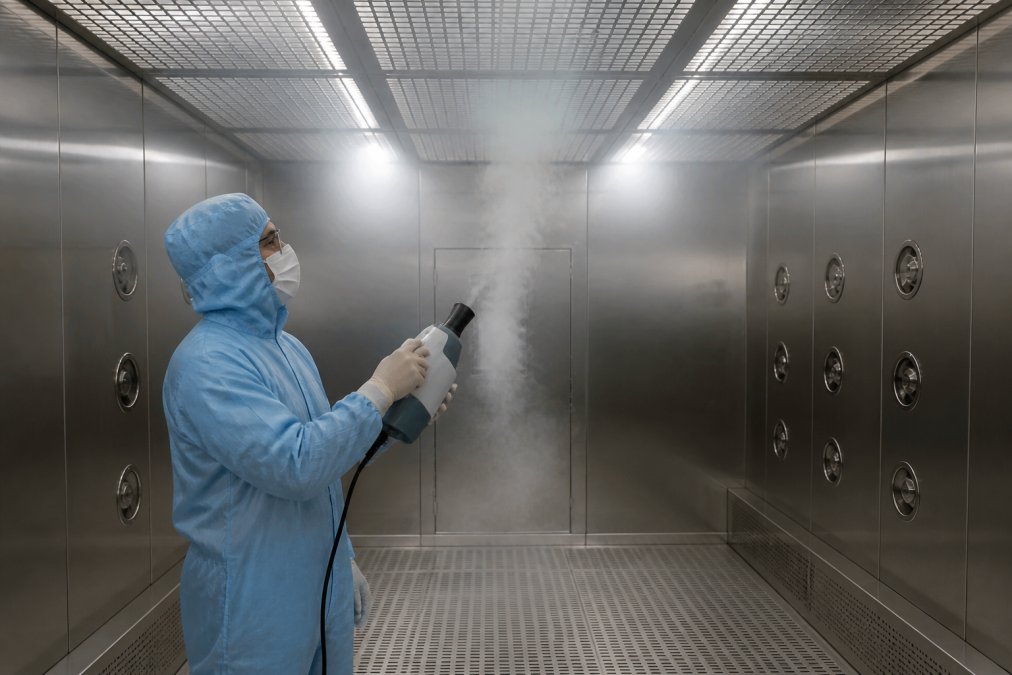
Applied Physics has spent decades analyzing cleanroom airflow patterns across pharmaceutical and semiconductor facilities. The core difference comes down to control: laminar flow gives you predictability; turbulent flow gives you chaos.
How Laminar Flow Works
Laminar flow operates on a simple principle: air moves in straight, parallel lines at consistent velocity. In an ISO 5 cleanroom, air enters through HEPA filters mounted in the ceiling or wall and travels downward (or horizontally) in a unidirectional pattern toward exhaust ports. Particles and contamination ride this airflow toward removal points rather than accumulating in dead zones.
Air velocity must stay within a narrow band, typically 0.3 to 0.5 meters per second for vertical laminar flow. Too slow, and particles settle; too fast, and you create turbulence at the edges. The HEPA filter itself, removing 99.9997% of particles at 0.3 micrometers, is essential to maintaining this clean, organized movement.
What makes laminar flow valuable in aseptic processing is recovery time. When an operator moves or equipment shifts, laminar flow re-establishes clean conditions quickly, sweeping contamination away before it settles on critical surfaces. This is why ISO 5 cleanrooms for sterile compounding and injectable drug manufacturing mandate unidirectional airflow.
How Turbulent Flow Works
Turbulent airflow mixes and recirculates, creating eddies, vortices, and dead zones where particles linger. Contamination doesn’t follow a predictable path; particles can accumulate in corners, under equipment, or near personnel. Recovery time is longer because chaotic mixing means contaminants take more time to reach exhaust points. For aseptic processing, this unpredictability is unacceptable.
Why Laminar Airflow Is Mandatory for ISO 5 Cleanrooms
ISO 5 cleanrooms must maintain no more than 3,520 particles per cubic meter at 0.5 micrometers or larger. Achieving this requires unidirectional laminar airflow as the foundation.
Annex 1 of the European GMP guidelines explicitly requires unidirectional airflow in ISO 5 aseptic processing areas. This applies to sterile compounding pharmacies, pharmaceutical manufacturers, and biotech facilities preparing injectable products. Laminar flow is the only pattern that reliably prevents particle ingress into the critical zone where sterile products are exposed.
Personnel movement and equipment placement disrupt airflow. An operator standing in front of a laminar flow hood creates a wake, but organized airflow recovers. In turbulent spaces, personnel create larger disturbances that take longer to settle. For USP 797 compliance in compounding pharmacies and USP 800 for hazardous drugs, laminar airflow ensures operator intervention doesn’t introduce contaminants.
Laminar flow also supports validation. You can measure velocity profiles, identify dead zones, and document recovery time reproducibly. Regulatory inspectors expect documented evidence that your cleanroom maintains the required cleanliness class, and that evidence comes from laminar flow validation studies.
Cleanroom Airflow Visualization: Validating Your Pattern
Validating laminar airflow requires seeing it. Smoke studies remain the gold standard for visualizing airflow patterns, particle movement, and identifying turbulence or stagnation zones.
Smoke Studies and Particle Tracing
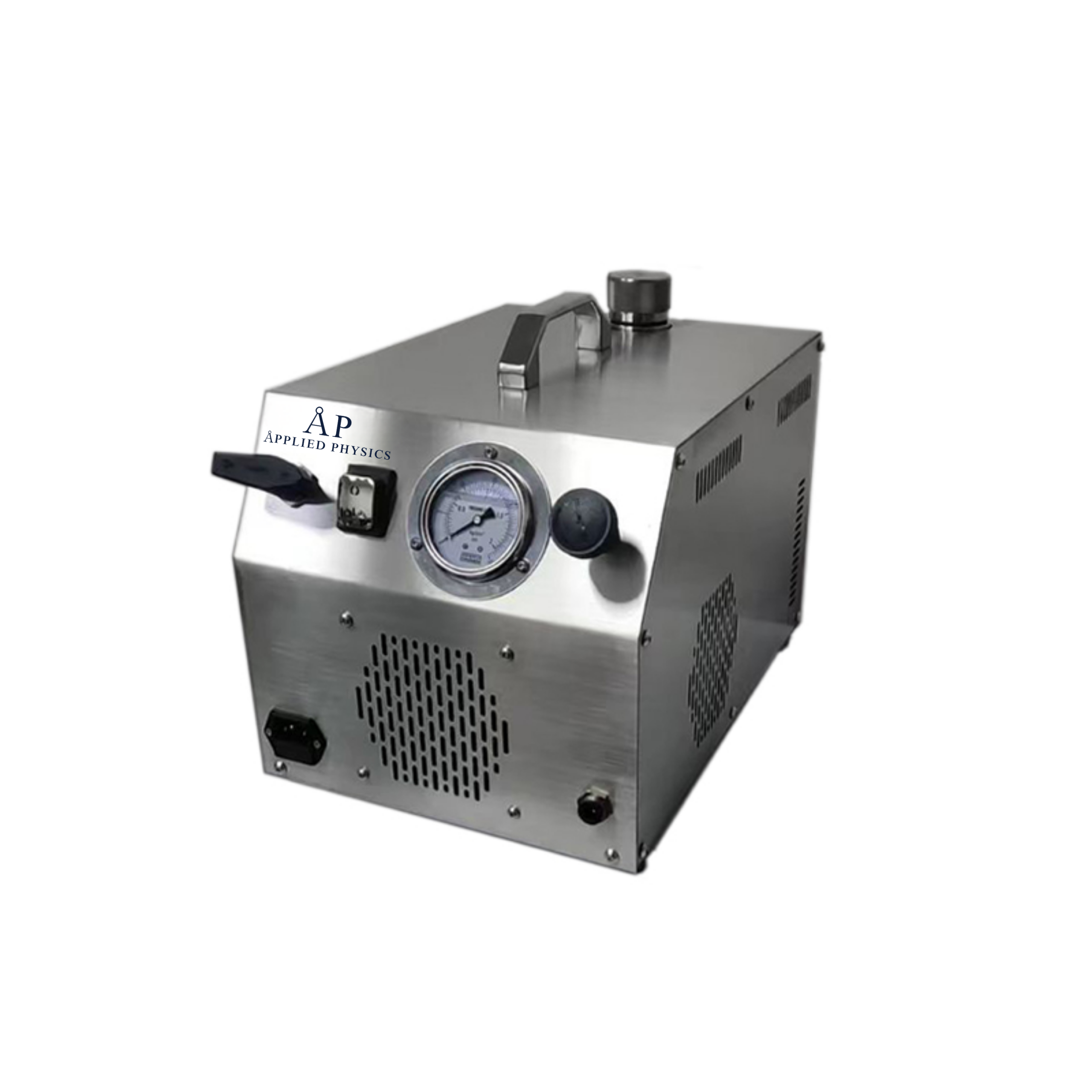
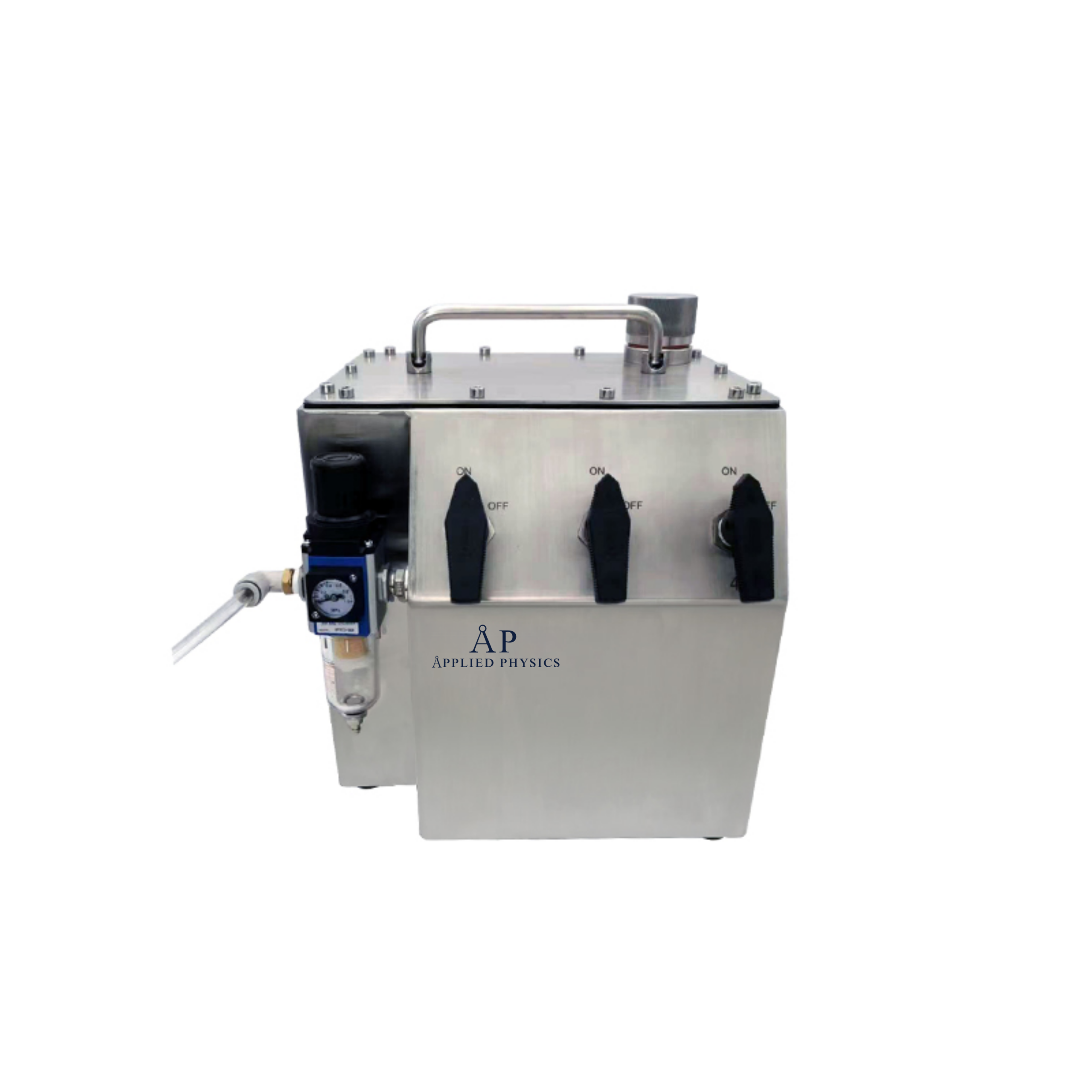
A smoke study introduces a visible tracer, typically a cold aerosol generated from diethyl hexyl sebacate (DEHS) or polyalphaolefin (PAO), into your cleanroom. The visualization agent follows the airflow, revealing actual movement patterns. Applied Physics manufactures aerosol generators like the BAG-6D and BAG-4B specifically for this purpose. These cold-type generators produce neutral, non-turbulent aerosol that doesn’t interfere with the airflow being tested.
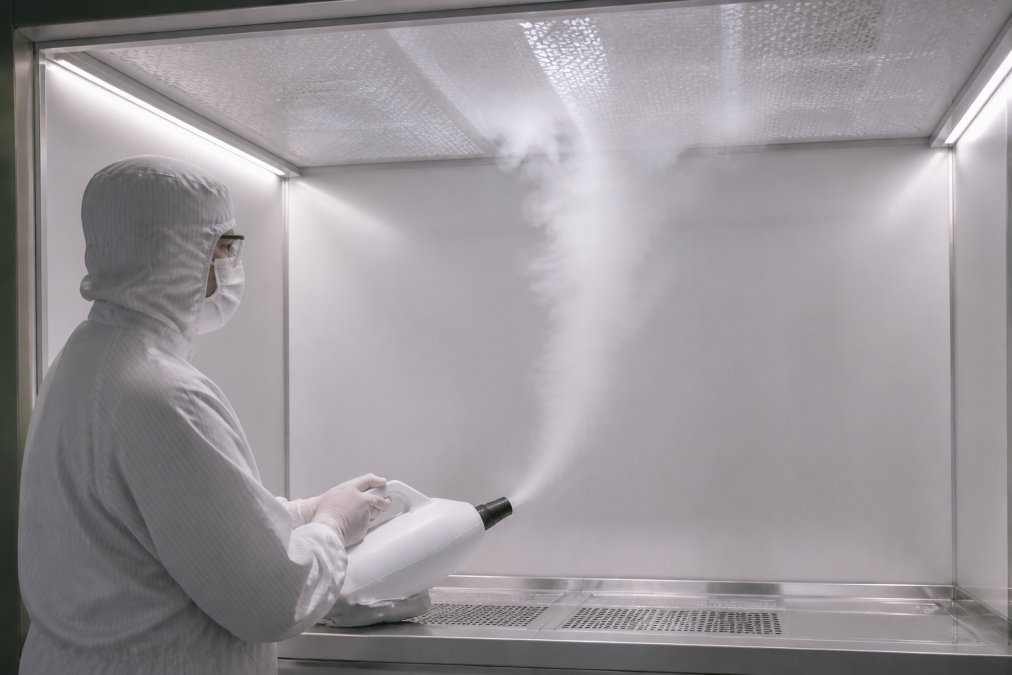
Introduce the aerosol at multiple points: near the HEPA filter, at the critical zone, and near personnel areas. In proper laminar flow, the plume travels in a straight line toward exhaust with consistent velocity. You shouldn’t see eddies or backward motion. Documentation is critical, photograph or video the smoke behavior and note any deviations.
Applied Physics’s Aerosol Photometer BAP-350 quantifies what you observe visually, measuring particle concentration downstream of the HEPA filter and at the critical zone. A properly functioning laminar flow system shows low particle counts at the critical zone and rapid recovery when the aerosol source is removed.
Identifying Dead Zones and Turbulence
Dead zones, areas where air stagnates, are common problems occurring in corners, behind equipment, or under work surfaces where the laminar flow pattern breaks down. Smoke studies reveal these immediately, the aerosol slows, swirls, or lingers instead of moving toward exhaust.
Turbulence appears as visible eddies or swirling patterns in the smoke, often at the edges of the laminar flow field near personnel or where velocity is too high. Once identified, dead zones can sometimes be corrected by repositioning equipment, adjusting HEPA filter placement, or modifying exhaust locations. Routine smoke studies, not just initial validation, catch degradation before it affects product quality.
ISO 5 Cleanroom Air Change Rates and Velocity Requirements
Laminar flow performance depends on two critical parameters: air change rate and velocity profile. Air change rate refers to how many times the entire room volume is replaced with filtered air per hour. ISO 5 cleanrooms typically require 20 to 30 air changes per hour. Higher air change rates increase velocity, improving particle removal and recovery time after contamination events.
Velocity profile is the distribution of air speed across the cleanroom cross-section. For vertical laminar flow, the target is typically 0.3 to 0.5 meters per second at the work surface. This range balances efficiency with cost. Velocities below 0.3 m/s risk particle settling; velocities above 0.5 m/s waste energy and create turbulence at edges.
Measuring velocity requires calibrated instrumentation. A hot-wire anemometer or vane anemometer gives point measurements. For comprehensive validation, measure velocity at multiple locations across the critical zone and document the profile. Uneven velocity distribution indicates filter degradation or blockage.
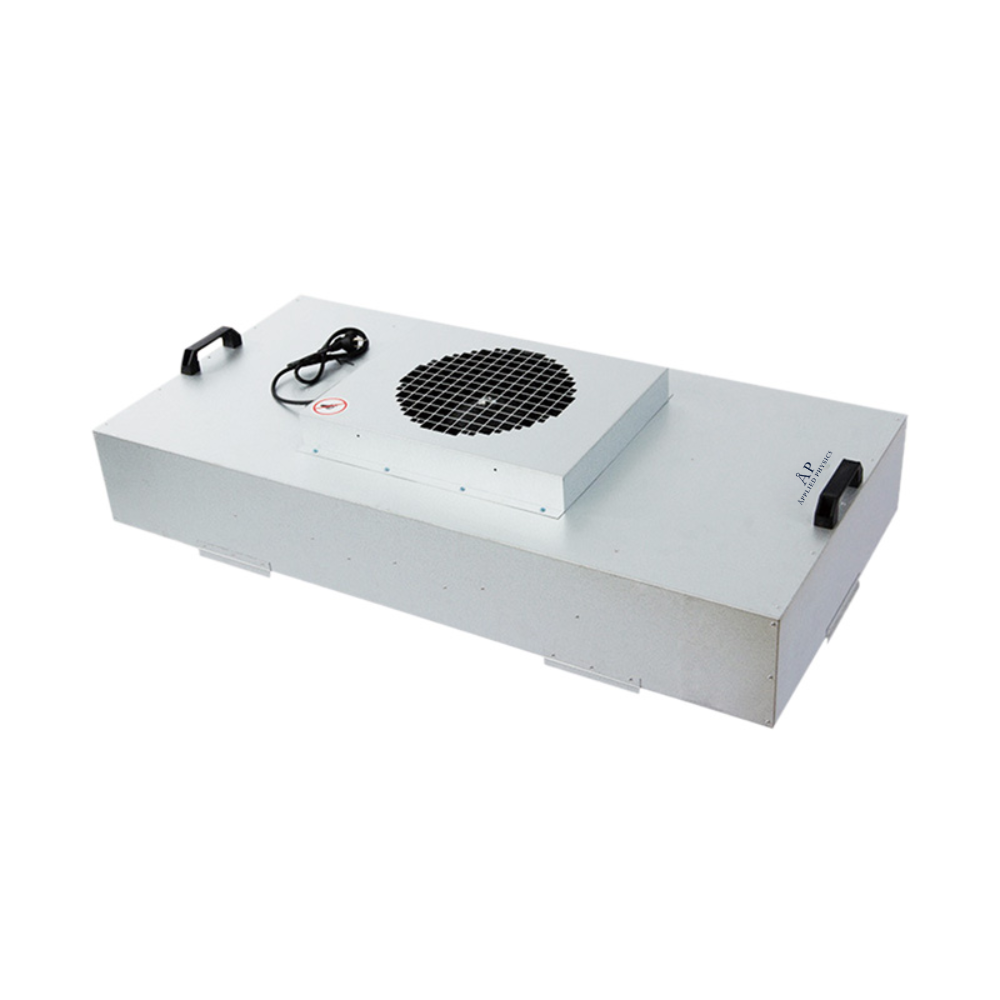
The relationship between air change rate and velocity depends on cleanroom geometry. A smaller room achieves higher velocity with fewer air changes. A larger space requires more air changes to maintain the same velocity. Applied Physics’s FFU models are engineered for specific room volumes and velocity requirements, ensuring compliance without oversizing.
Regulatory Compliance: Annex 1 and GMP Standards
Annex 1 of the European GMP guidelines explicitly requires unidirectional airflow in ISO 5 areas. While European regulation, it influences global pharmaceutical standards because many manufacturers export to Europe and adopt its requirements as best practice.
The key requirement: “The aseptic process shall be carried out in an ISO Grade 5 environment with an ISO Grade 7 background.” Achieving ISO Grade 5 requires laminar airflow. Turbulent systems cannot reliably maintain the particle count limits.
Annex 1 requires validation of your airflow pattern and recovery time. Smoke studies and particle counting aren’t optional, they’re regulatory expectations. You must demonstrate that your cleanroom maintains the required cleanliness class under dynamic conditions (with personnel present) as well as static conditions (unoccupied).
For sterile compounding pharmacies in the United States, USP 797 compliance requires ISO 5 conditions in the primary engineering control (PEC), typically a laminar flow hood. USP 800 adds requirements for handling hazardous drugs. Both standards assume unidirectional airflow as the baseline.
Regulatory inspections focus on documentation. Inspectors want to see evidence of initial validation, periodic revalidation, and trending data. A facility that performs smoke studies annually and maintains particle count records demonstrates control.
Common Mistakes in Airflow Validation and How to Avoid Them
Cleanroom managers often make predictable errors when validating or maintaining laminar airflow.
Mistake 1: Validating without personnel present.
A cleanroom that passes a static smoke study might fail under dynamic conditions. Personnel, gowning, and equipment create disturbances that alter airflow patterns. Always perform smoke studies with the room occupied and normal operations simulated.
What to do if you find airflow problems during dynamic testing: If smoke shows turbulence or dead zones only when personnel are present, the issue is usually one of three causes. First, HEPA filter velocity may be too low; increasing air change rate by 10-20% often resolves this. Second, personnel positioning may block return air paths; repositioning work surfaces or exhaust grilles can restore laminar flow. Third, gowning practices may introduce excess bulk; ensure gowning materials don’t obstruct airflow near critical zones. Document the specific conditions that trigger the problem so you can address the root cause.
Mistake 2: Ignoring edge effects and boundary turbulence.
Laminar flow at the center doesn’t guarantee laminar flow at the edges. Turbulence often develops near walls, corners, under benches, and around equipment because air velocity drops at boundaries. Smoke studies must include these areas systematically.
What to do if you find edge turbulence: Check three things. First, verify that return air grilles are positioned to capture air from the entire room perimeter; if returns are concentrated in one area, air will stagnate elsewhere. Second, measure velocity at edges using a calibrated anemometer; if velocity drops below 0.25 m/s at edges while the center maintains 0.4 m/s, your filter distribution is uneven. This can be corrected by adding diffuser baffles or adjusting FFU placement. Third, look for physical obstructions that block airflow; moving equipment 6-12 inches away from walls often eliminates edge dead zones.
Mistake 3: Confusing velocity with cleanliness.
High air velocity doesn’t automatically mean low particle counts. Velocity that’s too high can create turbulence and increase particle resuspension; velocity that’s too low allows particles to settle. The sweet spot for vertical laminar flow is 0.3 to 0.5 meters per second.
What to do if velocity and particle counts don’t align: If you measure high velocity but particle counts are elevated, investigate HEPA filter integrity. Perform a DOP (dioctyl phthalate) or PAO integrity test; if the filter fails (shows >0.01% penetration), replace it immediately. If the filter passes but particle counts remain high, the issue may be upstream contamination. If velocity is low but counts are acceptable, your system may be oversized; you can reduce energy consumption without sacrificing cleanliness.
Mistake 4: Neglecting HEPA filter maintenance and integrity testing.
A degraded HEPA filter can’t deliver clean air. Filters should be integrity-tested regularly using DOP or PAO challenges. Many facilities test only at installation and then assume the filter remains good indefinitely.
What to do if your filter shows degradation: Schedule integrity tests annually for ISO 5 cleanrooms; some high-risk pharmaceutical facilities test semi-annually. If a filter shows >0.01% penetration, replace it immediately. If filters fail prematurely (before 2-3 years), investigate the cause. Premature failure usually indicates upstream contamination. Adding or upgrading pre-filters can extend HEPA filter life and reduce replacement costs.
Mistake 5: Performing validation once and assuming permanence.
Cleanrooms degrade over time. Filters clog, equipment settles, seals deteriorate. A facility that validates once and ignores airflow is at risk of undetected contamination.
What to do to catch degradation early: Establish a routine monitoring schedule. For ISO 5 cleanrooms, perform smoke studies annually or semi-annually. Measure velocity at the same locations each time and trend the data. If velocity drops more than 10% from baseline, investigate, usually a clogged filter or blocked return. Track particle counts monthly if possible; a gradual upward trend indicates filter loading or seal degradation. Document all monitoring results to support your compliance file during regulatory inspections.
Mistake 6: Using the wrong visualization agent or improper smoke study technique.
Some aerosols are hydrophobic or electrically charged, which can distort airflow patterns. Additionally, introducing aerosol too quickly or at the wrong location can create artifacts that don’t reflect true airflow.
What to do to ensure valid smoke studies: Use only cold-type aerosol generators that produce neutral particles (diethyl hexyl sebacate or polyalphaolefin). Introduce aerosol slowly at multiple points: near the HEPA filter inlet, at the critical zone, and near personnel areas. Allow 30-60 seconds for the aerosol to stabilize before observing flow patterns. Document observations with video or photographs, noting time, location, and any deviations from expected laminar flow.
When to escalate to a professional validator:
If routine monitoring reveals problems you can’t resolve (persistent edge turbulence, unexplained particle count spikes, or unstable velocity), engage a professional third-party validator. They bring calibrated instruments, standardized methods, and regulatory credibility. A professional study typically costs $2,500-$5,000 but can identify root causes that internal testing misses.
Professional Validation vs. Routine Monitoring
There’s a meaningful distinction between initial validation and ongoing monitoring.
Initial validation is comprehensive and rigorous, including smoke studies, velocity profiling, particle counting under static and dynamic conditions, and recovery time testing. A professional third-party service brings calibrated instruments, documented procedures, and regulatory credibility. The result is a detailed report that satisfies inspectors and supports your compliance file.
Routine monitoring is lighter-touch but consistent. You perform periodic smoke studies (annually or semi-annually), measure velocity at key points, and track particle counts. This doesn’t require the same depth of instrumentation, but it does require discipline and documentation.
The best approach combines both. Invest in professional validation every 3 to 5 years, and perform routine monitoring in between. This balances cost with control.
Cost-Benefit Analysis: Investment in Proper Airflow Control
Proper laminar airflow control requires investment. HEPA filters, FFU units, aerosol generators, and particle counters represent capital and operational costs. The question is whether the investment pays off, and the answer depends on your facility size, risk profile, and regulatory environment.
The cost of contamination.
A single batch of contaminated sterile product can result in product recalls, regulatory action, and liability. A batch failure in pharmaceutical manufacturing can cost $100,000 to $500,000 or more. A single contaminated compounded medication can harm patients and trigger investigations that disrupt operations for weeks. A regulatory finding related to inadequate airflow control can result in import alerts, consent decrees, or facility closure. By comparison, the cost of validation and monitoring is modest.
Investment breakdown by facility type.
Small compounding pharmacy (1-3 ISO 5 hoods):
- Initial professional validation: $2,500-$4,000
- In-house aerosol generator (cold-type): $3,000-$6,000 (one-time)
- Handheld particle counter: $2,000-$4,000 (one-time)
- Annual professional revalidation: $1,500-$2,500
- HEPA filter replacement (every 2-3 years): $800-$1,500 per hood
- Annual routine monitoring (internal labor): 10-20 hours
Total first-year cost: $8,500-$14,500
Ongoing annual cost: $2,000-$4,000
Mid-size pharmaceutical manufacturer (ISO 5 suite, 500-1,000 sq ft):
- Initial professional validation: $5,000-$10,000
- Aerosol generator and photometer: $8,000-$15,000 (one-time)
- Particle counter (multi-point capable): $5,000-$10,000 (one-time)
- Annual professional revalidation: $3,000-$5,000
- HEPA filter replacement (every 2-3 years): $3,000-$8,000
- Annual routine monitoring (internal labor): 40-80 hours
Total first-year cost: $18,000-$35,000
Ongoing annual cost: $5,000-$8,000
Return on investment: The contamination avoidance model.
The primary ROI from airflow validation is contamination avoidance. For a compounding pharmacy, a single contamination event can cost $85,000-$355,000 when accounting for batch value, recall, investigation, potential loss of licensure, and liability. If proper airflow validation reduces contamination risk by even 50%, the expected value of contamination avoidance is $42,500-$177,500 per event. For a small pharmacy that compounds 50-100 batches per month, a single prevented event pays for 5-10 years of validation and monitoring.
For a pharmaceutical manufacturer, a single contamination event can cost $1.65 million-$16.5 million when accounting for batch value, recall, investigation, regulatory action, and reputational damage. A single prevented event justifies years of investment.
Secondary benefits: Regulatory compliance and operational efficiency.
Beyond contamination avoidance, proper airflow validation provides regulatory and operational benefits: reduced inspection findings, faster product approval, insurance premium discounts, operational efficiency through planned maintenance, and improved staff confidence in product safety.
Decision framework: When to invest in in-house equipment vs. outsourcing.
Small facilities (1-3 ISO 5 hoods) typically benefit from outsourcing validation to a third-party service. The cost per hood is lower than purchasing equipment if you perform validation only 1-2 times per year.
Mid-size facilities (500-2,000 sq ft ISO 5 space) benefit from purchasing in-house equipment if they perform validation 3+ times per year. The equipment pays for itself within 2-3 years through reduced consulting fees.
Large facilities (>2,000 sq ft or multiple ISO 5 suites) almost always benefit from in-house equipment and dedicated personnel. The cost per validation drops significantly with volume.
Practical cost-saving strategies.
-
Combine validation with other testing. Schedule airflow validation at the same time as HEPA filter integrity testing and particle counting to reduce labor costs.
-
Establish a monitoring schedule that matches your risk profile. High-risk aseptic processing may justify quarterly smoke studies; lower-risk compounding may justify annual studies.
-
Use trending data to optimize filter replacement. Monitor pressure drop and particle counts; replace filters when they show degradation, not on a fixed schedule.
-
Invest in training for internal staff. A technician trained to perform routine smoke studies can reduce reliance on external consultants. Training costs $2,000-$5,000 but pays for itself within 1-2 years.
-
Leverage continuous monitoring systems. Real-time particle counters and differential pressure sensors alert you to filter degradation before it affects product quality.
The bottom line.
For any facility handling sterile products, the cost of proper airflow validation is an investment in risk reduction. A single prevented contamination event pays for years of validation and monitoring. The question is not whether to invest, but how much to invest based on your facility size, risk profile, and regulatory environment.
Frequently Asked Questions
Why is laminar airflow mandatory for ISO 5 cleanrooms instead of turbulent flow?
Laminar airflow creates unidirectional flow patterns that sweep contaminants away from critical zones in a predictable manner. ISO 5 environments require this controlled pattern to achieve the stringent particle count limits (3,520 particles per cubic meter at 0.5 micrometers). Turbulent airflow creates eddies and dead zones where particles accumulate, making it impossible to meet ISO 5 standards. Regulatory bodies including FDA and USP 797/800 explicitly require laminar flow validation for aseptic processing and sterile compounding environments.
How do you validate cleanroom airflow visualization for compliance?
Smoke studies using aerosol generators like the BAG-6D or BAG-4B are the primary validation method. The process involves introducing visible particles or smoke into the airflow and observing the pattern using aerosol photometers such as the BAP-350. Technicians document velocity profiles, identify dead zones, and confirm unidirectional flow from top to bottom. Results must show no turbulence, vortices, or reverse flow near critical work surfaces. Documentation becomes part of your GMP compliance record and supports FDA audits.
What ISO 5 cleanroom air change rates are required?
ISO 5 cleanrooms typically require 240-360 air changes per hour, with most aseptic processing areas targeting 300+ changes per hour. Unidirectional airflow velocity at the work surface must maintain 0.45 meters per second plus or minus 20 percent. These rates ensure rapid particle removal and prevent contamination from operator movement and equipment intervention. Your FFU (Fan Filter Unit) system must be sized and configured to achieve these specifications consistently. Pressure differentials between zones should be verified regularly to confirm the system maintains design performance.
What’s the difference between validation and routine monitoring in cleanrooms?
Validation is a one-time comprehensive test performed during initial qualification and after major equipment changes. It uses smoke studies and detailed particle sampling to confirm the entire airflow pattern meets design specifications. Routine monitoring is ongoing, typically weekly or monthly, using particle counters to verify cleanliness class compliance without full airflow visualization. Validation proves your system works correctly; routine monitoring confirms it stays that way. Both are required for GMP compliance, but validation is more intensive and expensive while routine monitoring is faster and less disruptive.
Can you use turbulent airflow in an ISO 5 cleanroom?
No. ISO 5 classification requires laminar (unidirectional) airflow by definition. Turbulent airflow systems create unpredictable particle movement and dead zones where contamination accumulates, making it impossible to maintain the particle count limits required for ISO 5 (3,520 particles per cubic meter at 0.5 micrometers). If your facility currently operates with turbulent airflow, you cannot claim ISO 5 compliance. Regulatory agencies and auditors will identify this immediately during inspections. Conversion to laminar flow requires equipment upgrades, re-qualification, and validation studies.