
An unexpected particle spike during a downstream HEPA scan rarely points to damaged filter media or loose frame gaskets.
More often, the failure originates in the fluid reservoir long before the aerosol reaches the ductwork.
When standard concentrate bottles are diluted into poor-quality feed water or subjected to high-shear agitation, uniform microspheres bind into dense optical clusters.
Discrete particle counters cannot tell the difference between a genuine $0.20\,\mu\text{m}$ particle and two fused $0.14\,\mu\text{m}$ beads, collapsing the target challenge curve.
Eliminating these errors requires precise control over water purity, mixing force, and droplet drying distance.
The Physics of Monodisperse Challenges vs. Agglomeration
Discrete Optical Particle Counters (DPCs) size particles based on light-scattering intensity. This response depends on the particle’s physical diameter, geometric shape, and refractive index ($1.59 \text{ @ } 589\text{ nm}$ for polystyrene).
Manufactured with a coefficient of variation ($\text{CV}$) of $\le 5\%$, standard PSL spheres scatter a uniform amount of light. When two $0.14\,\mu\text{m}$ spheres fuse during preparation or aerosolization, the DPC does not register two distinct particles. Instead, it reads a single larger entity whose scattered optical signal mirrors a particle of roughly $0.18\,\mu\text{m}$ to $0.20\,\mu\text{m}$.
This optical clumping causes two immediate validation failures:
- Challenge Concentration Collapse: The upstream count of the target test size drops because single spheres are locked inside larger clusters.
- Shift Away from MPPS: Modern membrane filters (such as ePTFE) have an MPPS between $0.12\,\mu\text{m}$ and $0.17\,\mu\text{m}$. Clumping shifts the aerosol mass into larger diameters where mechanical interception and impaction are highly efficient, under-testing the filter at its most vulnerable physical threshold.
Primary Causes of Preparation and Aerosolization Faults
1) Water Quality and Non-Volatile Residue (NVR)
The AP5000 protocol calls for diluting a 25 mL concentrate containing $7.5 \times 10^{12}\text{ particles/mL}$ into one US gallon ($3.78\text{ L}$) of clean water. Using standard deionized (DI) water from a utility tap or stagnant carboy introduces dissolved solids, silica traces, and biological debris.
When the generator atomizes this solution, thousands of droplets contain only dissolved residue rather than a PSL bead. As the water evaporates downstream, these impurities crystallize into non-volatile residue (NVR) phantom particles. These particles register in the DPC’s lower channels, distorting background counts and triggering false upstream concentration readings.
2) Excessive Concentration Leading to Coalescence
Increasing the concentration of PSL in the feed water does not yield a stronger challenge signal. If the suspension is too dense, the probability of multiple spheres occupying the same atomized droplet increases sharply.
According to droplet distribution physics, once the suspension exceeds its recommended volumetric concentration, the ratio of doublets and triplets to singlets climbs exponentially.
3) Incomplete Droplet Desolvation
Ultrasonic and high-output pneumatic generators produce an aerosol composed of liquid droplets containing the suspended spheres. If the transit distance between the generator nozzle and the filter face is too short, or if the diluent carrier air is saturated (high relative humidity), the water droplet will not fully evaporate before passing the sample wand.
The wet droplet acts as an enlarged optical lens, causing the particle counter to record an inaccurate, erratic size.
4) Cold-Chain and Storage Failures
PSL bottles must be stored between $2^\circ\text{C}$ and $8^\circ\text{C}$. If a bottle freezes during transit or cold storage, the ice matrix strips the stabilizing surfactant layer from the spheres. This creates irreversible mechanical agglomeration that cannot be fixed, even with extensive ultrasonic agitation.
Technical Protocol: Dilution and Delivery
To preserve a monodisperse aerosol challenge that satisfies IEST-RP-CC034 and ISO 14644-3 protocols, apply the following controls.
Water Selection
Use freshly drawn High-Purity Water (HPW), Water for Injection (WFI), or ASTM Type I laboratory water with resistivity meeting $18.2\text{ M}\Omega\cdot\text{cm}$ and Total Organic Carbon (TOC) levels below $10\text{ ppb}$. Never use bottled drinking water, standard reverse-osmosis permeate, or water stored in unvented polyethylene carboys.
Dilution Procedure
- Remove the 25 mL AP5000 bottle from cold storage and let it stabilize at room temperature ($20\text{–}25^\circ\text{C}$) for 30 minutes.
- Invert the concentrate gently by hand 10 to 12 times to re-suspend settled spheres. Do not shake vigorously; violent mechanical shear generates foam that traps spheres within air pockets.
- Decant the 25 mL concentrate into exactly one US gallon ($3.78\text{ L}$) of verified Type I water.
- Agitate the reservoir gently until thoroughly mixed. If agglomeration is suspected from long shelf storage, place the diluted mixture in an ultrasonic bath for 60 to 90 seconds to separate loose doublets before connecting it to the aerosol generator.
Drying and Nebulization Mechanics
Maintain a dry, clean air supply (instrument air scrubbed of oil and moisture with a dew point below $-40^\circ\text{C}$) to drive the generator.
Ensure the aerosol delivery hose provides sufficient travel time, typically 1.5 to 2.5 meters of straight antistatic tubing, to allow the water jacket surrounding each microsphere to evaporate completely before the injection point.
Troubleshooting Guide for PSL Filter Challenges
Use the following troubleshooting matrix to diagnose and correct anomalous particle data during certification runs:
| Observed Anomaly | Root Cause | Impact on Validation | Corrective Action |
| High counts in sizes smaller than target PSL | Elevated non-volatile residues (NVR) in dilution water | False upstream baselines; incorrect dilution calculation | Switch to freshly drawn $18.2\text{ M}\Omega\cdot\text{cm}$ ASTM Type I / WFI water. Run dry water test without PSL first. |
| Secondary peak at ~1.26× target diameter | Droplet doublets caused by over-concentrated feed | Misidentifies true MPPS; reduces effective challenge count | Dilute feed water further. Ensure ratio does not exceed 25 mL per 3.78 L of water. |
| Gradual loss of downstream count stability | Surfactant breakdown or freezing during storage | Unstable challenge requiring frequent recalibration | Replace the concentrate bottle; verify cold-chain tracking ($2\text{–}8^\circ\text{C}$); inspect for settled white flakes. |
| Fluctuating counts with rapid nozzle clogging | High shear shaking creating microfoam in reservoir | Inconsistent aerosol generation and sample line pulsing | Avoid rapid shaking; let the diluted liquid rest 5 minutes to release entrained microbubbles before starting runs. |
| Sizing shifts when probe nears injection duct | Incomplete droplet evaporation (high local humidity) | Wet droplets measured as oversized particles by the DPC | Extend duct transit distance; heat dilution air or install an inline desiccant diffusion dryer. |
Particle Counter Scanning Parameters
Unlike photometers that measure total scattered light from high-density oil clouds, DPCs read individual light pulses. When running a PSL challenge, configure the scan rate according to the calculation outlined in IEST-RP-CC034:
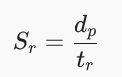
- $S_r$ is the maximum probe scan speed ($\text{cm/s}$)
- $d_p$ is the probe dimension parallel to the scan direction ($\text{cm}$)
- $t_r$ is the minimum transit time required to ensure detection statistics
To prevent false negatives when scanning for pinhole leaks at upstream concentrations of $10^5\text{ to }10^6\text{ particles/ft}^3$, do not exceed a scan speed of $5\text{ cm/s}$ ($2\text{ inches/s}$) when using standard rectangular isokinetic probes ($10\text{ mm} \times 100\text{ mm}$).
Maintain a probe distance of approximately $25\text{ mm}$ from the downstream filter surface and gasket joints.
Securing Defensible Leak Test Audits
Regulated cleanrooms cannot afford questionable test data. When auditors evaluate filter integrity records during ISO 14644 or GMP compliance reviews, a clean challenge curve is essential.
By verifying that dilution water is free of non-volatile residues, respecting the single-use 25 mL dilution volume, preventing frozen storage, and ensuring full aerosol drying, certification teams eliminate the common root causes of agglomeration.
This discipline protects operational integrity, ensures compliance at the filter’s true penetration threshold, and keeps downstream processing environments free of oily chemical residues.
Conclusion
Eliminating dilution and agglomeration faults ensures that PSL microspheres challenge filter media at their true penetration limits without generating misleading optical spikes.
By combining high-purity ASTM Type I water with controlled droplet evaporation and gentle mixing, validation teams protect both measurement accuracy and downstream air purity.
This disciplined preparation guarantees defensible ISO 14644-3 compliance records while keeping critical aseptic environments completely free from hydrocarbon residues.
Frequently Asked Questions (FAQs)
1. Can an aerosol photometer be used instead of a DPC for PSL testing?
No. Photometers require high mass concentrations ($10\text{ to }20\,\mu\text{g/L}$) to generate a signal, which would consume excessive volumes of PSL suspension and quickly clog generators. PSL testing requires a discrete particle counter (DPC) configured to the target size channel.
2. What happens if the PSL bottle accidentally freezes?
Freezing ruins the product. Ice crystals puncture the protective surfactant layer around the polystyrene spheres, causing them to bond permanently. Once frozen, the suspension cannot be returned to a monodisperse state and must be discarded.
3. Why does the AP5000 protocol specify 25 mL per 1 gallon of water?
This ratio balances generation density with evaporation physics. It delivers an upstream concentration of $10^5\text{ to }10^6\text{ particles/ft}^3$ into standard duct velocities without overloading the droplets, keeping doublet formation below $1\%$.