
Last Updated: September 14, 2026
The USP 800 compliance checklist is a structured set of requirements covering risk assessment, containment controls, standard operating procedures, personal protective equipment, environmental monitoring, and training documentation for any facility that handles hazardous drugs. Applied Physics has supported cleanroom and compounding operations in translating those requirements into equipment and workflows that hold up under inspection. The checklist isn’t a single document you download and file. It’s a living framework that touches facility design, daily practice, and documentation, and it applies across compounding pharmacies, infusion centers, and pharmaceutical manufacturing sites alike.
The stakes are straightforward. A failed inspection can halt compounding operations, force costly remediation, and put healthcare personnel at real risk of occupational exposure. Below, we break the checklist into eight steps you can work through methodically, including the retrofitting, budgeting, and vendor decisions most guides skip.
USP 800 applies to any entity that handles hazardous drugs, including compounding pharmacies, hospitals, clinics, and patient treatment centers (usp.org). The standard covers receipt, storage, compounding, dispensing, administration, and disposal.
Facilities that only occasionally handle hazardous drugs still fall within scope. The requirements scale with risk, but the documentation and containment obligations don’t disappear because volume is low.
The checklist follows the lifecycle of a hazardous drug through your facility. It starts with risk assessment, moves through engineering controls and standard operating procedures, then covers PPE, monitoring, training, and implementation planning.
Each step builds on the one before it. Skip the risk assessment and your containment strategy has no defensible basis. Skip training documentation and even correct practices become unverifiable during an audit.
| Checklist Step | Core Requirement | Primary Owner |
|---|---|---|
| 1. Risk assessment | Document which drugs are hazardous and why | Pharmacy leadership |
| 2. Engineering controls | Containment via pressure, airflow, and isolation | Facilities engineering |
| 3. SOPs | Written procedures for receipt, storage, disposal | Compliance officer |
| 4. PPE and deactivation | Documented gowning and decontamination practice | Safety officer |
| 5. Environmental monitoring | Verify containment performance over time | QA team |
| 6. Training documentation | Prove competency for every handler | Training coordinator |
| 7. Phased roadmap | Sequence upgrades without halting operations | Operations lead |
| 8. Budget and vendors | Fund and source the work, avoid audit failures | Finance and procurement |
A USP 800 assessment of risk template is the foundational document that identifies which drugs your facility handles, how they’re classified, and what containment and handling controls each one requires. Every downstream decision, from room pressure to PPE selection, traces back to this document.
Start by listing every drug that enters your facility, including investigational compounds. Then evaluate each against two dimensions: whether it meets the criteria for a hazardous drug, and what alternative approaches exist if it does. The template should capture the drug name, the basis for classification, the dosage forms handled, and the specific controls required.
A common mistake is treating the assessment as a one-time exercise. Formularies change, new drugs get added, and a stale risk assessment is one of the easiest findings for an auditor to write up.
Watch Out Facilities that copy a generic risk assessment template without adapting it to their actual formulary create a documentation gap. Auditors compare the assessment against your dispensing records, and mismatches get flagged as a compliance failure.
Hazardous drug containment secondary engineering controls are the room-level systems, including negative pressure, air changes per hour, and exhaust configuration, that keep contamination from migrating beyond the compounding area. These controls form the barrier between the compounding suite and the rest of your facility.

A cleanroom technician in full PPE gowning, including chemotherapy gloves and a respirator, working inside a biological safety cabinet in a negative pressure compounding suite with visible ante room behind
The compounding suite needs to sit under negative pressure relative to adjacent spaces, with a defined ante room buffering the buffer room from the corridor. Air changes per hour must meet the standard’s thresholds, and exhaust must route away from intake zones.
Verifying this isn’t a one-time measurement. Pressure relationships drift as filters load and doors get used. Regular verification with airflow visualization tools, such as the cleanroom foggers Applied Physics has supplied since 1992, shows exactly where air is actually moving rather than where the design says it should.
Primary containment comes from biological safety cabinets and closed system transfer devices. The cabinet protects the operator and the preparation; the transfer device limits aerosol generation during drug transfer. Both need documented certification and routine recertification.
Where a cabinet’s airflow or containment performance is in question, NSF/ANSI 49 standards for biosafety cabinetry provide the benchmark for field certification. Applied Physics supplies Class II B2 biological safety cabinets with automatic wind speed adjustment and power-failure memory.
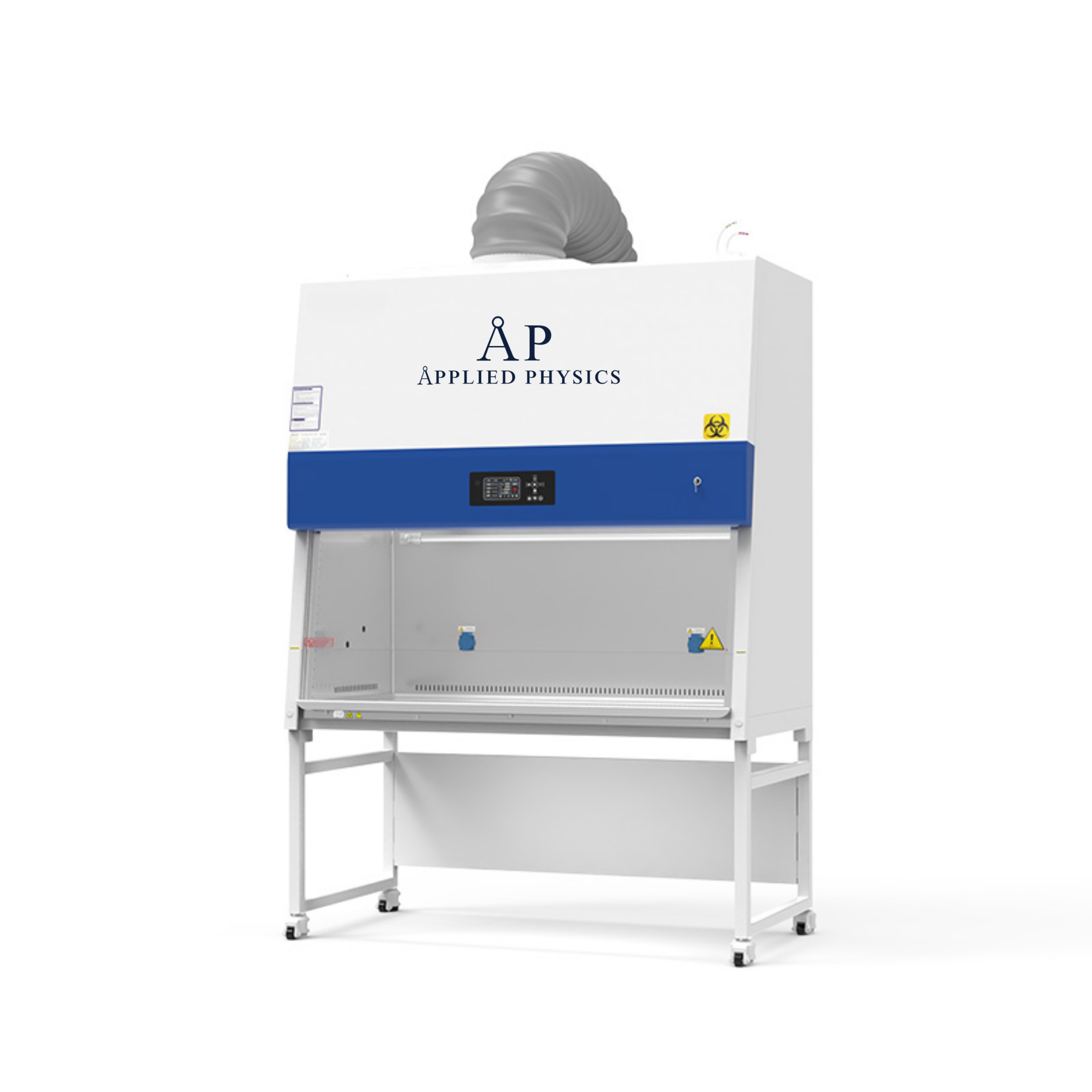
AC Series Class II B2 Biological Safety Cabinet BSC-1100IIB2-X BSC-1300IIB2-X BSC-1500IIB2-X BSC-1800IIB2-X
Standard operating procedures translate the standard’s requirements into the specific actions your staff take every day. USP 800 expects written procedures covering receipt, storage, compounding, deactivation, decontamination, cleaning, and disposal. Most guides stop there. The gap is in how you structure those procedures so they survive an inspection, and so they map cleanly to the roles that execute them.
Each SOP should follow the same skeleton so an auditor can navigate any procedure in the binder without hunting for fields:
That last field is the one most facilities skip. An auditor who sees a procedure with no revision history cannot tell whether it reflects current practice or a version from three years ago.
Receipt. Name the unpacking location (typically a designated area with containment), the inspection step for damaged or compromised packaging, and the spill response if a container fails during transport. Specify who is authorized to receive hazardous drug shipments and what PPE they wear.
Storage. Separate hazardous drugs from other inventory, and document the separation method, negative-pressure storage, externally vented cabinets, or a dedicated room. Specify labeling, segregation by hazard class, and the process for handling expired or returned product.
Disposal. Address contaminated materials, sharps, and trace-contaminated waste as distinct streams, each with its own container, labeling, and pickup schedule. Name the waste vendor and the manifest process. A disposal SOP that lumps all waste together will not match what your staff actually do at the point of use.
A common audit failure is a procedure that exists but has no named owner. Build a matrix that maps each SOP to the role responsible for executing it, the role responsible for reviewing it, and the review interval. When an inspector asks who owns your decontamination procedure, the answer should be a role, not a shrug.
| SOP | Executes | Reviews | Review Interval |
|---|---|---|---|
| Receipt and inspection | Receiving technician | Compliance officer | Annual |
| Storage and segregation | Pharmacy technician | Pharmacy leadership | Annual |
| Deactivation and decontamination | Compounding staff | Safety officer | Annual |
| Disposal and waste handling | Environmental services | Compliance officer | Annual |
The most frequent SOP-related findings cluster in two areas: procedures that were never revised after a practice change, and procedures with no evidence that staff were trained on the current version. Tie each SOP revision to a retraining trigger, and keep the training record linked to the procedure version. That single link closes the gap between what your binder says and what your staff do.
Watch Out Vague SOPs create inconsistent practice, and inconsistent practice is what auditors find first. If a procedure says “clean as needed” without naming the agent, the surface, or the frequency, it is not a procedure, it is a placeholder that will be cited as a documentation gap.
Pro Tip
Write procedures at the level of detail a new hire could follow on day one, then have a current staff member execute the procedure while you watch. Any step they have to ask about is a step the SOP is missing. ::: Refining these operational workflows serves as a critical safeguard for
by ensuring that every staff member maintains consistent adherence to established safety protocols.
Personal protective equipment requirements in the standard are specific: chemotherapy gloves tested to ASTM standards, gowns that resist permeation, and respiratory protection where risk assessment calls for it (D6978 Standard Practice for Assessment of Resistance of Medical Gloves to Permeation by…). Gowning procedures must specify the sequence and the donning and doffing steps.
Deactivation, decontamination, and cleaning are three distinct activities, and the standard treats them differently. Deactivation neutralizes the drug’s hazardous properties; decontamination removes residue; cleaning addresses general contamination. Your documentation should name the agents used for each and the surfaces they apply to.
Photograph your gowning sequence and post it at the point of use. Staff follow visual references more consistently than written steps, and auditors accept photographic SOPs as supporting documentation when the written procedure exists alongside them.
Contact Us →
USP 800 environmental monitoring requirements focus on verifying that your containment controls perform as designed over time. Monitoring typically includes surface wipe sampling, air pressure verification, and periodic airflow visualization. What separates a defensible program from a paper one is the specificity of the methods, the cadence, and the corrective-action trail behind each result.
A practical monitoring program covers four categories, each with its own method and cadence:
| Monitoring Category | Method | Typical Cadence |
|---|---|---|
| Room pressure relationships | Differential pressure gauges or handheld manometers | Continuous (gauges) with documented verification |
| Air changes per hour | Anemometer traverse or balometer at supply/exhaust | At commissioning and after any HVAC change |
| Airflow direction and containment | Airflow visualization (fogger, smoke, or vapor) | At commissioning, after filter changes, and on a set interval |
| Surface contamination | Wipe sampling with validated analytical method | Risk-based interval tied to compounding volume |
Airflow visualization is the step most facilities under-document. A fogger or vapor emitter shows where air actually travels, through door gaps, around cabinet edges, across the ante room threshold, rather than where the design drawings say it should. Photograph or record each visualization event and file it with the date, the technician, and the observed result.
Each monitoring event should produce a record containing, at minimum:
A monitoring program without that paper trail doesn’t demonstrate control. An auditor comparing your records against your SOPs is looking for consistency, the same fields, the same cadence, the same reviewer sign-off across every event.
Where a result fails, the standard expects a documented response, not just a re-test. Track the failure, the investigation, and the resolution as a single record. A common pattern is a facility that re-tests, gets a passing number, and closes the file, leaving no investigation into why the first result failed. That gap is one of the easiest findings for an inspector to write up.
Watch Out A re-test that passes does not close a monitoring failure. The record must show what was investigated, what was found, and what was changed, even if the corrective action was “no root cause identified, monitoring frequency increased.” An unexplained pass after a fail reads as an undocumented problem.
A frequent audit failure shows up in facilities that passed inspection previously. Containment performance drifts as filters load, doors get used, and equipment ages. A facility that verified its pressure relationships two years ago may not be able to demonstrate current control. Continuous verification, through installed gauges, scheduled visualization, and a monitoring log that stays current, closes that gap in a way that annual re-testing cannot.
Pro Tip Build a one-page monitoring calendar that maps each category to its cadence and its owner. Post it where the QA team works. Auditors accept a documented schedule with evidence of adherence far more readily than a stack of unrelated test reports.
Hazardous drug handling training documentation must prove that every person who touches a hazardous drug has been trained and assessed for competency, not just attendance. The standard distinguishes between initial training and the periodic reassessment that follows.
Build a training matrix that maps each role to the competencies it requires. Then keep records that show the date of training, the trainer, the content covered, and the method used to verify competency. A sign-in sheet alone rarely satisfies an auditor.
Retraining should trigger on three events: a defined interval, a change in role or procedure, and any incident that reveals a gap. Tie your documentation system to those triggers so records stay current without a manual scramble before inspection.
Retrofitting an existing facility to meet the standard rarely happens in one shutdown. A phased implementation roadmap sequences the work so you maintain operations while closing compliance gaps.
Start with a gap assessment that ranks findings by risk and by cost to remediate. Address containment failures and documentation gaps first, since those carry the highest inspection risk. Then move to facility modifications, which typically require the longest lead time and the most disruption.
Sequence the phases around your compounding schedule. A facility that compounds daily needs a plan for temporary containment or relocated operations during construction. Building that into the roadmap upfront prevents the expensive mid-project scramble.
The final step is the one most facilities underestimate: funding the work, choosing who does it, and anticipating where inspections actually go wrong. Budget and vendor decisions determine whether the roadmap stays on schedule.
Budgeting for retrofitting should separate one-time capital costs from recurring compliance costs. Capital covers engineering controls, cabinets, and facility modifications. Recurring costs cover certification, monitoring, training, and documentation upkeep.
Frame the investment against the cost of non-compliance. A failed inspection can halt compounding, and the operational loss from a shutdown typically dwarfs the cost of the equipment that would have prevented it. Many facilities find that phased spending, spread across budget cycles, is easier to approve than a single large capital request.
Vendor selection should weigh four factors: demonstrated experience in regulated environments, documentation quality, service response time, and total cost of ownership.
Ask each vendor for references from facilities similar to yours, and ask specifically about their track record through GMP audits. Applied Physics has served cleanroom, semiconductor, and healthcare operations since 1992, and our airflow visualization and metrology equipment is built for the verification work this standard demands.
The most frequent audit failures cluster in three areas: stale risk assessments, missing monitoring records, and training documentation that proves attendance rather than competency. Each is a documentation problem as much as a practice problem.
A fourth failure shows up in facilities that passed inspection previously. Containment performance drifts, and a facility that verified its pressure relationships two years ago may not be able to demonstrate current control. Continuous verification, not annual re-testing, closes that gap.
Key Takeaway The checklist isn’t a document to complete once. It’s a cycle of assessment, control, monitoring, and documentation that has to stay current. Facilities that treat it as ongoing tend to pass inspections without a scramble.
Meeting every requirement in this checklist takes more than a written plan. It takes equipment that performs predictably, documentation that holds up to scrutiny, and a partner who understands what auditors look for. Applied Physics has supported regulated cleanroom and healthcare environments since 1992 with airflow visualization tools, precision contamination control equipment, and biological safety cabinets. If you’re mapping your compliance roadmap, contact us to talk through the engineering controls and verification equipment your facility needs.
Yes. USP 800 applies to any facility where healthcare personnel handle hazardous drugs, including retail pharmacies that compound or dispense them. If a retail pharmacy only counts or repackages hazardous drugs, it still needs an assessment of risk, standard operating procedures, and documented training. The standard does not exempt community settings. Review your workflow against the checklist and confirm which controls apply to your specific operations.
USP 800 requires that hazardous drugs be administered using closed system transfer devices (CSTDs) when the dosage form permits. It also requires engineering controls such as a biological safety cabinet or containment ventilated enclosure, plus PPE including two pairs of chemotherapy gloves and a gown. Administration must occur in a controlled area with proper ventilation. Document which controls you use for each drug and dosage form.
The current version is USP General Chapter 800, Hazardous Drugs: Handling in Healthcare Settings. It was published in 2016 and became official in December 2019. USP has issued subsequent revisions and clarifications, so verify the latest text on the USP website before finalizing your checklist. The 2026 guide should reference the current chapter and any applicable USP 797 requirements for sterile compounding.
Yes. USP 800 covers both sterile and non-sterile compounding of hazardous drugs. Non-sterile operations still require an assessment of risk, standard operating procedures, PPE, deactivation and decontamination protocols, and training documentation. Secondary engineering controls may be less stringent for non-sterile work, but the core safety requirements remain. Review your non-sterile workflows against the checklist and document any alternative controls you use.
Contact Us

Enter your details below to save your shopping cart for later. And, who knows, maybe we will even send you a sweet discount code :)
Allow notifications to get real-time updates about your shopping cart and who knows, you may even receive a sweet discount code 😊