Description
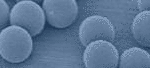
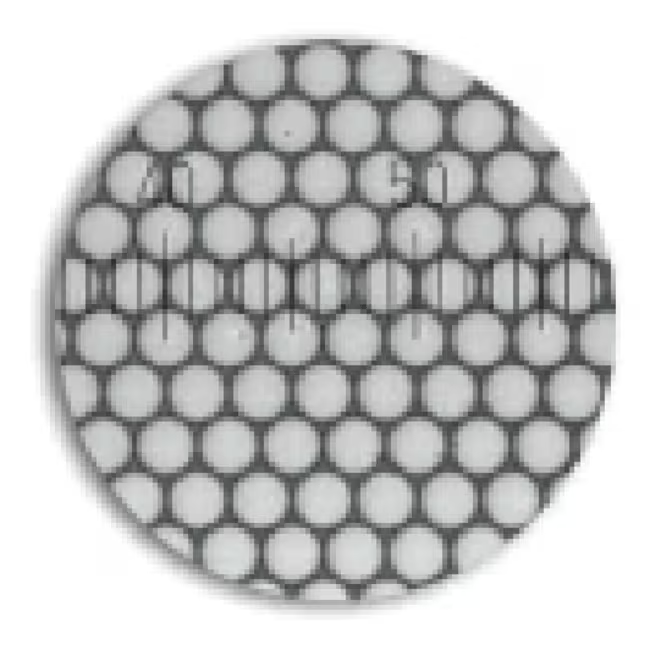
Our 4000 Series Dry Monosized Beads are meticulously engineered to eliminate the inconsistencies often caused by irregularly shaped particles in analytical systems. By utilizing perfect spheres, these beads effectively minimize the response of analytic systems to unwanted shape effects. The mean diameters of these polymer beads have been accurately calibrated using NIST traceable microscopy methods, ensuring precise and reliable performance across various platforms.
The size distribution and uniformity of these beads are rigorously measured by advanced electrical resistance analysis or optical microscopy to guarantee top tier quality control. Packaged as convenient dry spheres in a 1 gram format, these particles ensure optimal dispersion, easy handling, and exceptional stability for your specific operational requirements. Applied Physics USA maintains strict engineering, production, and metrology standards so these size standards consistently meet your exacting research and diagnostic needs.
Features:
Particle spheres are used instead of irregularly shaped particles for enhanced accuracy
Mean diameters are strictly calibrated using NIST traceable microscopy methods
Size distribution and uniformity are measured by electrical resistance analysis or optical microscopy
Packaged as dry spheres for optimal handling and structural stability
Supplied in a convenient 1 gram quantity to accommodate specific application volumes
Lot numbered packaging ensures convenient technical service and product support
Benefits:
Minimizes the response of analytical systems to unwanted shape effects
Delivers a very narrow standard deviation for highly consistent analytical results
Provides an exceptionally reliable and precise NIST traceable size standard
Avoids the limitations and diagnostic errors associated with non spherical reference materials
Dry format ensures excellent long term stability and easy integration into custom laboratory formulations
Recommended For:
Calibrating analytical instruments that require precise size standards
Narrow size standard deviation applications
Quality control and metrology workflows where shape effects must be eliminated
Industrial and academic particle research facilities
Product relationship
Available Through Applied Physics
Applied Physics supplies and supports quotation of this product. Product branding and manufacturer information, where stated on the product page or supporting documentation, remain authoritative.
Applied Physics portfolio: Particle
Catalog relationship: Available Through Applied Physics
Related Applied Physics resources
Continue through the Particle portfolio
Use these technical and portfolio pages to compare applications and related equipment. To keep this exact product attached to an RFQ, use the product’s existing Request a Quote or Add To Order control.