
Description
BioReady Streptavidin Gold Nanospheres
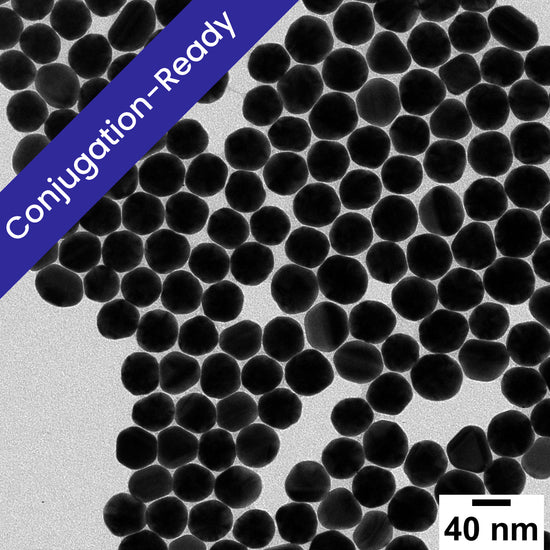
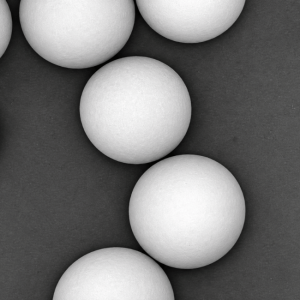
BioReady Streptavidin Gold Nanospheres are pre-functionalized nanoparticle reporters designed for diagnostic assays, immunodetection, biosensing, and molecular labeling.
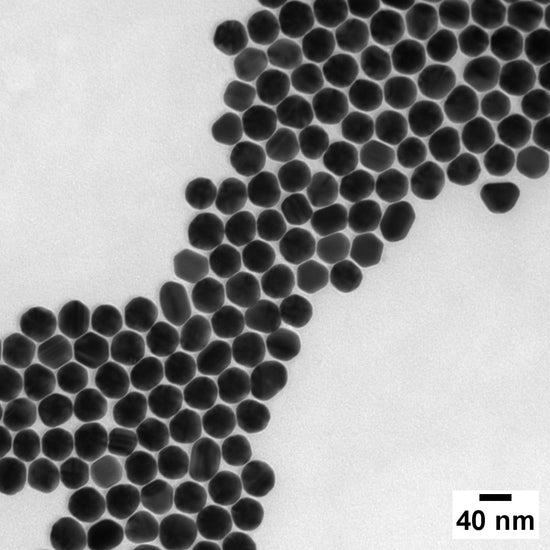
Tetrameric streptavidin is covalently immobilized on monodisperse 40 nm spherical gold nanoparticles. The resulting conjugates bind biotinylated antibodies, proteins, and nucleic-acid probes through the high-affinity streptavidin-biotin interaction, with an approximate dissociation constant of:
Kd≈10−15 M
The covalently attached streptavidin layer provides consistent surface coverage and reduces protein desorption in surfactant-containing assay buffers. The 40 nm gold core provides strong visible optical extinction, with an extinction maximum near 520–530 nm, producing high-contrast red test and control lines.
The product is supplied at an optical density of 10 OD in an aqueous buffer containing 1×PBS, 0.5% BSA, and 0.05% sodium azide.
Key features
- High-affinity biotin capture: Binds biotinylated antibodies, proteins, oligonucleotides, and other probes.
- No chemical activation required: Avoids EDC/NHS coupling and passive-adsorption optimization.
- Ready-to-use reporter platform: Biotinylated targets can be attached by simple mixing and incubation.
- High optical concentration: The 10 OD formulation reduces shipping volume and permits dilution into custom assay matrices.
- Controlled particle size: A TEM diameter of 40±4 nm and CV≤15% support consistent membrane migration and line intensity.
- Stabilized formulation: BSA helps reduce nonspecific interactions, while sodium azide provides antimicrobial preservation.
Specifications
| Parameter | Specification |
|---|---|
| Core material | Pure metallic gold, Au0 |
| Surface functionalization | Covalently immobilized streptavidin |
| Nominal core diameter, TEM | 40±4 nm |
| Size distribution | CV≤15% |
| Hydrodynamic diameter, DLS | 40–70 nm |
| Optical density | 10 OD at λmax |
| Extinction peak | λmax=520–530 nm |
| Zeta potential | ≤−10 mV |
| Buffer | 1×PBS, pH 6.8–8.2 |
| BSA concentration | 0.5% |
| Sodium azide concentration | 0.05% |
| Available package volumes | 200 µL, 1 mL, 5 mL, and 10 mL |
| Storage temperature | 2∘C to 8∘C |
| Freezing | Do not freeze |
| Shelf life | 12 months from receipt when stored properly |
Applications
- Lateral flow rapid diagnostic assays: Detection of biotinylated monoclonal or polyclonal antibodies and dual-biotinylated PCR amplicons.
- Immunohistochemistry and immunocytochemistry: High-contrast labels for brightfield, darkfield, and transmission electron microscopy.
- Western blotting and dot blots: Secondary detection reagent for biotinylated primary antibodies and recombinant fusion tags.
- Biosensors: Signal amplification in surface plasmon resonance, quartz crystal microbalance, and electrochemical systems.
- Surface plasmon metrology: Mass and optical signal enhancement on functionalized sensor surfaces.
Biotin-binding protocol
1. Determine the stoichiometric ratio
Estimate the desired molar ratio of biotinylated target to streptavidin-gold. Excess biotinylated probe may remain free in solution and compete with nanoparticle-bound targets. Insufficient probe may leave streptavidin binding sites unoccupied.
2. Incubate
Combine the biotinylated molecule with the 10 OD streptavidin-gold suspension in a compatible assay buffer, such as:
- 1×PBS
- TBS
- Another validated buffer near pH 7.2–7.4
Incubate for approximately 30 to 60 minutes at room temperature with gentle agitation.
3. Remove unbound ligand
For low-molecular-weight biotin conjugates or sensitive strip assays, remove unbound material by one of the following methods:
- Gentle centrifugation at approximately 3,000–5,000×g for 15 to 20 minutes
- Centrifugal ultrafiltration using a 100 kDa molecular-weight cutoff filter
The selected conditions should be validated for the specific conjugate to avoid nanoparticle loss or aggregation.
4. Resuspend
Remove the supernatant containing unbound biotinylated material and gently resuspend the nanoparticle conjugate in the intended conjugate-release buffer.
The buffer may contain components such as:
- Tween-20
- Triton X-100
- Sucrose
- Trehalose
Compatibility should be confirmed before use in the final assay.
Handling and storage
- Store upright at 2∘C to 8∘C.
- Protect from light.
- Do not freeze. Freezing can damage the stabilization layer and cause irreversible aggregation and precipitation.
- Gently invert or swirl the vial before pipetting.
- Avoid harsh ultrasonic treatment and high-speed vortexing, which may denature the immobilized streptavidin.
- Keep the container tightly closed when not in use.
- The formulation contains 0.05% sodium azide as an antimicrobial preservative.
- This product is not intended for direct in vivo injection without appropriate buffer exchange and formulation validation.
Product relationship
Available Through Applied Physics
Applied Physics supplies and supports quotation of this product. Product branding and manufacturer information, where stated on the product page or supporting documentation, remain authoritative.
Applied Physics portfolio: General
Catalog relationship: Available Through Applied Physics
Related Applied Physics resources
Continue through the General portfolio
Use these technical and portfolio pages to compare applications and related equipment. To keep this exact product attached to an RFQ, use the product’s existing Request a Quote or Add To Order control.


Reviews
There are no reviews yet.