
Description
Carboxyl-Functionalized 50 nm Gold Nanospheres
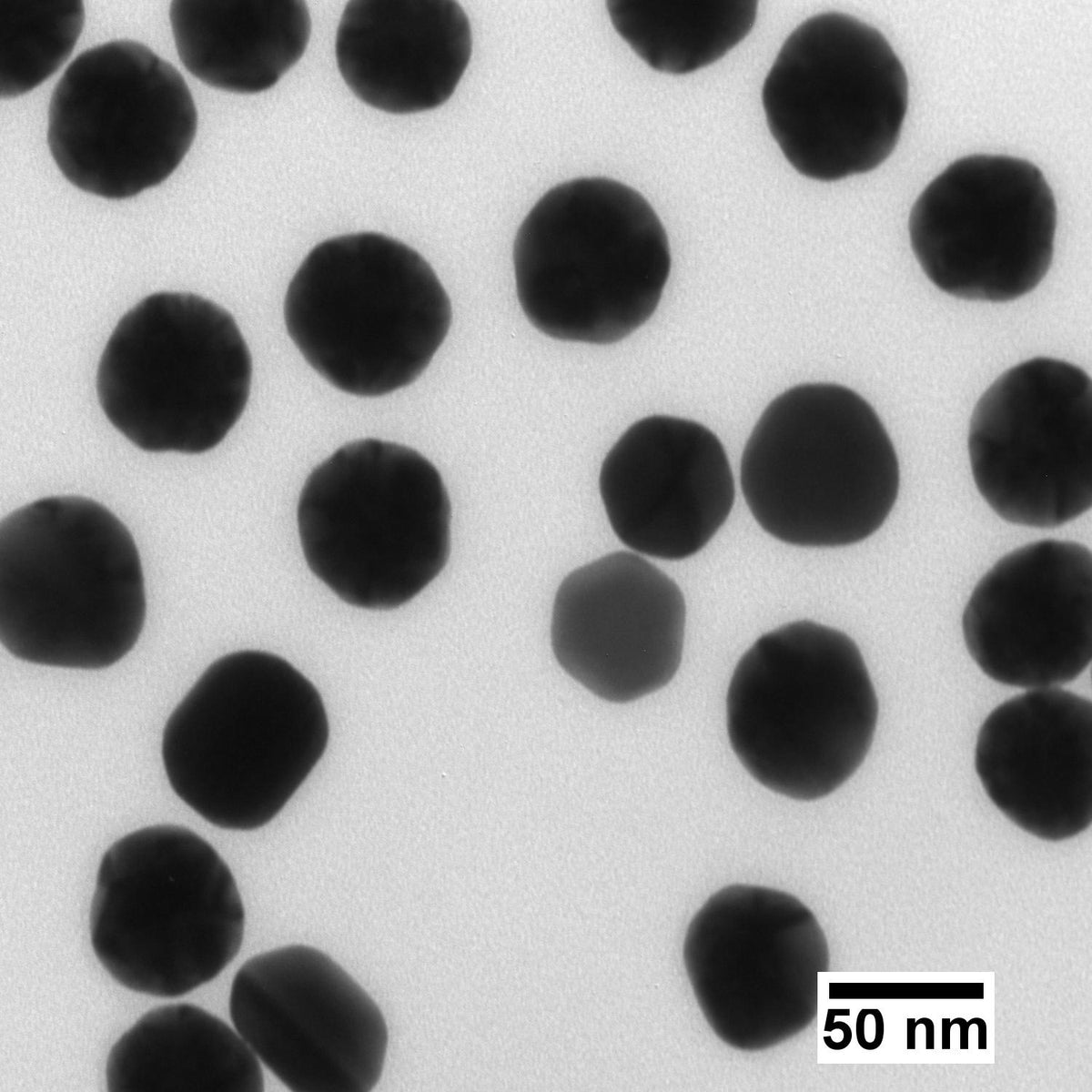
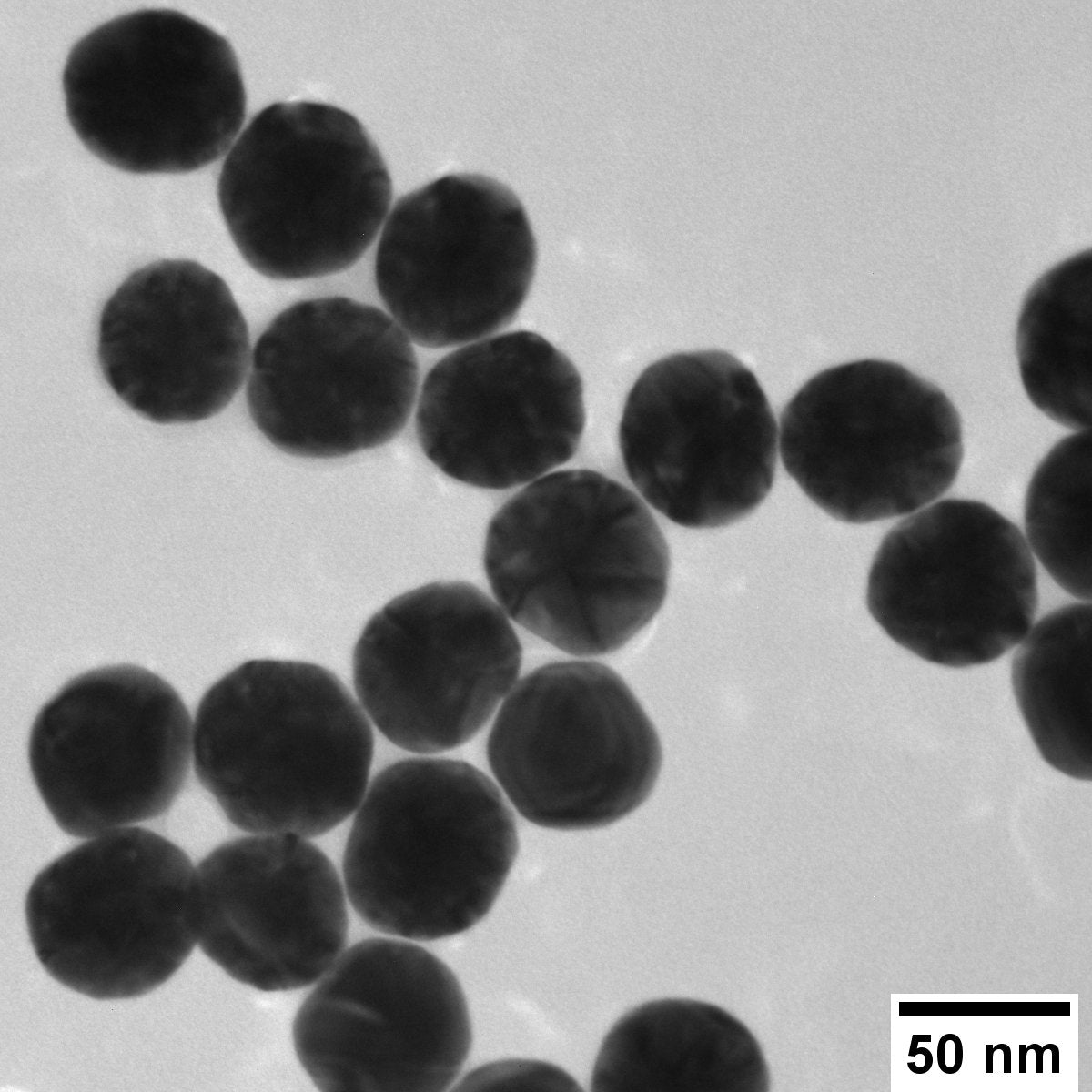
Carboxyl-functionalized 50 nm gold nanospheres are designed for diagnostic assay development, biosensing, molecular labeling, and optical detection applications.
Their terminal carboxylic acid groups enable covalent attachment of primary amine-containing molecules through standard carbodiimide chemistry using EDC/NHS or Sulfo-NHS. This provides stronger ligand retention than passive adsorption onto citrate-stabilized gold nanoparticles.
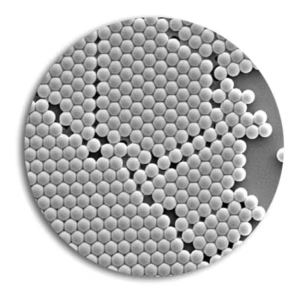
The particles have a narrow size distribution, uniform spherical morphology, and consistent optical properties between batches. Their 50 nm gold cores produce a strong localized surface plasmon resonance (LSPR) extinction peak at approximately 530–535 nm, making them suitable for colorimetric assays, lateral flow devices, optical microscopy, and related applications.
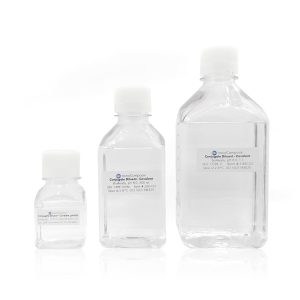
They are supplied at 1.0 mg/mL in a low-ionic-strength aqueous buffer to support colloidal stability and preserve a strongly negative zeta potential.
Key features
- Covalent conjugation: Terminal carboxyl groups support attachment to primary amines on antibodies, enzymes, proteins, and oligonucleotides.
- Improved ligand retention: Covalent amide bonds reduce ligand desorption and displacement in serum, biological fluids, and surfactant-containing buffers.
- Monodisperse particle geometry: Uniform 50 nm spheres provide predictable surface area and consistent ligand-loading behavior.
- Strong plasmonic response: An LSPR peak near 530–535 nm provides strong visible and spectrophotometric signals.
- Low-salt formulation: The aqueous matrix helps reduce premature aggregation during activation and coupling procedures.
Specifications
| Parameter | Specification |
|---|---|
| Core material | Pure gold, Au |
| Surface chemistry | Carboxylic acid, −COOH, carboxyl-terminated |
| Nominal core diameter | 50 nm |
| Gold concentration | 1.0 mg/mL |
| Particle morphology | Monodisperse spherical particles |
| LSPR extinction peak | Approximately 530–535 nm |
| Zeta potential | Strongly negative, ≤−30 mV |
| Carrier vehicle | Ultrapure deionized water or low-ionic-strength aqueous buffer |
| pH range | 7.0–8.5 |
| Shelf life | 12 months from delivery when unopened and properly stored |
| Storage temperature | 2∘C to 8∘C |
| Freezing | Do not freeze |
Covalent conjugation overview
1. Carboxyl activation
Activate the surface carboxyl groups with:
- EDC, 1-ethyl-3-(3-dimethylaminopropyl)carbodiimide
- NHS, N-hydroxysuccinimide
- Sulfo-NHS, where appropriate
Activation is commonly performed in MES buffer at approximately pH 5.5–6.0. The reaction forms amine-reactive NHS-ester intermediates on the nanoparticle surface.
2. Ligand coupling
Add the primary amine-containing biomolecule, such as an antibody, receptor, protein, or oligonucleotide, in a physiological coupling buffer such as PBS or HEPES at approximately pH 7.2–7.8.
The amine groups react with the activated carboxyl groups to form stable amide bonds.
3. Quenching and blocking
Quench remaining active esters with hydroxylamine or glycine. A blocking agent, such as BSA or PEG, may then be used to reduce nonspecific binding sites.
4. Purification
Remove unbound ligands and excess reagents using a suitable gentle method, such as:
- Centrifugation
- Ultrafiltration
- Dialysis
Resuspend the purified conjugate in the selected storage buffer.
Actual reagent concentrations, reaction times, purification conditions, and centrifugation parameters should be optimized for the specific biomolecule and assay format.
Applications
- Lateral flow immunoassays: Preparation of covalently linked antibody conjugates for diagnostic strips requiring resistance to salt and detergent washes.
- Colorimetric biosensors: Rapid analyte detection based on strong optical extinction and plasmonic color changes.
- Surface-enhanced Raman spectroscopy: Nanoscale gold substrates for electromagnetic enhancement and Raman reporter attachment.
- Cellular labeling: High-contrast markers for optical, confocal, and electron microscopy.
- Molecular labeling: Attachment of antibodies, enzymes, receptors, peptides, and nucleic-acid probes.
Handling and storage
- Store upright at 2∘C to 8∘C.
- Protect the suspension from light.
- Do not freeze. Freezing can cause irreversible aggregation and permanent precipitation of the gold colloid.
- Gently invert or swirl the vial before use to produce a homogeneous suspension.
- Avoid prolonged or intense bath sonication.
- Use clean, disposable pipette tips when removing aliquots.
- Keep the container tightly capped when not in use to limit contamination and evaporation.
Product relationship
Available Through Applied Physics
Applied Physics supplies and supports quotation of this product. Product branding and manufacturer information, where stated on the product page or supporting documentation, remain authoritative.
Applied Physics portfolio: General
Catalog relationship: Available Through Applied Physics
Related Applied Physics resources
Continue through the General portfolio
Use these technical and portfolio pages to compare applications and related equipment. To keep this exact product attached to an RFQ, use the product’s existing Request a Quote or Add To Order control.


Reviews
There are no reviews yet.