
Cleanroom Contamination Control Strategies for Biotech

Discover proven cleanroom contamination control strategies for biotech, from airflow visualization to FDA compliance. Learn how to protect your operations.
Bridging the Gap in Cleanroom Airflow Validation: How the AP50 Outperforms Traditional LN2 Foggers
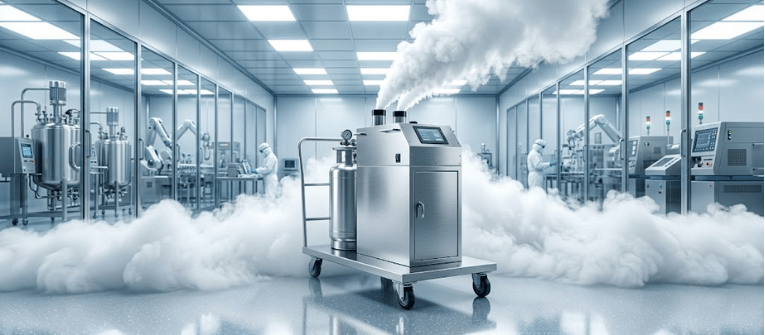
Cleanroom airflow validation is essential in pharmaceutical, semiconductor, and sterile medical-device manufacturing. Airflow visualization studies (smoke studies/AVS) help demonstrate that air moves as intended, protects critical areas, and minimizes turbulence around open products and processes. Traditional liquid-nitrogen (LN2) foggers produce residue-free fog but may have limits in fog density, throw distance, operating time, and buoyancy […]
Training Your Team for Effective Smoke Studies: A Step-by-Step Protocol
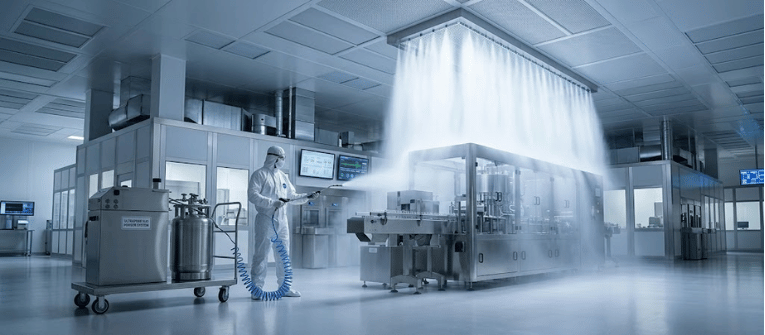
Visualizing airflow is a critical requirement for maintaining the integrity of any controlled environment. While sensors and monitors provide data, a smoke study or airflow visualization offers the only physical proof of how air actually moves around equipment, personnel, and work surfaces. An improperly executed smoke study can lead to regulatory observations or, worse, undetected […]
Integrating Real-Time Microbial Monitoring with Traditional Airflow Visualization for Enhanced Safety
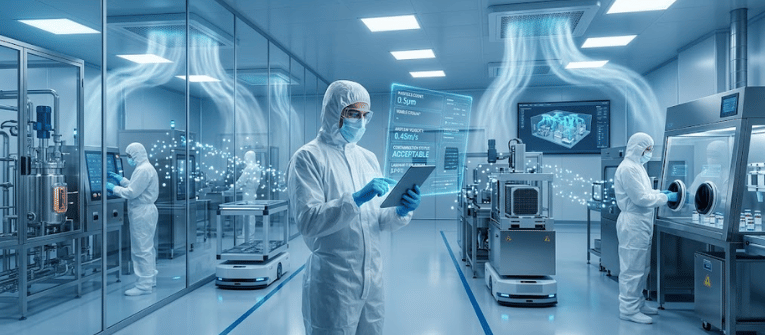
In the high-stakes environments of pharmaceutical compounding, semiconductor fabrication, and biotechnology, the mantra is control what you can measure. Historically, contamination control has relied on two distinct pillars: Airflow Visualization (Smoke Studies) to see where air goes, and Microbial Monitoring to identify what is in that air. However, as we move into 2026, the industry […]
Storage and Transport of Sensitive Wafers: How to Protect Them from Damage
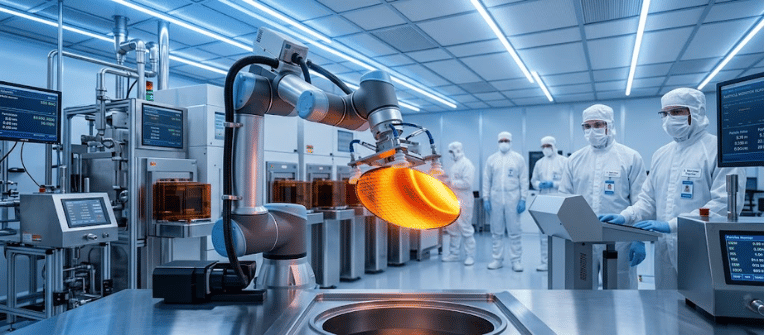
In the high-stakes world of semiconductor manufacturing, the integrity of a wafer, especially a calibration or contamination wafer standard, is paramount. Even a microscopic particle or a slight electrostatic discharge (ESD) can compromise the accuracy of metrology tools, leading to costly errors in the production line. Protecting these sensitive components requires a rigorous approach to […]
The Role of Advanced Contamination Control in Quantum Computing Research Labs
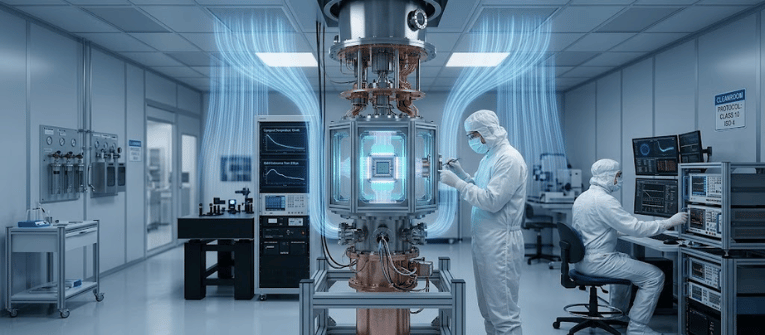
As the global race for quantum supremacy intensifies, the focus has shifted from theoretical algorithms to the physical reality of the laboratory. Quantum computers are among the most sensitive instruments ever engineered. Unlike traditional silicon-based processors, quantum processors operate on the edge of physical stability. In these environments, even a microscopic particle or a slight […]
Neutrally Buoyant Fog: Understanding Droplet Size, Physics Limits, and What Truly Matters in Cleanroom and Airflow Visualization
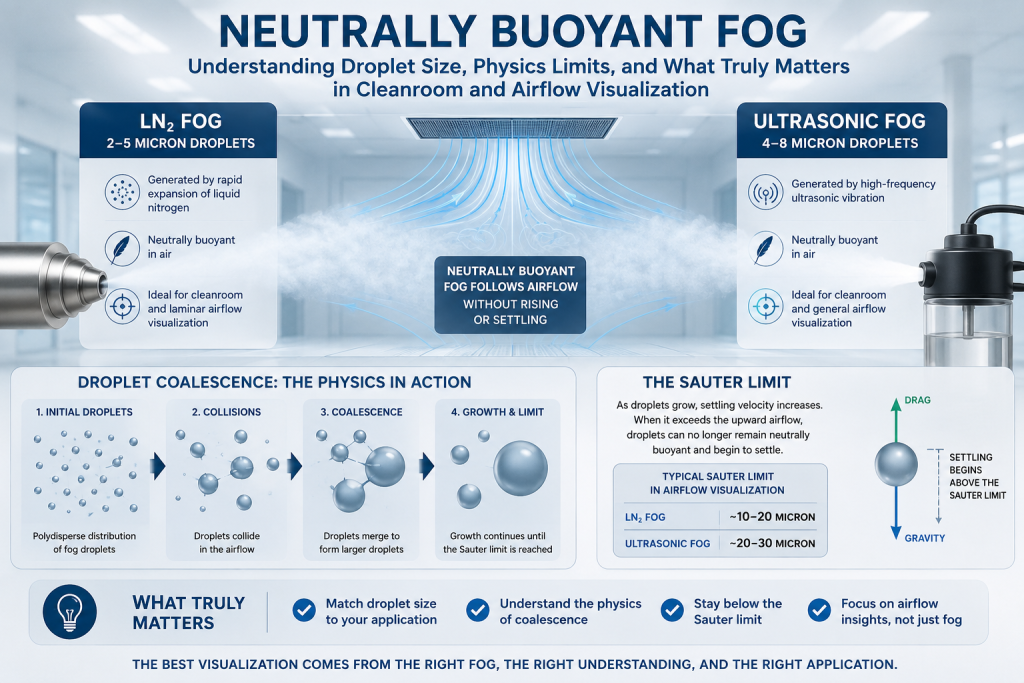
Over the past year, the Applied Physics sales team has seen a sharp increase in questions around “neutrally buoyant fog.” Customers across pharmaceutical, semiconductor, and regulated manufacturing environments are asking: These are valid questions—and they deserve real, physics-based answers rather than simplified marketing claims. What Does “Neutrally Buoyant Fog” Actually Mean? In strict physical terms, […]
The Technical Evolution of Vaporized Hydrogen Peroxide (VHP) Systems
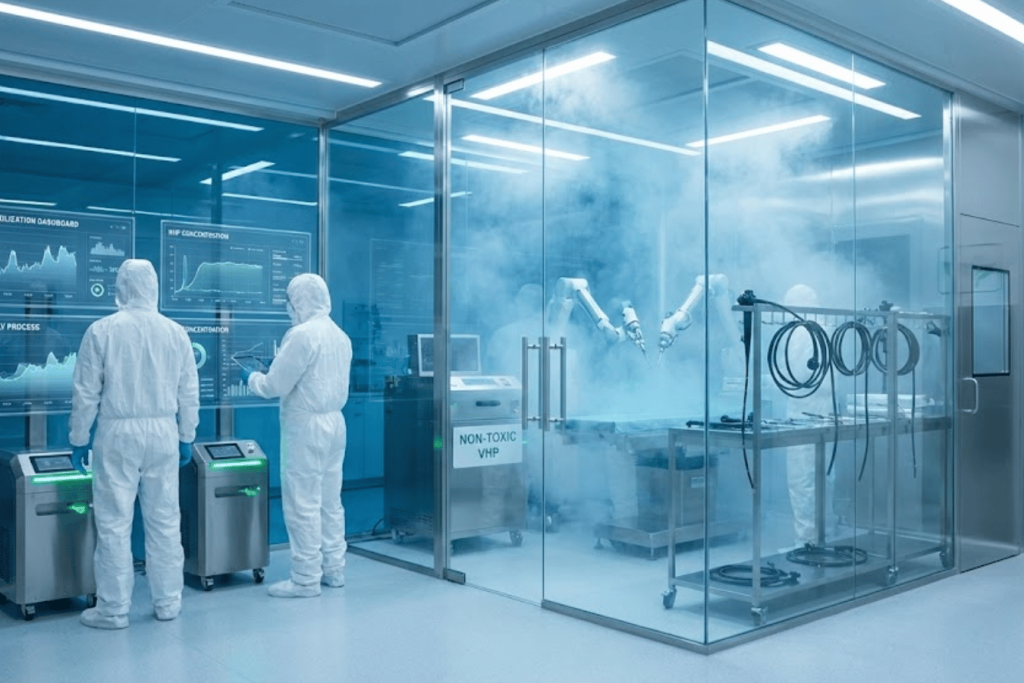
Vaporized Hydrogen Peroxide (VHP) has transitioned from a niche laboratory tool to the gold standard for low-temperature sterilization in the pharmaceutical and healthcare sectors. As we move through 2026, VHP systems are increasingly replacing older, more toxic methods like Ethylene Oxide (EtO). This article examines the technical journey of VHP, its sophisticated mechanism of action, […]
Why SSIS Tools Must Be Calibrated to NIST-Traceable Particle Size Standards
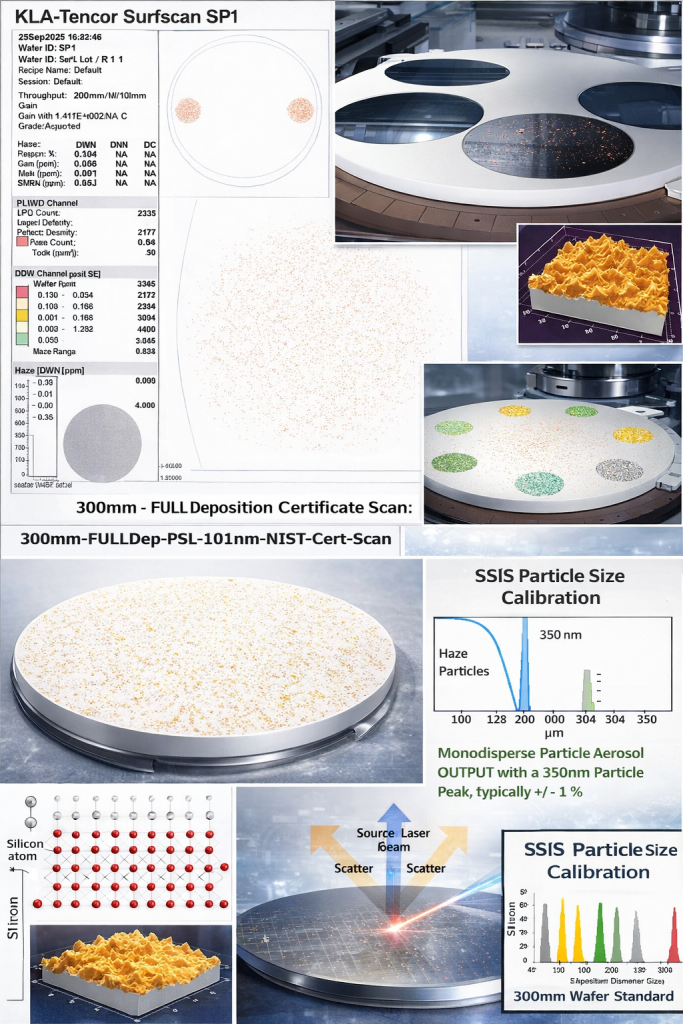
SSIS tools (Surface Scanning Inspection Systems) must be calibrated to NIST-traceable particle size standards to ensure particle sizing is consistent, comparable, and actionable across tools, fabs, and time. When particle size data is accurate and standardized, contamination control teams can identify sources faster, reduce false alarms, improve tool matching, and protect yield—especially at advanced nodes […]
Modular Cleanroom Design Supported by Portable Foggers

In industries where contamination control is mission-critical, such as pharmaceuticals, biotechnology, medical device manufacturing, and advanced electronics, cleanroom technology is the backbone of quality and compliance. As the demand for flexible, scalable, and efficient cleanroom solutions continues to grow, modular cleanroom designs supported by portable foggers are rapidly becoming the gold standard. This article explains […]