Description
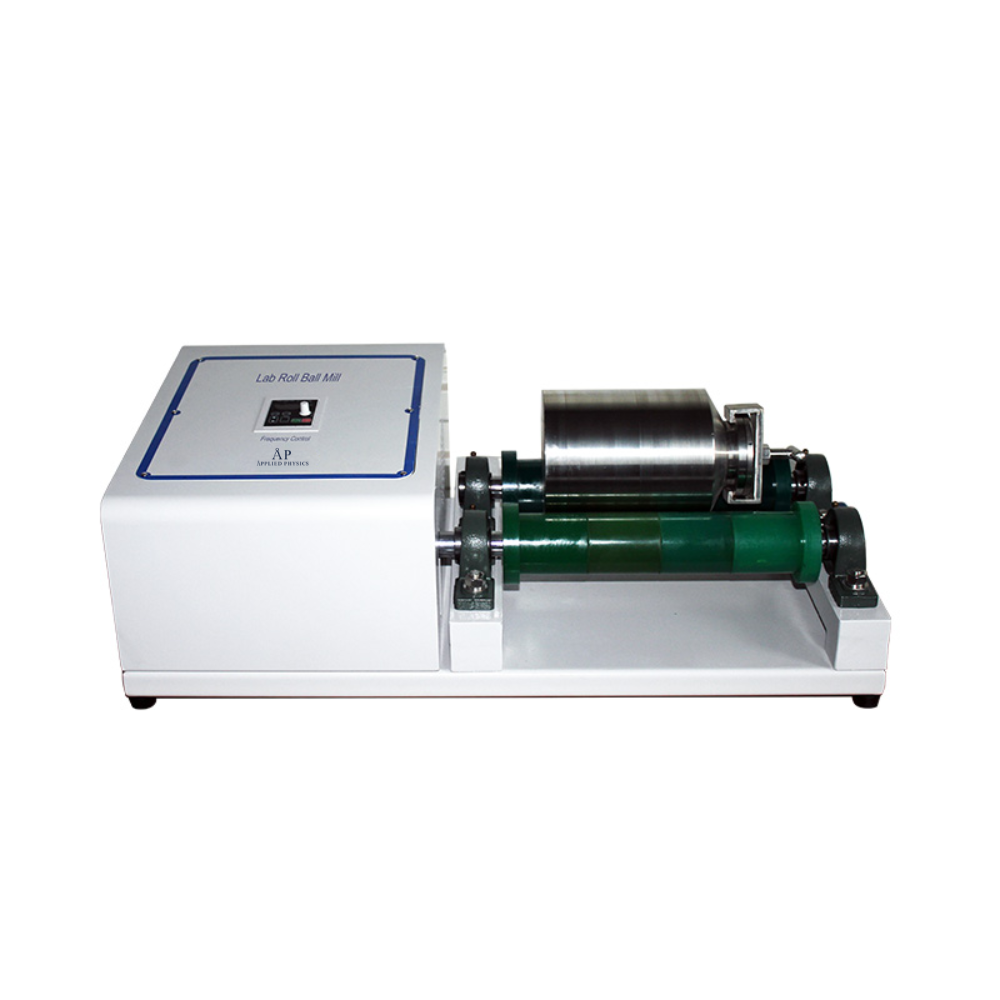
Laboratory Roller Ball Mill 0.5~15L
Application:
The laboratory roller ball mill is a superfine grinding and mixing equipment for laboratories and small-batch production. It has an elegant and novel appearance, a compact structure, and is easy to operate. It features high work efficiency and uniform fine particle size, making it a preferred device for scientific research, teaching, experiments, and production. It can be widely used in industries such as electronic materials, magnetic materials, ceramic slurries, non-metallic minerals, metal minerals, and new materials.
Features:
1. The machine has a compact structure and is easy to operate.
2. It features high work efficiency and uniform grinding particle size.
3. By adjusting the moving roller, grinding jars with different outer diameters within a certain range can be used.
4. Jar replacement is convenient, and both dry and wet grinding are uniform.
Technical Parameters:
Model
BKBM-5
BKBM-15
Capacity
0.5~5L
0.5~15L
Pot Quantity
1
1
Spindle Speed Range
60~570rpm±10
Effective Length of Roller Shaft
260mm
340mm
Adjustable Distance Between Roller Shafts
120mm
140mm
Single Station Distance
260mm
340mm
Maximum Load per Tank
35kg
80kg
Maximum Roller Speed
570rpm
Optional Accessory
Ball Mill Tank
Roller stainless steel ball mill tank, roller corundum ball mill tank, roller nylon ball mill tank, roller polytetrafluoroethylene(ptfe) ball mill tank
Grinding Ball
Stainless steel balls, zirconia balls, alumina balls, PU balls, steel carbon balls, tungsten balls, agate balls, cemented carbide balls, silicon nitride balls, high wear-resistant steel balls, manganese steel balls, nylon balls, cemented carbide, glass and other special metal materials
Consumption
0.4KW
0.75KW
Power Supply
AC220V, 50/60Hz(Standard); AC110V, 50/60Hz(Optional)
External Size(W*H*D)
730*415*260mm
845*435*270mm
Package Size(W*H*D)
750*450*300mm
850*450*300mm
Net Weight
32kg
43kg
Gross Weight
45kg
60kg
Note: Both the pots and balls are optional. Their materials are selected according to the customer’s materials and requirements. The loadable material is 1/3 of the volume capacity, multiply the volume of the loadable material by the bulk density of the material to get the weight of the loadable material.
Only logged in customers who have purchased this product may leave a review.


Reviews
There are no reviews yet.