
Table of Contents
- What Is a Contamination Control Strategy?
- Regulatory Requirements: Is CCS Mandatory?
- How Contamination Control Strategy Relates to ISO 14644-1 Cleanroom Standards
- Core Components of an Effective CCS
- Risk-Based Assessment and Microbial Contamination Mitigation
- Pharmaceutical Contamination Control Strategy Template and Documentation
- Implementing CCS in Existing Facilities: Small-Scale vs. Large-Scale
- Contamination Control Strategy Audit Checklist for Compliance
- Digital Solutions and Monitoring for Continuous CCS Validation
- Frequently Asked Questions
Last Updated: August 31, 2026
What Is a Contamination Control Strategy?
A contamination control strategy is a documented, science-based plan that identifies potential sources of contamination in a manufacturing or compounding environment and establishes preventive measures, monitoring protocols, and corrective actions to minimize risk. It’s not a single procedure, it’s a comprehensive framework that connects facility design, process controls, personnel practices, and environmental monitoring into a unified system.
The core idea is straightforward: contamination doesn’t appear randomly. It follows predictable pathways. A CCS maps those pathways and blocks them before they compromise product quality. This approach has become central to how pharmaceutical manufacturers, compounding pharmacies, and sterile manufacturing facilities approach quality assurance.
What sets a modern CCS apart from older contamination management is the risk-based component. Rather than applying identical controls everywhere, a CCS concentrates resources on the highest-risk areas. A cleanroom’s sterile core, where product contact surfaces exist, demands more stringent monitoring than support areas. Personnel moving between zones present different contamination risks than equipment. The strategy accounts for these distinctions and scales controls accordingly.
At Applied Physics, we’ve worked with facilities across pharmaceutical manufacturing, healthcare, and semiconductor production. The facilities that maintain the strictest compliance records aren’t necessarily those with the most expensive equipment. They’re the ones with the clearest CCS documentation and the discipline to follow it consistently.
Regulatory Requirements: Is CCS Mandatory?
Yes. A contamination control strategy is mandatory for sterile pharmaceutical manufacturing in the United States. The requirement stems from multiple regulatory pathways, each with specific expectations.
The FDA’s guidance on sterile drug manufacturing explicitly requires manufacturers to develop and maintain a contamination control strategy as part of their quality management system (the FDA). This isn’t optional language, it’s a regulatory mandate embedded in current Good Manufacturing Practice (cGMP) requirements for sterile products. The agency views CCS as foundational to demonstrating that a manufacturer understands and controls their process.
For compounding pharmacies, the requirement flows through USP 797 and USP 800 standards. USP 797 mandates environmental monitoring and contamination risk assessment for all sterile preparations. USP 800 extends this to hazardous drugs. Both standards require documented procedures that align with a broader contamination control framework. A compounding pharmacy operating without a formal CCS cannot demonstrate USP 797 compliance during inspection.
The EU’s Annex 1 to the Guide to Good Manufacturing Practice (GMP) for Medicinal Products also mandates contamination control strategies, and many U.S. manufacturers serving international markets must meet both FDA and Annex 1 requirements. This creates a convergence: the regulatory expectation is consistent across major markets.
Inspectors specifically look for CCS documentation during FDA audits. A facility can have excellent cleanroom design and still face warning letters if the CCS documentation is incomplete or doesn’t reflect actual operations. The written strategy and the practiced strategy must align.
How Contamination Control Strategy Relates to ISO 14644-1 Cleanroom Standards
ISO 14644-1 defines cleanroom classification based on particle count limits: ISO Class 3 (highest cleanliness) through ISO Class 9 (lowest in controlled environments). Many facilities mistakenly treat ISO 14644-1 as a standalone standard. It’s not. It’s one component of a broader contamination control strategy.
Here’s the critical distinction: ISO 14644-1 specifies what a cleanroom must achieve in terms of particulate control. A contamination control strategy specifies how you’ll achieve and maintain it. The standard defines the target; the CCS defines the path.
A cleanroom classified as ISO Class 5 must maintain particle counts below specified thresholds. But achieving that classification requires more than HEPA filtration and air handling units. It requires understanding contamination sources, designing workflows that minimize particle generation, training personnel on gowning and movement protocols, validating that airflow patterns actually deliver the promised protection, and monitoring continuously to catch degradation before it violates the standard.
This is where many facilities struggle. They invest in cleanroom infrastructure, achieve initial ISO 14644-1 certification, then discover that maintaining that classification requires a disciplined CCS. Without one, particle counts drift upward over time. Personnel gowning procedures that seemed adequate during validation fail under real production conditions. Environmental monitoring reveals microbial contamination patterns nobody anticipated.
A well-designed CCS uses ISO 14644-1 classification as a baseline requirement, not a finish line. It builds additional controls layered on top of the standard’s requirements.
Core Components of an Effective CCS
An effective contamination control strategy integrates five interconnected components. Each one addresses a specific contamination pathway.
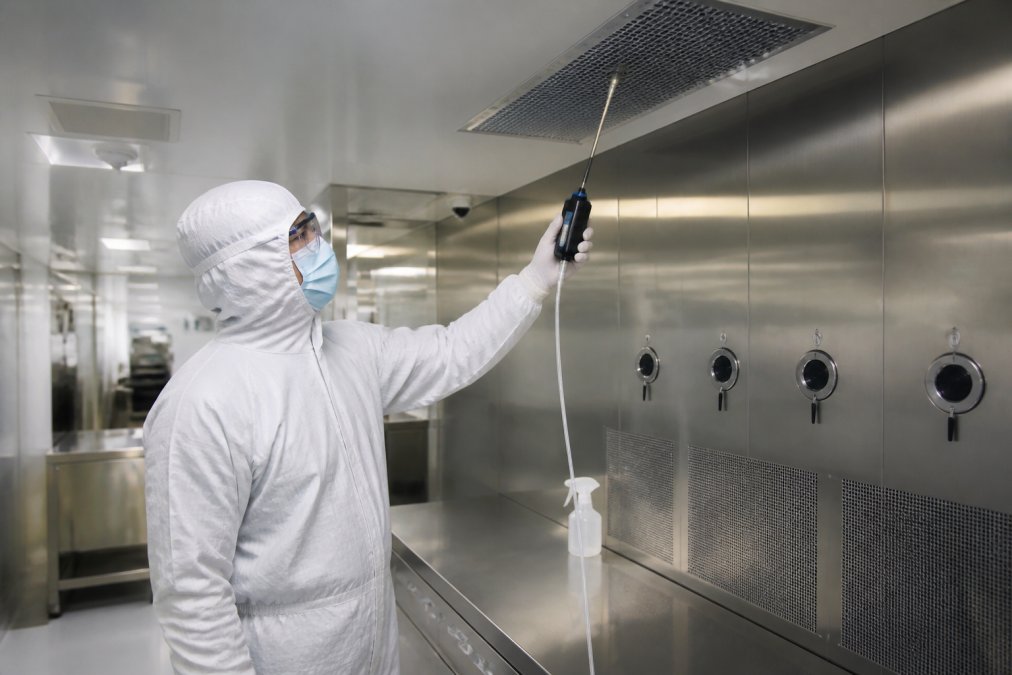
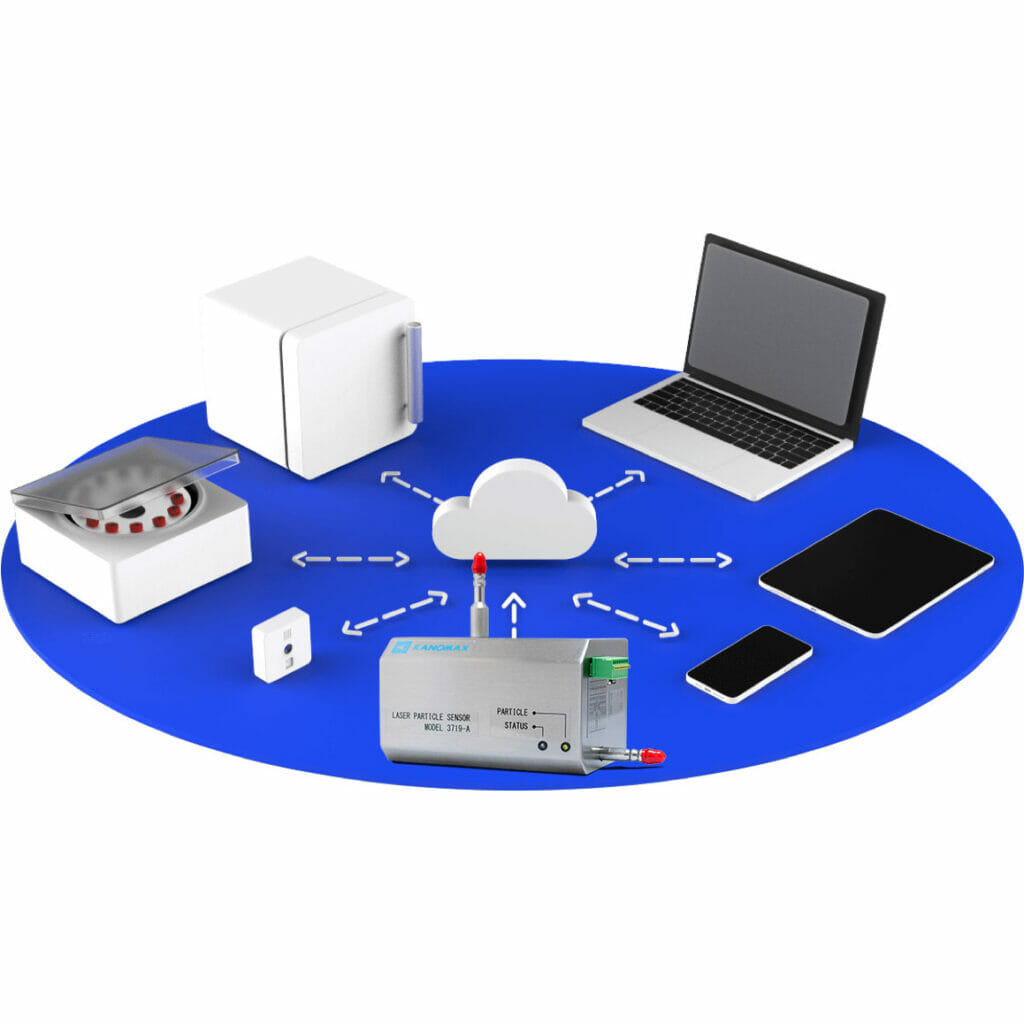
Environmental Monitoring and Particulate Control: This is the most visible component. It includes HEPA filtration, air handling system design, and continuous particle counting. Environmental monitoring captures both particulate (visible particles and aerosols) and microbial contamination (viable organisms). The monitoring program must define sampling locations, frequency, and action limits. Applied Physics’s Cleanroom Monitoring System – Model CRMS provides real-time integration of environmental data, enabling facilities to detect deviations before they become compliance issues.
Personnel Qualification and Gowning Protocols: Personnel are a primary contamination source. An effective CCS includes detailed gowning procedures, training validation, and ongoing competency assessment. This extends beyond the obvious (putting on a gown). It includes understanding how to move through the cleanroom without disrupting airflow, how to handle materials without generating particles, and how to recognize when a gown or glove has been compromised. Many facilities underestimate how much contamination control depends on consistent, correct personnel behavior.
Process and Equipment Qualification: Equipment used in sterile manufacturing must be qualified to demonstrate it doesn’t introduce contamination and that its operation is consistent. This includes validation of sterilization cycles, filtration systems, and any equipment that contacts sterile product or its immediate environment. The qualification process itself is part of the CCS, it’s the documented evidence that your process is under control.
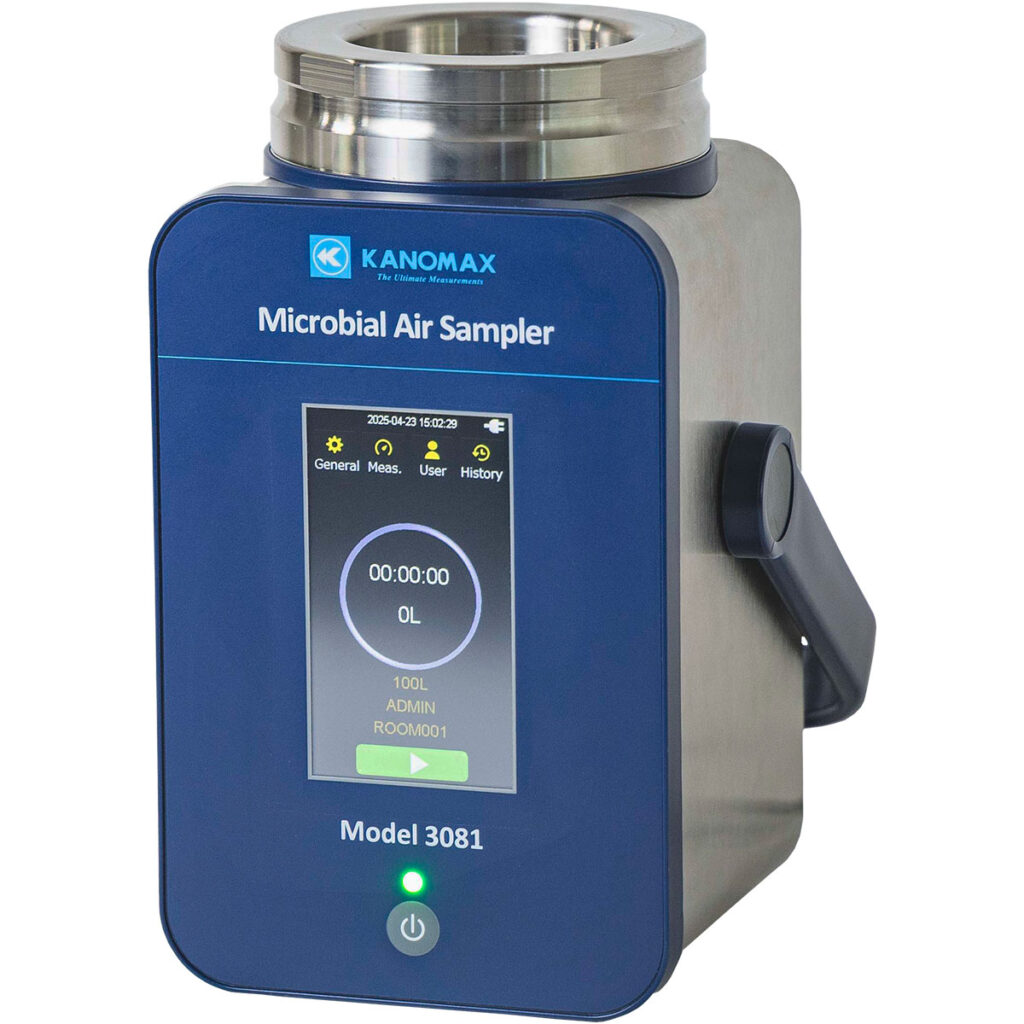
Microbial Contamination Risk Mitigation: Beyond particulate control, microbial contamination presents distinct risks. The CCS must address bioburden (the number of viable microorganisms on a surface or in a solution), sterilization validation, and the specific risks posed by non-sterile materials entering sterile environments. Applied Physics’s Microbial Air Sampler – 3080 Series enables precise sampling of airborne microorganisms, providing the data needed to validate that microbial contamination controls are effective.
Corrective and Preventive Actions (CAPA): An effective CCS isn’t static. It includes a documented process for investigating contamination events, implementing corrective actions to prevent recurrence, and capturing lessons learned. This feedback loop is what separates facilities that maintain compliance over years from those that face repeated inspection findings.
The most overlooked component is CAPA integration. Facilities often investigate contamination events but fail to update their CCS documentation with findings. This creates a gap: the strategy doesn’t reflect what you’ve learned from real operations.
Risk-Based Assessment and Microbial Contamination Mitigation
A risk-based approach to contamination control strategy prioritizes resources where they matter most. Not all areas of a facility present equal contamination risk. A sterile core, where product contact surfaces exist, demands more stringent controls than support areas. Personnel movement between zones presents different risks than equipment movement.
Risk assessment begins with identifying contamination sources and pathways. Sources include personnel, materials, equipment, and the environment itself. Pathways include direct contact, airborne particles, and cross-contamination through shared surfaces or equipment. Once you’ve mapped these, you can evaluate the likelihood and severity of contamination at each point.
The assessment typically uses a scoring system: likelihood (high, medium, low) multiplied by severity (critical, major, minor). High-risk combinations receive the most stringent controls. Medium-risk areas receive proportionate controls. Low-risk areas receive baseline controls. This approach ensures that a contamination control strategy is both effective and resource-efficient.
Microbial contamination requires specific attention because viable organisms can replicate and spread. A single microbial cell that escapes detection can become a biofilm. The CCS must address microbial risk through multiple barriers: environmental controls that limit microbial growth, sterilization processes that eliminate microorganisms, and monitoring that detects microbial contamination before it reaches product.
According to FDA guidance on sterile drug manufacturing, microbial contamination events must be investigated with the same rigor as particulate contamination events. The investigation should determine the source, assess the scope of affected product, and implement controls to prevent recurrence. This is where many facilities fall short, they treat microbial events as anomalies rather than system failures.
Pharmaceutical Contamination Control Strategy Template and Documentation
A practical contamination control strategy template should include specific sections that address regulatory expectations and operational reality. The template structure recommended by USP 797 standards for sterile compounding includes:
Section 1: Facility and Equipment Description
Document the cleanroom classification, air handling system design, equipment layout, and material flow. Include a floor plan showing personnel flow, material entry points, and environmental monitoring locations. This section demonstrates that you understand your facility and have intentionally designed it to support contamination control.
Section 2: Contamination Risk Assessment
Identify potential contamination sources for each process step. Rate each source by likelihood and severity. Document the controls you’ve implemented to address high-risk items. This section is where the risk-based approach becomes concrete.
Section 3: Environmental Monitoring Program
Define monitoring locations, frequency, and acceptance criteria. Specify what happens when monitoring results exceed action limits. Include the rationale for monitoring locations, why you’re sampling at these specific points. This section demonstrates that your monitoring program is scientifically justified, not arbitrary.
Section 4: Personnel Qualifications and Training
Document training requirements for all personnel working in controlled areas. Include initial qualification procedures and ongoing competency assessment. Specify gowning protocols and procedures for personnel who fail to meet competency standards. surface cleaning protocols.
Section 5: Process Controls and Equipment Qualification
Document the validation studies that demonstrate your process is under control. Include sterilization validation, filter integrity testing, and any other equipment qualification. Reference the specific protocols and results.
Section 6: Corrective and Preventive Actions
Establish procedures for investigating contamination events, implementing corrective actions, and assessing effectiveness. Document all CAPA activities and their outcomes. This section demonstrates that you learn from experience and continuously improve your contamination control strategy.
A well-structured template becomes the living document of your contamination control program. It’s not a compliance artifact, it’s the operational manual that guides daily activities.

Implementing CCS in Existing Facilities: Small-Scale vs. Large-Scale
Implementing a contamination control strategy in an existing facility presents different challenges depending on facility size. A small compounding pharmacy faces different constraints than a large pharmaceutical manufacturer, yet both must meet the same regulatory standards.
Small-Scale Implementation (Compounding Pharmacies and Micro-Manufacturers):
Small facilities often operate with limited resources and space. A contamination control strategy for a small operation must be focused and efficient. The strategy typically emphasizes personnel training and procedural controls over infrastructure investment. A small compounding pharmacy might achieve ISO Class 5 conditions through careful workflow design and rigorous gowning protocols rather than through massive air handling systems.
The advantage of small scale is agility. Changes to procedures can be implemented quickly. Environmental monitoring can be more frequent without overwhelming data management. The challenge is that every person on staff must understand and follow the contamination control strategy consistently. There’s less redundancy, if one person cuts corners, the entire system is compromised.
Small facilities should focus their CCS documentation on what makes their operation unique. Rather than copying a large manufacturer’s strategy, develop one that reflects your actual facility, personnel, and processes. The strategy should be detailed enough to guide operations but simple enough that every team member can understand and follow it.
Large-Scale Implementation (Pharmaceutical Manufacturers):
Large facilities have more resources but face greater complexity. A contamination control strategy for a large manufacturer must address multiple production lines, hundreds of personnel, and complex material flows. The strategy typically includes substantial infrastructure investment (advanced air handling systems, sophisticated environmental monitoring) combined with rigorous procedural controls.
The advantage of large scale is that infrastructure can be optimized for contamination control. Dedicated material entry systems, separate personnel flow paths, and sophisticated air handling can be designed from the beginning. The challenge is maintaining consistency across the entire operation. A deviation in one area can propagate through the system.
Large facilities should invest in digital solutions that support CCS implementation. Applied Physics’s environmental monitoring systems integrate data from multiple locations, enabling real-time detection of deviations and automated alerting. This level of integration becomes essential as facility size increases.
The implementation timeline differs significantly. A small facility might establish a basic contamination control strategy in weeks. A large facility might require months of planning, infrastructure validation, and personnel training before the strategy is fully operational. Both timelines are appropriate for their respective contexts.
Contamination Control Strategy Audit Checklist for Compliance
An audit checklist for contamination control strategy compliance should address both documentation and operational execution. Inspectors evaluate whether the written strategy exists and whether operations actually follow it.
| Audit Item | Compliance Indicator | Risk Level |
|---|---|---|
| CCS documentation exists and is current | Dated strategy document with version control | Critical |
| Risk assessment completed for all process steps | Risk assessment matrix with likelihood/severity scoring | Critical |
| Environmental monitoring program defined | Monitoring locations, frequency, and acceptance criteria documented | Critical |
| Personnel training records complete | Training records for all personnel in controlled areas | Critical |
| Equipment qualification documentation | Validation studies for sterilization, filtration, and critical equipment | Critical |
| CAPA procedures documented | Investigation records and corrective action effectiveness assessments | Critical |
| Monitoring results within acceptance limits | Recent environmental monitoring data showing compliance | Critical |
| Gowning procedures followed consistently | Observation of personnel gowning and movement in cleanroom | Major |
| Material handling procedures defined | Documentation of material entry procedures and quarantine protocols | Major |
| Airflow validation current | Recent airflow studies demonstrating ISO classification maintenance | Major |
During an audit, inspectors will review documentation first, then observe operations to verify that the documented strategy is actually being followed. A facility with excellent documentation but poor execution will receive findings. A facility with adequate documentation and consistent execution will pass.
The most common audit finding related to contamination control strategy is incomplete CAPA documentation. Facilities investigate contamination events but fail to document the investigation thoroughly or assess whether corrective actions actually prevented recurrence. This gap suggests that the CCS isn’t truly guiding operations, it’s just paperwork.
Inspectors specifically look for alignment between documented procedures and actual practices. If your CCS specifies that environmental monitoring occurs daily but records show weekly monitoring, you have a compliance gap. The written strategy and the practiced strategy must match.
Digital Solutions and Monitoring for Continuous CCS Validation
Modern contamination control strategy implementation increasingly relies on digital solutions that integrate environmental monitoring, data analysis, and compliance reporting. These systems enable continuous validation of the contamination control strategy rather than point-in-time assessments.
A digital monitoring system captures real-time particle counts, microbial sampling results, and environmental conditions (temperature, humidity, differential pressure). The system can alert personnel immediately when results exceed acceptance criteria, enabling rapid response before contamination reaches product. This is fundamentally different from traditional approaches where results are reviewed after the fact.
Applied Physics’s Cleanroom Monitoring System integrates environmental monitoring with data management and reporting. The system enables facilities to track trends, identify patterns, and demonstrate continuous compliance. This level of integration supports both operational efficiency and regulatory compliance.
Digital solutions also support CAPA integration. When environmental monitoring detects an anomaly, the system can trigger an investigation workflow, capture findings, document corrective actions, and track effectiveness. This creates a closed-loop system where learning from events directly feeds back into the contamination control strategy.
The investment in digital monitoring pays dividends during regulatory inspections. Rather than producing boxes of paper records, facilities can demonstrate real-time compliance through integrated data systems. Inspectors increasingly expect this level of sophistication in larger facilities.
For smaller facilities, digital solutions are becoming more accessible. Cloud-based monitoring platforms eliminate the need for expensive on-site infrastructure while still providing real-time data integration and reporting. The scale of implementation can match the facility’s size and resources.
A contamination control strategy is not optional, it’s a regulatory requirement that reflects the current understanding of how to manufacture sterile products safely. The strategy that works for your facility depends on your specific context: your facility size, your products, your personnel, and your processes. But the fundamental requirement is the same: document how you’ll prevent contamination, implement the controls you’ve documented, monitor continuously to verify effectiveness, and improve based on what you learn.
At Applied Physics, we support facilities at every stage of contamination control strategy implementation. Whether you’re validating airflow patterns with our cleanroom foggers, monitoring environmental conditions with our Cleanroom Monitoring System, or sampling microbial contamination with our 3080 Series sampler, our tools provide the precision and reliability that regulatory compliance demands. Contact Applied Physics to discuss how we can support your contamination control validation and help you maintain audit-ready compliance.
Frequently Asked Questions
Is a contamination control strategy mandatory under current FDA and GMP regulations?
Yes. The FDA’s Current Good Manufacturing Practice (CGMP) regulations and ICH Q9 guidelines require pharmaceutical manufacturers to implement a documented contamination control strategy. While the FDA does not mandate a specific format, the strategy must address identification of contamination sources, risk assessment, and control measures. Sterile compounding facilities must also comply with USP 797 standards. The requirement applies to all facilities producing sterile medicinal products, regardless of size.
What is the relationship between a contamination control strategy and ISO 14644-1 cleanroom standards?
ISO 14644-1 defines cleanroom classification and particle control requirements, while a contamination control strategy is the documented plan for managing all contamination risks, including microbial, particulate, and chemical. A CCS uses ISO 14644-1 classifications as part of its scientific justification for cleanroom design and environmental monitoring. The strategy explains why specific ISO classes are necessary and how they support product quality and regulatory compliance.
What should be included in a pharmaceutical contamination control strategy template?
A comprehensive pharmaceutical contamination control strategy template should include: contamination source identification, risk assessment methodology, cleanroom classification rationale, process validation approach, environmental monitoring program (particle and microbial), corrective and preventive actions (CAPA), personnel training requirements, equipment qualification, and audit readiness documentation. The template should align with ICH Q9 quality risk management principles and reference applicable USP chapters (797, 795) and Annex 1 requirements for sterile manufacturing.
How often should a contamination control strategy be reviewed and updated?
A contamination control strategy should be reviewed at least annually and whenever significant changes occur, such as facility modifications, process changes, equipment upgrades, or failed environmental monitoring results. Regulatory guidance emphasizes a lifecycle approach, meaning the CCS evolves as the facility matures. Many facilities conduct reviews during annual quality audits or when preparing for regulatory inspections. Digital monitoring systems can flag deviations that trigger immediate CCS review.