
High-containment laboratories handle virulent pathogens, recombinant organisms, and high-density liquid cultures that present severe respiratory hazards.
Decontamination protocols rely heavily on thermal steam sterilization to neutralize biohazardous materials before disposal.
Standard laboratory steam sterilizers can inadvertently expose facility personnel to viable pathogens during the initial air displacement phase.
When saturated steam enters the vessel, non-condensable cold air must be purged to establish direct thermal transfer.
This initial displacement creates violent shear forces across unsterilized loads, carrying aerosolized droplets into the exhaust stream.
Facilities operating under strict biocontainment mandates require specialized equipment, such as the BKQ-B Series Biosafety Autoclave, to physically trap and neutralize airborne pathogens before exhaust air exits the chamber.
Mechanics of Bioaerosol Generation During Chamber Evacuation
Dynamic air evacuation presents the highest contamination risk throughout the entire autoclave operational cycle. Understanding the fluid dynamics responsible for aerosol generation enables safety officers to configure defensible sterilization protocols.
Cold Air Displacement and Pathogen Dispersion
Saturated steam cannot effectively heat biohazard bags when non-condensable air pockets remain trapped in the load. Autoclaves purge this air through rapid gravity displacement or pulsed vacuum evacuations. During this purge, steam moves across open Petri dishes, contaminated pipette barrels, and liquid containers.
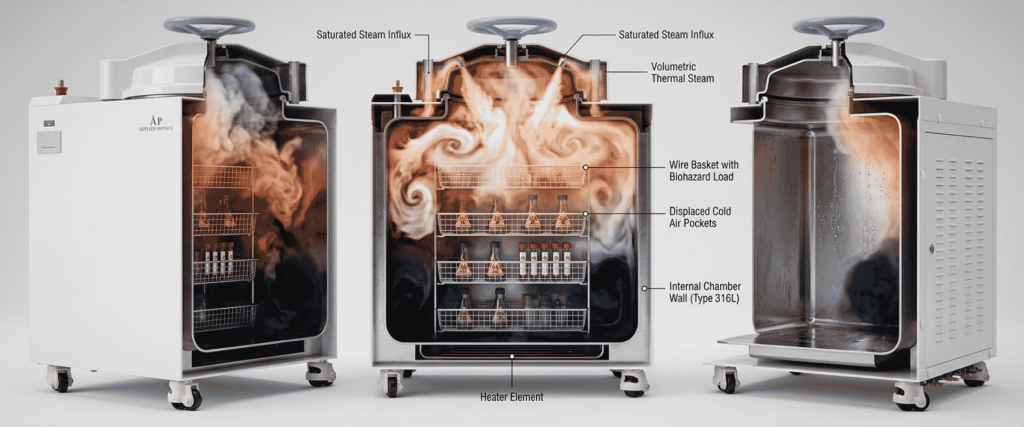
Thermal gradients generate rapid fluid movement, shearing liquid surfaces and atomizing micro-droplets containing live bacterial spores, viral particles, or endotoxins. Because the chamber temperature at this stage hovers between 40°C and 80°C, these entrained organisms remain fully viable. Reviewing technical updates across contamination control articles highlights how unmanaged venting compromises facility envelope barriers.
Pressure Differentials and Vent Velocity
Rapid exhaust venting causes sudden pressure drops inside the vessel. Low boiling point fractions flash into vapor, carrying aerosolized particulate upwards toward the exhaust line.
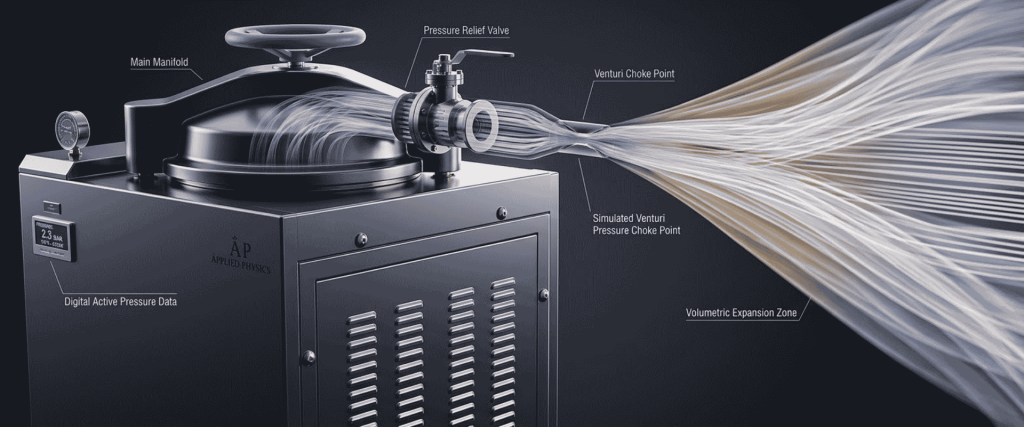
Without specialized physical barriers, these bioaerosols travel through the primary drain or exhaust manifold directly into the surrounding laboratory atmosphere. Compliance teams referencing established CDC biosafety standards confirm that unmitigated aerosol exhaust breaches primary containment protocols in BSL-2 and BSL-3 facilities.
Engineering Controls in the BKQ-B Series Biosafety Autoclave
Applied Physics engineered the BKQ-B Series to decouple necessary air evacuation from pathogen release. Specialized mechanical and thermal barriers safeguard personnel while maintaining validated cycle efficiency.
0.2 µm Hydrophobic PTFE Exhaust Filtration
Primary containment relies on an inline 0.2 µm hydrophobic polytetrafluoroethylene (PTFE) membrane filter assembly mounted on the exhaust path.
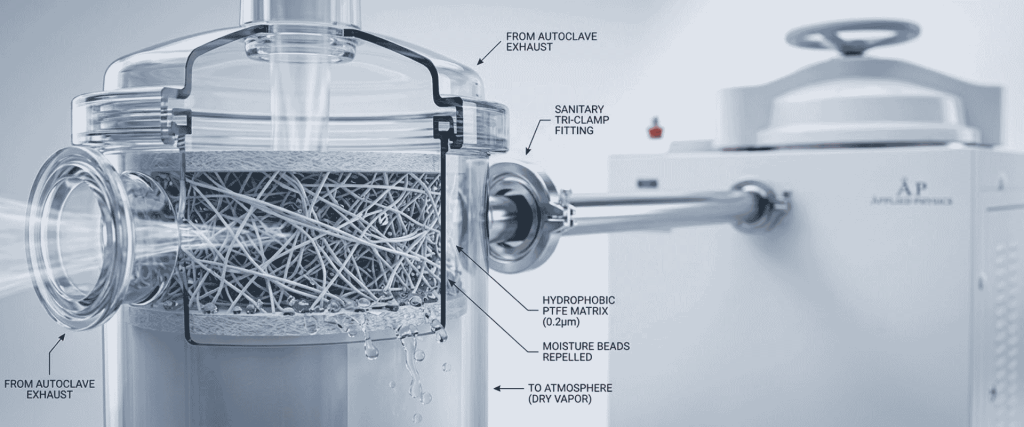
Hydrophobic membranes prevent liquid moisture and steam condensate from blinding the pore structure, allowing free passage of gases while capturing particulate matter down to sub-micron dimensions.
- Retention Efficiency: Exceeds 99.999% retention of aerosolized viral and bacterial particles, including resilient surrogates like Brevundimonas diminuta.
- Moisture Repellency: Hydrophobic fluoropolymer construction resists droplet accumulation, preventing pressure drops and cycle delays.
- Thermal Resistance: Designed to withstand continuous steam contact up to 138°C without pore deformation or polymer degradation.
Technical publications on cleanroom airflow guides reinforce the necessity of dry barrier media during dynamic air movement.
In-Situ Filter Decontamination Cycle
Standard external filters risk becoming secondary biohazards if pathogens load during pre-vacuum pulses. The BKQ-B Series resolves this through integrated in-situ thermal decontamination.
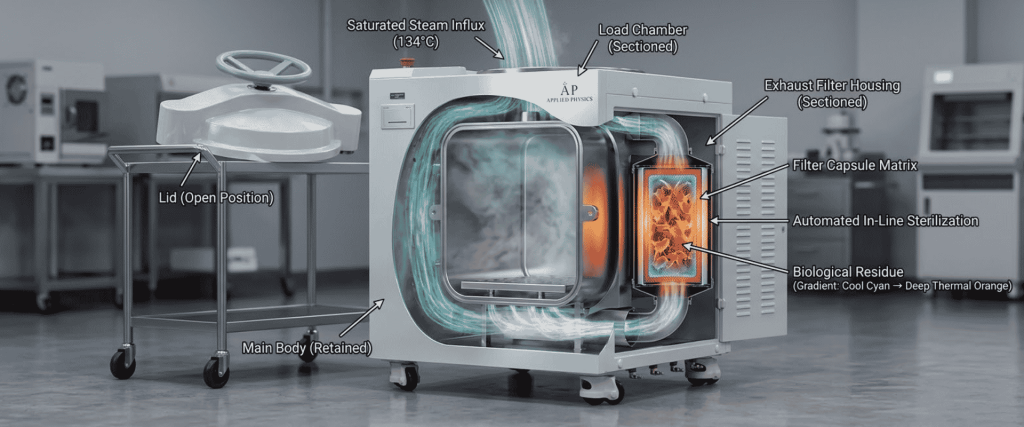
Saturated steam envelops the internal face of the filter housing during the main 121°C or 134°C sterilization dwell. The filter membrane undergoes the exact same exposure time ($F_0$ value) as the primary biohazard load. Trapped biological targets are completely inactivated before the system begins final exhaust venting and chamber drying.
Comparative Performance: Standard Autoclaves vs. Biosafety Containment Systems
Operating standard laboratory autoclaves for infectious biohazardous waste exposes technicians to avoidable biocontainment risks. The table below outlines critical engineering differences:
| Operational Metric | Conventional Vertical Autoclave | BKQ-B Series Biosafety Autoclave |
| Exhaust Air Pathway | Direct discharge via drain manifold | High-retention 0.2 µm PTFE barrier filter |
| Biological Aerosol Retention | Uncontrolled; 0% containment during purge | Certified 99.999% particulate capture |
| Effluent Condensate Treatment | Untreated drainage during pre-heat | High-temperature hold before drain release |
| Filter Decontamination | Manual off-site autoclaving required | Automated in-situ steam sterilization |
| Containment Classification | Suitable strictly for BSL-1 applications | Fully compliant with BSL-2 and BSL-3 rules |
| Cycle Parameter Logging | Basic analog or rudimentary display | Digital microprocessor with audit memory |
Facilities aligning their infrastructure with WHO laboratory biosafety regulations utilize sealed, filtered exhaust systems to guarantee reproducible decontamination.
Validation Protocols and Maintenance of Exhaust Filtration Systems
Defensible sterilization requires continuous monitoring rather than passive assumption. Rigorous operational workflows maintain filter integrity across repeated thermal cycles.
Filter Integrity Testing and Flow Resistance Monitoring
Porous membrane matrices face thermal stress during rapid cycling. Biosafety officers must validate filter performance using standardized aerosol challenge procedures or automated pressure-hold decay tests.
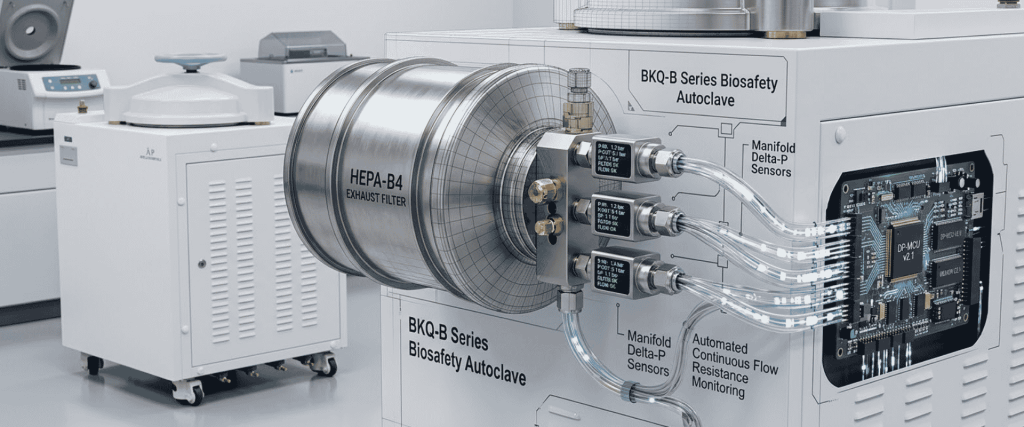
Monitoring differential pressure across the filter housing verifies that particulate accumulation has not restricted exhaust pathways. Engineers referencing specialized sterilization publications monitor venting time extensions as an early indicator of membrane fouling.
Condensate Decontamination Before Discharge
Chamber condensate formed during initial heating collects at the lowest point of the pressure vessel. Cold chamber surfaces prevent this liquid from reaching sterilizing temperatures immediately. The BKQ-B Series incorporates dedicated condensate retention, holding liquids inside the heated chamber boundary until the core temperature surpasses validated lethal exposure levels.
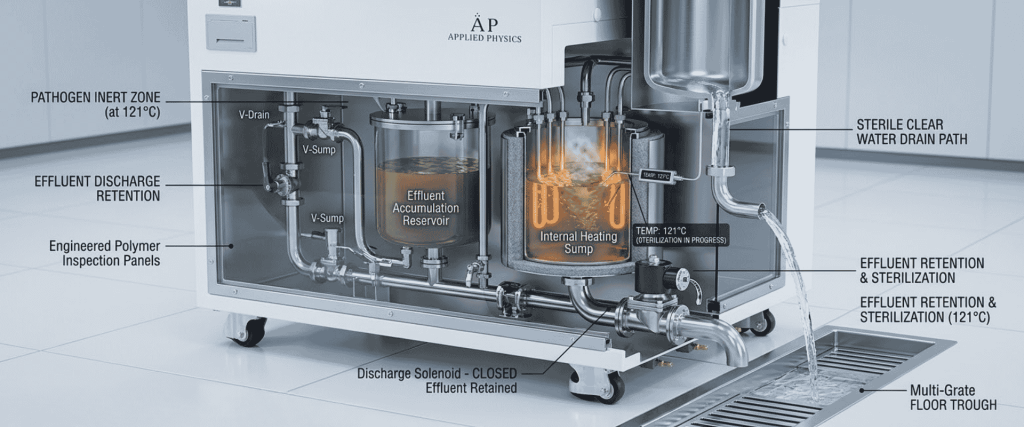
Discharging sterile condensate protects municipal drainage systems from biological transport. This methodology follows validated sterilization criteria outlined in international ISO 11134 sterilization frameworks.
Operational Guidelines for Processing Infectious Waste
Equipment engineering must be supported by correct operational loading protocols to achieve maximum containment.
- Bag Venting Management: Never tightly seal biohazard autoclave bags with rigid closures. Fold opening cuffs loosely or use dedicated steam-permeable filter patches to allow steam ingress without promoting aerosol geysers.
- Water Purity Control: Supply the steam generator with deionized water exhibiting electrical conductivity below 15 µS/cm. Mineral scaling on heater elements impedes rapid temperature progression and distorts cycle timing.
- Biological Indicator Positioning: Embed self-contained Geobacillus stearothermophilus ampoules inside the dense geometric center of waste packages to verify thermal penetration alongside air purge performance.
- Protective Equipment: Ensure operators wear full barrier PPE during loading and unloading, consulting current NIH containment guidelines for facility-specific precautions.
Further technical resources detailing metrology insights, equipment qualification protocols, and technical white papers provide operational teams with verified calibration methods.
Conclusion
Thermal processing of pathogenic waste requires strict containment from initial power-on through final cooldown.
Relying on standard open-vent steam sterilizers introduces unnecessary bioaerosol exposure risks during cold air purging.
Integrating the BKQ-B Series Biosafety Autoclave secures facility envelopes through 0.2 µm hydrophobic PTFE exhaust filtration, in-situ filter decontamination, and validated cycle control.
Upgrading sterilization equipment to match biosafety requirements ensures worker safety, regulatory compliance, and verified destruction of hazardous microbiological waste.
Frequently Asked Questions (FAQs)
1. How does an exhaust filter prevent laboratory contamination?
Hydrophobic 0.2 µm PTFE filters physically trap liquid micro-droplets and pathogenic aerosols expelled during chamber air evacuation, releasing only purified gas into the room.
2. Can standard laboratory autoclaves safely process BSL-3 waste?
Standard autoclaves lack exhaust filtration and release untreated air into the room, making them unsuited for high-containment BSL-3 pathogens without auxiliary containment.
3. Why must the exhaust filter membrane be hydrophobic?
Hydrophobic membranes naturally repel moisture, preventing steam condensate from saturating the filter pores, which avoids backpressure spikes and cycle termination.
4. When should technicians replace the autoclave exhaust filter?
Technicians should replace the filter annually or following a failed pressure-decay integrity test, whichever milestone occurs first under regular validation schedules.