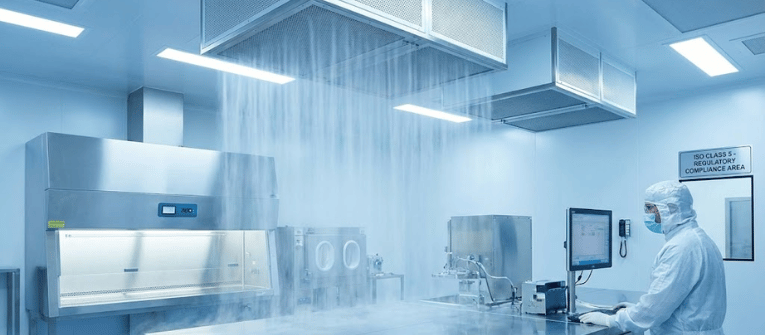
Ensuring the integrity of a cleanroom environment requires more than just high-end filtration; it demands visual proof of airflow patterns.
ISO 14644-3 compliant smoke testing, also known as Airflow Visualization, is the gold standard for verifying that contaminants are effectively swept away from critical zones.
This article explores the strategic implementation of smoke studies to guarantee regulatory compliance and operational excellence.
ISO 14644-3 (Part 3: Test Methods) outlines the procedures for characterizing cleanroom performance. While particle counting tells you how many particles are present, smoke testing shows you where they go.
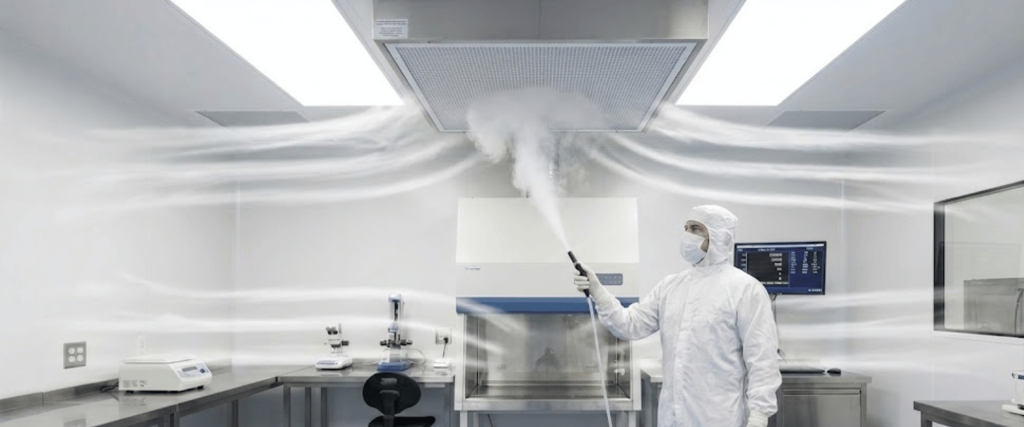
To execute a smoke study that satisfies auditors and protects your product, consider the following strategic pillars.
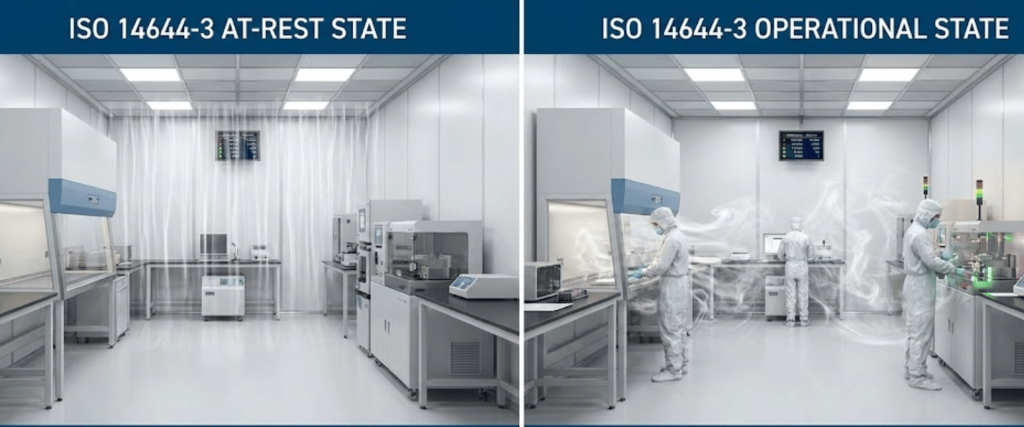
A common mistake is only testing an empty room. ISO 14644-3 encourages testing in both states.
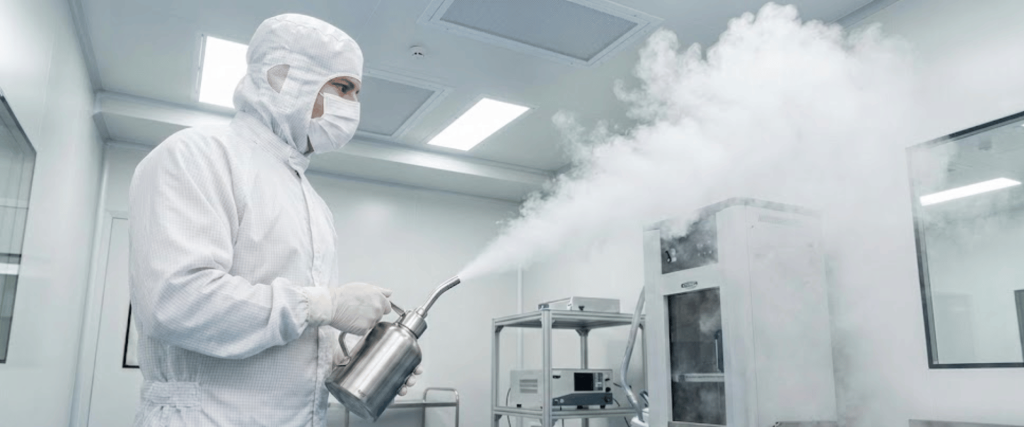
Not all smoke is equal. For cleanroom compliance, you must use high-purity generators that leave zero residue.
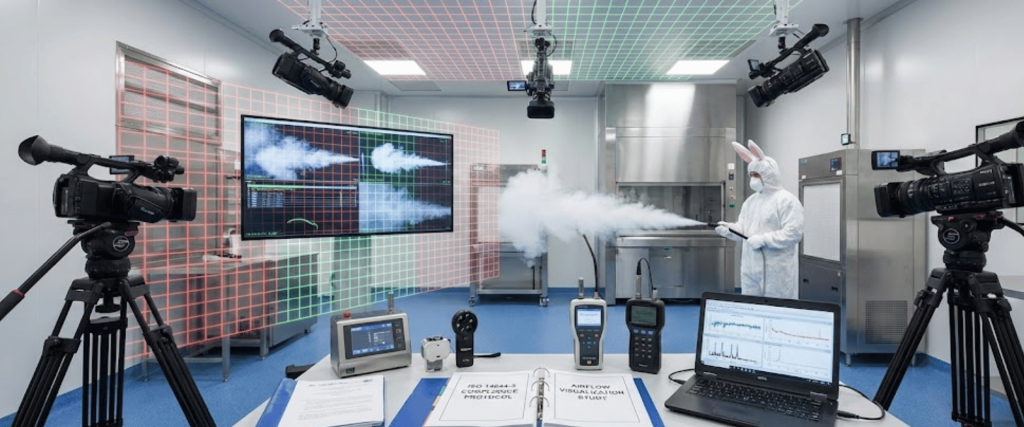
If it isn’t recorded, it didn’t happen. Compliance requires high-definition video documentation.
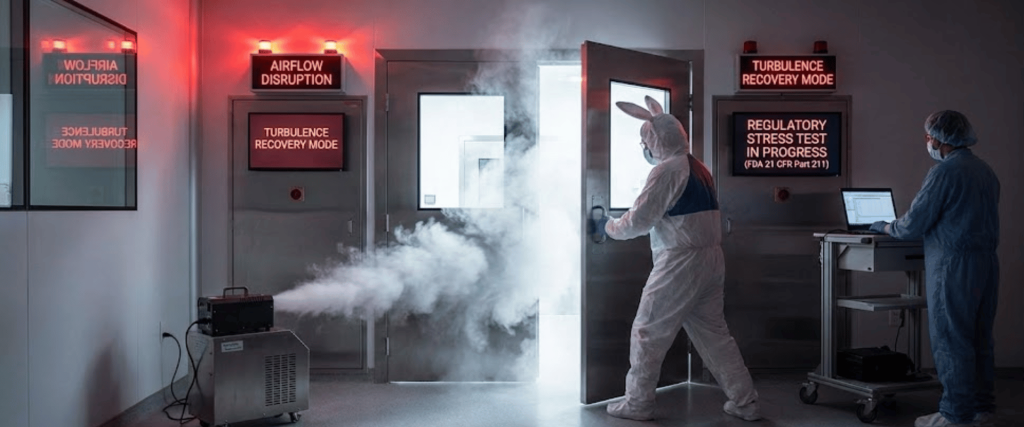
Regulatory bodies like the FDA and EMA look for stress testing. Strategy involves simulating door openings, rapid movement of technicians, and the heat load of machinery to see how quickly the airflow recovers.
| Phase | Action Item | ISO 14644-3 Requirement |
|---|---|---|
| Preparation | Cleanroom Cleaning & HVAC Stabilization | Ensure steady-state conditions |
| Visualization | Smoke Injection at HEPA Face | Verify unidirectional flow from source |
| Critical Zone | Visualization at Work Surface | Measure the time to clear the smoke after a disturbance |
| Recovery | Time-lapse Monitoring | Measure time to clear smoke after a disturbance |
| Documentation | Video & Written Report | Must include pass/fail criteria and mapping |
Smoke testing is the bridge between theoretical cleanroom design and practical contamination control.
By following ISO 14644-3 strategies focusing on high-purity fog, dual-state testing, and rigorous documentation, facilities can move beyond simple compliance to true environmental mastery.
While formal re-certification typically occurs every 12 to 24 months, it is a best practice to conduct smoke studies whenever there is a significant change in the environment. This includes the installation of new machinery, modifications to the HVAC system, or changes in personnel workflows. Regulatory bodies like the FDA often expect a fresh smoke study if the physical layout of a sterile processing area is altered.
It is highly discouraged to use traditional chemical smoke sticks in high-grade cleanrooms (ISO Class 5 or better). These sticks often release particulate matter or oily residues that can clog HEPA filters and contaminate sterile surfaces. For true ISO 14644-3 compliance, you should use ultrapure water foggers (DI water) or CO2 generators, as they provide high-visibility smoke that evaporates completely without leaving any trace.
In a smoke study, Laminar (Unidirectional) flow appears as smooth, straight lines of fog moving from the filter toward the floor, indicating that particles are being swept away efficiently. Turbulent flow appears as swirling, circular, or stagnant patterns. Identifying turbulence is critical because it marks areas where contaminants can hang in the air or be pulled back onto the product, signaling a need for equipment repositioning or airflow adjustment.