
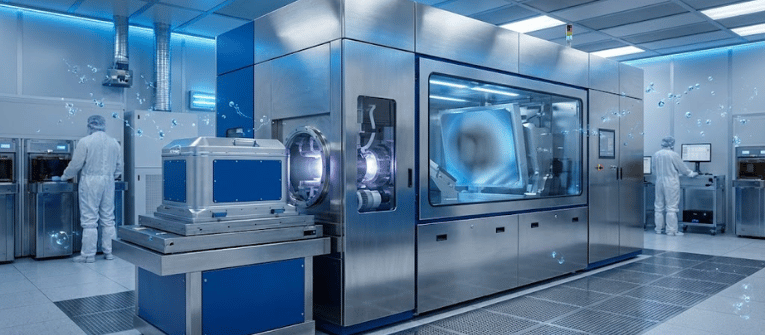
Cleanroom technicians operate large stainless steel wafer-processing equipment in a blue-lit semiconductor fabrication lab

Managing Molecular Contamination in Extreme Ultraviolet (EUV) Pods

As semiconductor manufacturing pushes beyond the 5 nm logic node, Extreme Ultraviolet (EUV) lithography has become the undisputed engine of modern chipmaking.

However, operating at a wavelength of 13.5 nm introduces unprecedented physical and chemical sensitivities.

Among the most complex hurdles in maximizing EUV uptime and yield is molecular contamination, specifically within the EUV reticle pods that store and transport the critical photomasks.

This guide breaks down the mechanics of molecular contamination, its impact on high-volume manufacturing (HVM), and the industry’s most effective strategies for mitigating these invisible threats.

The Hardware Reality: What is Molecular Contamination?

Unlike particulate contamination (physical dust or debris), Airborne Molecular Contamination (AMC) consists of chemical vapors and volatile organic compounds (VOCs) that adsorb onto sensitive surfaces.

In traditional optical lithography, molecular contamination often leads to haze crystalline defects formed by reactions of ammonia, sulfates, and moisture.
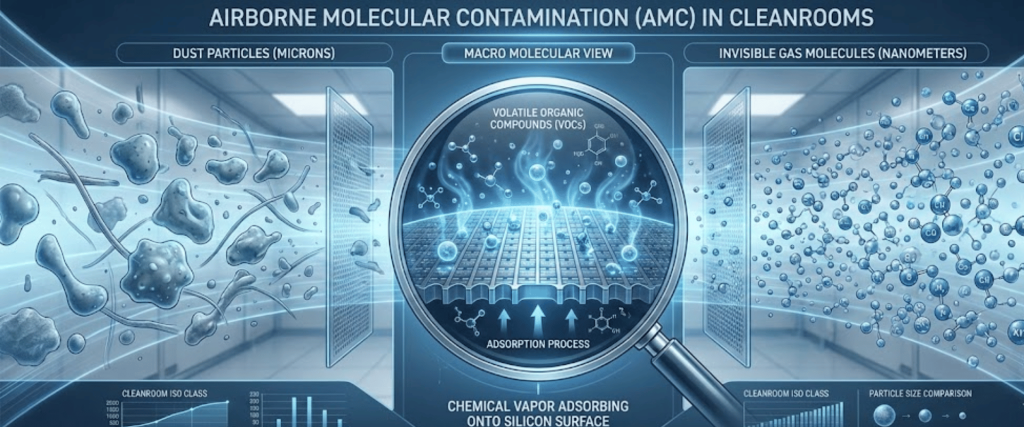
Airborne molecular contamination in cleanrooms dust particles left, filtration and magnified VOCs adsorbing onto a silicon surface, and tiny gas molecules right

In EUV lithography, the physics change dramatically. EUV photons possess extremely high energy ($92\text{ eV}$), which is more than enough to trigger the photo-dissociation of almost any organic molecule present in the vacuum environment.

Primary Sources of Molecular Contamination in EUV Pods

When an EUV reticle is housed within a pod, it is vulnerable to trace gases and outgassing from several sources.
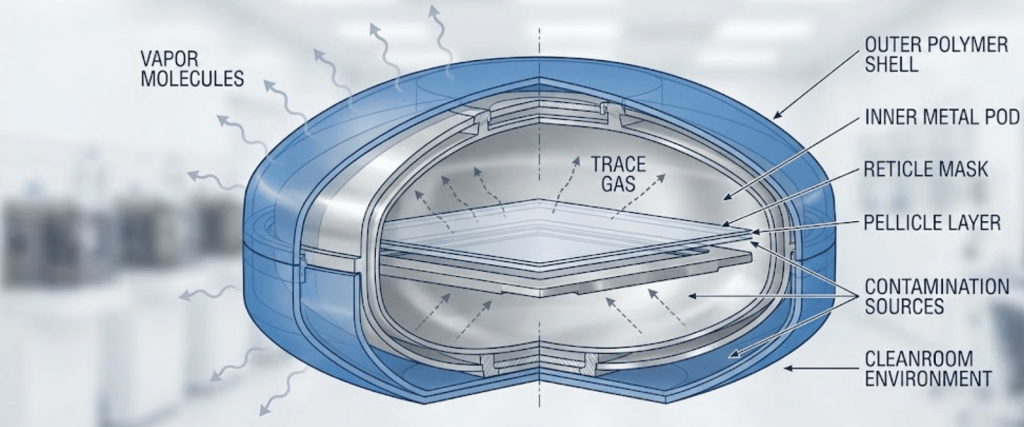
Cross-section of a sealed reticle pod showing outer polymer shell, inner metal pod, pellicle layer, trace gas and contamination sources
  • Polymer Outgassing: While the inner EUV pod is typically made of non-outgassing metals, the outer pod is polymer-based to absorb transport shocks. Over time, these polymers can release volatile organics.
  • Cleaning Chemical Residues: Trace solvents and chemicals left over from mask cleaning processes can evaporate and migrate onto the mask’s critical surfaces.
  • Pellicle Outgassing: Even the ultra-thin, EUV-transparent pellicles used to protect the reticle from physical dust can outgas under the intense thermal load of an EUV scanner.
  • Vacuum Environment Degradation: Hydrocarbons, water vapor, and hydrogen backgrounds can be introduced through micro-leaks or pump backstreaming during pod handling and scanner loading.

How Molecular Contamination Degrades EUV Performance

When a reticle carrying a thin layer of adsorbed hydrocarbons is loaded into the scanner and hit with EUV light, those molecules undergo photoelectron cracking.
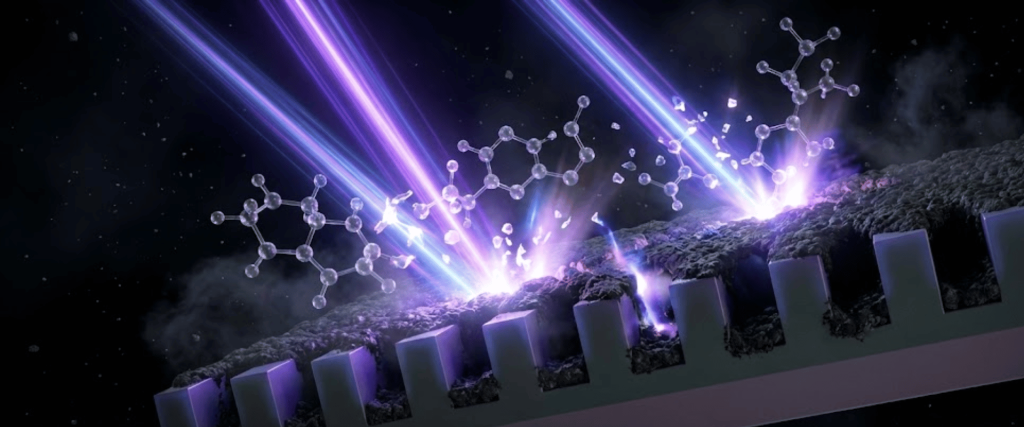
Purple laser beams strike a textured surface, sparking glowing molecular structures and fragments above a patterned substrate

The result is a progressive accumulation of amorphous carbon directly on the illuminated areas of the reticle both on the capping layer of the Mo/Si multilayer mirror and the absorber sidewalls.

This carbonization has direct, costly consequences on lithographic performance.

  1. Reflectivity Loss: Carbon is highly absorptive at 13.5 nm. Experimental data shows that just $1\text{ nm}$ of carbon deposition causes a roughly 1% decrease in mirror reflectivity.
  2. Dose Drift and Throughput: As reflectivity drops, the scanner must compensate by increasing the dose or slowing down, which degrades wafer throughput and inflates the cost per wafer.
  3. Critical Dimension (CD) Variability: Carbon buildup on the absorber sidewalls changes the phase and dimensions of the mask pattern, directly impacting exposure uniformity and causing CD errors on the printed wafer.

Proven Strategies for Managing Molecular Contamination

Because a single EUV scanner represents a nine-figure investment, contamination control is no longer just a cleanroom discipline; it is an ecosystem-wide necessity.

1) Advanced Dual-Pod Architecture

To combat both particulate and molecular threats, the industry relies on a specialized dual-pod standard.
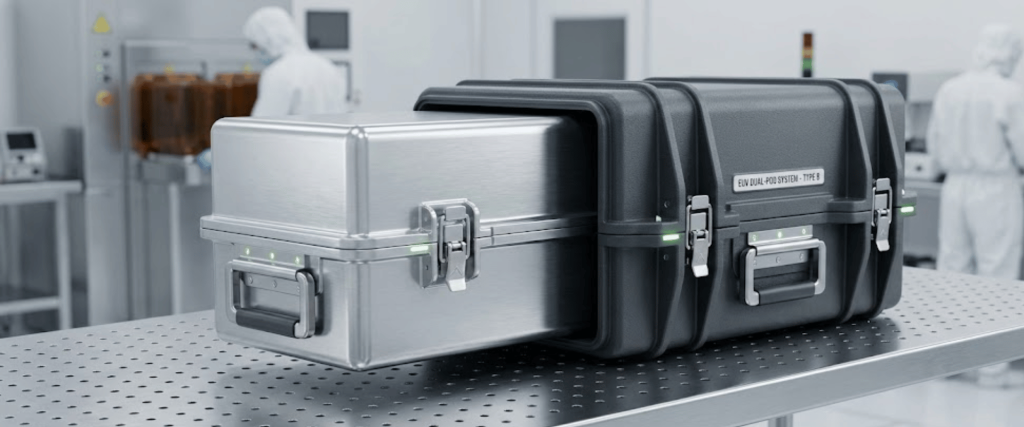
Sealed stainless-steel and hard-shell black transport cases with indicator lights on a lab bench, technicians in full PPE working in a sterile facility
  • The Inner Pod: Constructed from specialized metals or metalized materials that do not outgas. It holds the reticle securely with minimal contact points to prevent friction-generated particles and acts as a barrier against chemical vapors.
  • The Outer Pod: Made from durable, static-dissipative polymers. Careful material selection is required to ensure low-outgassing properties, preventing the outer shell from contaminating the inner vacuum environment.

2) Micro-Environment Purging

One of the most effective ways to starve the carbonization process is to eliminate the precursor molecules entirely.
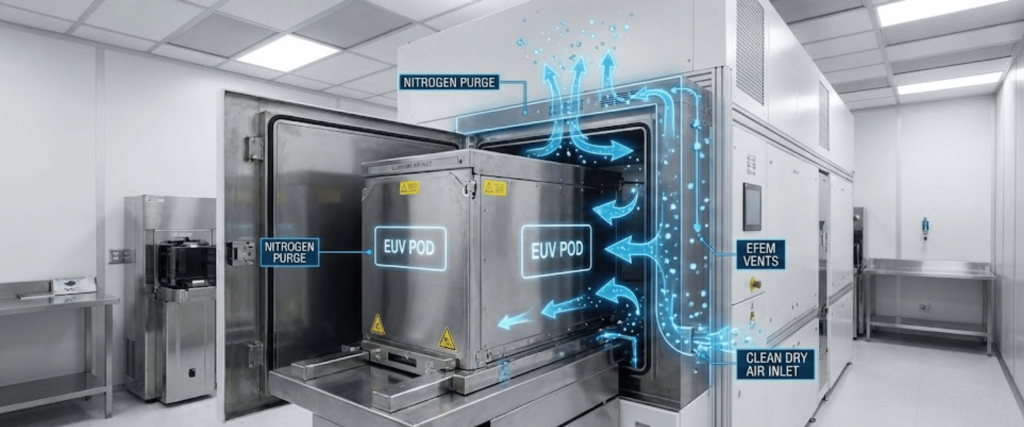
Sterile lab room with a metal EUV pod inside a nitrogen-purged transfer chamber, showing EFEM vents and clean dry air inlet
  • Inert Gas Purging: Pods and Equipment Front End Modules (EFEMs) are continuously purged with Ultra-High Purity (UHP) Clean Dry Air (CDA) or inert gases like Nitrogen. This flushes out airborne organics and maintains an environment where AMC is measured in parts per trillion (ppt).
  • Queue Time Optimization: Facilities strictly manage queue times between cleaning, storage, and exposure to minimize the duration a reticle is exposed to ambient cleanroom air.

3) Rigorous AMC Filtration and In-Line Monitoring

Cleanrooms use advanced chemical filters (AMC filters) above critical minienvironments.
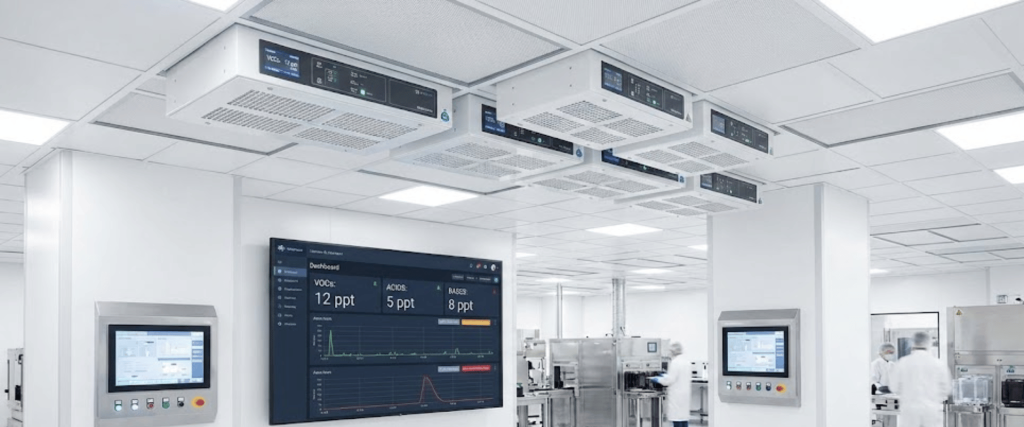
Clean lab production room with wall monitors displaying air-quality graphs, ceiling filtration units, and technicians in white cleanroom suits

In conjunction, fab operators utilize in-line real-time monitoring systems capable of detecting volatile organics, acids, and amines down to the $100\text{ ppt}$ level within the pod micro-environments.

4) In-Situ Plasma Cleaning

Because some carbon deposition is practically unavoidable over a reticle’s lifespan, modern EUV scanners utilize in-situ cleaning mechanisms.
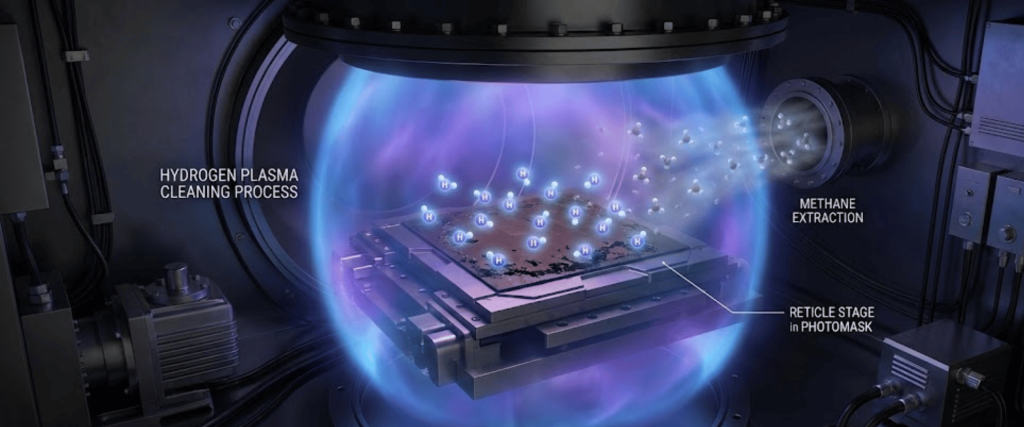
Hydrogen plasma cleaning of a photomask reticle inside a chamber, showing H atoms removing methane and surface contaminants
  • Hydrogen Radicals and Plasma: Low-power hydrogen plasma environments are maintained near the optics and reticle stage. The reactive hydrogen radicals interact with the deposited carbon, converting it into volatile hydrocarbon byproducts (like methane) that can be pumped away without breaking the vacuum or disassembling the tool.

Conclusion

The shift to Extreme Ultraviolet lithography has transformed molecular contamination from a minor nuisance into a major threat to optical transmission and throughput.

Controlling volatile organic compounds through strict material selection and ultra-clean micro-environments is essential to prevent carbon-induced reflectivity loss on delicate reticles.

Implementing rigorous AMC filtration and queue time optimization minimizes the risks associated with polymer and pellicle outgassing.

Moving forward, mastering these mitigation strategies will be the defining factor in achieving profitable, defect-free production at advanced logic nodes.

Frequently Asked Questions (FAQs)

1. What causes molecular contamination in EUV pods?

It is primarily caused by outgassing from polymer pod components, pellicles, and trace cleaning chemical residues.

2. How does carbon deposition affect EUV reticles?

Carbon absorbs EUV light, leading to a significant loss in mirror reflectivity, altered critical dimensions, and reduced wafer throughput.

3. What is an EUV dual-pod architecture?

It is a specialized two-part storage system featuring a non-outgassing inner pod and a durable, static-dissipative outer shell to block contaminants.

4. Why is molecular contamination worse in EUV than traditional lithography?

The high-energy ($92\text{ eV}$) EUV photons easily break down surrounding organic molecules, causing rapid carbon buildup on the optics.
Leave a Reply

Your email address will not be published. Required fields are marked *

Related Posts

About Applied Physics USA

Since 1992, Applied Physics Corporation has been a leading global provider of precision contamination control and metrology standards. We specialize in airflow visualization, particle size standards, and cleanroom decontamination solutions for critical environments.

Trending Articles