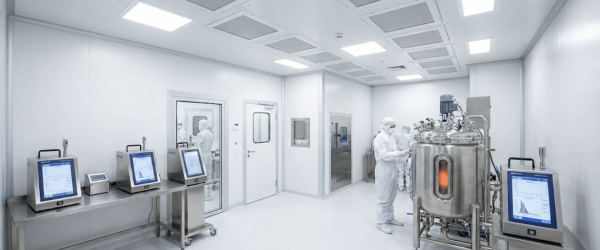
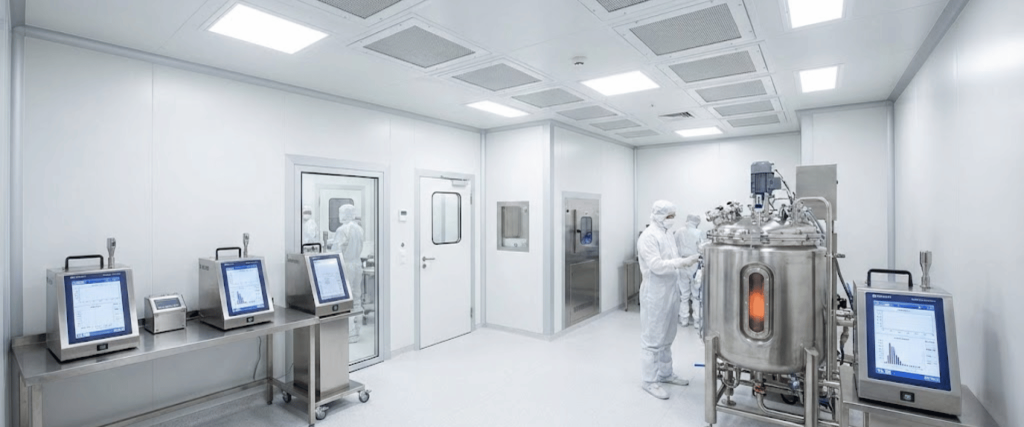
In a controlled environment, an unplanned power outage or mechanical failure is more than a logistical headache; it is a significant risk to product integrity.
When the HVAC system or HEPA filtration stops, the clean pressurized bubble collapses, allowing contaminants to migrate from lower-grade areas into critical zones.
Validating airflow recovery is the process of proving that your cleanroom can return to its specified ISO Class cleanliness within a defined timeframe once power is restored.
Standard operating procedures (SOPs) often dictate that a cleanroom must be re-qualified if it loses control. An emergency shutdown creates two primary issues.
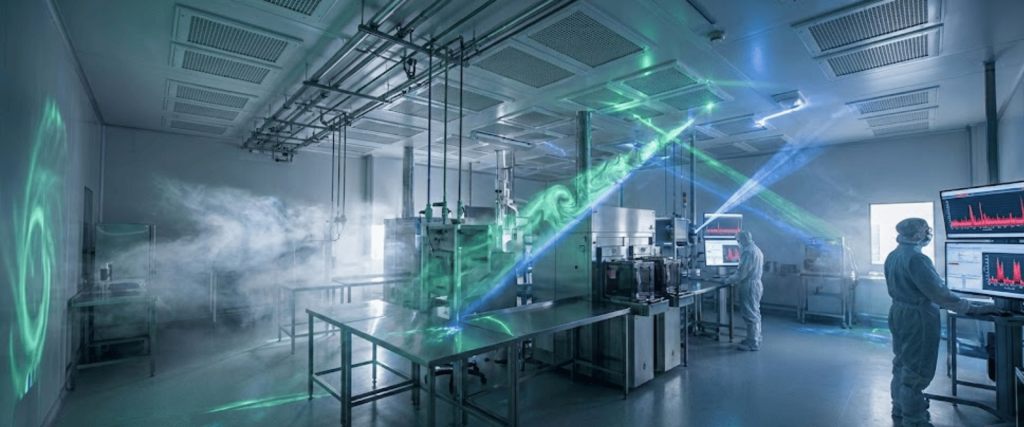
According to ISO 14644-3, the recovery test is performed to determine the ability of the installation to eliminate airborne particles. The most common metric is the 100:1 recovery time.
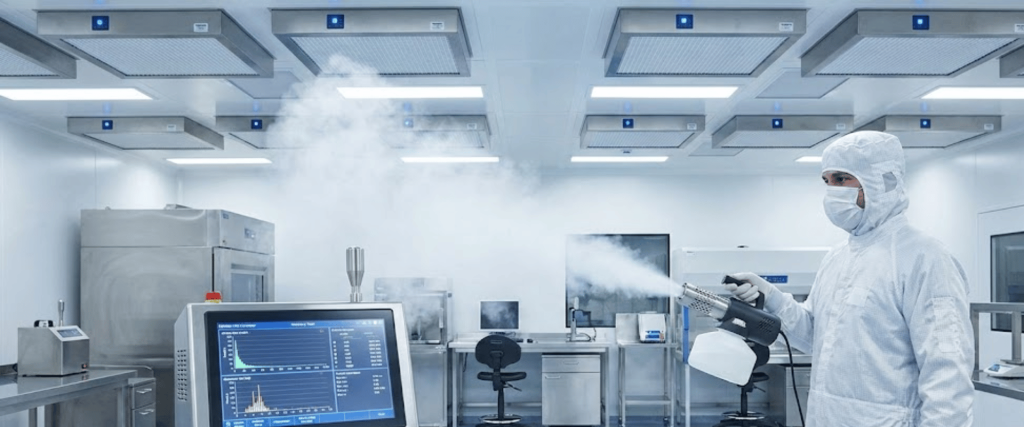
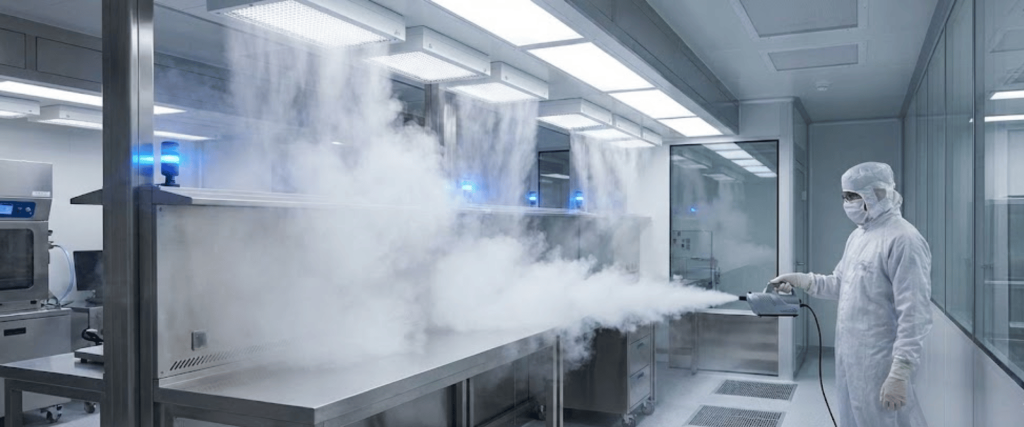
Before measuring particles, you must confirm that the direction of the air is correct. Using a high-purity water fogger or a CO2 fogger allows technicians to see the sweep of the air.
Strategically place calibrated particle counters at worst-case locations.

Once the system is restarted, the particle counter tracks the decay of the aerosol. This data is plotted on a logarithmic scale to calculate the exact recovery rate.

If the room fails to recover within the validated window, it may indicate a bypass leak in a HEPA filter or an issue with the air change rate (ACH).
To ensure a seamless return to production, follow this recovery checklist.
| Task | Objective |
|---|---|
| Pressure Differential Check | Ensure the room is positive relative to the surrounding hallways. |
| Aerosol Seeding | Challenge the room to verify effective particle clearance. |
| Filter Integrity Test | Confirm that no filter gaskets were dislodged due to the sudden air pressure surge. |
| Documentation Review | Record the downtime, recovery time, and any observed deviations. |
Validating your cleanroom’s airflow recovery is the final, essential step in restoring a state of control after any unplanned power or mechanical failure.
By adhering to ISO 14644-3 standards and utilizing precise particle decay measurements, you ensure that contaminants are effectively purged from critical zones.
This proactive approach not only protects your product integrity but also provides the documented proof required for strict regulatory compliance.
Ultimately, a well-validated recovery process transforms a potential operational risk into a managed and predictable event.
It is a standard test defined by ISO 14644-3 that measures the time required for a cleanroom to reduce an artificial concentration of particles by a factor of 100. This ensures the filtration system can effectively clear heavy contamination.
While specific requirements vary by industry, most high-grade cleanrooms are expected to return to their specified cleanliness class within 15 to 20 minutes after the HVAC system is fully restored.
Airflow visualization, or smoke testing, is used to physically see the air patterns. It helps technicians identify dead zones or turbulence that could trap particles, which a standard particle counter might miss.