
Volatile reagents and temperature-sensitive samples require stable, precise heating. Even small temperature spikes can degrade enzymes, denature proteins, or ruin expensive reagents.
A dry bath incubator with strong microprocessor control helps reduce these risks by maintaining consistent temperatures and preventing thermal overshoot.
What Is a Dry Bath Incubator?
A dry bath incubator heats samples in tubes or vials using interchangeable aluminum blocks instead of water. This design offers cleaner operation, faster heating, and easier maintenance compared to traditional water baths. Laboratories use these units for incubation, denaturation, and sample preservation, where precise temperature control is essential.
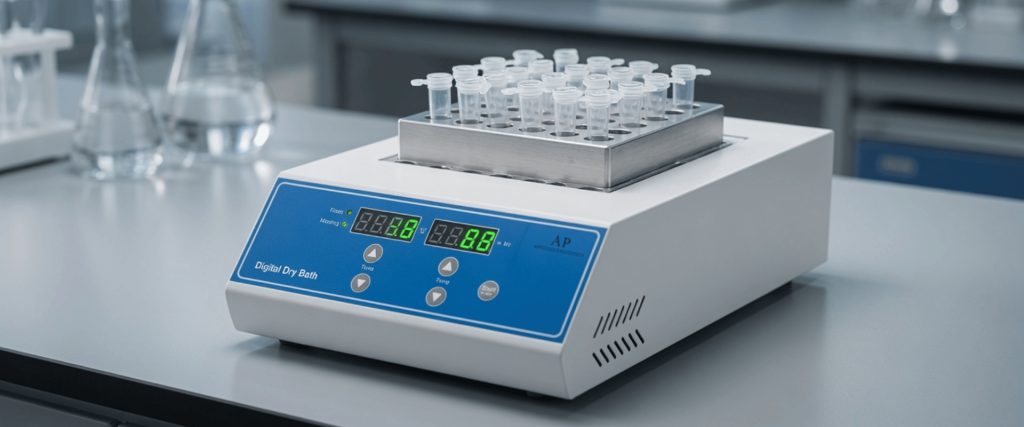
The DBI-1001 and DBI-1002 models combine compact design with microprocessor control to deliver reliable performance in molecular biology, clinical diagnostics, and biochemistry workflows.
Key Features of the DBI-1001 and DBI-1002
Both models share the same core heating performance but differ in capacity.
- The temperature range is from room temperature +5°C up to 160°C
- Fast heating time (reaches 160°C from 25°C in 15 minutes or less)
- Interchangeable aluminum blocks for different tube sizes
- Real-time temperature and countdown timer display
- Easy block replacement and cleaning
- Compact footprint suitable for crowded benchtops
The main difference lies in block capacity. The DBI-1001 holds one block, while the DBI-1002 holds two blocks at the same time. This makes the dual-block model useful when running different protocols or larger sample batches in parallel.
Why Microprocessor Control Matters for Volatile Reagents
Traditional heating devices often rely on basic thermostats. These can allow the temperature to rise above the set point before correcting, creating thermal overshoot. Volatile or sensitive reagents exposed to these spikes may lose activity or degrade.
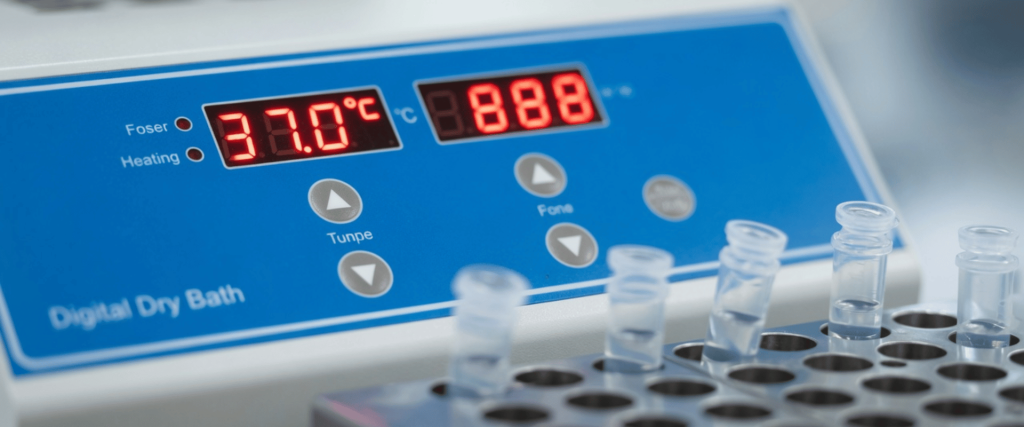
Microprocessor-controlled units monitor temperature in real time and adjust heating power gradually. This reduces overshoot and improves temperature stability. The DBI-1001 and DBI-1002 models include several built-in protections.
- Continuous temperature monitoring with 0.1°C display accuracy
- Automatic fault detection and alarm system
- Built-in over-temperature protection
- Temperature deviation calibration function
These features work together to keep samples within safe limits, especially during long incubation periods or when working with small volumes of sensitive reagents.
How These Models Help Protect Sensitive Samples
The combination of microprocessor control and safety features directly addresses thermal overshoot risks.
- Gradual power adjustment prevents sudden temperature jumps
- Over-temperature protection cuts the heating if limits are exceeded
- Real-time display lets users verify conditions without opening the unit
- The calibration function corrects small deviations over time
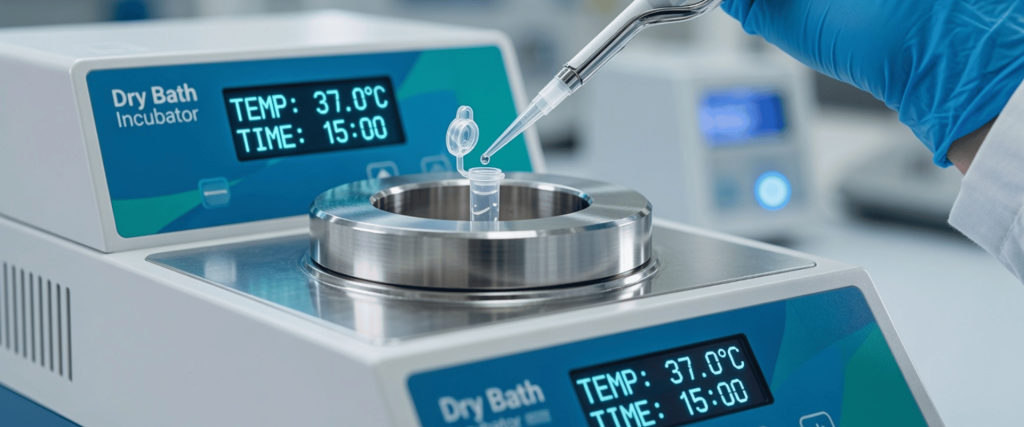
Laboratories working with volatile reagents, enzymes, or low-volume samples benefit from this level of control. It reduces repeat experiments caused by temperature-related sample loss.
Technical Specifications
| Specification | DBI-1001 | DBI-1002 |
|---|---|---|
| Temperature Range | RT +5°C to 160°C | RT +5°C to 160°C |
| Temperature Accuracy | ±0.5°C @ 40°C | ±1°C @ 120°C |
| Temperature Uniformity | ±0.5°C | ±0.5°C |
| Display Accuracy | 0.1°C | 0.1°C |
| Heating Time | ≤15 min, 25°C to 160°C | ≤15 min, 25°C to 160°C |
| Number of Blocks | 1 | 2 |
| Max Power | 300W | 500W |
| Dimensions (W × D × H) | 260 × 220 × 100 mm | 260 × 220 × 100 mm |
| Weight | 5.0 kg | 5.5 kg |
| Timer Range | 1 min to 99h 59min / ∞ | 1 min to 99h 59min / ∞ |
Common Laboratory Applications
These incubators support many routine and specialized procedures.
- DNA amplification and PCR sample preparation
- Electrophoresis sample denaturation
- Serum and biochemical sample incubation
- Enzyme reactions and reagent stabilization
- Sample preservation at controlled temperatures
The wide temperature range and block options make them suitable for both research and clinical laboratories that need reliable dry heating without water bath maintenance.
Conclusion
Microprocessor-controlled dry bath incubators like the DBI-1001 and DBI-1002 offer practical advantages for laboratories that handle temperature-sensitive or volatile reagents.
The built-in protections against thermal overshoot, combined with accurate temperature control and flexible block options, help maintain sample integrity while simplifying daily workflows.
Whether you need single or dual-block capacity, these models provide reliable performance for common incubation tasks without the maintenance demands of water-based systems.
Frequently Asked Questions (FAQs)
1. What is the main advantage of microprocessor control in a dry bath incubator?
Microprocessor control allows precise temperature regulation and reduces the risk of thermal overshoot, which helps protect sensitive and volatile reagents during incubation.
2. Can I use different tube sizes with the DBI-1001 and DBI-1002?
Yes. Both models support interchangeable aluminum blocks designed for various tube sizes, including 0.2 ml, 0.5 ml, 1.5 ml, 2 ml, and larger tubes.
3. How fast do these incubators reach the target temperature?
They can heat from 25°C to 160°C in 15 minutes or less, depending on the set temperature and block type.