
Description
BioReady Citrate-Stabilized Gold Nanospheres
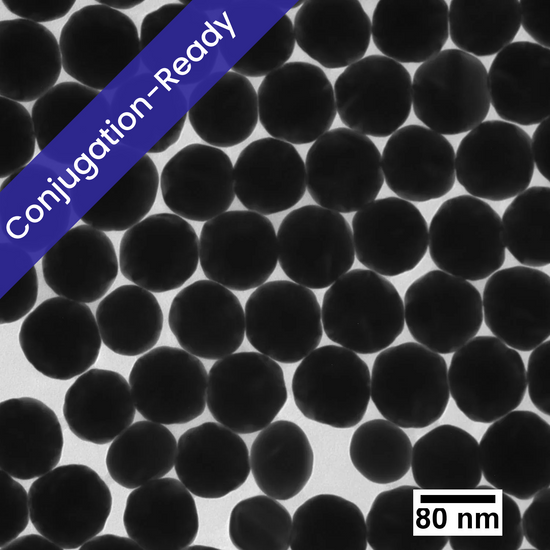
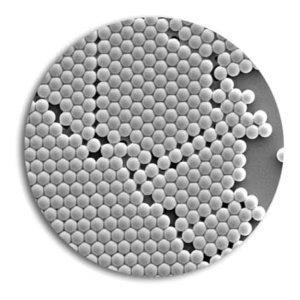
BioReady Citrate-Stabilized Gold Nanospheres are high-concentration, aggregation-free colloidal gold suspensions developed for rapid diagnostic assay manufacturing and research.
Conventional colloidal gold preparations are often supplied at approximately 1 OD or 0.05 mg/mL, requiring centrifugal concentration before passive conjugation. BioReady suspensions are supplied at 20 OD, enabling the direct addition of concentrated antibodies, proteins, or biological targeting ligands to the particle stock.
The weakly bound, negatively charged sodium citrate capping layer provides electrostatic stability, with ζ≤−25 mV, in low-ionic-strength media. The citrate layer remains readily displaceable through spontaneous hydrophobic and electrostatic interactions with protein amine and thiol motifs.
Two particle sizes are available:
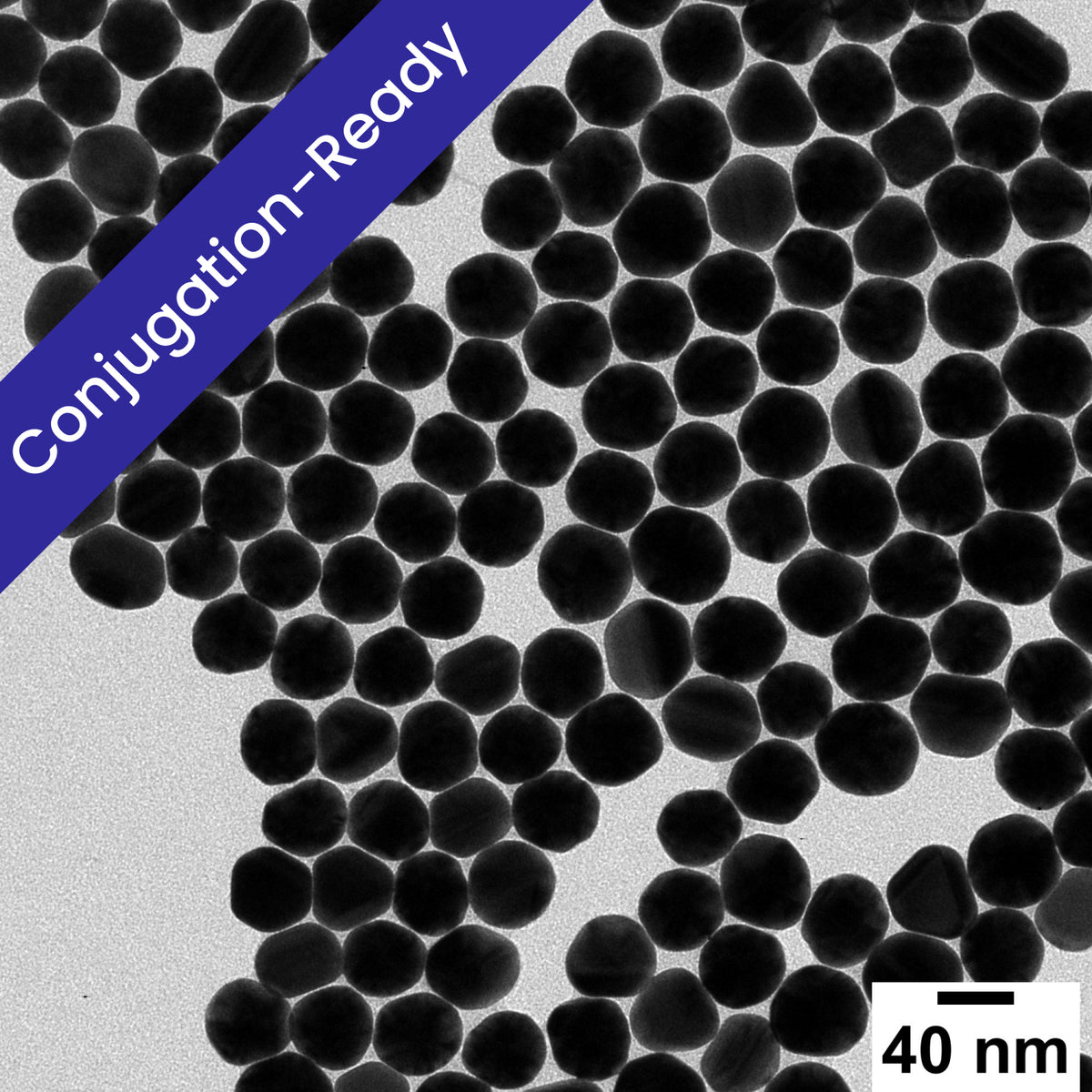
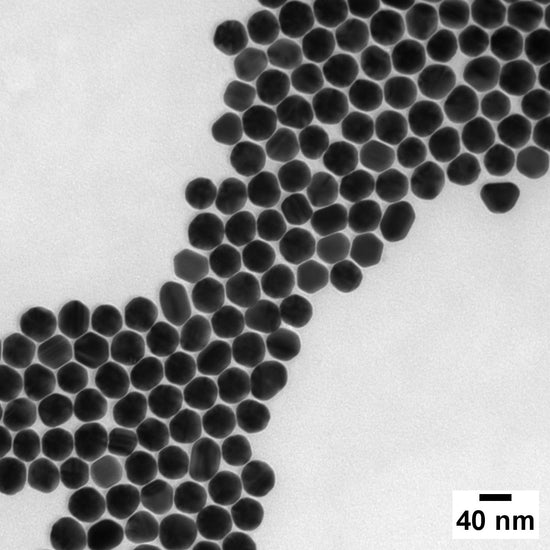
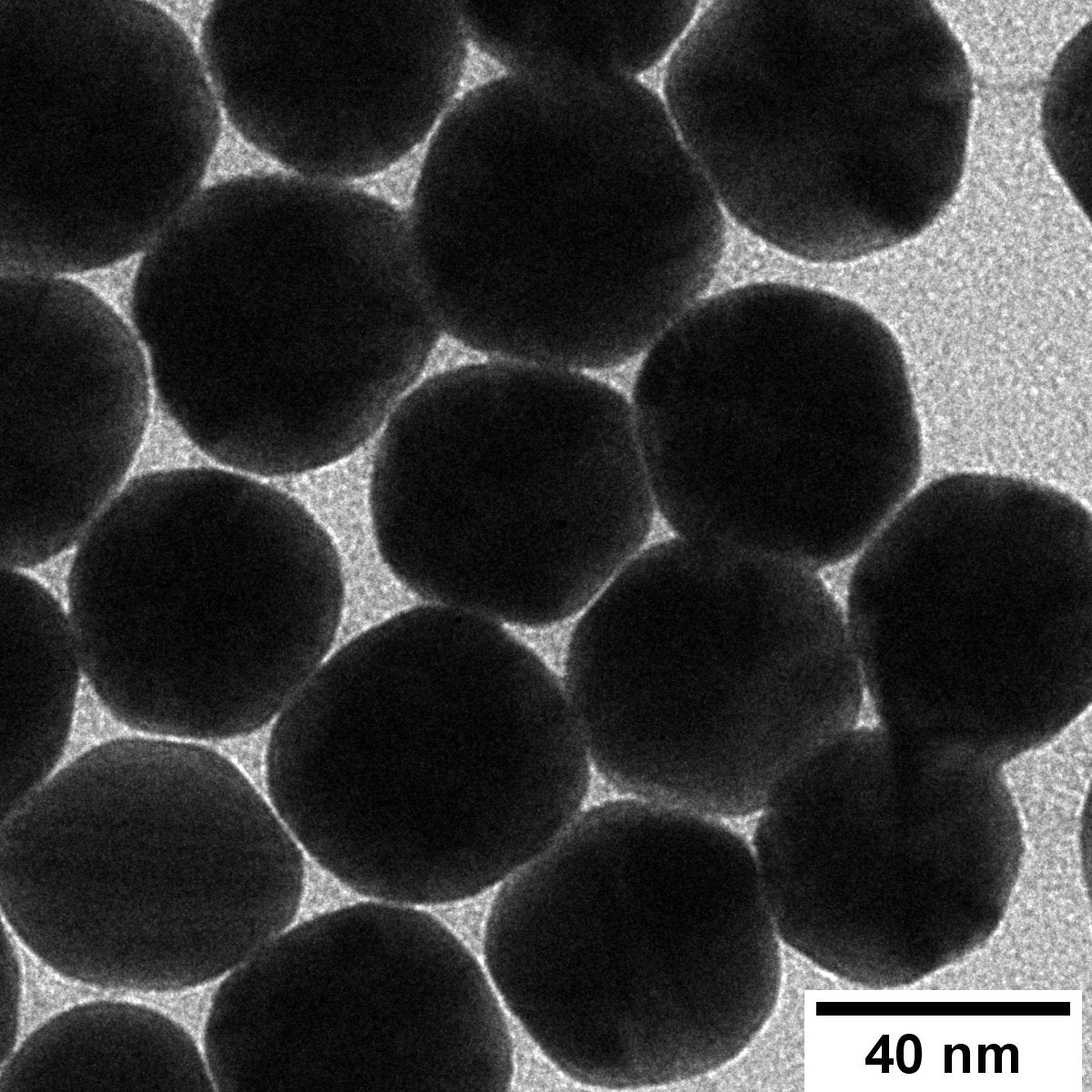
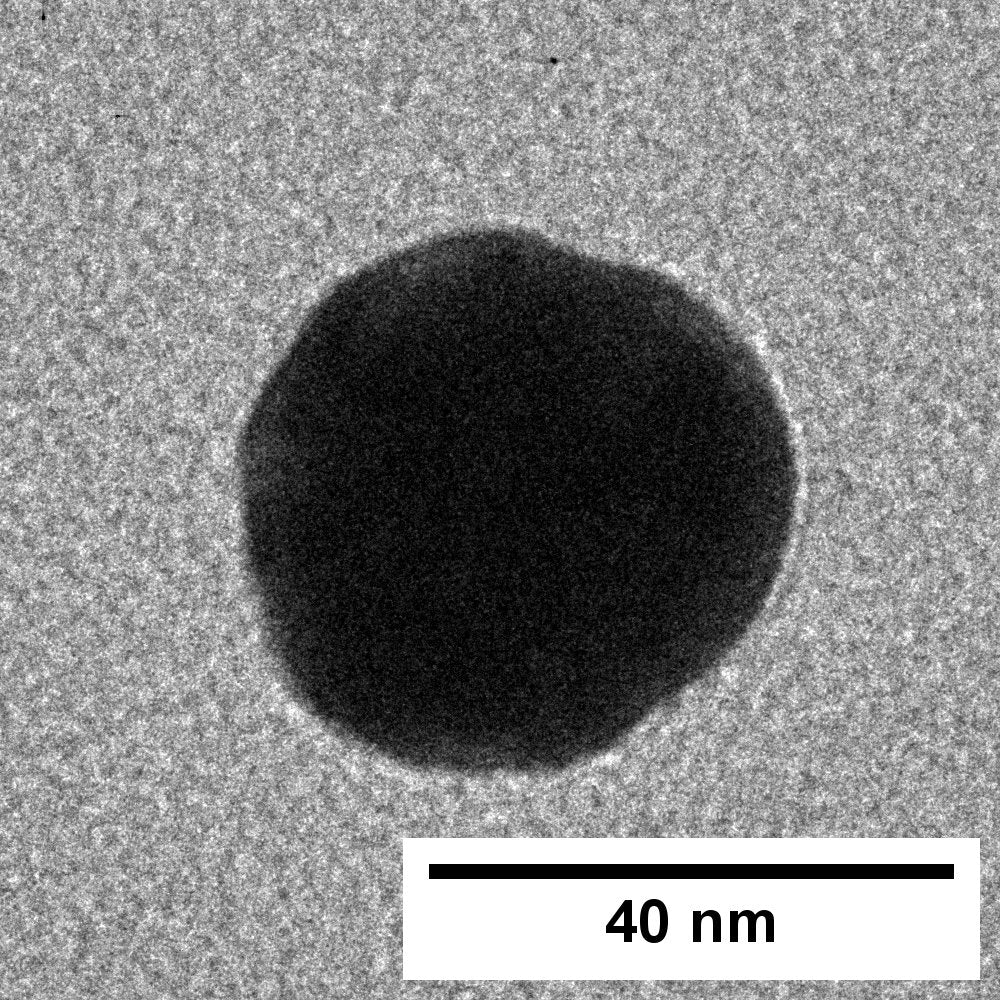
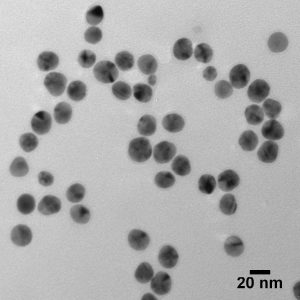
- 40 nm variant: Designed for lateral flow rapid tests, with an LSPR peak at 515–525 nm and a vibrant ruby-red appearance.
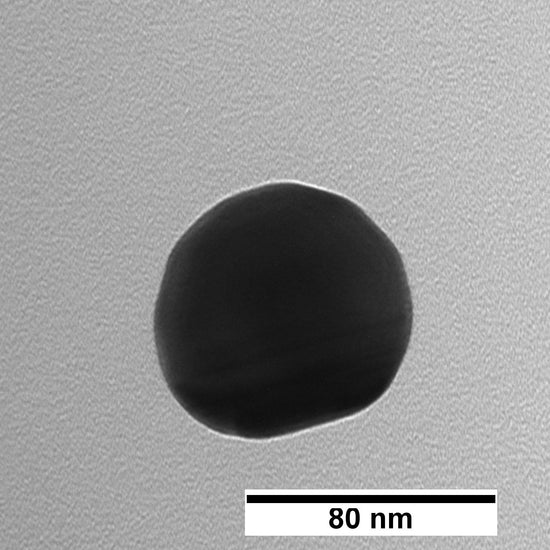
- 80 nm variant: Designed for increased optical scattering and higher per-particle extinction cross-sections, with an LSPR peak at 540–550 nm and a deep magenta or purple-red appearance.
Key features
- High concentration: Supplied at 20 OD, reducing the need for preliminary centrifugal concentration and minimizing process time, shear stress, and particle loss before passive conjugation.
- Labile citrate stabilization: Weakly coordinated surface citrate ions desorb during protein addition, supporting passive adsorption without chemical crosslinkers.
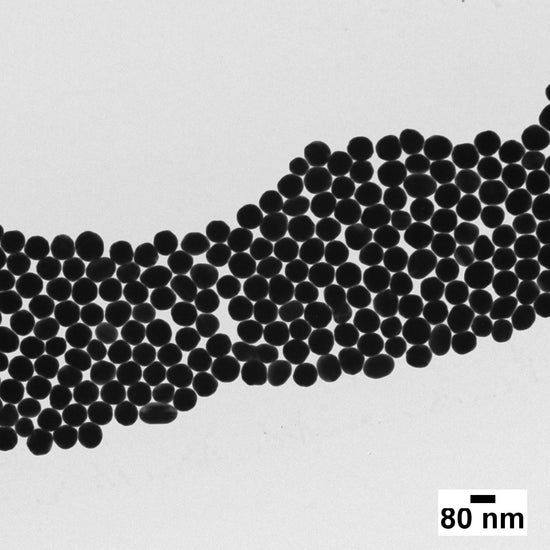
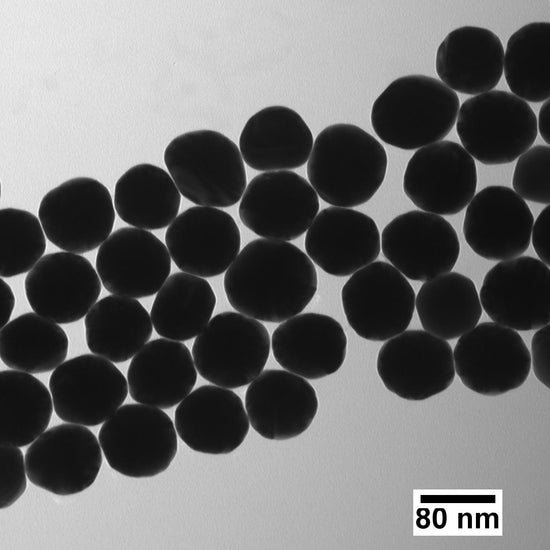
- Tight monodispersity: Size distribution of CV≤15%, supporting consistent membrane migration, uniform flow dynamics, and reproducible signal intensities.
- High negative surface charge: Zeta potential of ≤−25 mV, helping prevent non-specific self-aggregation during low-salt stock storage.
- No surfactant interference: Formulated in clean 0.02 mM aqueous sodium citrate without non-ionic detergents or uncharacterized blocking agents.
Specifications
| Parameter | 40 nm variant | 80 nm variant |
|---|---|---|
| Core material | Pure metallic gold, Au0 | Pure metallic gold, Au0 |
| Surface chemistry | Sodium citrate, labile capping layer | Sodium citrate, labile capping layer |
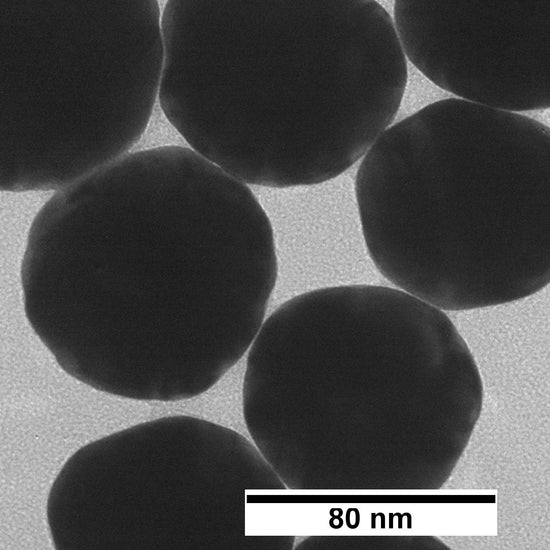
| Nominal core diameter, TEM | 40±4 nm | 80±5 nm |
| Size distribution, CV | ≤15% | ≤15% |
| Hydrodynamic diameter, DLS | 40–50 nm | 80–90 nm |
| Optical density | 20 OD at λmax | 20 OD at λmax |
| LSPR extinction peak, λmax | 515–525 nm | 540–550 nm |
| Colloid appearance | Vibrant ruby-red | Deep magenta / purple-red |
| Surface charge / zeta potential | ≤−25 mV | ≤−25 mV |
| Suspending medium | 0.02 mM aqueous sodium citrate | 0.02 mM aqueous sodium citrate |
| pH range | 5.5–8.0 | 5.5–8.0 |
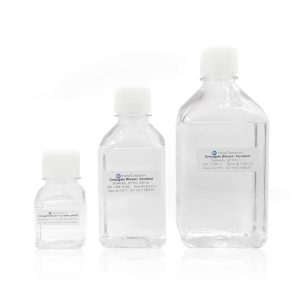
| Available fill volumes | 5 mL, 30 mL, 100 mL | 5 mL, 30 mL, 100 mL |
| Storage temperature | 2∘C to 8∘C, do not freeze | 2∘C to 8∘C, do not freeze |
| Shelf life | 12 months from delivery, unopened and refrigerated | 12 months from delivery, unopened and refrigerated |
Product variants and packaging
| Variant | Nominal diameter | Fill volumes |
|---|---|---|
| 40 nm citrate-stabilized gold nanospheres | 40 nm | 5 mL, 30 mL, 100 mL |
| 80 nm citrate-stabilized gold nanospheres | 80 nm | 5 mL, 30 mL, 100 mL |
Product codes were not provided in the source information.
Variant comparison and selection guide
| Nominal diameter | Optical density | Peak absorbance, λmax | Primary optical modality | Common applications |
|---|---|---|---|---|
| 40 nm | 20 OD | 515–525 nm | High absorption, low scatter | Benchmark lateral flow test strips, dot blots, microarrays |
| 80 nm | 20 OD | 540–550 nm | High scattering cross-section | Ultra-sensitive diagnostic assays, darkfield tracking, SERS |
Applications
Rapid diagnostic test strips
Suitable as high-titer reporter particles for qualitative and semi-quantitative lateral flow assays involving:
- Infectious disease markers
- Toxicology targets
- Cardiac markers
The 40 nm variant is described as a diagnostic benchmark for lateral flow tests and is intended to produce crisp, high-contrast ruby-red test and control lines on nitrocellulose membranes.
Optical and darkfield microscopy
The particles can be used as electron-opaque and light-scattering markers for:
- Cytochemistry
- Cellular surface labeling
- Electron microscopy
- Single-particle darkfield microscopy
The 80 nm variant provides increased optical scatter and a higher per-particle extinction cross-section.
Surface-enhanced Raman scattering
The particles are suitable for SERS applications involving localized electromagnetic field amplification and molecular fingerprinting.
Biosensors and solid-phase assays
Potential uses include signal-generating labels for:
- Sandwich immunoassays
- Surface plasmon resonance, SPR
- Optical plate readers
Passive conjugation workflow
The following conditions are provided as protocol guidelines. Conditions should be optimized and validated for the specific protein, particle size, assay format, and intended application.
Adjust the suspension pH
Adjust the pH of the gold suspension slightly above the target protein’s isoelectric point, or pI, using dilute potassium carbonate, K2CO3, or dilute acid.
Perform antibody challenge and optimization
Prepare a concentration curve of purified antibody, typically 5–20 μg per mL of 1 OD equivalent. Add the antibody solution to the gold nanospheres under rapid mixing.
Allow passive adsorption
Incubate for 20 to 30 minutes at room temperature to allow spontaneous electrostatic and hydrophobic binding to the gold surface.
Block unreacted surface sites
Add a blocking agent, such as 1% BSA or PEG, and incubate for an additional 15 minutes.
Purify the conjugate
Centrifuge the mixture at the appropriate relative centrifugal force for 15 minutes:
- Approximately 8,000–10,000×g for the 40 nm variant
- Approximately 2,000–3,500×g for the 80 nm variant
Collect and resuspend the pellet
Aspirate the clear supernatant containing unbound protein. Resuspend the soft pellet in conjugate drying buffer containing sucrose, trehalose, and Tween-20 for conjugate pad spraying.
Handling and storage
- Store upright at 2∘C to $8^\circ\text{C}.
- Protect from direct sunlight.
- Do not freeze.
- The stated shelf life is 12 months from delivery when unopened and refrigerated.
- Freezing can disrupt the electrostatic double layer, causing irreversible gold agglomeration and precipitation.
- Particles may settle slowly during prolonged standing because of their high particle density, particularly the 80 nm variant.
- Invert or gently swirl the vial before pipetting.
- Avoid prolonged exposure to an ultrasonic bath.
Compatibility and usage notes
- Maintain low-salt conditions during initial conjugate assembly.
- High-ionic-strength solutions, including standard 1×PBS, can cause rapid salt-induced flocculation if introduced before a protective protein or polymer monolayer has been applied.
- The formulation contains 0.02 mM aqueous sodium citrate and no non-ionic detergents or uncharacterized blocking agents.
- Direct addition of concentrated antibodies, proteins, or biological targeting ligands is supported by the supplied 20 OD concentration.
- Passive adsorption conditions should be optimized for each target protein and validated in the intended assay format.
Product relationship
Available Through Applied Physics
Applied Physics supplies and supports quotation of this product. Product branding and manufacturer information, where stated on the product page or supporting documentation, remain authoritative.
Applied Physics portfolio: General
Catalog relationship: Available Through Applied Physics
Related Applied Physics resources
Continue through the General portfolio
Use these technical and portfolio pages to compare applications and related equipment. To keep this exact product attached to an RFQ, use the product’s existing Request a Quote or Add To Order control.

Reviews
There are no reviews yet.