Description
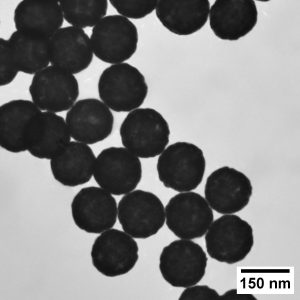
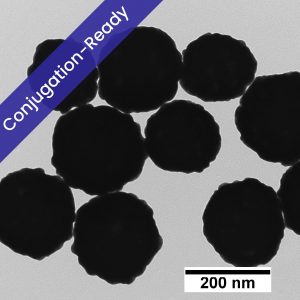
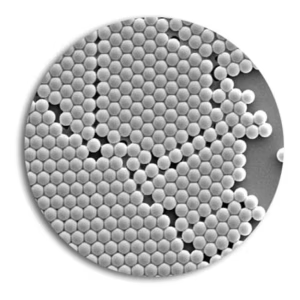
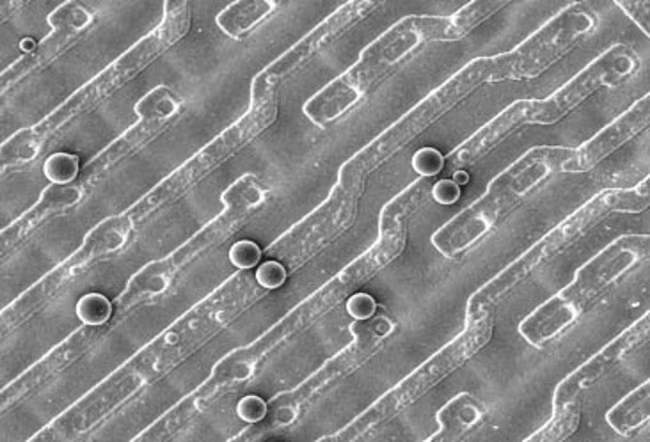
Polystyrene-Surf-Cal are precision-engineered polystyrene latex (PSL) microspheres suspended in deionized, filtered water. Designed for calibration and maintenance of Scanning Surface Inspection Systems (SSIS), these reference particles provide controlled particle diameters for semiconductor wafer inspection, surface contamination monitoring, and instrument performance verification.
Available in nominal particle diameters ranging from 47 nm to 3.04 µm, these microspheres cover critical particle-sizing ranges used in semiconductor manufacturing and surface inspection applications.
The particles are NIST-traceable and supplied with a Certificate of Calibration and Traceability to NIST. Their controlled size distribution and documented calibration characteristics support consistent instrument comparisons, periodic calibration checks, and quality assurance procedures.
Key Features
NIST-Traceable Particle Sizes: Includes calibration documentation establishing traceability to NIST.
Wide Particle Size Range: Available in nominal diameters from 47 nm to 3.04 µm.
Two Concentration Options: Available at 3 × 10⁸ particles/mL and, for applicable sizes, 1 × 10¹⁰ particles/mL.
Aqueous Suspension: Supplied in deionized, filtered water for convenient particle handling and wafer deposition.
Controlled Size Distribution: Characterized particle-size distributions support reliable calibration and measurement comparisons.
No Added Additives: The standard formulation contains no added additives.
Calibration Documentation: Each configuration includes a Certificate of Calibration and Traceability to NIST.
Applications
These polystyrene microsphere standards are suitable for:
Scanning Surface Inspection System (SSIS) calibration
Semiconductor wafer inspection and calibration
Surface particle contamination monitoring
Wafer inspection instrument maintenance
Particle deposition on calibration wafers
Semiconductor manufacturing quality control
Instrument performance verification
Comparison of inspection systems across manufacturing locations
Material and Composition
The microspheres are manufactured from polystyrene and supplied as an aqueous suspension in deionized, filtered water.
The formulation contains no added additives. The controlled particle diameters and characterized size distributions provide reference materials for surface inspection and particle measurement applications.
Particle Size and Concentration Options
Multiple particle sizes are available to support calibration at different critical sizing points.
Two concentration configurations are offered:
Standard Concentration: 3 × 10⁸ particles/mL.
High Concentration: 1 × 10¹⁰ particles/mL, available for applicable particle sizes.
The high-concentration configuration is intended for applications involving Differential Mobility Analyzers (DMA) and other size-exclusion techniques.
Concentration availability depends on the selected particle diameter.
Calibration and Traceability
Accurate particle sizing is essential for reliable semiconductor surface inspection. These polystyrene particle standards provide defined reference diameters for periodic calibration checks and performance comparisons.
Each configuration includes a Certificate of Calibration and Traceability to NIST. The certified particle-size characteristics support instrument calibration, quality assurance, and comparison of scanning surface inspection systems.
Handling and Storage
The microspheres are supplied as an aqueous suspension in deionized, filtered water.
Store refrigerated at 2°C to 8°C when not in use.
Do not freeze.
Keep the bottle upright and tightly sealed.
Before use, gently mix by hand inversion or with a vortex mixer.
The product has a minimum stated stability of 12 months under the specified storage conditions.
Product relationship
Available Through Applied Physics
Applied Physics supplies and supports quotation of this product. Product branding and manufacturer information, where stated on the product page or supporting documentation, remain authoritative.
Applied Physics portfolio: Particle
Catalog relationship: Available Through Applied Physics
Related Applied Physics resources
Continue through the Particle portfolio
Use these technical and portfolio pages to compare applications and related equipment. To keep this exact product attached to an RFQ, use the product’s existing Request a Quote or Add To Order control.