
Table of Contents
- What a Certified Cleanroom Validation Consultant Actually Does
- The Cleanroom Validation Checklist Every Consultant Should Follow
- ISO 14644-1 Compliance Standards: What Your Consultant Must Know
- Cleanroom Validation Report Requirements for GMP Audits
- Vetting Criteria: How to Separate Real Experts From Resume Padding
- Hiring a Certified Cleanroom Validation Consultant vs. Building In-House
- Risk Mitigation: What Happens When Validation Goes Wrong
- Equipment and Testing Tools That Support Validation Work
- Frequently Asked Questions
Last Updated: September 14, 2026
What a Certified Cleanroom Validation Consultant Actually Does
A certified cleanroom validation consultant is a specialist who tests, documents, and certifies that a controlled environment meets its stated classification and regulatory requirements before it is used for production. Hiring a certified cleanroom validation consultant matters because a facility that cannot prove its performance data cannot pass an audit, and remediation after a failed inspection costs far more than the validation itself.
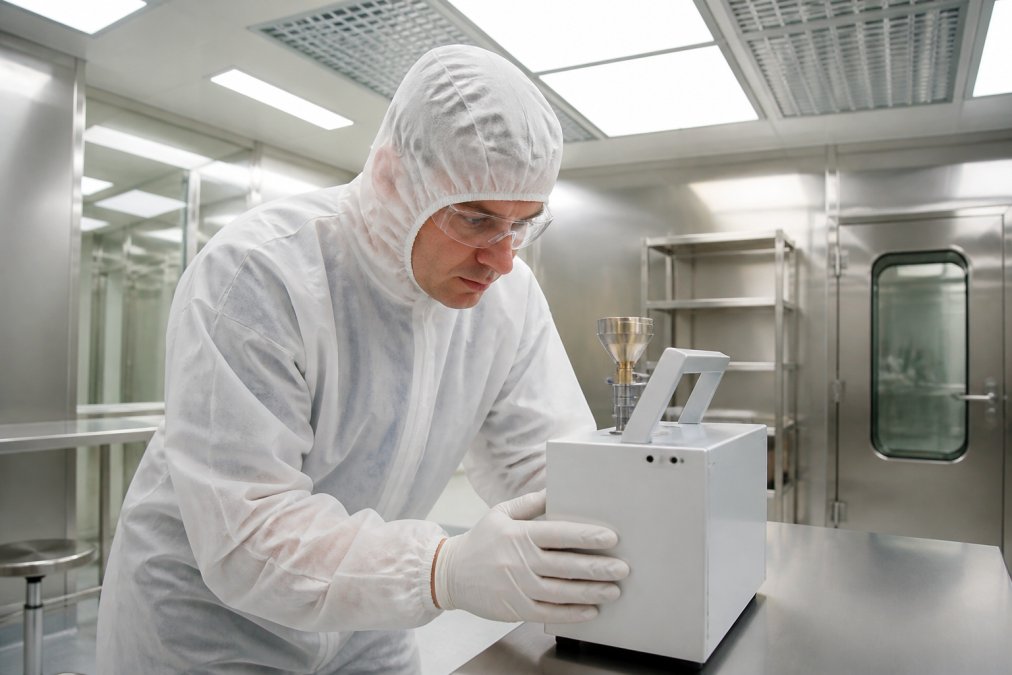
Most facility managers assume the consultant’s job is to run a few particle counts and hand over a certificate. That is the smallest part of the work.
The real deliverable is a defensible record: test methods, raw data, pass/fail criteria, and a signed report that a regulator or auditor can follow line by line. This guide walks through what to demand from a validation partner, how to vet one properly, and where the process typically breaks down.
Validation vs. Certification: The Distinction That Trips Up Facility Managers
Validation is the documented evidence that a system consistently performs as intended. Certification is the formal attestation, usually issued after testing, that the cleanroom meets a specific standard such as ISO 14644-1.
The two are not interchangeable, and conflating them causes real problems. A certification without supporting validation data is a piece of paper. When an auditor asks how you arrived at that classification, the answer has to be the test record, not the certificate.
A common mistake is treating certification as the finish line. In practice, it is the output of a process that starts with a written protocol and ends with a report. Skip the protocol and you have no basis for the certificate.
Certification proves a result on one day. Validation proves the process that produced it. Auditors want the second one.
The Cleanroom Validation Checklist Every Consultant Should Follow
Every credible cleanroom validation checklist follows the same logical sequence: define the protocol, execute the tests, record the raw data, and issue a report that ties each result back to its acceptance criterion. A consultant who cannot show you this sequence in writing before work begins is improvising.
A standard engagement covers these stages:
- Protocol development – written test plan with acceptance criteria tied to the target classification
- Airflow visualization – smoke studies to confirm unidirectional or non-unidirectional flow behaves as designed
- Airborne particulate counts – sampling at defined locations per ISO 14644-1
- HEPA filter integrity testing – leak detection across the filter face and frame
- Air changes per hour and pressure differential verification
- Recovery testing – how quickly the room returns to baseline after a challenge
- Report issuance – signed, dated, with raw data attached
The sequence matters. Running particle counts before confirming HEPA integrity produces numbers you cannot trust.
ISO 14644-1 cleanroom classification standard overview
Documentation and Test Data You Should Receive
At minimum, you should walk away with the raw data files, not just a summary table. Ask for the instrument calibration certificates that were valid on the test date, the sampling map showing where each measurement was taken, and the acceptance criteria stated before testing began.
If a consultant offers only a one-page certificate with no supporting data, that is a red flag. Regulators increasingly expect the underlying record, and reconstructing it after the fact is rarely possible.
ISO 14644-1 Compliance Standards: What Your Consultant Must Know
ISO 14644-1 compliance standards define how cleanrooms are classified by airborne particle concentration and how that classification is verified through sampling. Your consultant must know the standard well enough to select sample locations, determine minimum sample volumes, and apply the correct statistical evaluation.
The parts that matter most in practice:
- Classification covers ISO Classes 1 through 9 based on particles per cubic meter at defined sizes
- Sampling locations are determined by room area, with a minimum number of points that scales with floor space
- Sample volume must be sufficient to detect the class limit at the largest considered particle size
- Statistical evaluation requires that 95% of locations meet the limit, with no single location exceeding it
What most guides miss is that the standard specifies the method, not just the numbers. A consultant who reports “the room is ISO 7” without documenting how many points were sampled and at what volume has not demonstrated compliance. They have asserted it.
A common failure is sampling too few locations to satisfy the minimum count for the room’s area. The result looks clean but fails an audit because the method itself was non-compliant.
Cleanroom Validation Report Requirements for GMP Audits
Cleanroom validation report requirements for GMP audits go beyond the ISO classification data. Good Manufacturing Practice frameworks, including those enforced by the FDA guidance on sterile drug products, expect a documented, traceable record that connects design intent to verified performance.
A GMP-ready report typically includes:
- Executive summary with the classification achieved and the standard applied
- Test protocol, version-controlled and approved before execution
- Instrument list with calibration traceability
- Raw data with timestamps and operator identification
- Deviation log noting any out-of-specification results and their resolution
- Final conclusion signed by the responsible validation engineer
The deviation log is the part most facilities overlook. Auditors do not expect zero deviations. They expect you to have found them, documented them, and closed them out.
For sterile compounding operations, contamination control expectations are set by USP 797 and USP 800, which place additional weight on environmental monitoring and airflow verification. A validation partner who has not worked inside those frameworks will miss the specific documentation those standards demand.
Vetting Criteria: How to Separate Real Experts From Resume Padding
Most results for this query are service pages that tell you to “hire an experienced consultant” and stop there. None of them give you a way to score the candidates in front of you. This section does.
Treat vetting as a four-part screen: credentials, evidence, method, and references. A candidate who clears all four is worth a proposal. A candidate who clears two is a risk you are choosing to take.
Part 1: Credentials, What to Verify, Not Just Collect
Relevant credentials fall into three buckets, and they are not interchangeable:
- Standards training, formal coursework or documented competency in ISO 14644-1 classification and, where applicable, GMP validation practice
- Instrument-specific certification, training on the specific particle counter, aerosol photometer, or airflow visualization tool the consultant will actually use on your site
- Sector experience, documented work in your environment type (sterile compounding, aseptic fill, semiconductor, medical device, or hospital pharmacy)
What matters less: generic quality management certifications with no cleanroom testing component. They look impressive on a proposal and tell you nothing about whether the person can execute a smoke study correctly.
Ask for the certificate number, the issuing body, and the date. Then verify at least one of them directly with the issuer. A credential you cannot verify is a claim, not a qualification.
Part 2: Evidence, The Report Is the Product
Ask for a redacted sample report from a facility comparable to yours. Then read it the way an auditor would:
- Are acceptance criteria stated before the results, or reverse-engineered to match them?
- Is raw data attached, or only a summary table?
- Are instrument model numbers and calibration dates listed?
- Is there a deviation log, and does it show real deviations that were closed out?
- Is the sampling map included, with point count and sample volumes documented?
A consultant who hesitates on the sample report is telling you something. The report is the product. If they cannot show one, they either have not produced many or do not want you to see the quality.
A report with zero deviations is not a sign of a perfect facility. It is often a sign that out-of-specification results were quietly dropped before the report was written. Ask how deviations are handled before you see one.
Part 3: Method, Make Them Walk You Through a Test
Ask a prospective consultant to walk you through a recovery test they personally ran. The ones who did the work will describe the setup, the challenge agent, the timing, and the pass/fail threshold without hesitation. The ones who did not will stay abstract.
Then ask two follow-up questions:
- How do you determine the minimum number of sampling locations for a room of my size?
- What do you do when a single location fails the statistical evaluation?
The first question tests whether they know the standard’s method, not just its numbers. The second tests whether they have actually resolved a failure in the field.
Part 4: References, Call Them, and Ask These Questions
Two references in your sector is the minimum. Ask each one:
- Did the consultant flag problems during testing or only in the final report?
- How did they handle a deviation or a re-test?
- Would you use them again for a facility like mine?
- Did the report survive an audit or inspection without follow-up questions?
That last question is the one that separates a consultant who produces paperwork from one who produces a defensible record.
A Simple Scoring Sheet
Score each finalist from 1 to 5 on credentials, evidence, method, and references. A candidate averaging below 3 on any single category is a pass, regardless of price. The cheapest proposal that fails an audit is the most expensive option on the table.
Ask for the name of the individual who will be on site, not just the firm. Firms subcontract. The person holding the particle counter is the person whose work you are buying.
Hiring a Certified Cleanroom Validation Consultant vs. Building In-House
No competitor content explains the economics of this decision, which is the question facility managers actually ask. The honest answer is that it depends on three variables: how often you validate, how many rooms you run, and how much audit exposure you carry.
The Real Cost Buckets
Going in-house is not just an instrument purchase. The full cost stack includes:
- Capital, particle counter, aerosol photometer, airflow visualization equipment, and calibration standards
- Recurring calibration, every instrument needs traceable calibration on a fixed cycle, and an out-of-calibration instrument invalidates the data it produced
- Training, formal standards training and instrument-specific certification for at least two people, so you are not single-threaded
- Protocol development, writing and version-controlling test protocols tied to your target classification
- Audit defense, the internal time to walk an investigator through your method, your data, and your deviations
The external model folds all five into a per-engagement fee. That is the trade: you pay a premium per event in exchange for not carrying the fixed cost between events.
When External Wins
External consulting is usually the better fit when:
- You validate once or twice a year, or only after a change control
- You run a small number of classified spaces
- You do not have a dedicated validation or quality engineering function
- Your last audit produced findings related to test method or documentation
In these cases the fixed cost of an in-house program cannot be spread across enough events to justify it, and the expertise you would need to build takes years to accumulate.
When In-House Wins
In-house capability starts to make sense when:
- Validation is continuous, or you run ongoing environmental monitoring that requires the same instruments
- You operate many classified rooms across multiple sites
- You already employ validation engineers who can absorb the protocol work
- Instrument utilization is high enough that calibration cost per test drops
The break-even is not a single number. It is the point at which your annual validation events are frequent enough that the per-event consultant fee exceeds your annualized fixed cost. Most facilities can estimate that point with a simple two-year comparison: total consultant fees versus capital plus calibration plus training plus internal labor.
The Hidden Cost Nobody Prices In
The hidden cost of going in-house is not the equipment. It is the expertise to interpret results correctly and defend them under audit scrutiny. A consultant brings pattern recognition from dozens of facilities. An in-house team builds that recognition slowly, and the learning curve is paid for in audit findings.
A common pattern: a facility builds in-house capability, passes its first internal validation, then receives a finding because the sampling location count did not satisfy the minimum for the room’s area. The instrument was fine. The method was not. That is the gap a consultant closes.
A Hybrid Model Worth Considering
Many facilities land on a hybrid: retain an external consultant for formal validation and re-validation events, and build in-house capability for routine environmental monitoring between them. The consultant owns the defensible record; the in-house team owns the day-to-day data. This spreads the fixed cost of instruments across continuous monitoring while keeping the audit-critical work in experienced hands.
For most pharmaceutical and biotech operations running periodic validation, the external or hybrid model is the better fit. Applied Physics supports these programs with cleanroom foggers and particle metrology tools that consultants use during airflow visualization and particle counting work.
Hiring is a per-event cost. Building in-house is a fixed cost. The decision is not which is cheaper in isolation, it is which is cheaper at your validation frequency, and which one you can defend in an audit.
Risk Mitigation: What Happens When Validation Goes Wrong
Risk mitigation in cleanroom validation starts with assuming something will fail and planning for it. The facilities that recover fastest are the ones that wrote a deviation procedure before they needed one.
When validation goes wrong, the consequences compound quickly:
- Failed audit – production halts until remediation is documented and re-verified
- Batch rejection – product manufactured in a non-compliant space may be unsalvageable
- Re-validation cost – the entire test sequence repeats after remediation
- Regulatory scrutiny – repeated findings invite closer inspection of other systems
The strongest mitigation is a consultant who flags problems during testing rather than after. A failed HEPA filter found on day one is a filter change. The same failure found in the final report is a re-test, a delay, and an explanation to your quality team.
[FDA guidance on aseptic processing and contamination control(/cleanroom-contamination-control-checklist-audit/) | fda.gov]
Equipment and Testing Tools That Support Validation Work
The instruments behind a validation study determine how much you can trust the result. Particle counters, aerosol photometers, and airflow visualization tools each play a specific role, and the quality of the calibration behind them matters as much as the model number.
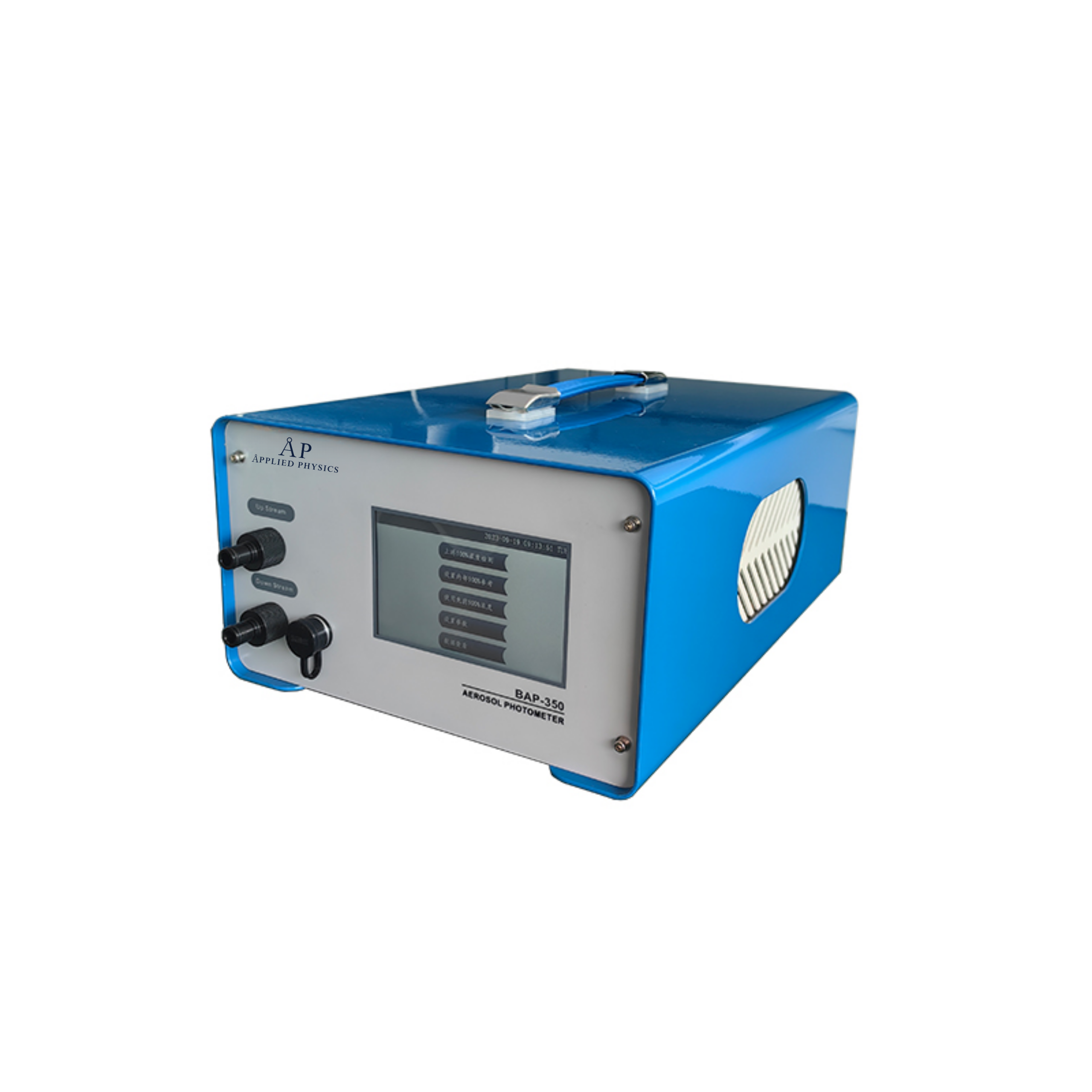
Applied Physics has supplied contamination control and metrology equipment since 1992, including LN2 ultrapure and ultrasonic cleanroom foggers for airflow visualization, calibration wafer standards, and the Aerosol Photometer BAP-350 for HEPA validation and filter integrity testing. For facilities running continuous monitoring, the Cleanroom Monitoring System (CRMS) supports ongoing compliance between formal validation events.
The practical point: equipment and expertise are a package. A consultant with strong protocols and poorly calibrated instruments produces data you cannot defend. Ask what they test with, and ask to see the calibration records.
Validation failures rarely announce themselves. They surface during an audit, a batch investigation, or a regulatory inspection, and by then the cost has multiplied. Getting the right validation partner in place before that happens is the difference between a routine inspection and a production shutdown.
Applied Physics has supported cleanroom, semiconductor, and healthcare operations since 1992 with precision contamination control and metrology equipment, including airflow visualization foggers, calibration wafer standards, and particle counting systems built for validation work. If your facility needs defensible test data and equipment that holds up under audit scrutiny, contact Applied Physics to discuss your validation requirements.
Frequently Asked Questions
What does a cleanroom validation consultant do?
A cleanroom validation consultant tests and documents whether your facility meets its classified cleanliness level. That includes airborne particulate counts, HEPA filter integrity, airflow visualization, and pressure differentials. They produce a validation report with raw data, pass/fail results, and deviation notes. For GMP facilities, they also verify that standard operating procedures and environmental monitoring programs align with regulatory expectations. The consultant does not just run tests; they confirm your cleanroom performs as designed under real operating conditions.
What certifications should a cleanroom validation consultant have?
Look for credentials tied to ISO 14644-1 compliance standards, such as NEBB cleanroom certification or equivalent training in cleanroom performance testing. GMP experience matters too: a consultant who has supported FDA inspections knows what auditors ask for. Ask for documentation of their training, not just a claim. A cleanroom validation engineer with hands-on experience in your industry (pharma, semiconductor, or compounding pharmacy) will understand the specific contamination control risks you face.
How often should cleanroom validation be performed?
ISO 14644-1 recommends re-validation at least every 12 months for most classified cleanrooms. Facilities under GMP requirements often test more frequently, sometimes every six months, depending on the classification and the product being manufactured. You also need re-validation after any significant change: new equipment, altered airflow, HEPA filter replacement, or facility modifications. A certified cleanroom validation consultant can help you build a testing schedule that matches your regulatory obligations and internal quality control plan.
What is the difference between cleanroom certification and validation?
Certification is a point-in-time test that confirms your cleanroom meets a specific standard, such as ISO 14644-1. Validation is broader: it includes certification testing plus documentation that the facility consistently performs as intended across all operating conditions. Validation covers installation qualification, operational qualification, and performance qualification. For GMP facilities, validation is the regulatory expectation. Certification alone may satisfy a building inspector, but it will not satisfy an FDA auditor reviewing your cleanroom validation report requirements.