
In the field of clinical diagnostics, accuracy is the only metric that truly matters.
Clinical chemistry analyzers are the workhorses of the modern laboratory, processing hundreds of patient samples daily to provide critical health data.
However, the performance of these sophisticated instruments is heavily dependent on the quality of the water used in the testing process.
Impurities in water can lead to assay interference, inconsistent results, and frequent equipment downtime.
The MEDICA D 7-15 series represents a specialized solution designed to meet the rigorous Clinical Laboratory Reagent Water (CLRW) standards.
By providing a consistent flow of purified water, these systems ensure that chemical reactions within the analyzer remain uncontaminated by minerals, bacteria, or organic compounds.
The Critical Role of CLRW in Diagnostics
Water is used in almost every stage of clinical chemistry analysis, from rinsing probes and cuvettes to diluting reagents and samples.
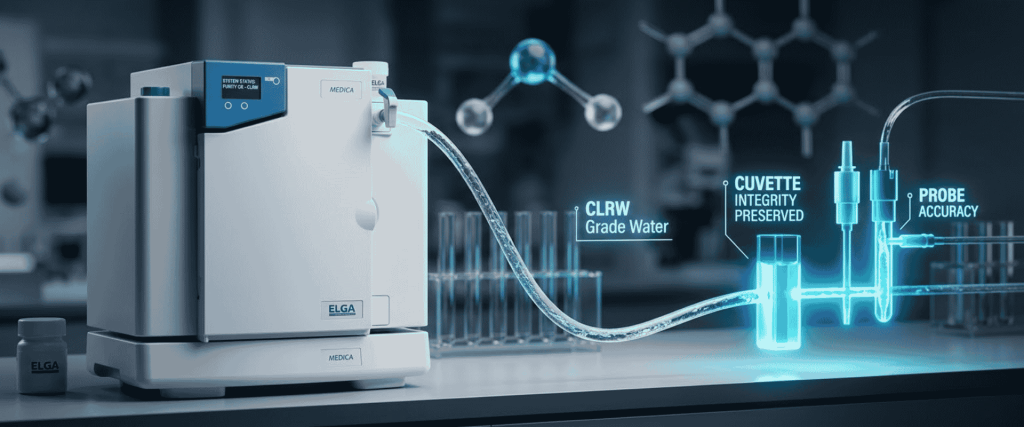
If the water quality fluctuates, the baseline of the diagnostic test shifts. CLRW grade water is essential because it limits specific contaminants that are known to interfere with photometric readings and enzymatic reactions:
- Ion Interference: Trace metals like calcium, magnesium, and iron can mimic or inhibit the ions being measured in patient samples, leading to false positives or negatives.
- Bacterial Control: Microorganisms produce enzymes and byproducts that can degrade reagents and cause blockages in sensitive analyzer tubing.
- Organic Compounds: Dissolved organics can interfere with the ultraviolet (UV) detection systems used in most clinical analyzers.
MEDICA D 7-15 System
The MEDICA D 7-15 is a compact, high-performance water purification system engineered specifically for laboratories with low-to-medium volume needs.
It integrates various purification technologies, including reverse osmosis (RO), ion exchange, and UV photo-oxidation, into a single unit that feeds directly into a clinical analyzer.
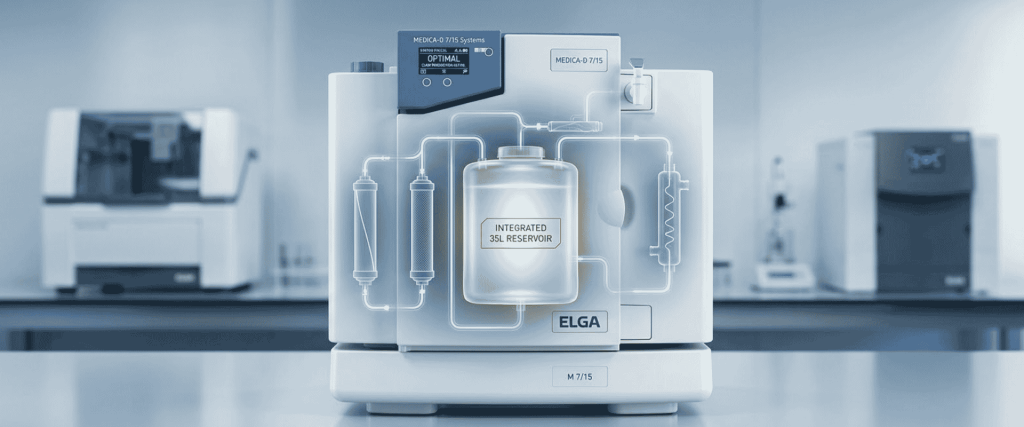
One of the standout features of this series is its space-saving design.
Laboratory bench space is often at a premium; the MEDICA D 7-15 incorporates an internal 35-liter reservoir, eliminating the need for bulky external tanks while maintaining a steady supply of purified water during peak demand.
Technical Comparison: MEDICA D 7 vs. MEDICA D 15
Choosing between the two models depends primarily on the daily volume requirements of your laboratory and the specific throughput of your chemistry analyzer.
| Feature / Specification | MEDICA D 7 | MEDICA D 15 |
| Purified Water Production Rate | 7 Liters per hour | 15 Liters per hour |
| Water Quality Standard | CLRW (Clinical Lab Reagent Water) | CLRW (Clinical Lab Reagent Water) |
| Inorganics (Resistivity) | >10 MΩ-cm | >10 MΩ-cm |
| Total Organic Carbon (TOC) | <30 ppb | <30 ppb |
| Bacteria Count | <1 CFU/ml | <1 CFU/ml |
| Internal Storage Capacity | 35 Liters | 35 Liters |
Operational Reliability and Safety Features
Clinical laboratories cannot afford downtime. A failure in the water system can halt an entire testing line. The MEDICA D 7-15 addresses this through a robust design that includes an emergency bypass.
In the unlikely event of a system malfunction, the bypass ensures that the analyzer continues to receive compliant water, allowing the lab to remain operational while maintenance is performed.
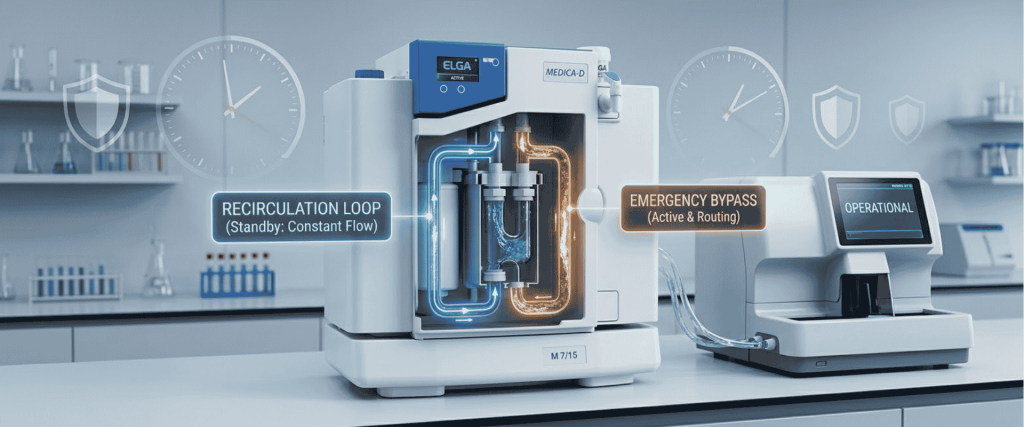
Furthermore, the system features a recirculation loop that keeps the water moving through the purification media even when the analyzer is idle.
This prevents stagnant water from becoming a breeding ground for bacteria, ensuring that the first milliliter of water used in the morning is just as pure as the last milliliter used at the end of the day.
Ease of Installation and Maintenance
Modern lab equipment should be easy to manage.
The MEDICA D 7-15 is designed for quick installation, often fitting under a standard lab bench.
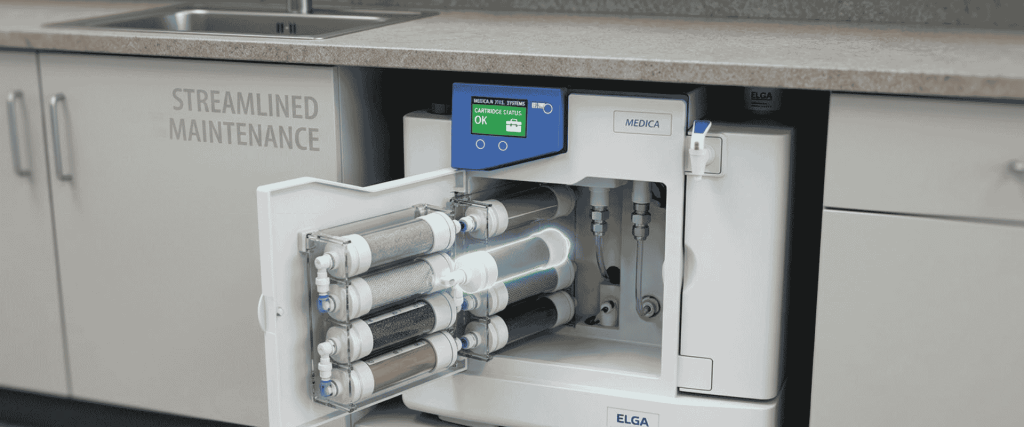
Maintenance is streamlined with easily accessible cartridges, and the system provides clear digital monitoring of water quality parameters.
This allows lab technicians to focus on diagnostic work rather than troubleshooting water supply issues.
Conclusion
Protecting a clinical chemistry analyzer starts with the water supply.
The MEDICA D 7-15 system provides a reliable, cost-effective way to eliminate assay interference by strictly adhering to CLRW standards. By investing in a dedicated water purification system, laboratories can ensure the longevity of their diagnostic equipment and, most importantly, the accuracy of the patient results they deliver.
Frequently Asked Questions (FAQs)
1. How often do the cartridges need to be replaced?
Cartridge life depends on the quality of the incoming feed water and your daily usage. Typically, cartridges are replaced every 6 to 12 months to maintain CLRW standards.
2. Does the MEDICA D 7-15 require an external storage tank?
No, the system includes an integrated 35-liter reservoir, which is designed to save space while providing enough volume to handle the rinse cycles of most clinical analyzers.
3. Can this system support multiple analyzers?
The MEDICA D 7-15 is generally designed to support a single clinical chemistry analyzer. If you have multiple high-throughput machines, a larger MEDICA system with a higher flow rate may be required.
4. What is the significance of the <1 CFU/ml bacterial count?
A low bacterial count is vital to prevent biofilm formation in the analyzer’s internal components, which can lead to frequent clogging and contamination of reagents.