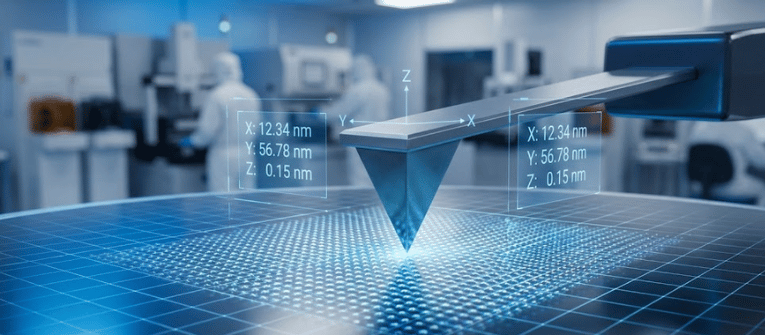
Scanning Probe Microscopy (SPM) has revolutionized our ability to visualize and manipulate matter at the atomic and molecular scales.
However, the data produced by an SPM is only as reliable as the system’s calibration. Precision calibration is the bridge between a beautiful topographic image and scientifically accurate metrology.
Without rigorous calibration, measurements of height, lateral displacement, and force are subject to significant errors due to piezoelectric creep, hysteresis, and tip-sample interactions.
Precision calibration for SPM involves the systematic standardization of the microscope’s scanners and sensors using certified reference materials.
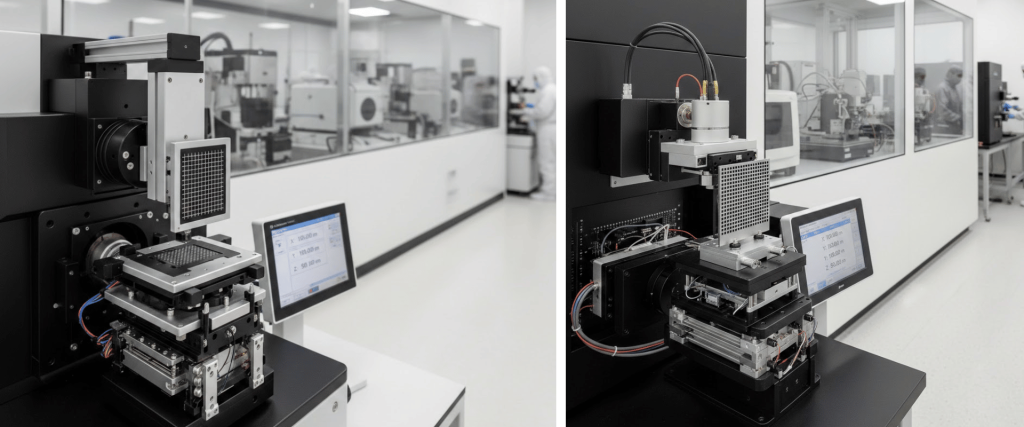
The goal is to ensure that the voltage applied to the piezoelectric scanners translates into an accurate physical displacement in the X, Y, and Z axes.
In high-stakes industries like semiconductor manufacturing, material science, and biotechnology, a deviation of even a few picometers can lead to failed experiments or faulty components.

To achieve precision, researchers typically follow a standardized workflow.
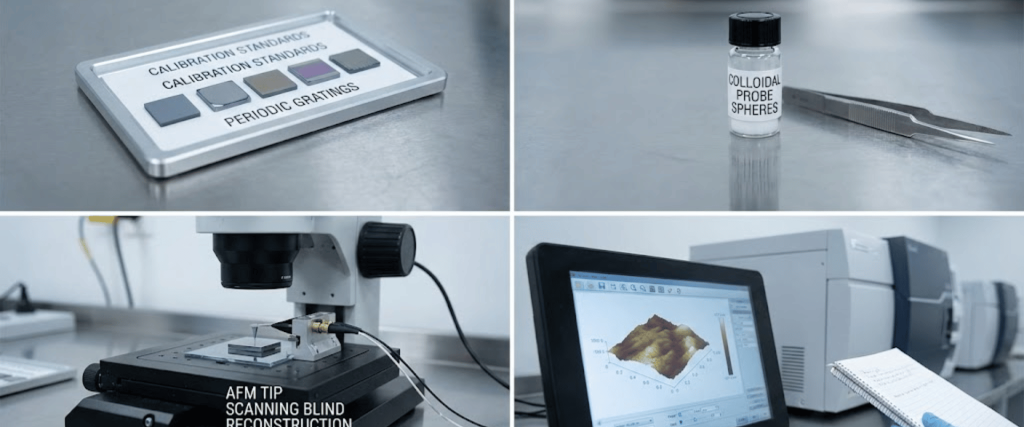
High-quality standards are usually made from silicon or quartz. Common standards include.
Piezoelectric materials are inherently nonlinear.
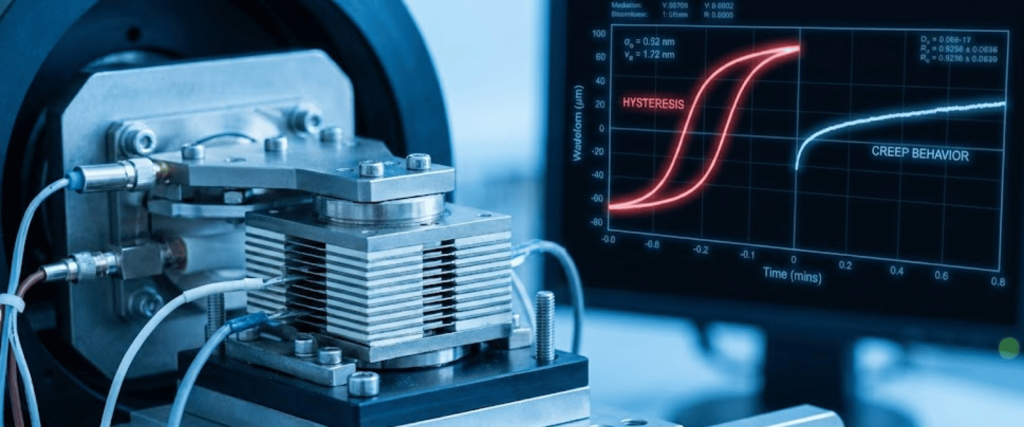
Calibration allows the software to apply look-up tables or polynomial corrections to counteract hysteresis (the lagging effect during scan direction changes) and creep (the continued movement of the piezo after a voltage change).
The shape of the probe tip significantly affects the image (convolution).
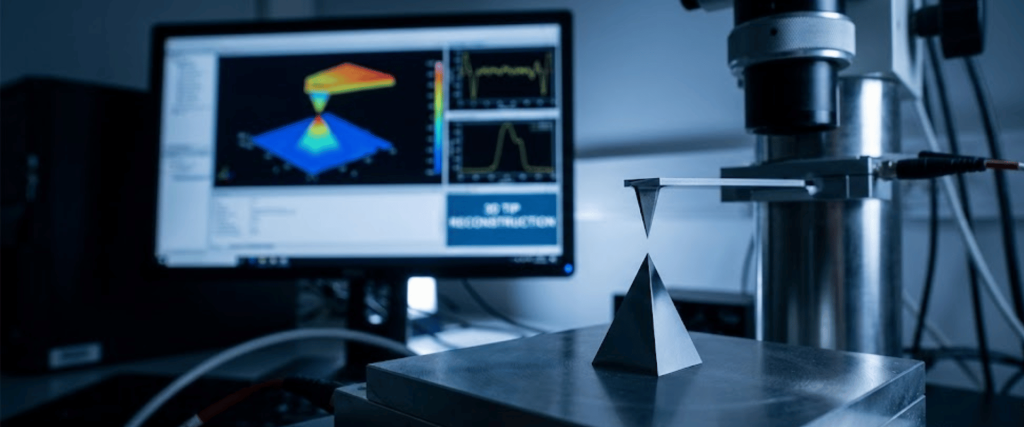
Precision calibration often includes scanning a blind reconstruction standard to map the tip’s geometry, allowing for more accurate deconvolution of the final image.
To achieve sub-nanometer accuracy, specific standards must be used for different mechanical behaviors of the SPM scanner. The table below outlines the primary parameters monitored during a precision calibration routine.
| Calibration Parameter | Standard Used | Purpose & Importance |
|---|---|---|
| X & Y Axis (Lateral) | 2D Silicon Gratings | Calibrates the scanner’s linear accuracy and ensures correct 90° angle alignment between X and Y directions. |
| Z-Axis (Vertical) | Step Height Standards | Measures accurate height and thickness of atomic layers and thin films. |
| Scanner Hysteresis | Periodic Grid Patterns | Corrects the lagging effect caused by piezoelectric scanner response. |
| Tip Characterization | Sharp Silicon Spikes | Determines the probe shape to avoid image distortion and false features. |
| Spring Constant | Thermal Tune Method | Calibrates the force sensitivity of the AFM cantilever for accurate force measurements. |
In the realm of nanotechnology, precision calibration is not merely a maintenance task but a fundamental requirement for data integrity.
By utilizing certified standards and addressing piezoelectric nonlinearities, researchers can transform qualitative scans into quantitative metrological data.
Consistent calibration ensures that your SPM results are reproducible, internationally traceable, and free from instrumental artifacts.
Investing in high-quality calibration kits is the most effective way to guarantee the long-term accuracy and reliability of your nanoscale research.
While a full system calibration is typically performed monthly or after changing a scanner, it is best practice to run a validation check on a known standard daily to account for thermal drift and piezo aging.
Lateral (X-Y) calibration ensures the accuracy of horizontal distances and scanner orthogonality, while vertical (Z) calibration focuses on measuring accurate step heights and surface topography.
NIST-traceable standards provide a certified link to international measurement units, ensuring your SPM data is globally recognized, audit-compliant, and consistent across different laboratories and instruments.