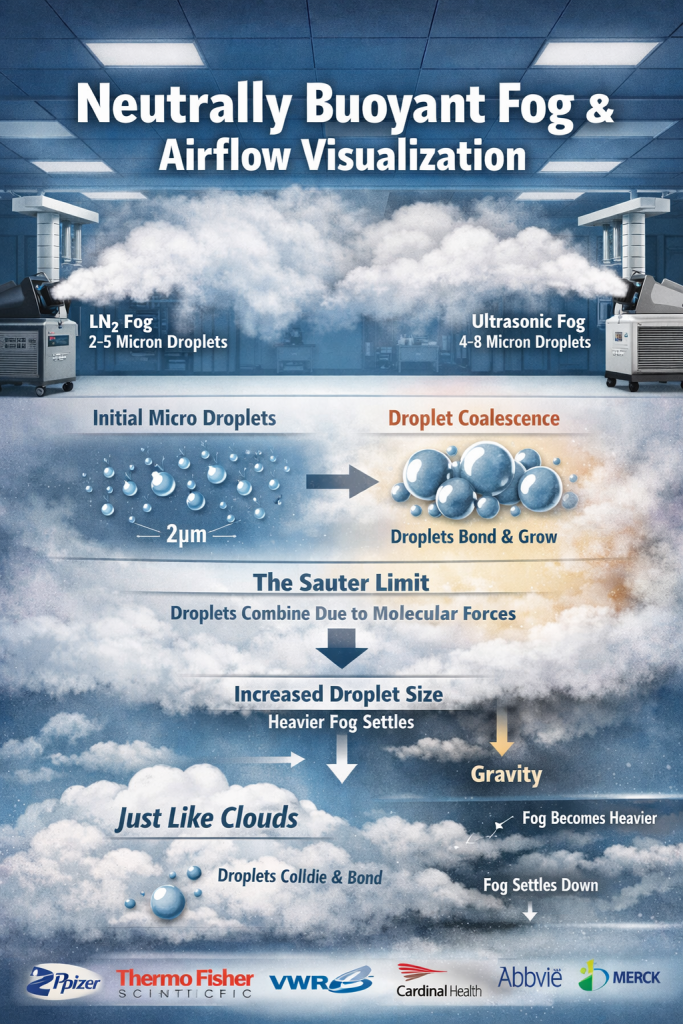
Over the past year, the Applied Physics sales team has seen a sharp increase in questions around “neutrally buoyant fog.” Customers across pharmaceutical, semiconductor, and regulated manufacturing environments are asking: These are valid questions—and they deserve real, physics-based answers rather than simplified marketing claims. What Does “Neutrally Buoyant Fog” Actually Mean? In strict physical terms, […]
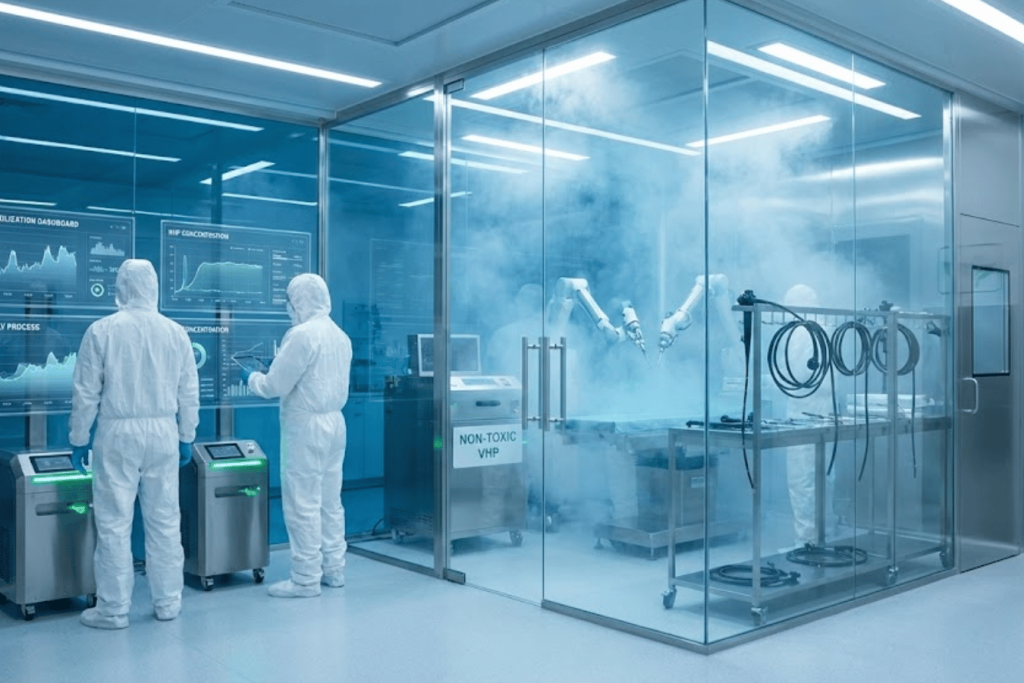
Vaporized Hydrogen Peroxide (VHP) has transitioned from a niche laboratory tool to the gold standard for low-temperature sterilization in the pharmaceutical and healthcare sectors. As we move through 2026, VHP systems are increasingly replacing older, more toxic methods like Ethylene Oxide (EtO). This article examines the technical journey of VHP, its sophisticated mechanism of action, […]
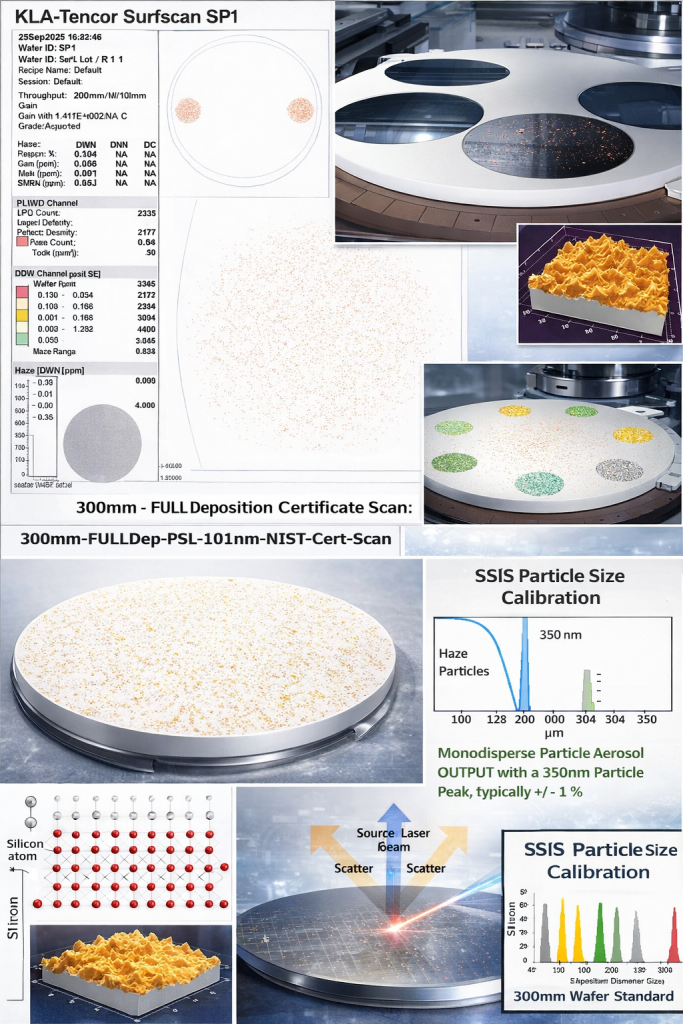
SSIS tools (Surface Scanning Inspection Systems) must be calibrated to NIST-traceable particle size standards to ensure particle sizing is consistent, comparable, and actionable across tools, fabs, and time. When particle size data is accurate and standardized, contamination control teams can identify sources faster, reduce false alarms, improve tool matching, and protect yield—especially at advanced nodes […]

In industries where contamination control is mission-critical, such as pharmaceuticals, biotechnology, medical device manufacturing, and advanced electronics, cleanroom technology is the backbone of quality and compliance. As the demand for flexible, scalable, and efficient cleanroom solutions continues to grow, modular cleanroom designs supported by portable foggers are rapidly becoming the gold standard. This article explains […]
Introduction: Why Contamination Control Is the Heart of Cleanroom Design Cleanrooms are built not for people, but for the products and processes that must remain uncontaminated. Whether it’s a sterile pharmaceutical vial, a semiconductor wafer, or a medical implant, the slightest contamination can compromise safety, quality, and yield. But contamination doesn’t happen randomly. It has […]
Introduction: Why Particle Behavior Defines Cleanroom Performance Particles are the invisible enemies of cleanrooms. Whether it’s a 10 nm defect on a semiconductor wafer or microbial contamination in a sterile vial, particle transport determines product yield, safety, and compliance. Understanding how particles settle, diffuse, and move with airflow is the foundation of contamination control. While […]
Introduction It is a common misconception that cleanrooms are completely free of contamination. While cleanrooms are designed to minimize the presence of contaminants, it is virtually impossible to eliminate all contaminants entirely. Cleanrooms are controlled environments that are designed to limit the introduction, generation, and retention of particles and other contaminants. However, it is important […]
Particle control is a vital component of laboratory operations, as it has a direct impact on the quality and reliability of experimental results. In a laboratory setting, particles encompass a broad range of substances, including dust, microorganisms, and chemical contaminants. These particles can significantly affect the accuracy and reproducibility of experiments, as well as the […]
Introduction Maintaining a sterile environment in a cleanroom is vital for various industries, including pharmaceuticals, biotechnology, electronics, and healthcare. Cleanrooms are specifically designed to minimize the presence of airborne particles, microorganisms, and other contaminants, thereby safeguarding the integrity of sensitive processes and products. The significance of cleanroom sterility cannot be overstated, as even minute amounts […]
Introduction Cleanroom maintenance is a critical aspect of ensuring the functionality and safety of cleanroom environments. Cleanrooms are used in a variety of industries, including pharmaceuticals, biotechnology, electronics, and aerospace, where the control of airborne particles and contaminants is essential. Proper maintenance of cleanrooms is crucial for meeting regulatory standards, maintaining product quality, and ensuring […]