
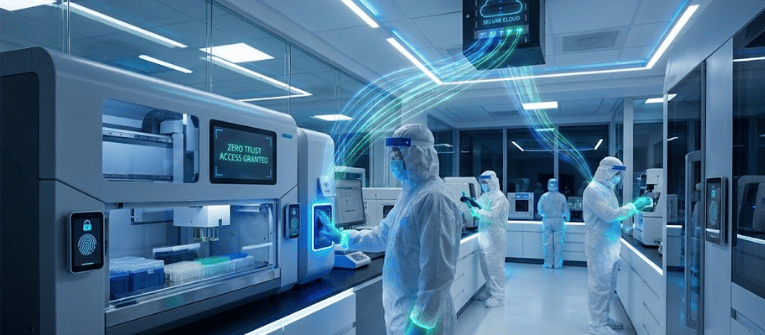
Lab technicians in full protective suits operate automated lab equipment in a high-tech cleanroom, secure cloud data links visible overhead

Implementing Multi-Factor Authentication for Lab Equipment

In an era where data is the most valuable currency in research, the perimeter of cybersecurity has moved from the office desk to the laboratory bench.

As lab equipment becomes increasingly networked and integrated into cloud ecosystems, standard password protection is no longer sufficient to safeguard intellectual property or ensure experimental integrity.

Implementing Multi-Factor Authentication (MFA) for lab hardware represents a critical shift toward a Zero Trust environment, where every access point is verified.

By layering security protocols, labs can prevent unauthorized usage, mitigate the risk of data breaches, and maintain the rigorous standards required by modern scientific discovery.

Why Lab Equipment Needs MFA

Standard laboratories often house equipment worth millions of dollars, frequently containing sensitive proprietary data. Simple passwords are easy to crack, share, or lose.
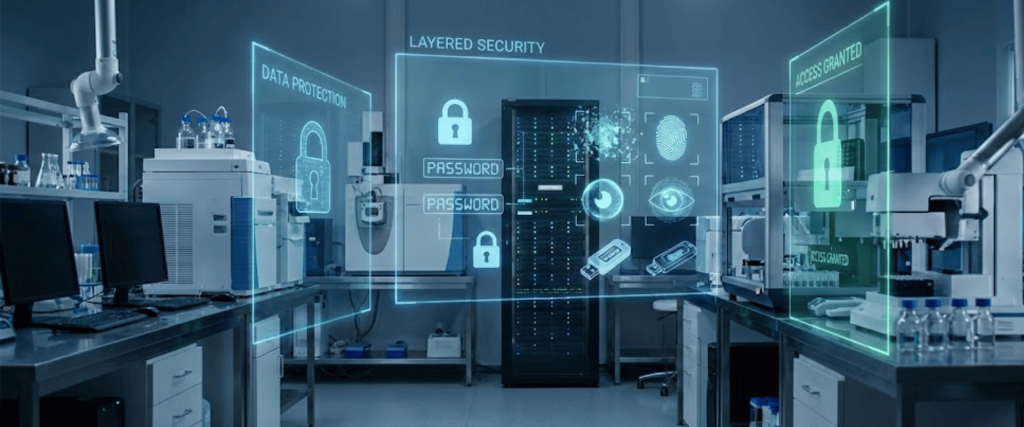
Laboratory with servers and holographic security overlays showing locks, fingerprint, password fields, and access granted icons

MFA adds a layer of something you have or something you are to the traditional something you know.

  • Protection of Intellectual Property: Prevents unauthorized users from accessing or exporting proprietary research results.
  • Data Integrity: Ensures that only certified personnel can change calibration settings or experimental parameters.
  • Audit Trails: MFA provides a definitive link between a physical person and an action taken on a machine, which is essential for forensic accounting in research.

Key Benefits of MFA in a Laboratory Setting

1) Regulatory Compliance

Many labs must adhere to strict guidelines such as 21 CFR Part 11 (FDA), HIPAA, or ISO 27001. These standards often require robust access controls and traceable user activity, which MFA provides out of the box.

Clean modern laboratory with computers, secured diagnostic instruments, servers and compliance icons for FDA, ISO 17025 and HIPAA

2) Prevention of Human Error

By requiring a secondary check, MFA ensures that only trained staff who possess the necessary credentials (like a physical key or biometric scan) can operate dangerous or highly sensitive machinery.
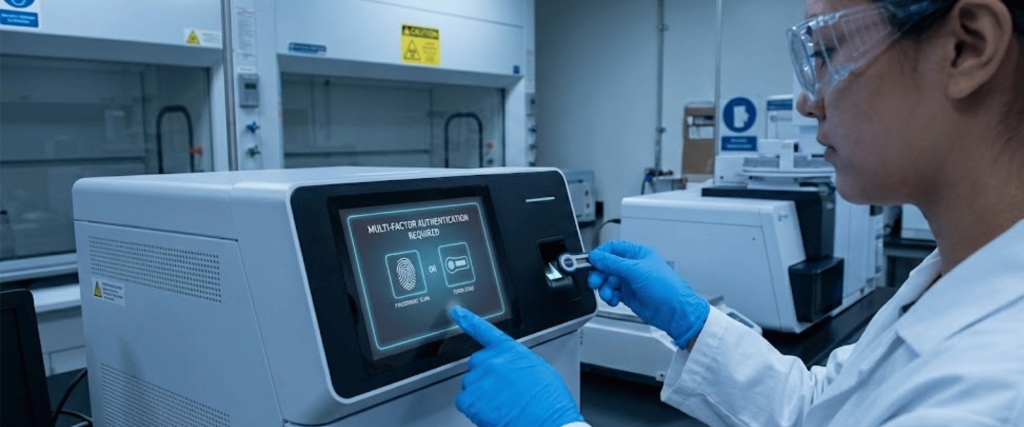
Lab technician in gloves using a touchscreen and USB security key on a benchtop molecular diagnostic instrument in a clinical lab

3) Remote Access Security

With the rise of Smart Labs, researchers often monitor experiments remotely. MFA is the gold standard for securing these remote connections against external hacking attempts.
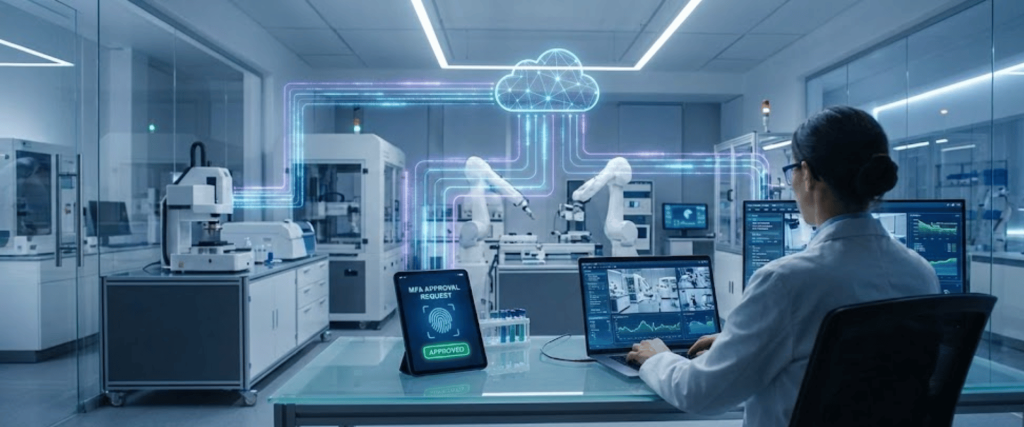
Lab tech at a workstation monitors automated robotic arms and cloud-connected data streams across a high-tech laboratory

Step-by-Step Implementation Process

Phase 1: Equipment Audit and Categorization

Not every piece of equipment requires high-level MFA.
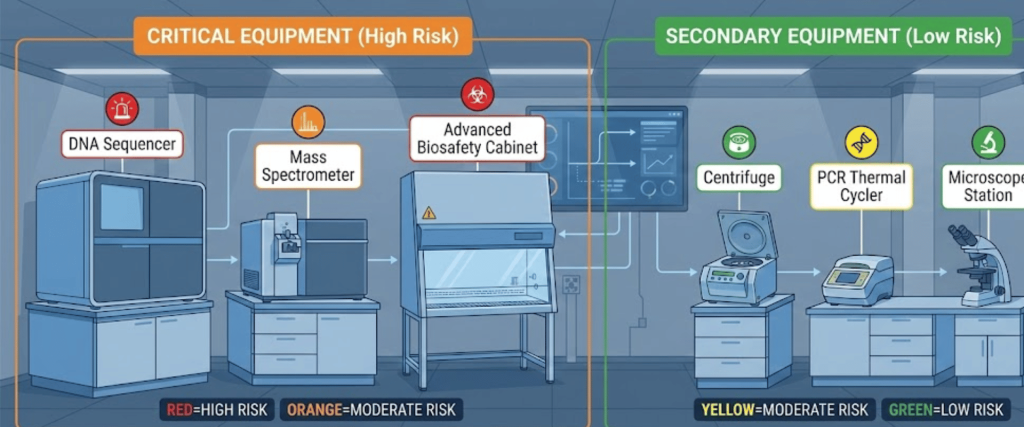
Laboratory layout showing high-risk critical equipment (DNA sequencer, mass spectrometer, biosafety cabinet) and low-risk secondary tools
  • Critical Assets: Mass spectrometers, DNA sequencers, and bioreactors.
  • Secondary Assets: Standard centrifuges or digital scales.
  • Categorization: Group equipment based on the sensitivity of the data they produce and the risk associated with unauthorized changes.

Phase 2: Choosing the Right MFA Method

In a lab environment, the choice of MFA must not hinder productivity.
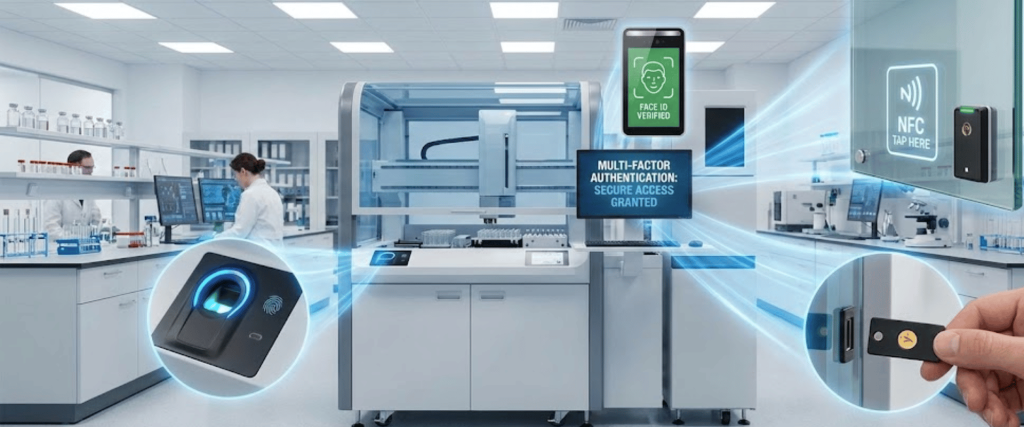
Lab laboratory with scientists using biometric and NFC multi-factor authentication on equipment for secure access
  • Biometric Scanners: Fingerprint or facial recognition (careful with PPE requirements).
  • Hardware Tokens: YubiKeys or USB dongles that stay with the researcher.
  • Mobile Push Notifications: Using a smartphone app to approve access.
  • RFID/NFC Cards: Utilizing existing employee badges for a Tap-and-Go experience.

Phase 3: Integration with Lab Information Management Systems (LIMS)

For a seamless workflow, the MFA protocol should be integrated into your LIMS or Electronic Lab Notebook (ELN).
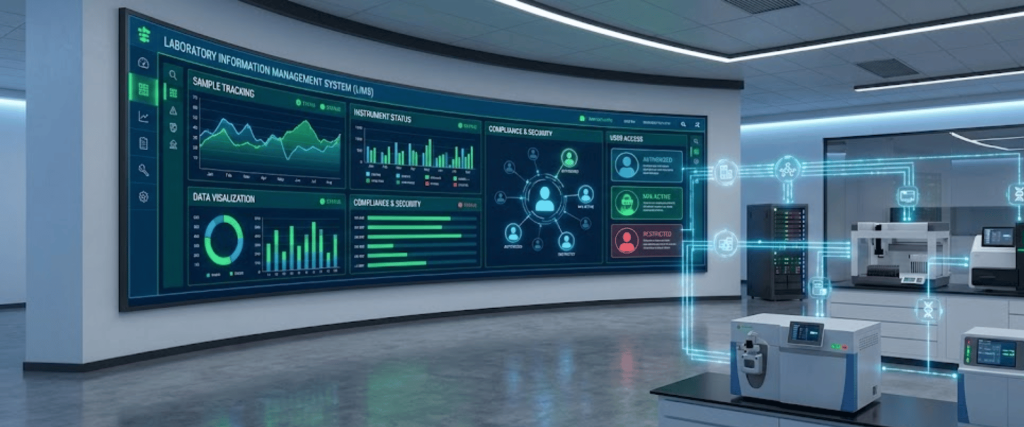
Modern laboratory with connected instruments and a large wall display showing data charts, system status, and sample tracking

This creates a centralized hub where permissions can be revoked or granted instantly across all connected hardware.

Overcoming Common Challenges

  • Legacy Equipment: Older machines may not support modern software. In these cases, hardware-based power-interlocks or network-level gateways can be used to wrap the equipment in a layer of MFA.
  • User Friction: Scientists prioritize their research. To ensure adoption, choose low-friction MFA like NFC badges that do not require typing long codes while wearing gloves.

Conclusion

Adopting Multi-Factor Authentication for lab equipment is a vital investment in the security and credibility of your research environment.

By layering verification methods, you effectively shield sensitive data from breaches while ensuring that only qualified personnel handle critical machinery.

This transition not only satisfies modern regulatory demands but also future-proofs your facility against the growing landscape of digital and physical threats.

Protecting your lab’s integrity today ensures that the scientific breakthroughs of tomorrow remain secure and undisputed.

Frequently Asked Questions (FAQs)

1. Will implementing MFA significantly slow down my lab’s daily workflow?

While adding a security step takes a few extra seconds, low-friction methods like NFC badge tapping or biometric scans are designed to be nearly instantaneous. When integrated correctly, the minor increase in time is vastly outweighed by the reduction in risk and the automation of access logs, which actually saves time during administrative audits.

2. How can I implement MFA on legacy equipment that isn’t connected to the internet?

For older, offline machinery, you can use hardware-based solutions such as smart-plug interlocks or physical cabinet locks that require an MFA-authorized key to power on the device. Alternatively, a dedicated Gateway PCcan be used as a terminal that requires MFA before it sends a signal to unlock the equipment’s software interface.

3. What is the best MFA method for researchers who must wear heavy PPE or gloves?

In environments where gloves or masks are mandatory, biometric methods like fingerprint or facial recognition may be impractical. In these cases, NFC (Near Field Communication) badges, or RFID fobs, are the best choice. They allow researchers to authenticate by simply tapping their badge against a sensor, which works perfectly even through protective clothing.


Leave a Reply

Your email address will not be published. Required fields are marked *

Related Posts

About Applied Physics USA

Since 1992, Applied Physics Corporation has been a leading global provider of precision contamination control and metrology standards. We specialize in airflow visualization, particle size standards, and cleanroom decontamination solutions for critical environments.

Trending Articles