
Maintaining a stable environment is the most important part of cleanroom operations.
These facilities rely on strict physical settings to prevent contamination and protect product integrity.
High-precision industries, such as semiconductor fabrication and pharmaceutical manufacturing, require constant monitoring of specific variables to meet ISO certification standards.
When environmental controls fail, the risk of particle accumulation and microbial growth increases, which can lead to expensive product losses and regulatory fines.
Establishing Pressure Differentials
One of the most effective ways to keep a cleanroom sterile is through air pressure management. Most cleanrooms are designed as positive-pressure environments.
This means the air pressure inside the room is higher than the pressure in the hallways or adjacent rooms.
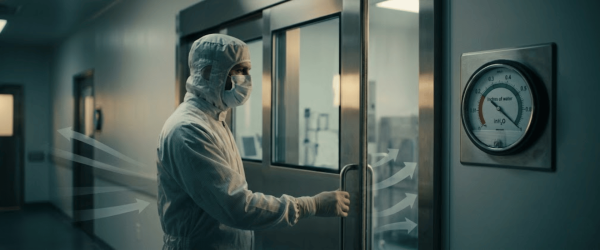
When a door is opened, the higher pressure causes air to rush out rather than allowing unfiltered air to drift in.
This cascading pressure effect ensures that the cleanest areas remain protected from external contaminants. Operators must check pressure gauges daily to verify that these barriers are functioning as intended.
Temperature and Humidity Standards
Fluctuations in temperature and humidity do more than just affect worker comfort; they can physically change the materials inside the room.
Temperature Stability
Standard cleanroom temperatures usually stay between 66°F and 70°F (19°C to 21°C). Constant temperatures prevent the expansion or contraction of sensitive mechanical parts.
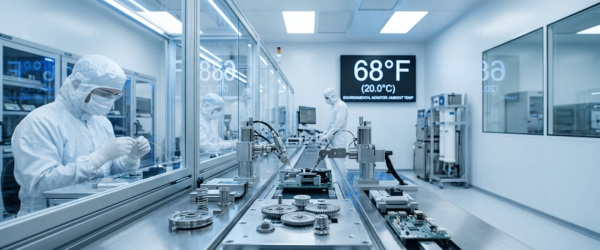
If the room gets too warm, personnel may sweat, which introduces significant biological contamination into the environment.
Humidity and Static Control
Humidity is often kept between 30% and 50% Relative Humidity (RH). If the air is too dry, static electricity builds up.
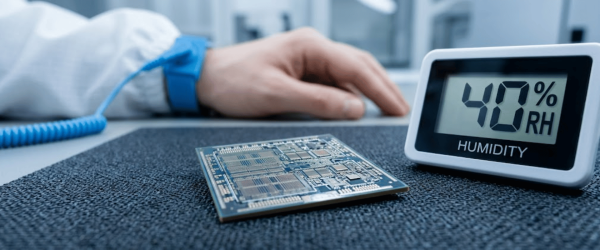
In semiconductor environments, a single electrostatic discharge (ESD) can destroy a microchip. If the humidity is too high, it leads to corrosion on metal surfaces and encourages the growth of mold and bacteria.
Key Environmental Control Parameters
| Parameter | Primary Function | Typical Target Range |
|---|---|---|
| Differential Pressure | Prevents outside air from entering the cleanroom | 0.02 to 0.05 inches of water |
| Relative Humidity | Controls static electricity and microbial growth | 30% to 50% RH |
| Temperature | Maintains material stability and worker comfort | 68°F ± 2°F |
| Air Change Rate | Flushes particles out of the room | 10 to 600+ changes per hour |
| Airflow Velocity | Moves particles toward filtration systems | 90 feet per minute (FPM) |
Managing Airflow Patterns and Filtration
Cleanrooms remove particles through high-efficiency particulate air (HEPA) filters. However, the way air moves through the room is just as important as the filter itself.
- Laminar Flow: In high-grade cleanrooms (ISO 5 or lower), air moves in a single, straight direction from the ceiling to the floor. This unidirectional flow pushes particles straight down and out of the room.
- Turbulent Flow: In lower-grade cleanrooms, air is mixed to dilute the concentration of particles.
To verify these patterns, facility managers use smoke studies.
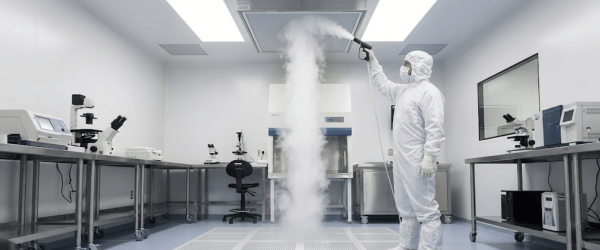
Tools like ultrapure foggers or ultrasonic foggers create a visible vapor that shows exactly how the air is moving around equipment and workstations, identifying dead zones where air might be trapped.
Contamination Control Through Gowning and Access
Even with the best HVAC systems, humans remain the largest source of particles in a cleanroom.
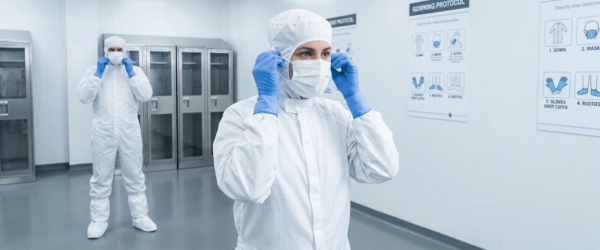
Guidelines for environmental control must include strict protocols for entering and exiting the space.
Gowning Procedures
Personnel must wear non-linting garments, including hoods, masks, gloves, and boot covers.
Material Transfer
Any equipment or raw materials entering the room should be wiped down in a pass-through airlock to prevent introducing dust from the outside.
Limited Motion
Rapid movements disrupt laminar airflow. Training staff to move slowly and deliberately helps maintain the stability of the air patterns.
Regular Validation and Monitoring
Guidelines are only effective when they are verified. Automated monitoring systems should be installed to track temperature, humidity, and pressure in real time.
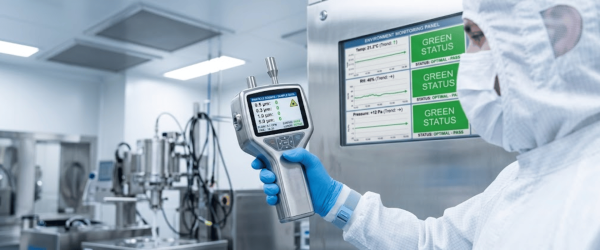
Routine testing using particle counters is also necessary. These devices measure the concentration of airborne particles to confirm that the room is still meeting its ISO classification.
Note: If any variable goes outside the required range, an alarm should immediately notify the facility manager.
Conclusion
Strict adherence to these environmental protocols ensures that cleanroom facilities stay compliant with international standards and operational requirements.
Consistently monitoring pressure, humidity, and airflow creates a dependable workspace for handling sensitive materials and high-precision equipment.
By prioritizing these physical controls, managers can prevent contamination risks and maintain the integrity of every project.
Frequently Asked Questions (FAQs)
1. How often should cleanroom pressure be monitored?
Pressure levels should be checked daily or monitored continuously through automated sensors to ensure the cascading air barrier remains effective at all times.
2. Why is humidity control necessary for sensitive equipment?
Keeping humidity within a specific range prevents static electricity from damaging electronics and stops excess moisture from causing metal corrosion or microbial growth.
3. What tools are used to verify cleanroom airflow?
Facility managers often use ultrapure or ultrasonic foggers to conduct smoke studies, which provide a clear visual map of how air moves through the space.