Last Updated: August 18, 2026
Selecting the right cleanroom equipment for pharmaceutical compounding isn’t just about meeting regulatory checkboxes. It’s about understanding which tools actually protect product integrity and operator safety while fitting your facility’s workflow. The difference between adequate equipment and optimized equipment often comes down to airflow control, particulate containment, and validation capability, areas where many operations still operate with outdated or mismatched systems.
At Applied Physics, we’ve spent over three decades analyzing how cleanroom equipment performs under real conditions. This guide covers the equipment categories that matter most for USP 797 and USP 800 compliance, along with the practical considerations that separate a functional cleanroom from one that consistently delivers results.
| Equipment Category | Primary Function | Compliance Standard | Best For |
|---|---|---|---|
| Class II Biosafety Cabinets | Operator and product protection | USP 797, NSF 49 | Sterile compounding, hazardous drugs |
| HEPA Filtration Systems | Particulate control and airflow | ISO 14644, USP 800 | Cleanroom air supply and exhaust |
| Airflow Visualization Tools | Validation and troubleshooting | USP 797 Annex 1 | Compliance audits, filter integrity |
| Environmental Monitoring | Particle and microbial detection | USP 797, USP 800 | Ongoing environmental control |
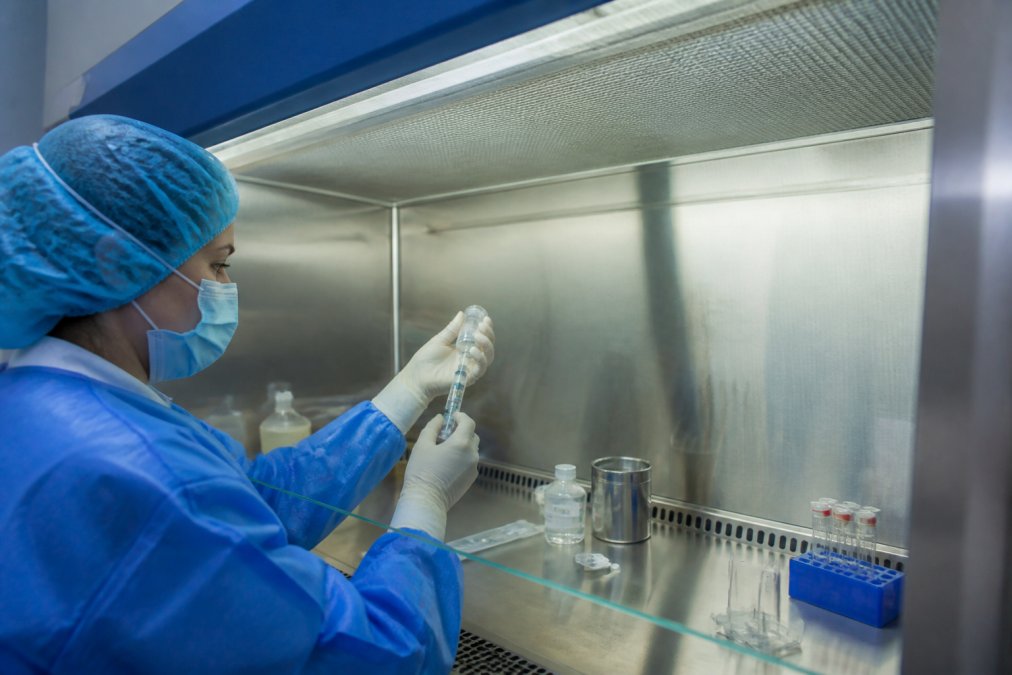
NSF Certified Class II Type A2 biosafety cabinets represent the foundation of sterile compounding environments. These cabinets provide three-directional protection: inflow air protects the operator, downflow air protects the product, and HEPA-filtered exhaust protects the environment. The key distinction is that Class II Type A2 cabinets recirculate 70% of air through the work zone while exhausting 30% through the facility’s HVAC system, a critical detail for facilities with space or ducting constraints.
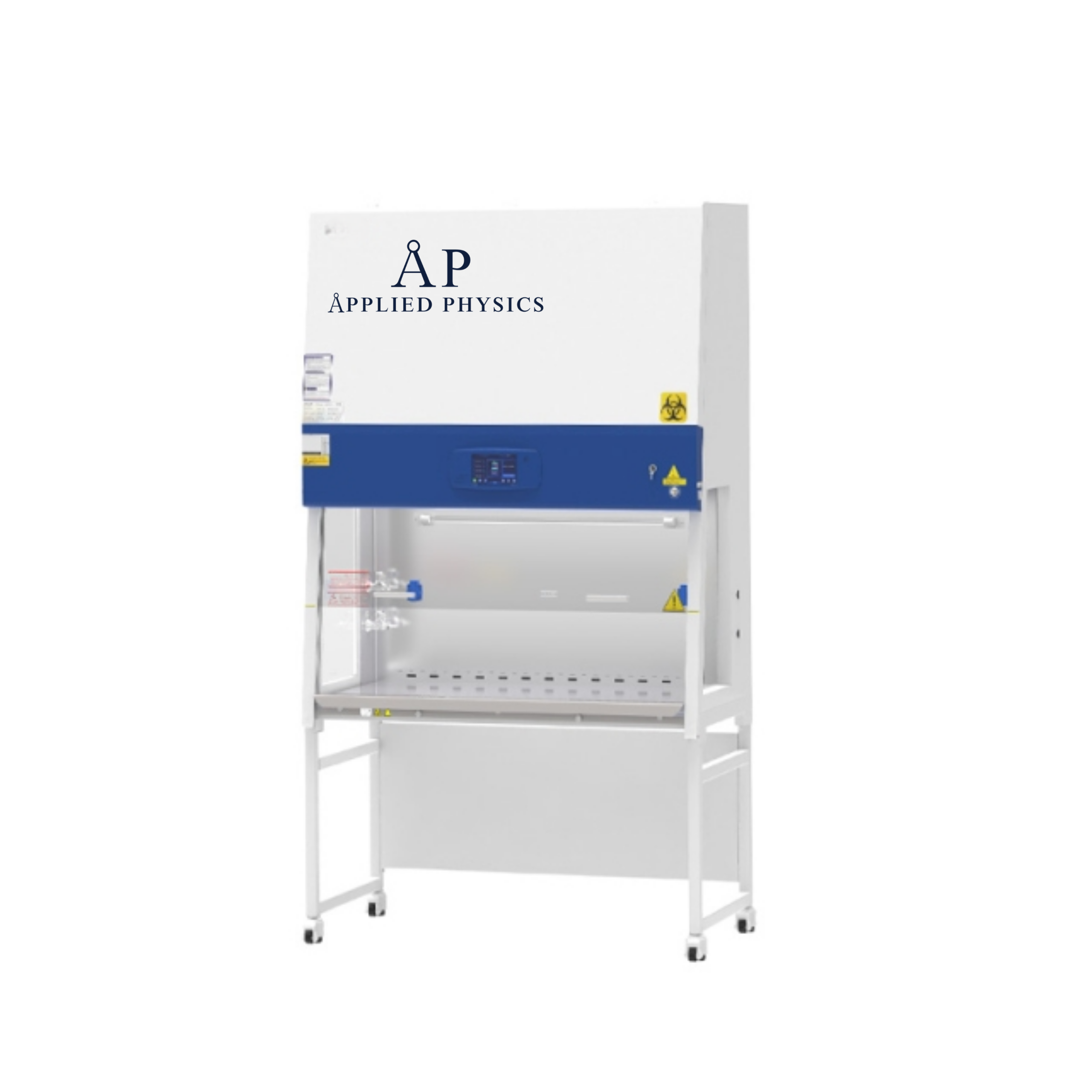
The NSF Certified Class II Biosafety Cabinet models (BSC-3FA2, BSC-4FA2, BSC-6FA2) from Applied Physics deliver certified airflow velocities of 0.53±0.025 m/s inflow and 0.33±0.025 m/s downflow, meeting USP 797 requirements for ISO Class 5 compounding environments. These cabinets feature motorized front windows with interlocking UV and fan systems, a safety feature that prevents accidental exposure when UV sterilization is active. The 7-inch touchscreen display shows real-time airflow patterns and filter pressure, eliminating guesswork about cabinet performance.
What matters in practice: The integrated EC fan automatically adjusts wind speed based on filter loading. This prevents the common problem of degraded airflow from a clogged filter, the cabinet compensates until filter replacement becomes necessary. The appointment timing function allows you to schedule UV sterilization cycles during off-hours, extending UV lamp life and reducing operator exposure.
The one limitation: Type A2 cabinets require connection to facility exhaust ducting. If your space doesn’t have existing ductwork, installation becomes more complex than a self-contained unit would be. For smaller compounding pharmacies in retrofitted spaces, this can add significant construction costs.
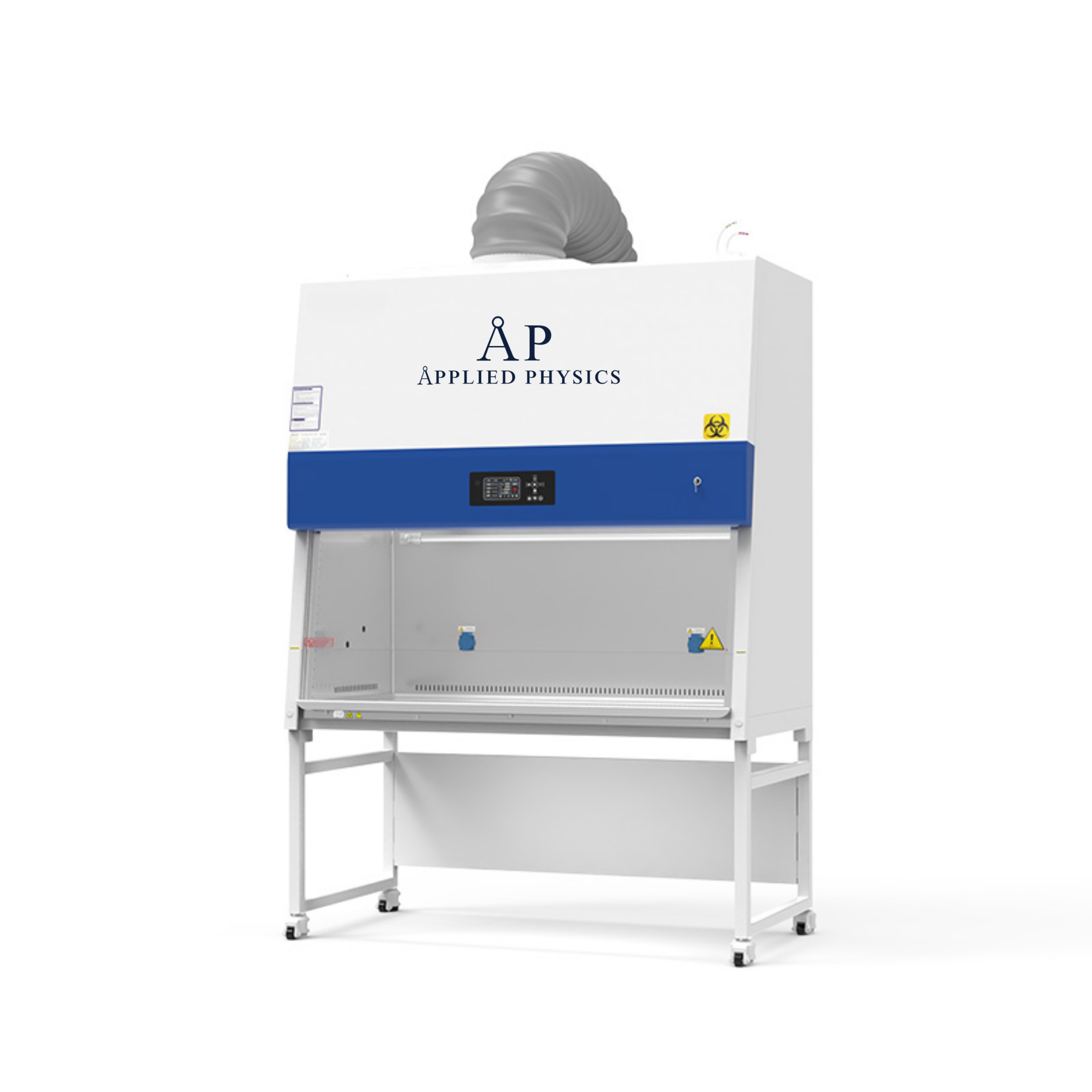
Class II B2 cabinets differ fundamentally from Type A2: they exhaust 100% of air through facility ductwork with no recirculation. This design is mandatory for USP 800 hazardous drug compounding because it eliminates any possibility of contaminated air returning to the work zone. The AC Series models (BSC-1100IIB2, BSC-1300IIB2, BSC-1500IIB2, BSC-1800IIB2) maintain inflow velocity of 0.53±0.025 m/s and downflow velocity of 0.33±0.025 m/s while handling up to 1,625 mm internal width on the largest model.
Class II B2 cabinets require more strong exhaust infrastructure than Type A2 units. The negative pressure air duct includes a foreign matter filtering structure, a practical detail that prevents paper scraps or other debris from entering the fan system and degrading performance. This is the kind of engineering detail that separates cabinets designed for real-world pharmacy environments from generic laboratory equipment.
The LCD display on AC Series cabinets tracks exhaust filter and downflow filter pressure separately, allowing you to identify which filter is loading first. This granular data helps you optimize filter replacement schedules and catch installation problems early. If exhaust filter pressure rises disproportionately, it often signals an exhaust line blockage or damper issue that needs facility attention.
For operations compounding both sterile non-hazardous and hazardous drugs, many facilities use B2 cabinets exclusively, the 100% exhaust design provides containment for everything, even if it’s overkill for non-hazardous compounding. This simplifies operator training and eliminates the need to decide which cabinet to use for each prescription.
Cytotoxic safety cabinets (models 11224BBC86, 11234BBC86, 11244BBC86) represent a specialized subset of Class II B2 design optimized specifically for chemotherapy and hazardous pharmaceutical handling. The distinction is dual exhaust filtration: the primary exhaust filter uses ULPA media (99.9995% efficiency at 0.12 μm), and a secondary exhaust filter adds HEPA protection (99.995% efficiency at 0.3 μm). This layered approach ensures that even if the primary filter develops a leak, hazardous particles remain contained.
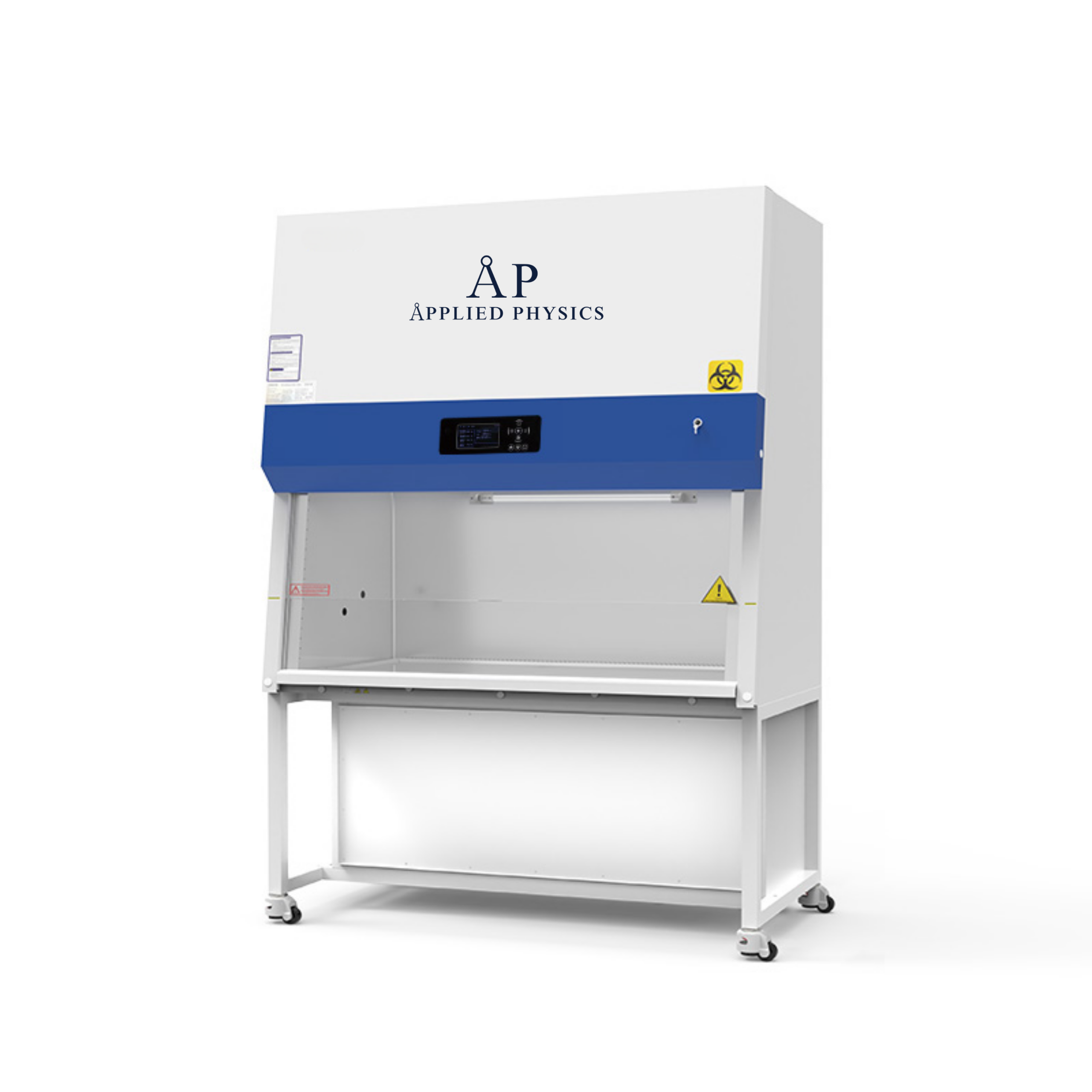
The cabinet work surface is 304 stainless steel with a motorized two-layer laminated glass front window. Stainless steel is non-porous and chemically resistant, critical for cabinets handling cytotoxic agents that can corrode standard materials. The motorized window includes a one-key lift function and 10-degree inclination angle designed for ergonomic operator comfort during extended compounding sessions.
Cytotoxic cabinets consume more electrical power than standard Class II B2 units (700-1,300 W depending on model size) due to dual filtration and enhanced exhaust systems. This is a facility planning consideration, ensure adequate electrical circuits and HVAC capacity before installation. The noise level remains at or below 67 dB, meeting occupational safety standards for sustained operator exposure.
Fan Filter Units (FFUs) are the workhorses of cleanroom air delivery. Applied Physics FFU models (FFU1000, FFU1200, FFU1500, FFU1800) deliver 99.999% efficiency at 0.3 μm with air velocity of 0.45 m/s ±20%. These units use split-design HEPA filters, the shell and filter separate for easy replacement without full unit removal. This design matters for facilities running multiple FFUs; you can replace filters on individual units without disrupting the entire cleanroom.
The centrifugal blower in each FFU is rated for 100,000 hours of operation with minimal maintenance. Built-in microprocessor control adjusts fan speed to maintain target airflow velocity despite filter loading. Aluminum zinc-coated housing resists corrosion from pharmaceutical cleaning agents and humidity typical in compounding environments.
FFUs are typically mounted in ceiling grids or modular cleanroom structures. For small-scale compounding operations, a single FFU provides ISO Class 5 conditions over a limited work area. For larger operations, multiple FFUs create uniform airflow across the entire cleanroom. The noise level of 60 dB or less per unit makes them suitable for occupied pharmacy environments.
What distinguishes effective FFU deployment: airflow uniformity depends on ceiling design, ducting configuration, and return air pathways. A poorly designed return air system creates dead zones where particles accumulate despite adequate FFU output. This is where cleanroom design expertise, not just equipment selection, determines actual performance.
USP 797 compliance for sterile compounding requires ISO Class 5 conditions in the direct compounding area, with ISO Class 7 conditions in the adjacent buffer room and ISO Class 8 in the general pharmacy area. The standard specifies that equipment selection must support these classifications through controlled airflow, particulate filtration, and environmental monitoring.
The primary engineering control for USP 797 is a Class II biosafety cabinet or, for very limited compounding volumes, a laminar airflow workbench. The cabinet must maintain inflow velocity between 0.38-0.63 m/s (target 0.53 m/s) with downflow velocity between 0.20-0.40 m/s (target 0.33 m/s). These specific velocities prevent turbulence that could introduce particles while ensuring adequate operator protection.
Secondary engineering controls include the cleanroom itself, walls, flooring, and ceiling surfaces must be non-shedding and compatible with pharmaceutical cleaning agents. Most compounding pharmacies use modular cleanroom systems with sealed wall panels, epoxy flooring, and washable ceiling tiles. The room HVAC system must provide positive pressure relative to adjacent areas, ensuring contaminated air flows outward, not inward.
Equipment selection for USP 797 compliance hinges on compounding volume and hazardous drug handling. Non-hazardous sterile compounding can use Type A2 cabinets with partial recirculation. Hazardous drug compounding requires Class II B2 cabinets with 100% exhaust. Many facilities choose B2 cabinets exclusively to simplify operations and training.
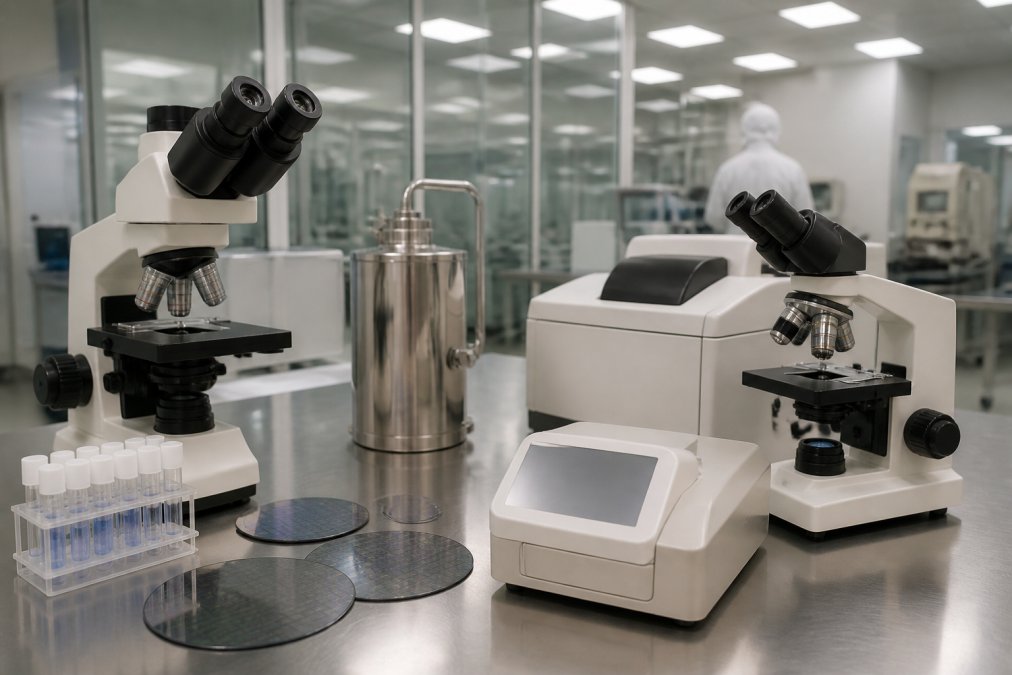
Airflow visualization proves that your cleanroom equipment actually delivers the protection it’s designed to provide. The Aerosol Generator Cold Type BAG-6D from Applied Physics generates test aerosol particles across flow rates from 50-2,000 CFM using PAO, DEHS, or DOP reagents. This equipment simulates contamination sources to validate that HEPA filters capture particles and airflow patterns remain uncompromised.
The Aerosol Photometer BAP-350 detects and measures aerosol concentration in real time. The 5-inch color touchscreen displays leakage rates from 0.0001% to 100%, with a portable scanning probe allowing technicians to map airflow patterns throughout the cleanroom. This is how you verify that a cabinet’s rated airflow velocity actually exists at the work surface, not just in theory.
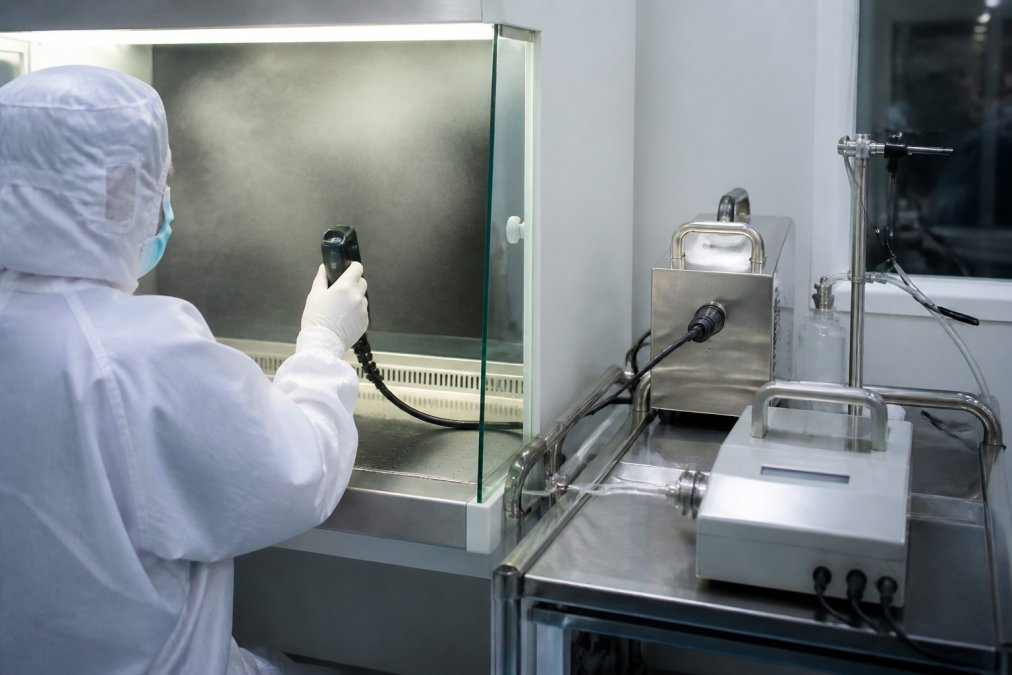
Validation studies using these tools must occur at cabinet installation, after any maintenance involving filter replacement, and annually thereafter per USP 797 Annex 1 requirements. The data becomes part of your regulatory documentation, auditors expect to see these records. Many facilities conduct validation studies only at initial installation, missing the opportunity to catch performance degradation before it affects product safety.
The practical workflow: Generate aerosol upstream of the HEPA filter, then scan downstream with the photometer to detect any breakthrough. A properly functioning filter shows zero or near-zero downstream concentration. If you detect particles downstream, the filter has failed and requires immediate replacement. This is non-negotiable for hazardous drug compounding.
Applied Physics equipment integrates with standard cleanroom validation protocols. The BAP-350 stores up to 6,000 data points and connects to Bluetooth printers for immediate report generation. This speeds up validation documentation, critical when you’re validating multiple cabinets or running time-sensitive compliance audits.
Ongoing environmental monitoring tracks whether your cleanroom maintains ISO Class 5 conditions during actual compounding operations. This differs from validation studies, monitoring happens continuously or at scheduled intervals, catching problems before they affect product quality.
Particle counters measure airborne particle concentration at specified sizes (typically 0.5 μm and 5 μm). USP 797 limits for ISO Class 5 are 3,520 particles ≥0.5 μm per cubic meter and 832 particles ≥5 μm per cubic meter. If your monitoring data shows concentrations above these limits, you’ve exceeded the standard and must investigate root cause before resuming compounding.
Microbial monitoring uses settle plates, contact plates, and active air samplers to detect viable organisms. USP 797 specifies action levels based on monitoring location and frequency. Exceeding action levels triggers investigation and corrective action, potentially including equipment servicing, personnel retraining, or facility cleaning.
The challenge with environmental monitoring: many facilities conduct monitoring but don’t act on the data. If a particle count exceeds limits, you must stop compounding, identify the cause, take corrective action, and revalidate before resuming operations. This creates operational friction that some facilities try to avoid by not monitoring. This approach violates USP 797 and creates regulatory exposure.
Effective monitoring programs establish baseline data during normal operations, then investigate any deviations. Applied Physics equipment provides the precision needed to detect subtle changes, a 20% increase in particle concentration might signal filter degradation before it becomes a compliance failure.
Cleanroom equipment requires scheduled maintenance to sustain performance. Class II biosafety cabinets need annual certification verifying airflow velocities, filter integrity, and proper interlocking functions. This certification must be conducted by qualified technicians using calibrated instruments, it’s not optional for regulatory compliance.
HEPA filter replacement intervals depend on facility conditions and equipment usage. Filters loaded with particulates work harder, consuming more energy and eventually exceeding acceptable pressure differential. Most facilities replace filters every 6-12 months, but high-volume operations may need quarterly replacement. Applied Physics equipment displays real-time filter pressure, allowing data-driven replacement decisions rather than guessing.
UV lamps in biosafety cabinets degrade over time. Most UV lamps are rated for 8,000-10,000 hours of operation. Tracking lamp hours prevents reliance on failed sterilization. The appointment timing function on Applied Physics cabinets logs UV runtime, eliminating manual tracking.
Facility downtime during maintenance represents a significant cost, every day your compounding cabinet is offline, you’re not generating revenue and potentially missing prescription deadlines. Preventive maintenance schedules minimize unplanned downtime. Keeping spare filters, UV lamps, and gaskets in inventory allows rapid component replacement without waiting for parts delivery.
Documentation of maintenance and certification becomes your compliance record. Auditors review these records to verify you’re meeting USP 797 requirements. Gaps in documentation create regulatory risk, even if equipment is functioning properly.
Start by defining your compounding scope: volume, complexity, and hazardous drug involvement. A small independent pharmacy compounding 100 non-hazardous prescriptions monthly has different equipment needs than a hospital system compounding 1,000 prescriptions daily including hazardous agents.
Next, assess your facility infrastructure. Do you have existing HVAC capacity for a Class II B2 cabinet with dedicated exhaust ducting? Can you accommodate a dedicated cleanroom, or are you working within existing space? These constraints determine which equipment options are feasible.
Regulatory requirements then drive equipment selection. USP 797 compounding requires ISO Class 5 primary engineering control, typically a Class II biosafety cabinet. USP 800 hazardous drug compounding requires Class II B2 with 100% exhaust. These aren’t negotiable; they’re regulatory minimums.
Budget considerations come last, not first. Selecting cheaper equipment that doesn’t meet requirements creates compliance risk, potential product failures, and regulatory liability. The true cost of equipment includes installation, validation, ongoing maintenance, and certification. The cost of equipment varies based on specific models and configurations.
Consider workflow integration. How does the equipment fit into your actual compounding process? Will operators need to move between multiple cabinets? Does the cabinet design support the glove boxes, pass-through chambers, or other secondary equipment you use? Equipment that creates workflow friction generates errors and reduces adoption of best practices.
Finally, validate that your selected equipment actually performs as specified. Don’t rely on manufacturer claims, conduct airflow visualization and environmental monitoring studies to confirm ISO Class 5 conditions. This validation becomes your baseline for ongoing monitoring.
Selecting cleanroom equipment for pharmaceutical compounding requires balancing regulatory compliance, operational workflow, and facility constraints. The equipment choices you make today determine whether your operation sustains USP 797 and USP 800 compliance for years to come. Applied Physics has supported compounding pharmacies and pharmaceutical manufacturers since 1992, and our Class II biosafety cabinets, FFU systems, and validation equipment integrate the precision contamination control and airflow visualization capabilities that serious compounding operations demand. Contact us to discuss your specific facility requirements and identify the equipment configuration that supports your compliance and operational goals.
USP 797 compliance requires a Class 5 ISO-classified primary engineering control (PEC) such as a biosafety cabinet or compounding aseptic containment isolator, HEPA filtration systems delivering 99.99% particle removal at 0.3 micrometers, environmental monitoring equipment for viable and non-viable particle counts, and validated airflow systems. Your cleanroom equipment must maintain positive or negative pressure depending on the drug type, include gowning benches with non-shedding materials, and pass certification through particle count validation and airflow velocity testing. Documentation of all equipment maintenance and certification is mandatory.
ISO classifications define particle count limits per cubic meter at specific size thresholds. ISO Class 5 (formerly Class 100) allows 3,520 particles ≥0.5 micrometers per cubic meter and is required for the primary work surface in sterile compounding. ISO Class 6 permits 35,200 particles and is acceptable for the immediate compounding environment. ISO Class 7 and 8 are used for support areas. Pharmaceutical compounding requires at least ISO Class 5 in the primary engineering control and ISO Class 6 or 7 in the surrounding cleanroom. Equipment selection depends on your facility's classification, Class II biosafety cabinets create ISO Class 5 conditions at the work surface, while FFUs maintain the broader cleanroom classification.
Initial certification must occur before equipment is put into use, with documentation of airflow velocity, particle counts, and filter integrity. Recertification is required annually for biosafety cabinets and every 6 months for critical validation equipment like aerosol photometers. HEPA filters must be integrity-tested after any maintenance, relocation, or sterilization cycle. Environmental monitoring should run continuously or at defined intervals, daily viable sampling for ISO Class 5 spaces is industry standard. Maintenance logs for blower motors, filter pressure drops, and seal integrity checks must be kept for GMP audits. The Aerosol Photometer BAP-350 and Aerosol Generator BAG-6D provide real-time validation data that supports your certification lifecycle and regulatory compliance documentation.
This article was written using GrandRanker

Enter your details below to save your shopping cart for later. And, who knows, maybe we will even send you a sweet discount code :)
Allow notifications to get real-time updates about your shopping cart and who knows, you may even receive a sweet discount code 😊