Maintaining a pristine environment is the backbone of pharmaceutical safety.
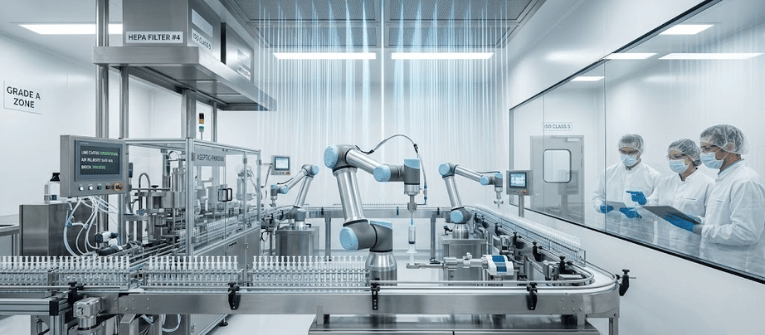
In automated syringe filling suites, where high-speed robotics meet sensitive biologicals, the margin for error is zero.
Validating sterile air quality ensures that every syringe leaving the line is free from microbial and particulate contamination, safeguarding patient health and meeting stringent global regulatory standards.
In the world of injectable drug manufacturing, the environment is just as important as the medicine itself. Automated syringe filling suites utilize advanced technology to minimize human intervention, the primary source of contamination. However, automation does not eliminate the need for rigorous air quality validation.
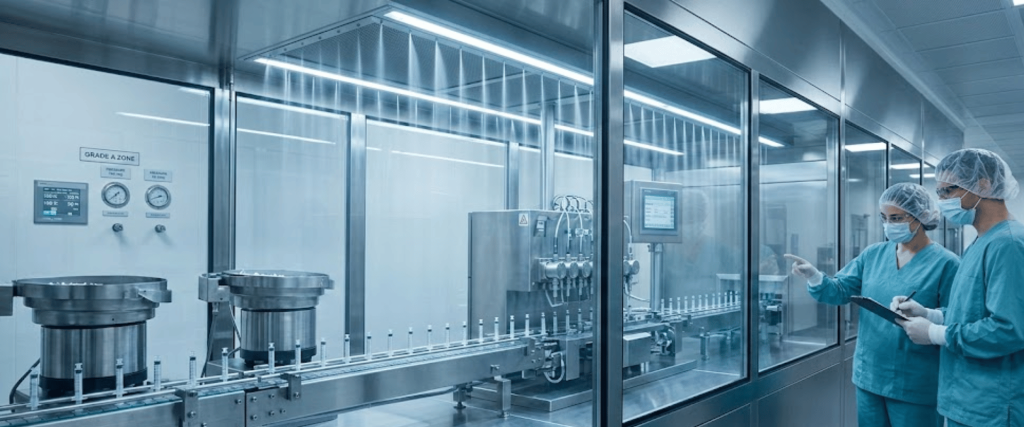
Sterile air acts as a protective shield, often delivered through Laminar Air Flow (LAF) or Restricted Access Barrier Systems (RBS). Validation is the documented evidence that these systems consistently perform within defined parameters, ensuring the Grade A environment remains uncompromised during operational hours.
Validation isn’t just best practice; it’s a legal requirement. Pharmaceutical manufacturers must adhere to international guidelines to ensure their suites are fit for purpose.
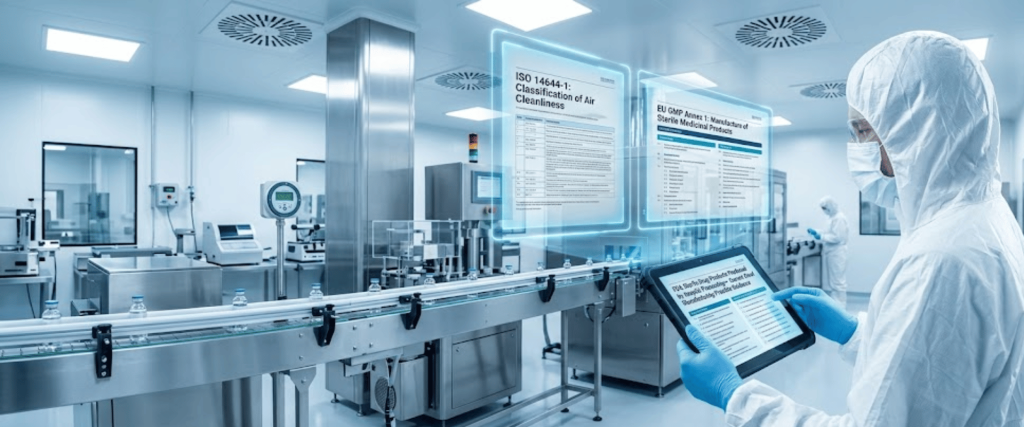
Validating an automated syringe filling suite is a multi-stage process that evolves from the design phase to routine production.
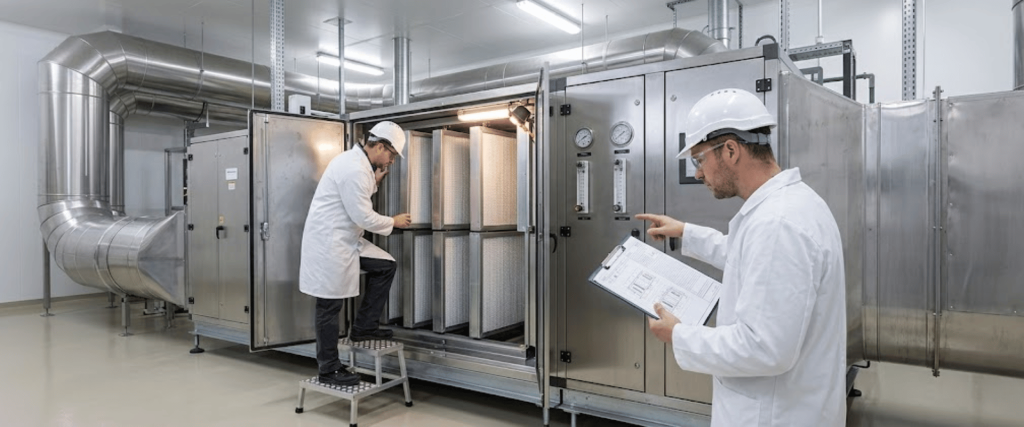
This stage verifies that all air handling units (AHUs), ductwork, and HEPA filters are installed according to the manufacturer’s specifications and engineering drawings.
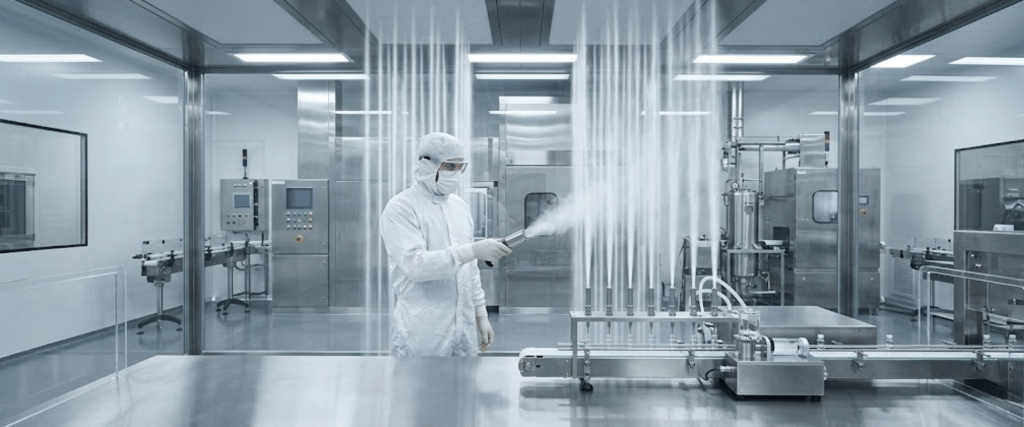
OQ tests the system’s ability to maintain air quality at rest. This includes smoke pattern testing to visualize airflow and ensure there are no dead zones where stagnant air could harbor contaminants.
The most critical phase. PQ validates the air quality in operation while the automated filling machines are running.
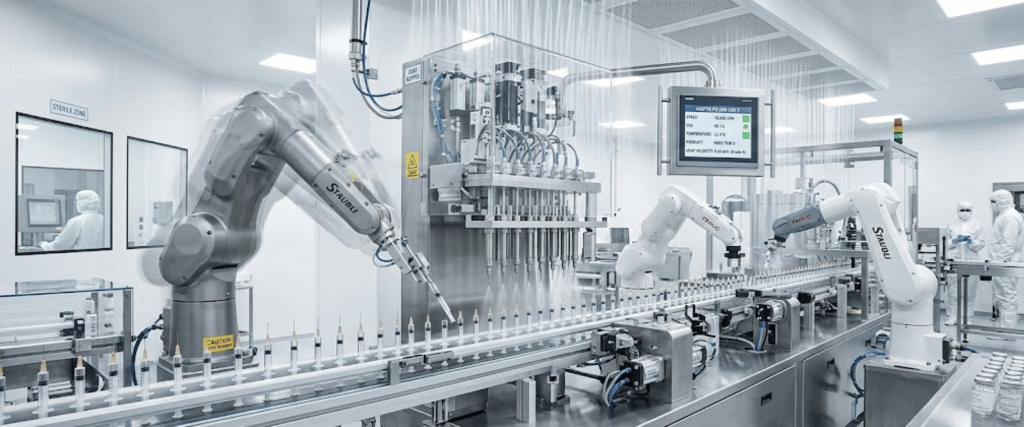
It proves that the system can handle the heat load and mechanical movement of the machinery without losing sterility.
To validate an automated suite, several technical parameters must be measured and documented. These metrics provide a 360-degree view of the cleanroom’s health.
| Parameter | Measurement Goal | Required Tool / Method |
|---|---|---|
| Non‑Viable Particulates | Count of inert dust and fibers (0.5 µm & 5.0 µm) | Laser Particle Counters |
| Viable Particulates | Detection of living microorganisms (bacteria and fungi) | Settle Plates and Active Air Samplers |
| HEPA Filter Integrity | Ensure no leaks in the filtration system | PAO (Polyalphaolefin) Testing |
| Airflow Velocity | Maintain a consistent air speed (0.36–0.54 m/s) | Anemometers |
| Pressure Differentials | Prevent entry of contaminated air into the cleanroom suite | Manometers or Pressure Sensors |
Automated suites operate at incredible speeds. The rapid movement of syringe nests and plungers can create turbulence.
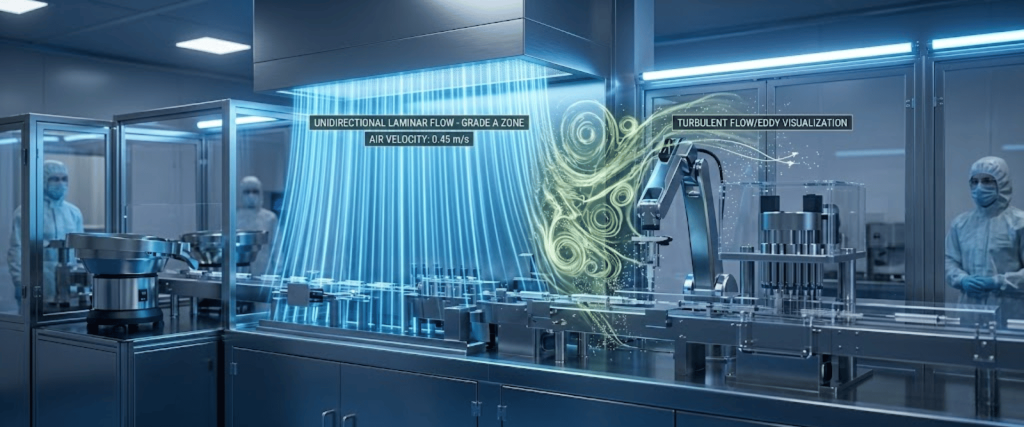
Validation must prove that the Uni-directional Airflow (UDAF) is strong enough to overcome this turbulence and sweep particles away from the open syringes.
Validating sterile air quality in automated syringe filling suites is a continuous commitment to quality.
By integrating robust monitoring technology with strict adherence to ISO and GMP standards, manufacturers can ensure that their automation serves its ultimate purpose: delivering safe, life-saving medication to patients without fail.
Validation is the only way to prove that the sterile environment remains uncompromised during high-speed automation. It ensures that the robots’ mechanical movements do not create turbulence that could introduce contaminants, thereby protecting patient safety and ensuring regulatory compliance.
At-Rest validation confirms the cleanroom meets standards when the machinery is idle. In-Operation validation is more critical; it proves the air handling system can maintain Grade A sterility even while the automated filling line is running at full capacity and generating heat or particles.
According to EU GMP Annex 1 and ISO standards, Grade A environments (where filling occurs) typically require a full physical re-validation every six months. However, continuous monitoring of particles and pressure is required during every production batch.
If a suite fails validation, production must stop immediately. The team must conduct a root-cause analysis, checking for HEPA filter leaks or airflow obstructions, perform corrective maintenance, and successfully pass a full re-validation before the suite can be used for pharmaceutical manufacturing again.