
Blood banks, hospitals, and research laboratories need reliable cold storage to keep whole blood and red blood cells viable. Even small temperature deviations can damage blood components or allow bacterial growth.
The BBR-4V626 and its larger counterpart, the BBR-4V966, are double-door blood bank refrigerators designed to maintain stable temperatures between 2°C and 6°C while offering practical features for daily use.
This guide covers the specifications, key features, operating practices, and considerations for anyone evaluating or using these models.
Why Precise Temperature Control Matters in Blood Storage
Whole blood and red blood cells must stay within a narrow temperature window. Storage below 1–2°C risks hemolysis (destruction of red blood cells), while temperatures above 6°C can promote bacterial growth and reduce shelf life.
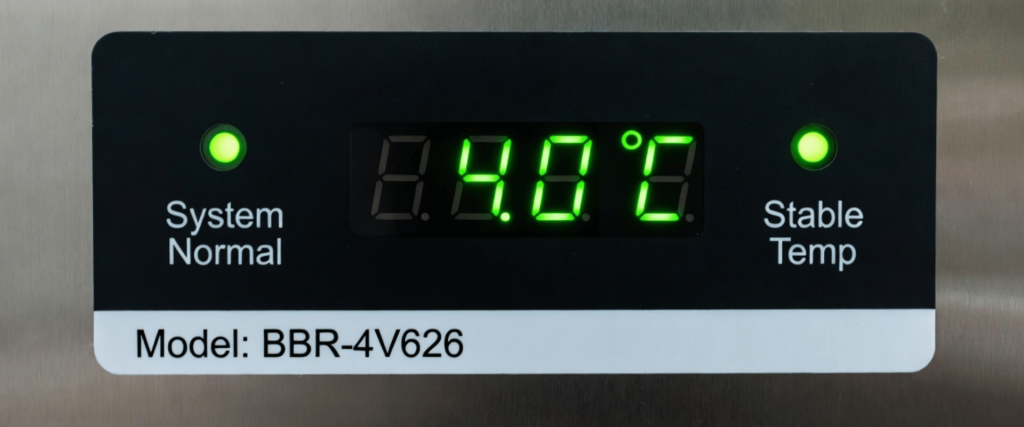
Modern blood bank refrigerators use forced-air circulation and multiple sensors to maintain uniformity and recover quickly after door openings. Facilities also need clear alarms and reliable backup systems because any failure can compromise an entire inventory.
BBR-4V626 and BBR-4V966
We offer two double-door models in this series.
- BBR-4V626: 626-liter capacity, suitable for medium-sized blood banks or hospital transfusion services.
- BBR-4V966: 966-liter capacity, better suited for larger blood centers or facilities with higher storage needs.
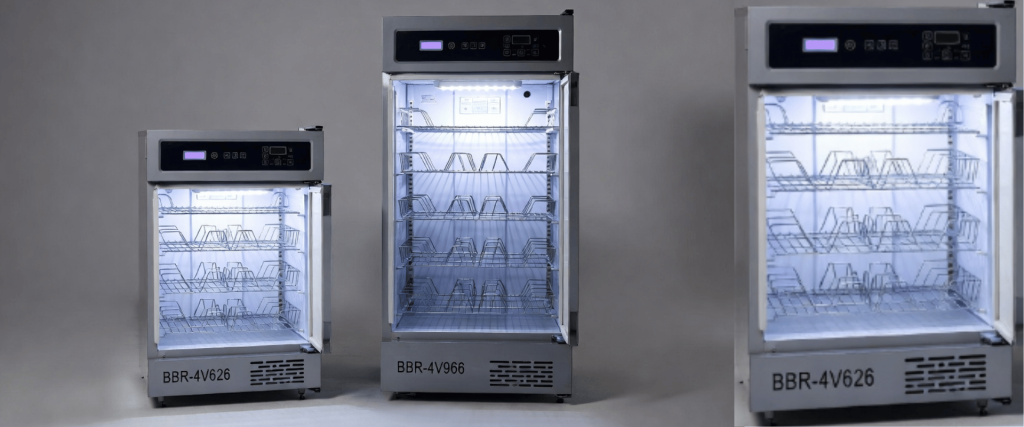
Both models share the same core technology: microprocessor control, forced-air cooling, electrically heated glass doors, and multiple transparent inner doors that reduce cold air loss during access.
Standout Design and Safety Features
Several practical features stand out in daily operation.
- Electrically heated glass doors allow staff to see contents without opening the unit while preventing condensation and maintaining insulation.
- Individual transparent inner doors minimize cold air escape when retrieving specific blood bags.
- Forced-air refrigeration with copper tube and aluminum fin evaporators helps achieve the stated temperature uniformity of ≤1.5°C.
- Adjustable shelves and dedicated blood baskets improve organization and space utilization.
- Stainless steel interior supports easy cleaning and durability in clinical environments.
- Automatic defrost reduces manual maintenance needs.
Technical Specifications
| Specification | BBR-4V626 | BBR-4V966 |
|---|---|---|
| Capacity | 626 L | 966 L |
| Blood Bags | 360 bags | 576 bags |
| Blood Bag Size | 450 ml | 450 ml |
| Temperature Range | 2–6°C | 2–6°C |
| Temperature Uniformity | ≤1.5°C | ≤1.5°C |
| Temperature Accuracy | 0.1°C | 0.1°C |
| Recovery Time | ≤15 min | ≤15 min |
| Shelves | 12 pcs | 12 pcs |
| Blood Storage Baskets | 36 pcs | 36 pcs |
| Power Consumption | 550 W | 560 W |
| Internal Dimensions (W × D × H) | 1100 × 420 × 1325 mm | 1100 × 650 × 1325 mm |
| External Dimensions (W × D × H) | 1220 × 665 × 1885 mm | 1220 × 895 × 1885 mm |
| Net Weight | 220 kg | 246 kg |
| Refrigerant | R134a | R134a |
| Door Type | 2 × electrically heated glass semi-foam doors | Same |
| Inner Doors | 6 × transparent acrylic | 6 × transparent acrylic |
Installation and Setup Recommendations
Place the unit in a well-ventilated area with at least 10–15 cm clearance on all sides for proper heat dissipation. Avoid locations near heat sources or in direct sunlight. Level the refrigerator using the adjustable feet or casters before loading.
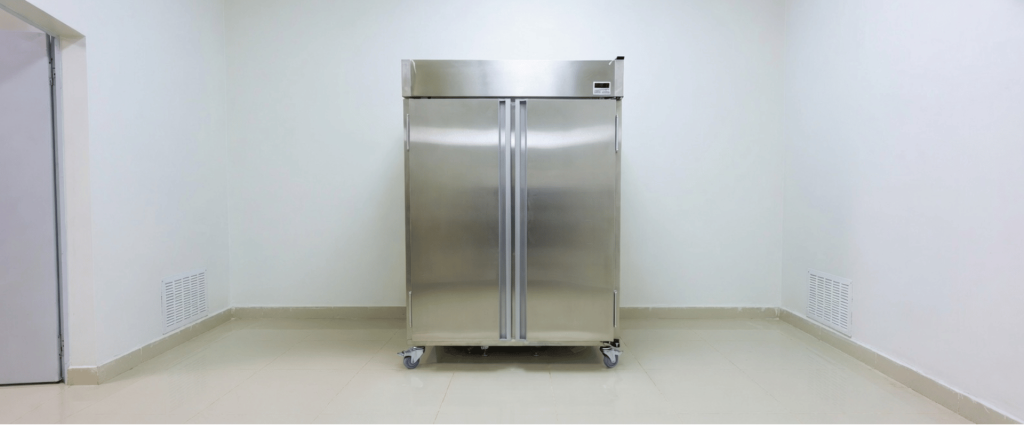
After installation, allow the unit to stabilize at the set temperature for several hours before storing blood products. Connect the unit to a dedicated power circuit with proper grounding. Facilities should also consider connecting the alarm output to a central monitoring system or security desk for after-hours response.
Alarm System and Continuous Monitoring
Safety depends heavily on reliable alerts.
The BBR-4V models include
- High and low temperature alarms
- Door ajar alarm
- Power failure alarm
- Sensor and system failure alarm
- Battery backup for the alarm system
A thermal printer comes standard for temperature recording. Optional accessories include a temperature recorder, USB interface, and RS485 connectivity for integration with facility monitoring systems.
Temperature Performance and Recovery
The BBR-4V series is specified to recover to 6°C within 15 minutes after a door opening in a 32°C ambient environment. While high-end medical-grade units sometimes achieve faster recovery, 15 minutes remains acceptable for many mid-sized facilities when combined with proper door management.
Temperature uniformity of ≤1.5°C across the chamber helps ensure all stored units stay within safe limits, even when the refrigerator is heavily loaded.
Maintenance Guidelines
Clean the interior monthly with a mild disinfectant suitable for stainless steel. Wipe door gaskets regularly and inspect them for wear.
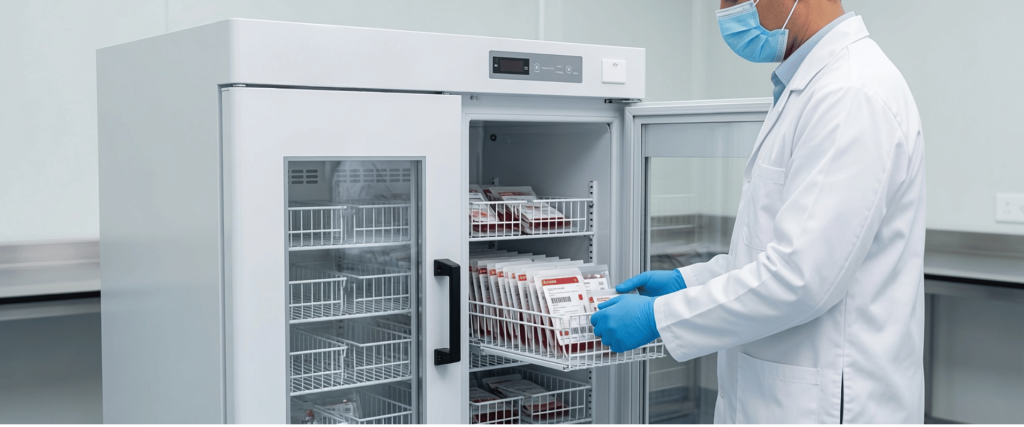
Keep the condenser coils clean to maintain cooling efficiency. Schedule professional servicing at least once a year, including sensor calibration and refrigerant checks.
Best Practices for Daily Operation
- Keep door openings as brief as possible. Use the inner doors to access only the needed section.
- Load blood bags in the provided baskets and avoid blocking air vents.
- Check the digital display regularly and review printed temperature logs daily.
- Respond immediately to any alarm. Document the event and corrective action.
- Do not store reagents or non-blood items in the same unit unless they have been validated for compatibility.
- Maintain a backup power source (UPS or generator) for critical inventory.
Is the BBR-4V626 Right for Your Facility?
The BBR-4V626 works well for hospital blood banks, regional transfusion centers, and research laboratories that need reliable 2–6°C storage, good visibility, and organized basket systems. The larger BBR-4V966 suits higher-volume operations.
Buyers in highly regulated environments should verify current certification requirements (such as local medical device regulations or AABB/FDA expectations) separately, as these details are not listed on the product specifications.
Conclusion
The BBR-4V626 and BBR-4V966 double-door blood bank refrigerators offer solid capacity, practical design features, and a comprehensive alarm package for maintaining blood products within the critical 2–6°C range.
Their combination of heated glass doors, individual inner doors, and forced-air cooling addresses common operational challenges in blood storage.
Facilities evaluating these models should focus on temperature uniformity, recovery performance, alarm reliability, and ease of daily access.
Proper installation, disciplined door management, and regular maintenance will help maximize the performance and longevity of the unit.
Frequently Asked Questions (FAQs)
1. What is the correct temperature range for storing whole blood and red blood cells?
Whole blood and red blood cells should be stored between 2°C and 6°C. Temperatures below this range risk cell damage, while higher temperatures can promote bacterial growth.
2. How important is temperature uniformity in a blood bank refrigerator?
Uniformity ensures every blood bag stays within the safe range, even in different parts of the chamber. A uniformity of ≤1.5°C, as specified for the BBR-4V series, is generally acceptable for most clinical applications.
3. What should I do when the refrigerator triggers a temperature alarm?
Check the display for the current temperature, inspect the door seal and closing, and review recent door activity. Document the incident and transfer blood products to a validated backup unit if the temperature moves outside safe limits for an extended period.
4. Does the BBR-4V626 include a temperature recording system?
Yes. A thermal printer is included as standard. Optional temperature recorders and digital interfaces are also available for facilities that require continuous electronic logging.
5. How often should blood bank refrigerators be serviced?
Most facilities perform basic cleaning monthly and schedule professional maintenance, including calibration and system checks, at least once per year or according to local regulatory requirements.