Last Updated: August 9, 2026
A cleanroom fogger rental service provides temporary access to specialized equipment that visualizes airflow patterns within controlled manufacturing environments. Rather than purchasing expensive equipment outright, organizations rent portable foggers to validate cleanroom performance, detect contamination pathways, and verify compliance with GMP standards.
These rental services address a critical need: cleanrooms must demonstrate that air moves predictably through the space, that particulate matter flows toward exhaust points, and that no dead zones exist where contaminants could accumulate. Fog visualization makes invisible airflow patterns visible in real time, revealing vortices, turbulence, and flow disturbances that could compromise product sterility.
Applied Physics has served the cleanroom and semiconductor industries since 1992, offering both LN2 ultrapure and ultrasonic cleanroom foggers alongside comprehensive airflow visualization solutions. The company’s rental programs support organizations across pharmaceutical manufacturing, biotech research, and semiconductor fabrication, facilities where airflow validation isn’t optional, it’s regulatory mandate.
Rental services typically include equipment delivery, technical support, and documentation required for audit trails. For short-term validation projects, rental eliminates capital expenditure and the burden of equipment maintenance. For ongoing compliance monitoring, some providers offer tiered rental agreements that scale with facility needs.
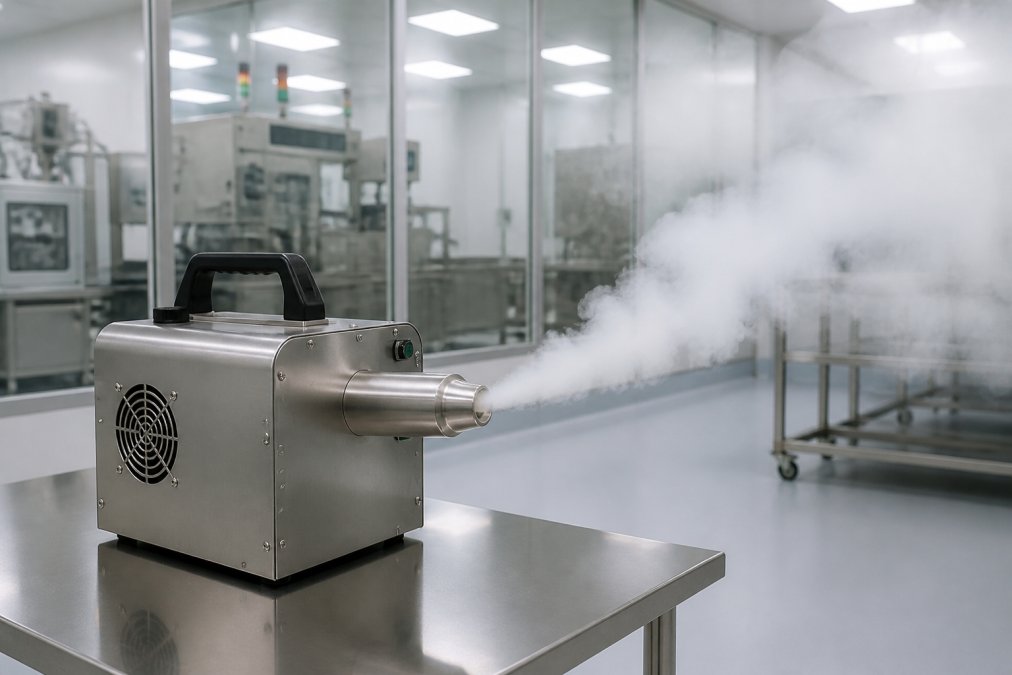
The equipment itself varies by application. Ultrapure water foggers produce neutral, non-contaminating mist suitable for critical pharmaceutical environments. Cold mist generators work in tight spaces like biosafety cabinets and glove boxes. ULV foggers deliver ultra-fine particle dispersion for broad area coverage in larger cleanrooms. Each type serves specific validation requirements and contamination control objectives.
Cleanroom fogger rental services differ significantly in equipment type, media compatibility, and operational capability. Understanding these distinctions matters because the wrong fogger delivers poor visualization and wastes validation time.
| Equipment Type | Media | Best For | Key Advantage |
|---|---|---|---|
| Ultrapure Water Fogger | Deionized water | GMP pharmaceutical validation | Non-contaminating, leaves no residue |
| Ultrasonic Cold Mist | DI water or glycol | Biosafety cabinets, glove boxes | Operates in confined spaces |
| ULV Fogger | Disinfectant or water | Large cleanroom areas | Rapid broad-area coverage |
| LN2 Cryogenic Fogger | Liquid nitrogen | Semiconductor fabs | Produces ultra-fine particles |
Ultrapure water foggers dominate pharmaceutical cleanroom validation because they produce neutral fog that doesn’t deposit residue on surfaces or equipment. The fog particles remain visible for 15-30 minutes, allowing technicians to trace complete flow paths from supply diffusers to return vents. Applied Physics’s ultrapure water systems meet this requirement precisely, ensuring validation data holds up under regulatory scrutiny.
Ultrasonic cold mist generators excel in constrained environments where traditional foggers won’t fit. Biosafety cabinets, isolators, and glove boxes require compact equipment that operates safely within confined spaces. These units generate fog without heat, critical for environments where thermal disturbance would distort airflow patterns.
ULV (Ultra-Low Volume) foggers deliver fog particles at extremely high velocity, allowing coverage of large areas quickly. These work well for initial facility-wide airflow surveys before detailed section validation. However, the high-velocity discharge can create artificial turbulence, making them unsuitable for precision flow path analysis.
Cryogenic foggers using liquid nitrogen produce particles smaller than 1 micron, enabling visualization of air movement at scales relevant to semiconductor manufacturing. These systems cost more and require specialized handling, but they’re essential for validating cleanrooms supporting sub-10nm fabrication processes.
Rental specifications should clearly state particle size range, fog density adjustability, runtime per charge or refill, and media compatibility. Equipment documentation must include calibration certificates and traceability records, as GMP audits require proof that visualization equipment itself met performance standards during the validation period.
Airflow visualization connects directly to regulatory compliance. ISO 14644 cleanroom classification standards require documented evidence that airflow patterns support the facility’s contamination control strategy. The FDA’s GMP guidance expects pharmaceutical manufacturers to demonstrate that critical areas maintain unidirectional flow and that no stagnant zones exist.
USP 797 and USP 800 standards for sterile compounding and hazardous drug handling mandate that airflow visualization occur during initial qualification and periodically thereafter. These standards explicitly reference smoke or fog testing as the primary method for confirming flow direction and velocity.
Airflow visualization using fog reveals several critical parameters. Flow direction shows whether air moves from clean areas toward contaminated exhaust points, preventing product exposure to ambient particles. Flow velocity indicates whether air speed falls within the 0.3 to 0.5 meters per second range specified for ISO Class 5 environments. Flow uniformity confirms that velocity remains consistent across the work surface, eliminating slow zones where particles could settle.
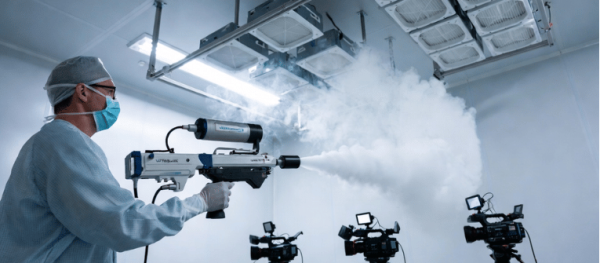
The visualization process involves introducing fog at strategic points, supply diffusers, room entry points, work surfaces, and observing the fog’s path toward exhaust. Technicians photograph or video document the flow patterns, creating a record that satisfies audit requirements. Deviations from expected flow, swirling patterns, reverse flow, stagnation, trigger corrective actions before the facility processes products.
Applied Physics’s airflow visualization equipment supports this documentation requirement by producing consistent, repeatable fog patterns that photograph clearly and maintain visibility long enough for thorough observation. The equipment’s neutral media ensures validation results reflect actual facility airflow, not artifacts introduced by the testing method itself.
Operating a cleanroom fogger correctly determines whether visualization reveals genuine airflow patterns or creates misleading artifacts. Improper technique wastes rental time and produces data that regulators will challenge.
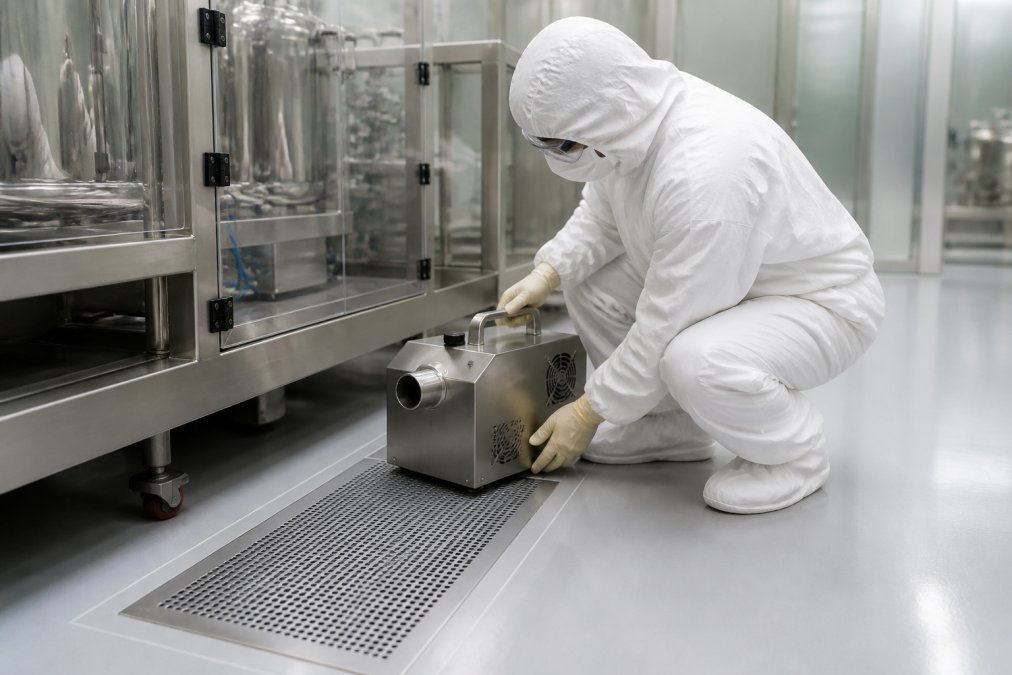
Pre-operation preparation begins with equipment inspection. Verify that all seals are intact, that the media reservoir contains the specified fluid (ultrapure water, not tap water), and that electrical connections are secure. For cryogenic systems, confirm that liquid nitrogen supply lines are properly connected and that pressure regulators show normal readings.
Media selection determines visualization quality. Ultrapure, deionized water produces the clearest, most neutral fog. Tap water introduces mineral deposits that cloud visualization and contaminate the cleanroom. Glycol-based media work in ultrasonic systems but leave residue on surfaces, acceptable for some validations but problematic in pharmaceutical environments. Applied Physics’s equipment specifications detail compatible media for each fogger type.
Fog introduction technique matters significantly. Introduce fog slowly at supply diffuser locations, allowing natural airflow to carry the fog throughout the space. Avoid dumping large volumes of fog at once, which creates artificial turbulence and masks genuine flow patterns. Multiple small introductions across different supply points provide more complete flow path documentation than a single heavy fog release.
Observation methodology requires systematic documentation. Photograph or video record fog movement from initial introduction through complete dispersal. Note the time required for fog to travel from supply to exhaust, typically 5-15 minutes in well-designed cleanrooms. Document any unexpected patterns: swirling, reverse flow, stagnation zones, or areas where fog lingers longer than adjacent regions.
Duration considerations affect data reliability. Allow sufficient time for the space to clear between fog introductions, typically 30-60 minutes depending on air change rates. Rushing multiple fog tests without adequate clearance produces overlapping patterns that obscure actual flow paths.
Safety protocols protect personnel and equipment. Ensure adequate ventilation in areas where fog is introduced. Some media can irritate respiratory systems if inhaled in high concentrations. Operators should wear appropriate personal protective equipment, particularly when working with cryogenic systems. Never introduce fog into occupied spaces without advance notice to personnel in the area.
Rental pricing varies widely based on equipment type, rental duration, and service inclusions. Understanding pricing structures helps organizations budget validation projects accurately.
Daily rental rates for standard ultrapure water foggers typically range from $200 to $500 per day, depending on equipment sophistication and supplier location. Weekly rentals often offer 20-30% discounts compared to daily rates, making them cost-effective for multi-day validation projects. Monthly rental programs provide the deepest discounts, sometimes reducing effective daily cost to $100-150 for organizations with ongoing validation needs.
ULV fogger rentals cost less, often $40-100 per day, because the equipment is simpler and more widely available. However, the lower rental cost reflects lower capability; ULV foggers don’t provide the precision visualization needed for detailed cleanroom qualification.
Cryogenic and specialized pharmaceutical-grade foggers command premium pricing, $400-800 per day, reflecting their technical sophistication and the specialized handling they require. Organizations validating semiconductor cleanrooms or high-containment pharmaceutical facilities typically budget for these higher-tier systems.
Shipping and logistics add significant cost for organizations not located near rental suppliers. Equipment delivery, setup, and pickup can add $200-500 to a rental. Some suppliers offer local pickup options that eliminate shipping charges. Applied Physics and other established suppliers typically include shipping within their rental agreements, though this should be confirmed before booking.
Technical support and documentation vary by supplier. Premium rental services include on-site setup, operational guidance, and post-validation report generation. Budget suppliers provide equipment only, leaving all operational and documentation responsibility to the customer. For GMP-regulated facilities, paying for supplier support ensures validation documentation meets regulatory standards.
Media and consumables sometimes fall outside the base rental rate. Confirm whether ultrapure water, nitrogen refills, or replacement filters are included or charged separately. A full validation project might require multiple media refills, adding $100-300 to the total cost.
Damage deposits and insurance requirements vary. Some suppliers require refundable deposits equal to 25-50% of equipment value. Others include equipment damage insurance in the rental rate. Organizations should clarify liability terms before signing rental agreements.
Choosing between short-term and long-term rental depends on validation frequency and facility operational patterns.
Short-term rentals suit one-time validation projects: initial cleanroom qualification, investigation of suspected airflow problems, or validation after facility modifications. Organizations rent equipment for 1-7 days, complete their validation work, and return the equipment. This approach minimizes capital expenditure and storage requirements. Short-term rentals make sense for organizations that validate every 2-3 years or less frequently.
Short-term rental advantages include flexibility, no long-term commitment, and reduced financial risk if equipment doesn’t meet expectations. Disadvantages include higher per-day costs and potential scheduling delays during peak demand periods.
Long-term rentals serve facilities with ongoing validation requirements. Pharmaceutical compounding pharmacies operating under USP 797 often need quarterly or semi-annual airflow verification. Semiconductor fabs validating new process nodes require multiple validation cycles as production ramps. Biotech research facilities may need continuous cleanroom monitoring to support regulatory submissions.
Long-term rental agreements typically run 3-12 months, with monthly or quarterly rental payments. These arrangements offer 30-50% cost savings compared to equivalent short-term rentals. Equipment remains on-site, reducing logistics overhead and enabling rapid validation when needed.
Long-term rental disadvantages include commitment to a single supplier and potential obsolescence if technology advances during the rental period. Organizations should negotiate renewal terms and upgrade options before signing long-term agreements.
Hybrid approaches combine elements of both. Some organizations maintain short-term rental relationships for routine validations while negotiating longer-term agreements for major projects. This strategy balances cost efficiency with operational flexibility.
Applied Physics supports both short-term and long-term rental arrangements, allowing facilities to scale validation programs with their operational needs. The company’s established relationships with pharmaceutical and semiconductor manufacturers mean they understand the validation requirements specific to each industry.
Regulatory compliance requires documenting every aspect of airflow validation. This checklist ensures validation work satisfies GMP and ISO 14644 requirements.
ISO 14644 requires that cleanroom classification be supported by documented evidence of airflow characteristics. Fog visualization provides this evidence, but only if the testing and documentation process itself meets quality standards. Regulators expect to see validation reports that include photographs, flow observations, acceptance criteria, and personnel signatures.
GMP guidance emphasizes that validation must be "prospective" (planned before implementation), "concurrent" (documented during operation), or "retrospective" (documented after the fact). Most airflow validation is prospective or concurrent, planned and executed as part of facility qualification or periodic re-qualification.
Safety considerations require that fog introduction not create hazards for facility personnel. Ensure adequate ventilation, limit fog concentration to levels that allow visibility without respiratory irritation, and provide advance notice to all personnel in the validation area. For pharmaceutical facilities, confirm that fog media are compatible with product and equipment, ultrapure water is standard for this reason.
Validation projects sometimes encounter unexpected problems. Recognizing and addressing these issues ensures reliable results.
Poor fog visibility often stems from incorrect media. Tap water produces inferior fog compared to ultrapure water. Verify that media meets specification before beginning validation. If visibility remains poor despite correct media, check that the fogger’s nozzle or atomizer isn’t clogged. Mineral deposits or debris restrict fog generation. Cleaning or replacing the nozzle typically restores visibility.
Fog dispersing too quickly indicates that the cleanroom’s air change rate exceeds design specifications or that the validation is occurring during high-activity periods. Conduct testing during unoccupied hours when HVAC systems operate at baseline settings. If fog still disperses rapidly, this may indicate that actual air changes per hour exceed design documentation, important information for facility managers.
Fog not moving as expected suggests that airflow patterns differ from design. This is valuable validation data, not a problem. Document the unexpected flow pattern and investigate potential causes: supply diffuser blockage, return vent obstruction, or HVAC system malfunction. These findings often trigger corrective maintenance that improves facility performance.
Equipment malfunction during validation requires immediate troubleshooting. For ultrasonic foggers, confirm that the ultrasonic element is vibrating, you should feel vibration at the unit’s base. If vibration is absent, the element may have failed. For water-based foggers, verify that media is reaching the atomizer. If the media line is kinked or blocked, fog generation stops. For cryogenic systems, confirm that liquid nitrogen supply pressure is adequate.
Fog staining surfaces indicates incompatible media or equipment malfunction. Ultrapure water shouldn’t stain. If staining occurs, the media may contain contaminants or the equipment may be introducing unwanted substances. Investigate the media source and equipment condition before continuing validation.
Regulatory concerns about validation results often arise when documentation is incomplete. Ensure that all observations are photographed, that environmental conditions are recorded, and that personnel qualifications are documented. Regulators challenge validation results that lack supporting documentation, not fog visualization itself.
Selecting appropriate equipment requires understanding your facility’s specific validation needs and regulatory requirements.
Identify your contamination control objective. Are you validating initial cleanroom qualification, investigating suspected airflow problems, or demonstrating compliance during regulatory inspection? Each objective may require different equipment. Initial qualification typically uses ultrapure water foggers for neutral, regulatory-acceptable visualization. Problem investigation might use ULV foggers for rapid broad-area assessment. Regulatory demonstrations require equipment with documented calibration and traceability.
Determine your facility’s ISO classification and airflow design. ISO Class 5 environments require unidirectional laminar flow at 0.3-0.5 m/s. ISO Class 6-8 environments tolerate mixed airflow patterns. Facilities with unidirectional flow need foggers that produce fine particles visible for extended periods, ultrapure water or ultrasonic systems. Facilities with turbulent mixing can use ULV foggers for faster assessment.
Assess space constraints. Biosafety cabinets, isolators, and glove boxes require compact, handheld foggers. Full-size cleanrooms accommodate larger, more capable equipment. Applied Physics’s equipment portfolio includes both handheld units for confined spaces and larger systems for comprehensive facility validation.
Verify regulatory requirements. Pharmaceutical facilities operating under GMP expect equipment with calibration documentation and media traceability. Semiconductor fabs may require cryogenic systems capable of visualizing sub-micron particle movement. Biotech research facilities may need documentation sufficient for regulatory submissions. Your regulatory body’s guidance determines equipment specifications.
Evaluate supplier support. Rental suppliers who provide technical expertise, on-site setup, and documentation assistance reduce your validation risk. Applied Physics’s 1992 founding and specialization in cleanroom and semiconductor industries means the company understands regulatory requirements across multiple sectors. Suppliers offering training on proper operation and documentation ensure your validation work meets quality standards.
Consider rental vs. purchase economics. If your facility validates less than twice annually, rental typically costs less than purchase and maintenance. If validation occurs quarterly or more frequently, purchase may be economical. Long-term rental agreements can bridge this gap, providing equipment access without ownership burden.
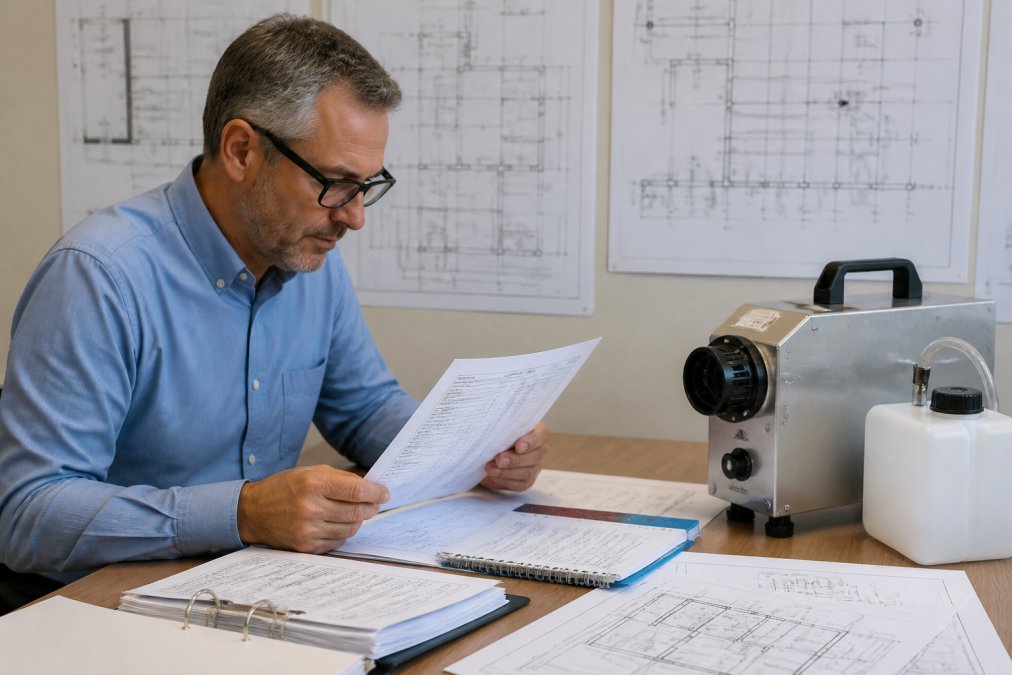
Request equipment demonstrations. Before committing to a rental agreement, ask suppliers to demonstrate equipment operation and show sample validation reports. This ensures the equipment produces results you need and that the supplier’s documentation meets your regulatory standards.
Verify media compatibility. Confirm that rental equipment uses media compatible with your facility’s contamination control requirements. Ultrapure water is standard for pharmaceutical facilities. Glycol-based media work for some applications but may not satisfy GMP requirements. Applied Physics specifies compatible media for each equipment type, eliminating guesswork.
Choosing a cleanroom fogger rental service requires balancing equipment capability, regulatory compliance, cost efficiency, and supplier reliability. Applied Physics delivers precision contamination control and airflow visualization solutions specifically designed for GMP-regulated pharmaceutical manufacturing, semiconductor fabrication, and biotech research environments. With equipment options ranging from handheld ultrasonic foggers for confined spaces to cryogenic systems for advanced semiconductor validation, Applied Physics supports facilities across the contamination control spectrum. The company’s three-decade track record and specialization in cleanroom, semiconductor, and medical equipment means your validation work benefits from deep expertise in regulatory requirements and industry standards. Contact Applied Physics to discuss your facility’s specific validation needs and explore rental options that fit your operational timeline and budget.
A cleanroom fogger visualizes airflow patterns and contamination control pathways within ISO-rated environments. The fog traces laminar flow, identifies vortices, and detects turbulent zones that could compromise product integrity. For pharmaceutical manufacturing and semiconductor fabrication, foggers validate that cleanroom systems meet GMP and ISO 14644 standards by revealing where particles travel and confirming HEPA filter performance during leak testing.
Airflow visualization requires activating the fogger in a controlled manner while monitoring fog dispersion patterns. Position the fogger at the entry point or work surface and observe how fog moves through the space. Document flow paths, identify dead zones, and note any turbulence using video or photographic evidence. Most facilities perform this during scheduled validation windows to minimize production downtime and maintain sterile conditions.
Rental eliminates capital expenditure, eliminates maintenance and calibration costs, and provides access to multiple equipment types for different validation scenarios. Renting is ideal for project-based work, temporary facilities, or validating new cleanroom designs. Purchasing makes sense only for facilities requiring continuous, frequent validation. Rental also ensures equipment meets current ISO standards and GMP requirements without your facility bearing the burden of regulatory updates.
Cleanroom foggers use deionized (DI) water or ultrapure water to prevent particulate contamination and mineral deposits that could interfere with airflow visualization or compromise cleanroom integrity. Some high-performance systems use liquid nitrogen (LN2) to produce ultra-cold mist for specialized applications. Water for Injection (WFI) is used in pharmaceutical-grade systems to meet USP 797 and USP 800 standards for compounding pharmacies.
Yes, when using FDA GRAS-approved fog formulations and non-toxic, non-corrosive media. Foggers must not introduce particulates or chemical residues that degrade cleanroom classification. Validation studies should confirm fog dissipation rates and confirm no residue remains post-test. Always verify equipment certifications (CE-marked, ISO 14644 compatible) and follow manufacturer protocols to maintain sterile conditions and operator safety.
This article was written using GrandRanker
Enter your details below to save your shopping cart for later. And, who knows, maybe we will even send you a sweet discount code :)
Allow notifications to get real-time updates about your shopping cart and who knows, you may even receive a sweet discount code 😊