
Ensuring the sterility of compounded sterile preparations (CSPs) is not just a regulatory requirement; it is a critical component of patient safety.
Within the framework of USP Chapter <797>, the visual verification of airflow plays a central role in maintaining a controlled environment.
Pure water foggers have emerged as the gold standard for this task, providing the precision and cleanliness required for high-stakes pharmaceutical environments.
Understanding USP <797> Airflow Visualization Requirements
USP <797> mandates that airflow in primary engineering controls (PECs) such as laminar airflow workbenches (LAFWs) and integrated vertical laminar flow zones must be unidirectional.
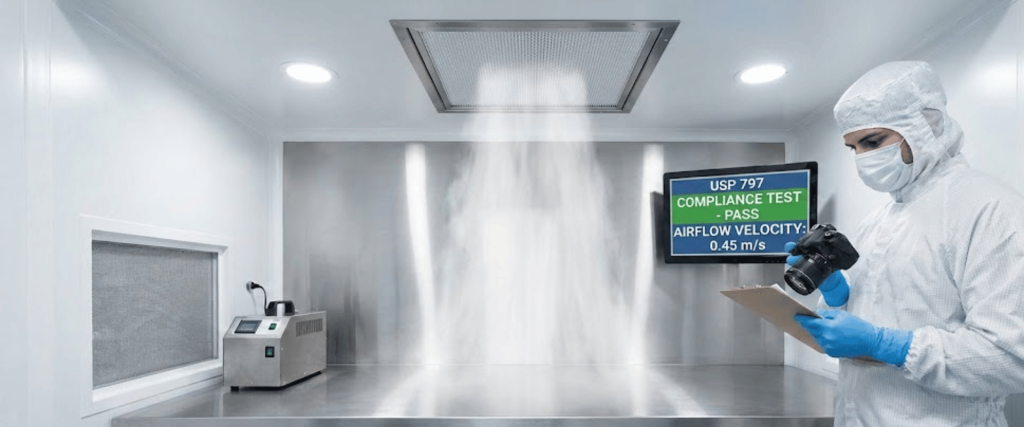
To prove this, facilities must conduct smoke studies or airflow-visualization testing.
The goal of these tests
- Confirm that air moves in a single direction without turbulence.
- Verify that the first air reaching critical sites is an undisturbed, HEPA-filtered stream.
- Identify any dead zones or stagnant air that could harbor contaminants.
Why Pure Water Foggers?
In the past, smoke sticks or chemical generators were common.
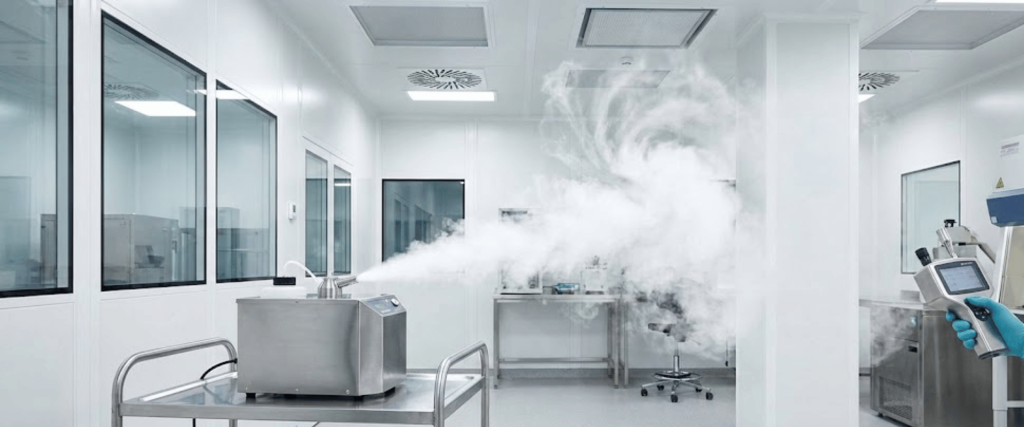
However, these often left behind residues or particulate matter that could compromise the very clean environment they were meant to test. Pure water foggers offer a superior alternative.
1) Zero Residue and Contamination
Pure water foggers utilize ultrasonic transducers to vibrate High-Purity (DI) water or Water for Injection (WFI) into a dense, visible mist. Because the fog consists only of pure water droplets, it evaporates without leaving a trace.
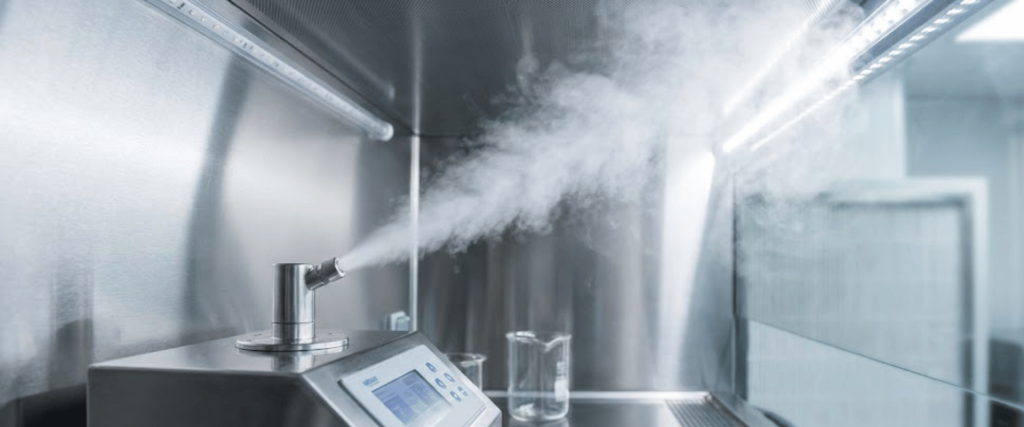
This eliminates the need for extensive post-test cleanup and ensures no chemical film remains on sensitive equipment.
2) High-Density Visualization
To accurately track airflow at high velocities, the smoke must be dense enough to be captured on video.
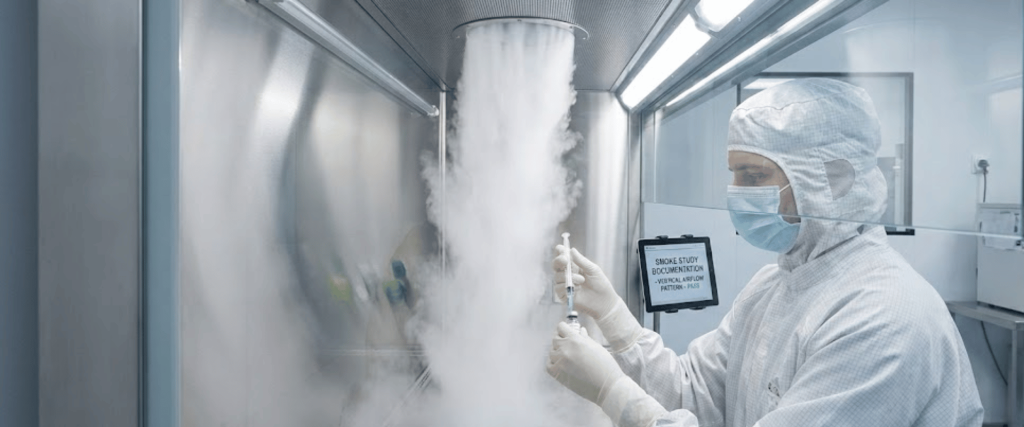
Modern pure water foggers produce a high-output mist that clearly defines air patterns, making it easier for certifiers to document compliance during dynamic conditions, e.g., while technicians are performing compounding motions.
3) Safety for Personnel
Unlike chemical smoke generators, which can release irritating or toxic fumes, pure water fog is completely safe for the operator to breathe.
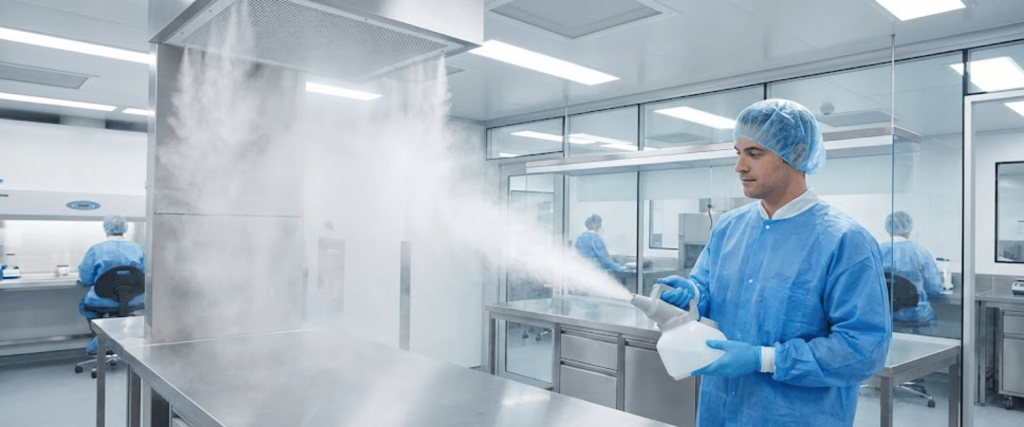
This allows for more thorough testing without the need for specialized respiratory protection.
Comparative Analysis: Pure Water Foggers vs. Alternatives
To understand why pure water foggers are preferred for USP 797 compliance, it’s helpful to compare them to older methods.
| Feature | Pure Water Fogger (Ultrasonic) | CO₂ / Dry Ice Foggers | Chemical Smoke Sticks |
|---|---|---|---|
| Residue | Zero (evaporates completely) | Minimal (may leave moisture) | High (chemical buildup) |
| Contamination Risk | None | Low | High (particulate matter) |
| Visibility / Density | High and adjustable | Moderate | Low |
| Setup Time | Instant | Long (requires dry ice) | Instant |
| Safety | 100% breathable | Risk of CO₂ displacement | Irritating to lungs and eyes |
| USP 797 Suitability | Ideal / best practice | Acceptable | Not recommended |
Best Practices for Smoke Studies Using Foggers
To meet USP <797> standards, the testing must be performed under dynamic conditions. This means the fogger should be used.
- Equipment is in place.
- Personnel are performing standard operating procedures.
- Materials are being moved in and out of the PEC.
Key Focus Areas
- The Direct Compounding Area (DCA): The fog should demonstrate that the critical site is always bathed in first air.
- Interruption of Airflow: Observe how the air recovers after a technician reaches into the hood.
- Waste and Supply Placement: Ensure that the placement of sharps containers or IV bags does not cause turbulent eddies that pull dirty air into the work zone.
Maintenance and Care for Your Fogger
To ensure your pure water fogger provides accurate results for years, follow these maintenance tips.
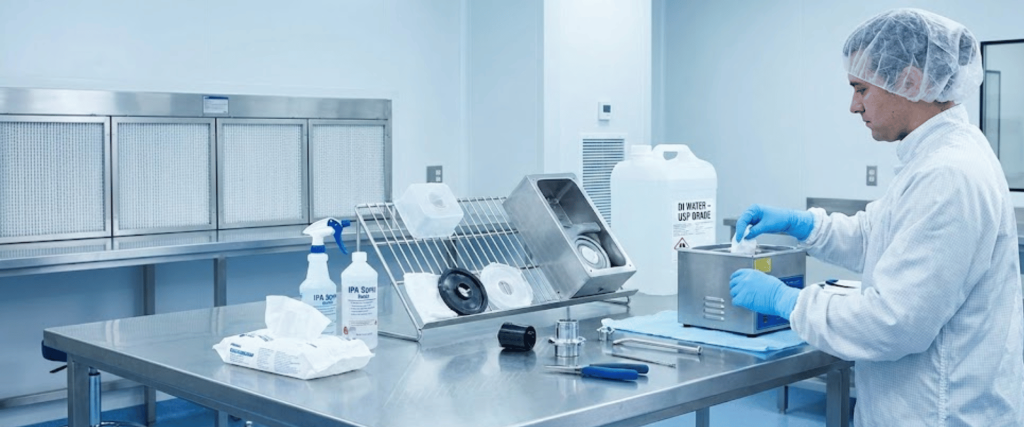
- Use Only Pure Water: Only use DI water or WFI. Tap water will cause mineral buildup on the ultrasonic transducers.
- Dry After Use: Always drain the tank and allow the internal components to air dry to prevent microbial growth.
- Regular Calibration: Ensure the transducers are checked during annual tool calibration cycles.
Conclusion
Using a pure water fogger is more than a technical preference; it is a commitment to the highest standards of pharmacy practice.
By providing clear, residue-free, and safe visualization, these tools ensure that your facility remains in strict alignment with USP <797> while protecting the integrity of your CSPs.
Frequently Asked Questions (FAQs)
1. Why is pure water (DI or WFI) necessary for USP 797 smoke studies?
High-purity water ensures that the mist leaves zero residue or particulates behind. This protects the sterile integrity of ISO 5 environments and prevents chemical buildup on sensitive compounding equipment.
2. How often must airflow visualization testing be performed?
According to USP <797> standards, airflow visualization or smoke studies must be conducted during initial facility certification and then repeated at least every six months during semi-annual recertification.
3. Can pure water foggers damage HEPA filters?
No. Unlike chemical smoke sticks, the ultra-fine mist from a pure water fogger evaporates quickly and does not saturate or clog the filter media, making it the safest option for expensive ventilation systems.
4. Is a pure water fogger required for USP 800 compliance, too?
Yes. Since USP <800> focuses on the containment of hazardous drugs, it relies on the same airflow principles as <797>. A fogger is essential to verify that hazardous vapors are being properly exhausted and not leaking into the buffer room.