
In the world of life sciences, clinical diagnostics, and pharmaceutical research, the laboratory incubator is the silent engine of discovery.
Whether you are culturing delicate primary cells, conducting protein expression studies, or performing microbiological assays, the incubator provides the controlled environment necessary for life to thrive under glass.
However, not all incubators are created equal. A slight temperature fluctuation or a minor lapse in CO2 levels can jeopardize weeks of research.
To ensure repeatable and reliable data, selecting the right equipment is a high-stakes decision.
Here are the five critical factors you must evaluate when choosing a laboratory incubator for your facility.
Key Factors for Choosing a Reliable Laboratory Incubator
1) Temperature Uniformity and Stability
The primary function of any incubator is to maintain a constant temperature.
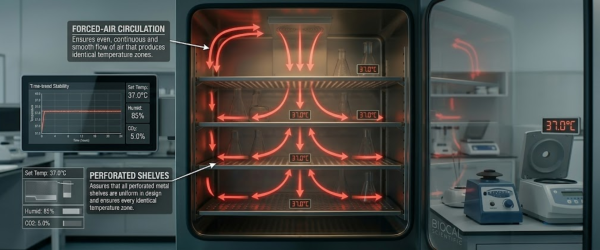
However, stability (how well the unit maintains a set point over time) and uniformity (how consistent the temperature is across all shelves) are two different metrics.
- Airflow Design: Forced-air circulation systems are generally superior for rapid temperature recovery after the door has been opened.
- Heating Technology: Advanced water-jacketed models provide incredible stability and protection against power failures, while air-jacketed models offer faster heat-up times and high-temperature decontamination cycles.
2) Precise Atmospheric Control (CO2 and O2)
For researchers working with mammalian cells, maintaining a physiological pH is critical. This is achieved by controlling CO2 concentration.
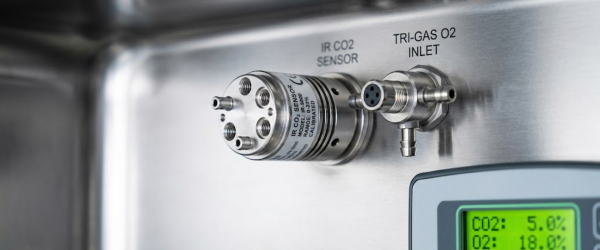
- Sensor Technology: Modern incubators utilize Thermal Conductivity (TC) or Infrared (IR) sensors. IR sensors are preferred in high-traffic labs because they are not affected by humidity levels and provide faster recovery of CO2 concentrations after door openings.
- Tri-Gas Capabilities: If your research involves hypoxia or mimics specific tissue environments, ensure the incubator offers Oxygen (O2) control to create suppressed oxygen environments.
3) Humidity Management and Contamination Prevention
Evaporation is the enemy of microplate-based assays. Without proper humidity control, the media in your wells can evaporate, leading to toxic concentrations of salts and metabolites.
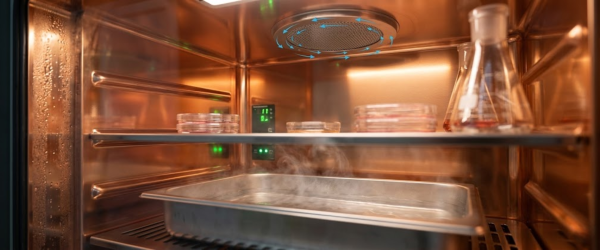
Furthermore, contamination can ruin a lab’s reputation and budget. Look for these Must-Have features.
- High-Temperature Decontamination: Look for units that offer a validated 120°C or 180°C sterilization cycle.
- Copper Interiors: Some high-end incubators use antimicrobial copper surfaces to naturally inhibit the growth of mold and bacteria.
- HEPA Filtration: Continuous air filtration within the chamber ensures that Class 100 air quality is maintained, protecting your samples from airborne particulates.
4) Interior Configuration and Capacity
Lab space is expensive. Choosing an incubator that maximizes usable space is essential.
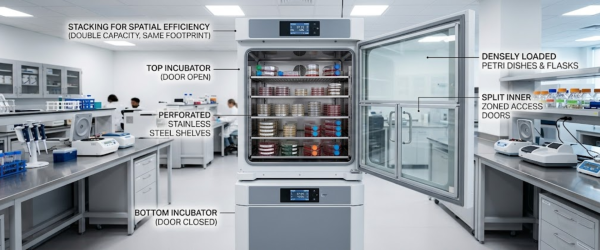
- Stackable Designs: Many labs prefer stackable units to double their capacity without increasing the footprint on the lab floor.
- Adjustable Shelving: Ensure the shelving is perforated to allow for optimal airflow and can be easily removed for cleaning without the use of specialized tools.
- Split Inner Doors: Multiple inner glass doors allow you to access specific sections of the incubator without disrupting the entire internal atmosphere.
5) Advanced Monitoring and Data Logging
In the era of Open Science and strict regulatory compliance (such as FDA 21 CFR Part 11), manual logging is no longer sufficient.
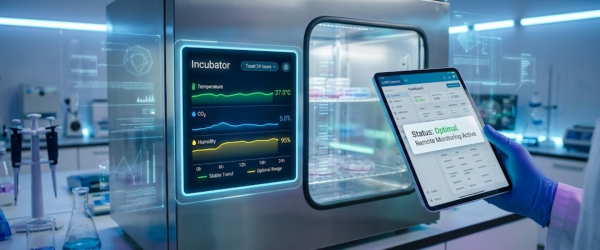
- Digital Interfaces: A touch-screen controller that displays real-time graphs of temperature and gas levels.
- Alarm Systems: Visual and audible alarms for door-ajar, temperature deviations, or low gas pressure.
- Remote Connectivity: The ability to integrate with Laboratory Information Management Systems (LIMS) or mobile apps that alert you to issues after hours.
Conclusion
A laboratory incubator is more than just a heated box; it is a precision instrument that protects your most valuable assets, your samples, and your time.
By focusing on temperature uniformity, atmospheric precision, contamination control, spatial efficiency, and data integrity, you ensure that your research results remain consistent and reproducible.
Frequently Asked Questions (FAQs)
1. What is the difference between air-jacketed and water-jacketed incubators?
Air-jacketed models heat up faster and often include high-temperature decontamination cycles. Water-jacketed models offer better temperature stability and can hold heat longer during a power outage.
2. Why is CO2 control necessary for cell culture incubators?
CO2 control is critical because it interacts with the buffer in the growth media to maintain a stable pH. This ensures that the environment remains ideal for cell health and growth.
3. How often should a laboratory incubator be calibrated?
For most research facilities, it is recommended to calibrate temperature and gas sensors every 6 to 12 months. However, high-traffic labs may require more frequent checks to ensure data accuracy.
4. Can HEPA filters really prevent incubator contamination?
Yes. HEPA filters continuously circulate and scrub the air inside the chamber, removing 99.97% of airborne particulates. This significantly reduces the risk of mold or bacteria reaching your samples.