
Medical and laboratory cryogenic storage depends on stable temperature control, accurate monitoring, and documented verification.
In biobanks, clinical laboratories, research facilities, and hospital environments, poor calibration can lead to temperature drift, missed alarms, sample loss, and compliance issues.
Cryogenic storage systems are used to protect temperature-sensitive materials such as biological samples, reagents, reference materials, and clinical inventory.
We serve medical and laboratory environments with clinical and laboratory equipment as part of its broader contamination control and precision equipment portfolio, which makes the topic of calibration especially relevant for regulated storage workflows.
Cryogenic and ultra-low storage equipment can look stable on the front display while still having warmer or colder zones inside the cabinet.
Temperature mapping guidance for freezers recommends using calibrated sensors, placing them across the storage space, and running the study under realistic conditions so facilities can identify spatial variation before samples are affected.
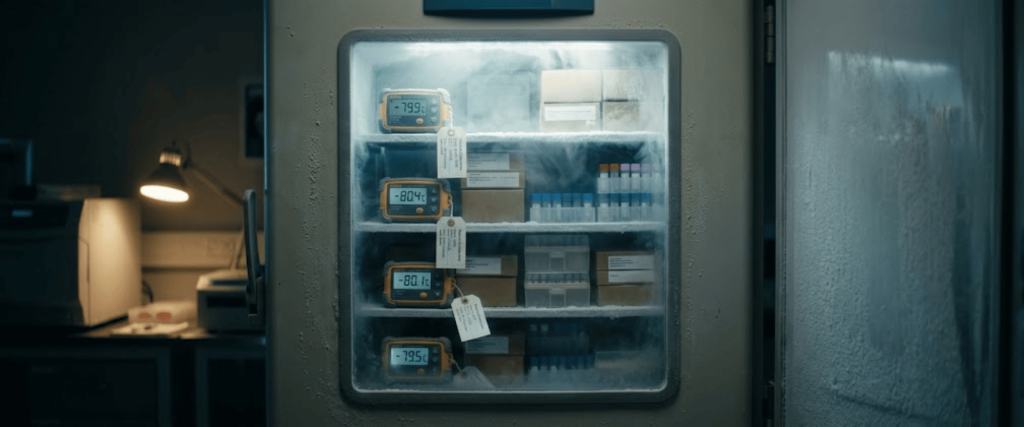
In regulated environments, calibration also supports traceability and inspection readiness.
Storage records should capture readings before and after calibration, the calibration date, the person performing the work, the serial number of the device used, and the relevant SOP reference.
The reference instrument used for cryogenic calibration should be traceable to a national standard such as NIST.
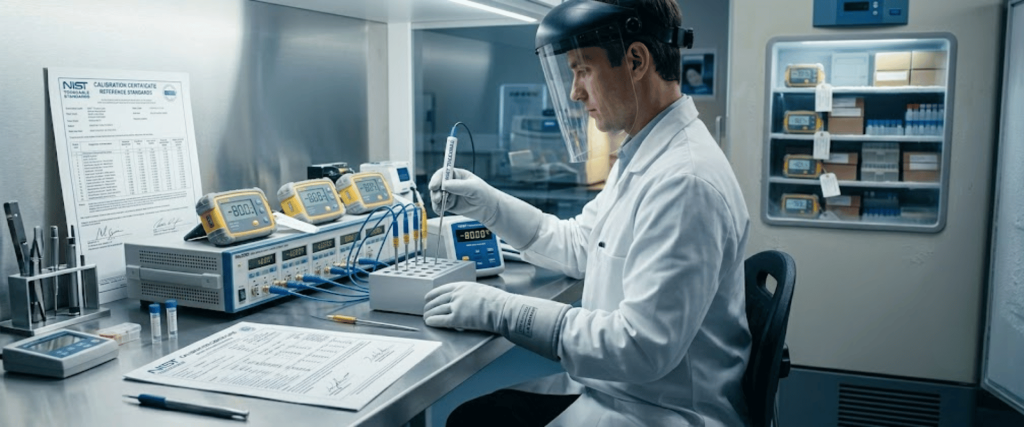
Annual temperature sensor calibration is commonly treated as a minimum expectation in regulated cold-chain programs, and certificates should identify the sensor, the standard used, the result, and the next due date.
A single-point check is helpful, but it is not enough for critical storage.
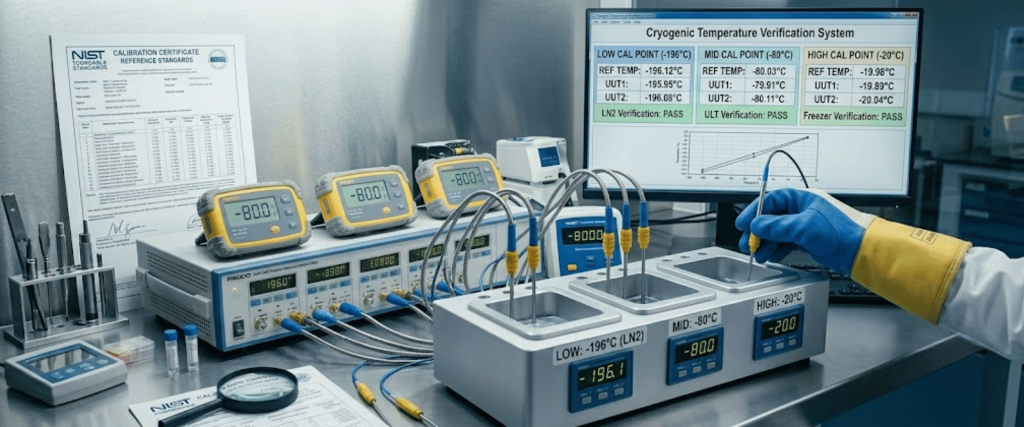
WHO mapping guidance recommends calibration points below the low end of the required range, in the middle, and above the high end, so the instrument performance is confirmed across the full operating band.
Strong calibration practice checks the sensor, the controller or indicator, and the chamber itself.
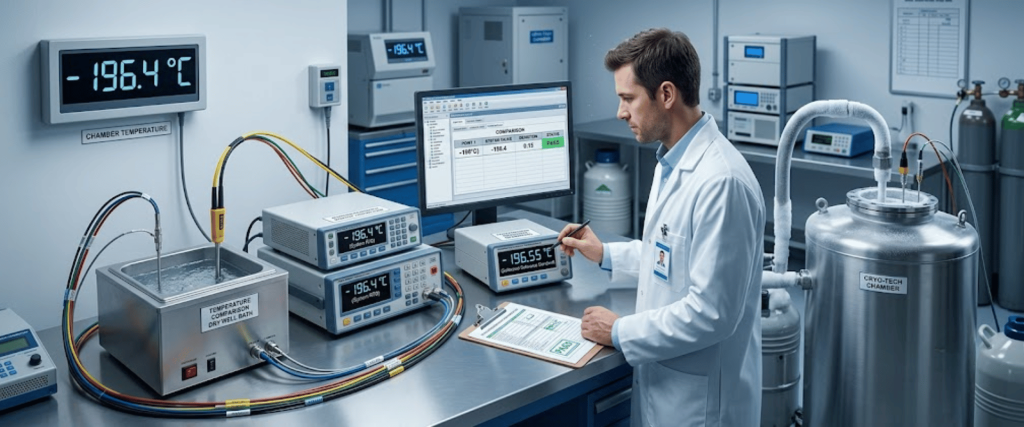
For regulated facilities, best practice is to verify the probe against a stable reference environment, confirm the controller interprets the signal correctly, and then perform a mapping study to see what users actually experience across the storage volume.
Temperature mapping is essential for freezers and other cold storage units because internal conditions are rarely uniform from top to bottom and front to back.
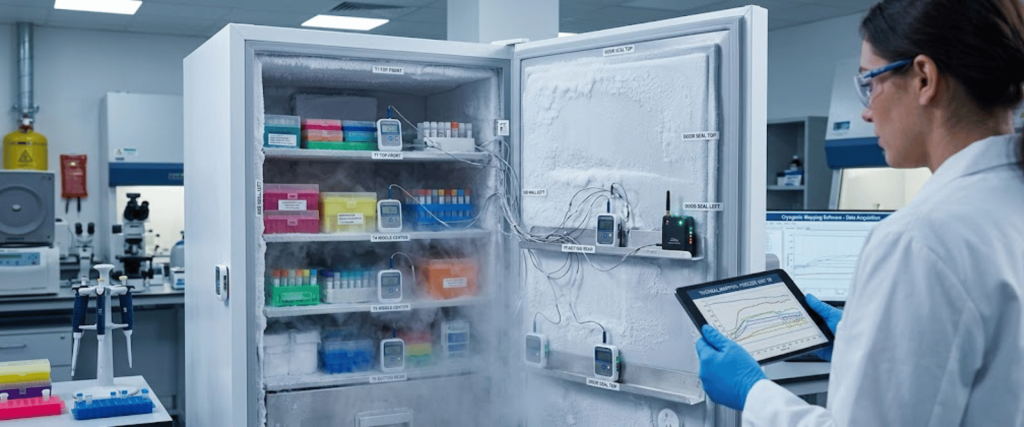
Typical mapping guidance calls for a protocol, calibrated data loggers, defined sensor placement, a study period of at least 24 hours, and realistic operating conditions such as routine loading and door openings.
A storage unit is only as reliable as its warning system during a temperature excursion.
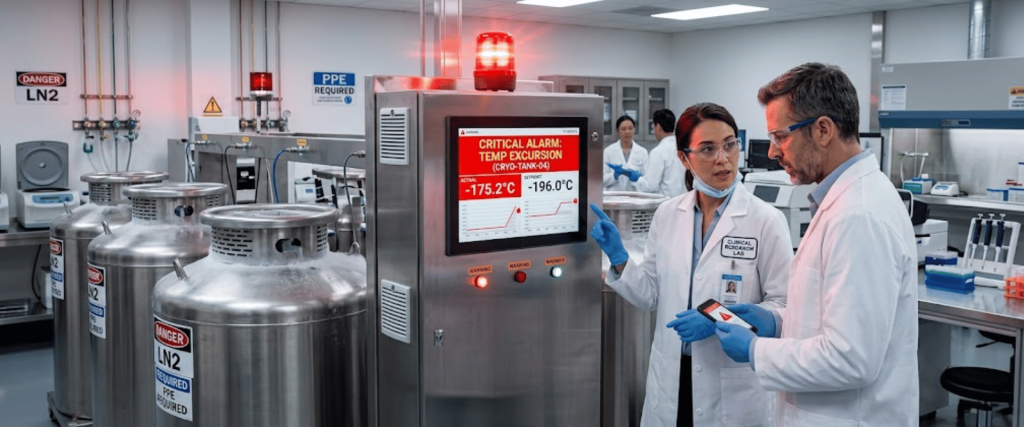
Alarm and monitoring programs in laboratory cold storage are expected to support timely acknowledgment, routine testing, and documented follow-up when limits are exceeded.
Calibration frequency should reflect equipment criticality, usage patterns, and drift history rather than relying only on a fixed calendar.
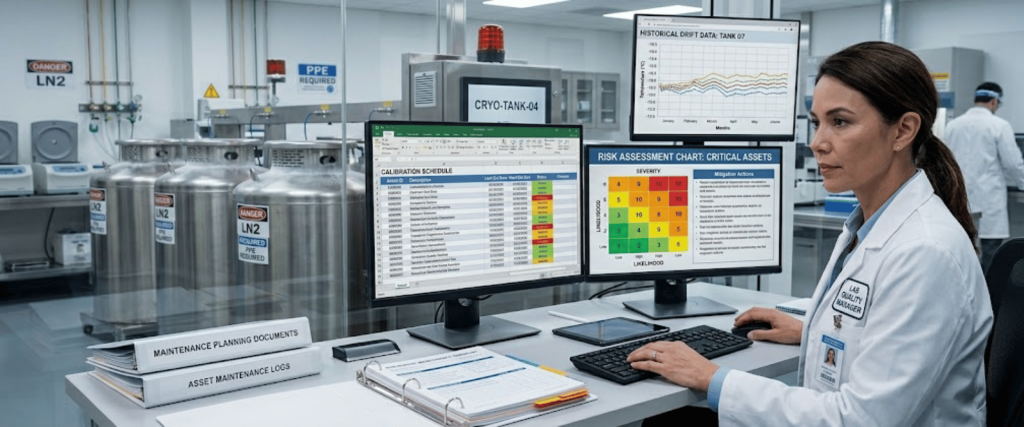
Sources on regulated temperature calibration note that instruments exposed to rapid cycling or used for critical storage often need tighter review intervals, especially when drift data shows the risk of moving out of tolerance before the next scheduled check.
Before a cryogenic freezer or storage vessel is released for use, the facility should confirm installation conditions, review the manufacturer’s documentation, and verify that the sensor and display agree with a traceable reference.

For liquid cryogenic vessels, user guidance also emphasizes fill, stabilization, and equilibration checks before storage use so abnormal consumption or insulation issues can be identified early.
After the initial point check, perform a formal mapping study using calibrated loggers placed at representative locations.
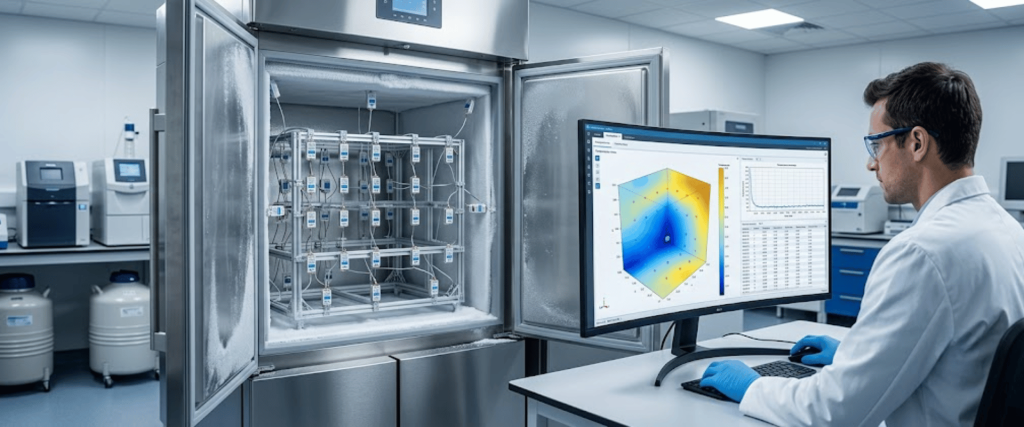
The study should use the same time interval across all devices and run long enough to capture normal cycling, access events, and any warm or cold spots that could affect stored material.
Once mapping confirms chamber behavior, test the high and low alarm thresholds and verify that notifications reach the right people.

This is especially important in healthcare and laboratory settings where delayed response can lead to irreversible sample damage or product loss.
Trend the results from each calibration event, compare drift over time, and adjust the calibration interval when needed.

This approach helps quality teams move from routine paperwork to a risk-based maintenance plan grounded in actual performance data.
Facilities often assume that a correct display reading means the full chamber is within specification, but mapping guidance shows that localized variation is common in freezer storage.
Another common problem is treating annual calibration as a complete validation program. For critical cryogenic storage, a strong program combines annual traceable calibration with mapping, alarm verification, documentation review, and risk-based interval adjustment.
| Calibration activity | Purpose | Recommended practice |
|---|
| Calibration activity | Purpose | Recommended practice |
|---|---|---|
| Reference sensor calibration | Confirm probe accuracy against a traceable standard | Use a NIST-traceable reference and keep the certificate on file. |
| Multi-point verification | Check performance across the intended operating range | Verify the points below, mid-range, and above range. |
| Temperature mapping | Identify hot and cold zones inside the chamber | Use calibrated loggers, defined placement, and at least 24 hours of data. |
| Alarm testing | Confirm excursion alerts work in practice | Challenge alarm thresholds and document response steps. |
| Record review | Support compliance and traceability | Keep dates, serial numbers, pre/post readings, and SOP references. |
| Interval adjustment | Reduce drift-related risk | Base frequency on criticality, usage, and historical drift data. |
Calibration strategies for medical and laboratory cryogenic storage should confirm more than the number shown on the front panel.
The most reliable programs use traceable reference standards, multi-point verification, chamber mapping, alarm testing, and complete documentation to prove that stored materials remain protected under real operating conditions.
The main purpose is to verify that the storage system measures temperature accurately and maintains the required conditions for sensitive materials.
No. A single-point check can confirm one reading, but it does not show how the unit performs across the full range or throughout the chamber.
Annual calibration is a common baseline, but the final interval should depend on equipment risk, usage, and drift history.

Enter your details below to save your shopping cart for later. And, who knows, maybe we will even send you a sweet discount code :)
Allow notifications to get real-time updates about your shopping cart and who knows, you may even receive a sweet discount code 😊