Understanding Nanoparticle Coatings: Polyimide and Its Benefits
Modern industries demand materials that perform reliably under extreme heat, harsh chemicals, and precise engineering tolerances.
Standard nanoparticles often fall short in these environments; they degrade, react with surrounding materials, or lose their properties under stress.
This article covers what polyimide nanoparticle coatings are, how they work, and where they deliver the most value.
What Are Polyimide-Coated Nanoparticles?
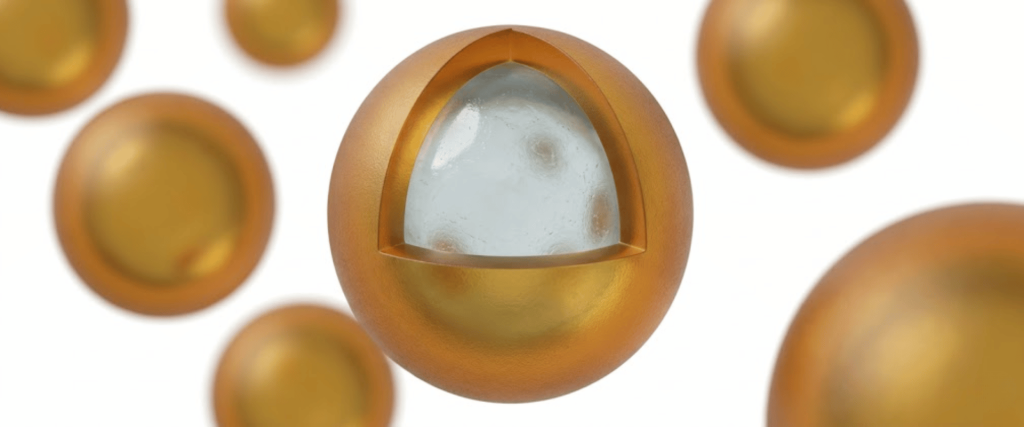
Polyimide-coated nanoparticles are silica particles, ranging from 20nm to 1000nm, coated with a polyimide (PI) polymer layer on their outer surface. This coating gives the particles thermal stability, chemical resistance, and a surface that can be modified for specific industrial or research uses.
They are available as a dry white-to-off-white powder with a purity of >99.9%, making them reliable for high-precision applications.
Key Properties at a Glance
Why Polyimide Is Used as a Coating
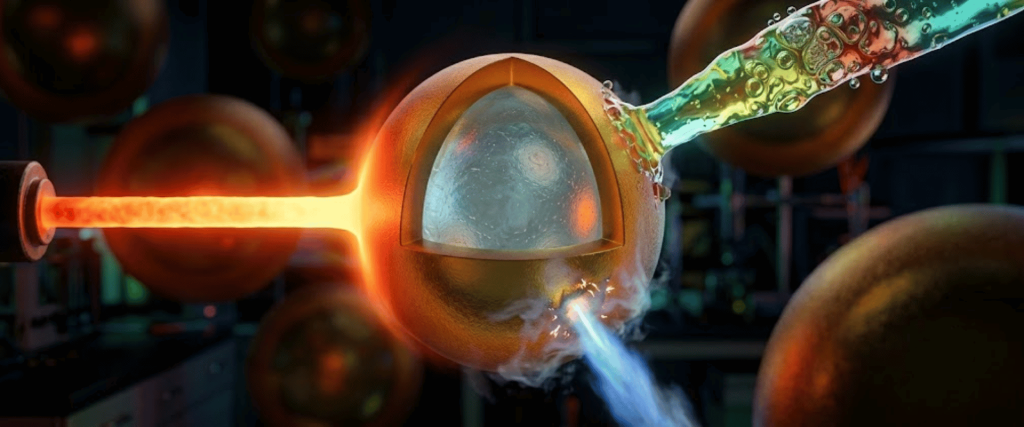
When applied as a nanoparticle coating, it protects the silica core from harsh environments while also enabling surface functionalization, meaning the particle can be engineered to interact with specific materials, tissues, or matrices.
Three reasons
Where These Nanoparticles Are Used
1) Electronics and Semiconductors
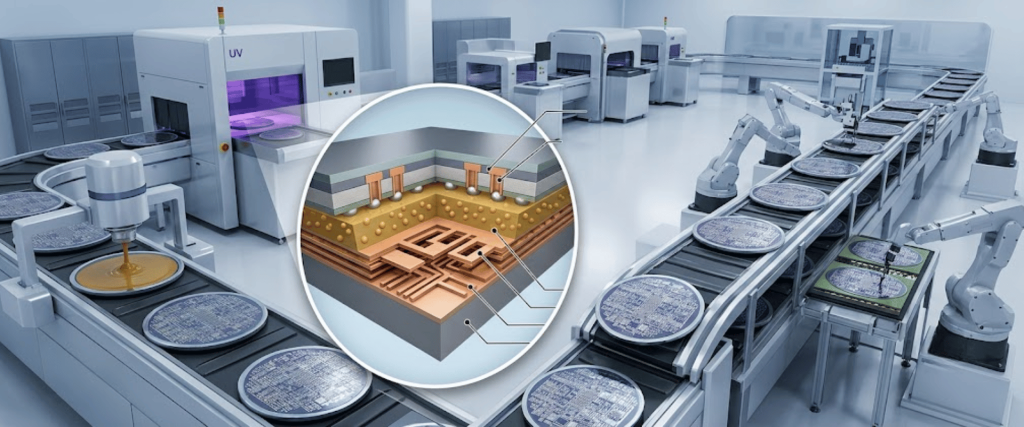
Polyimide-coated nanoparticles are used in dielectric films, stress-buffer layers, and chip packaging, where electrical insulation and heat management are critical.
Hollow silica/polyimide composites are actively studied for low-dielectric-constant semiconductor applications.
2) Aerospace
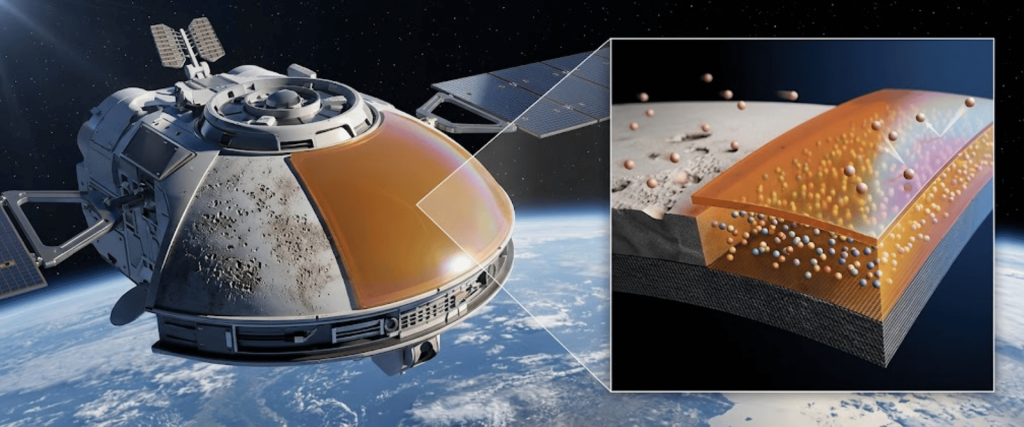
The PI coating resists exposure to atomic oxygen and extreme thermal cycling, real challenges for materials used in satellites and spacecraft.
This durability makes PI-based nanoparticles a practical choice for protective surface films in low Earth orbit environments.
Because polyimide is chemically inert, these particles do not react adversely with biological environments. They are used for bioengineering surfaces, drug encapsulation, and coating medical devices.
Adding PI-coated nanoparticles to coating formulations improves hardness, scratch resistance, and thermal conductivity.
Research confirms nanocomposite coatings on PI films can reach thermal conductivities of 1.68 W/mK with 2H hardness.
Conclusion
Polyimide-coated silica nanoparticles deliver a proven combination of heat resistance, chemical durability, and surface flexibility that is difficult to replicate with other materials.
Whether you need them for semiconductor fabrication, aerospace coatings, biomedical devices, or composite research, the PI coating directly solves the real problems of particle degradation, contamination, and poor surface control.
For sourcing, Applied Physics Corp. offers these particles with verified >99.9% purity across a wide size range, from 20nm to 1000nm.
Frequently Asked Questions (FAQs)
1. What is a polyimide-coated nanoparticle?
A silica nanoparticle with a polyimide polymer layer on its surface, giving it thermal stability, chemical resistance, and a functionalizable surface.
2. What temperature can polyimide nanoparticles handle?
They remain stable above 300°C, making them suitable for high-temperature processing in electronics and aerospace.
3. Are these nanoparticles safe for biomedical use?
Yes. Polyimide is chemically inert and does not react with biological environments, making it suitable for bioengineering and medical device applications.
4. What sizes are available?
Particle sizes range from 20nm to 1000nm, available in quantities from 1g up to 250g.