How are airborne particulates reduced in semiconductor fabs?
In semiconductor fabrication, sub-micron particulate contamination directly impacts wafer yield and device reliability.
Maintaining strict cleanroom standards requires continuous validation of unidirectional airflow vectors to eliminate localized turbulence.
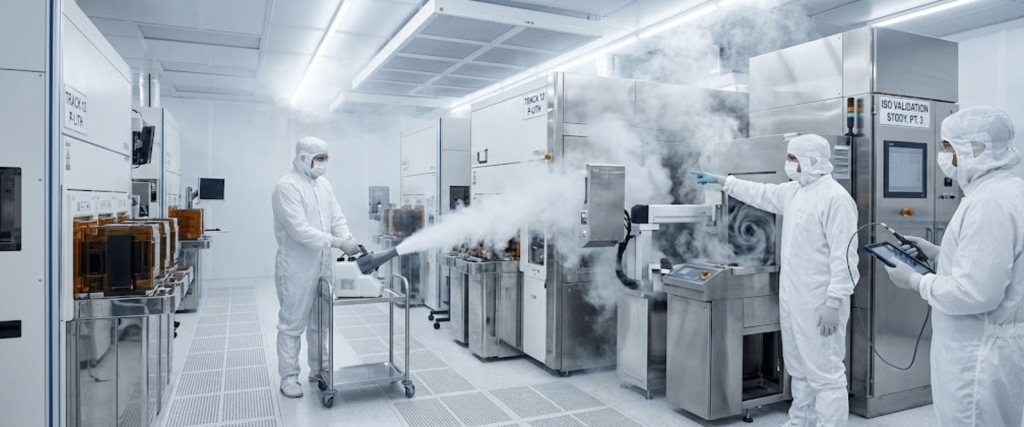
Ultrapure cleanroom foggers provide the visual evidence necessary to track air currents, detect dead zones, and ensure compliance with ISO standards.
Airborne Particulate Control in Semiconductor Wafer Fabrication Facilities
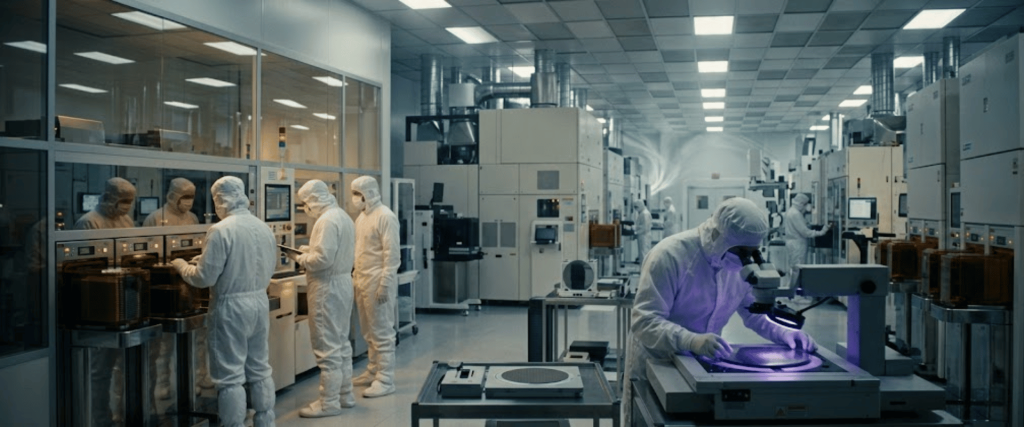
Contamination control inside a semiconductor wafer fabrication facility requires strict management of mechanical systems, personnel activity, and aerodynamic variables.
Airborne particulates, which cause structural defects on sub-micron silicon architectures, are mitigated through a multi-tiered technical strategy.
1) High-Efficiency Filtration Enclosures
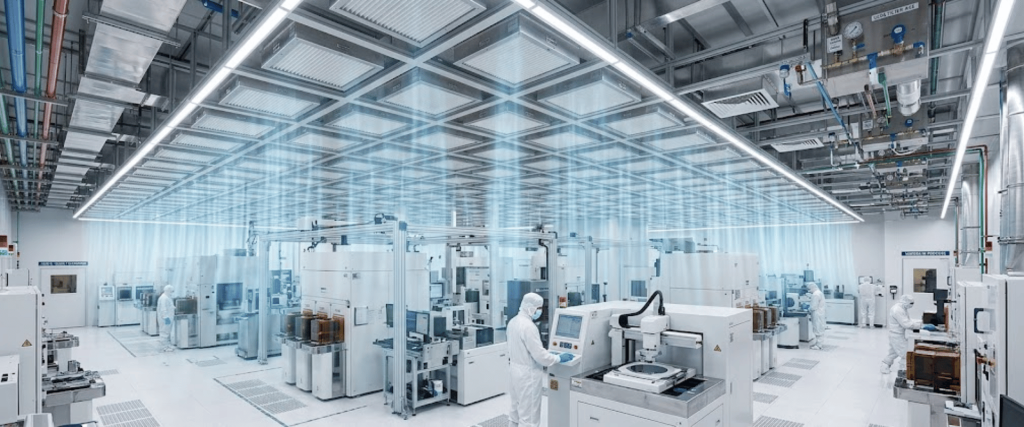
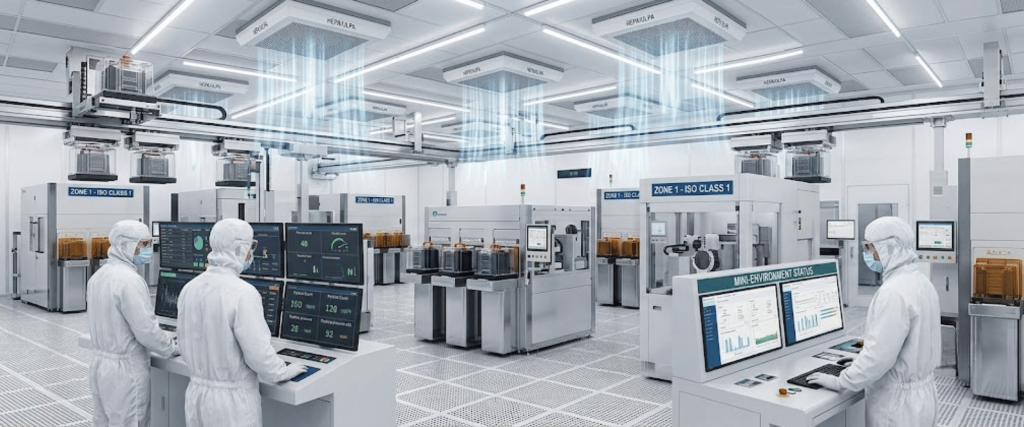
Semiconductor cleanrooms utilize Ultra-Low Particulate Air (ULPA) or High-Efficiency Particulate Air (HEPA) filters across the ceiling plenum to continuously purge the air of particles down to the nanometer scale.
Fresh make-up air is supplied through dedicated outdoor air handling systems to maintain exact environmental metrics (Choi, 2018).
2) Unidirectional Laminar Airflow
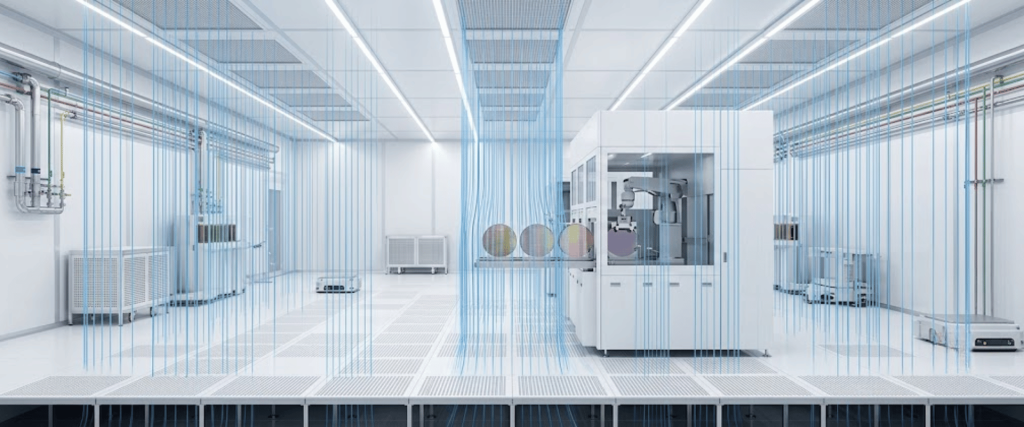
This continuous movement sweeps airborne particulates away from exposed wafers, preventing settlement on critical production surfaces (Ma, 2006).
3) Differential Pressurization & Isolation Enclosures
Fabs maintain a strict positive pressure gradient (typically 5 Pascals or greater relative to adjacent areas) to prevent outside unconditioned air from leaking into the clean production zone (Ma, 2006).
Advanced fabs isolate production tools using Standard Mechanical Interface (SMIF) micro-environments or mini-environments, minimizing the surface area requiring the highest levels of cleanliness (Ma, 2006).
4) Airflow Visualization and Dead Zone Mitigation
Physical obstructions, manufacturing equipment, and personnel movement disrupt laminar airflow, creating localized pockets of turbulence or recirculation zones where air captures particulate matter. Ultrapure cleanroom foggers are deployed to trace these airflow paths.
By visualizing the air vectors, engineers realign equipment geometry and adjust ventilation velocities to eliminate recirculation zones (Ma, 2006).
Applications in Semiconductor Inspection and Metrology
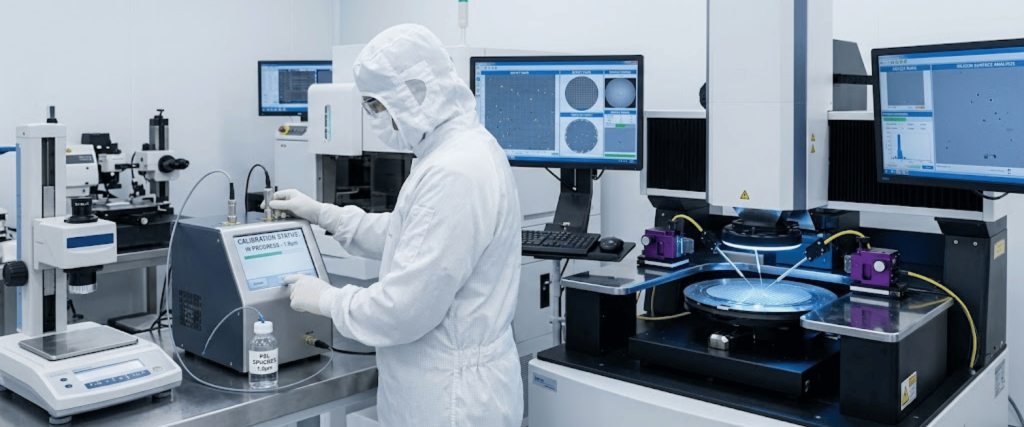
In addition to macroscopic airflow management, modern fabrication nodes require precise instrument calibration to verify tool accuracy.
Polystyrene Latex (PSL) spheres and calibration wafer standards are utilized to calibrate Laser Particle Counters and Scanning Surface Inspection Systems (SSIS).
When combined with rigorous smoke study validation using ultrapure foggers, these technologies ensure that both the macro-environment and micro-inspection tools operate within precise calibration parameters.
Comparative Performance of Contamination Visualization Systems
To maintain cleanroom compliance, choosing the correct style of visualization instrumentation is critical to avoid accidental contamination of the environment during testing.
Conclusion
Maintaining a particulate-free environment in semiconductor fabrication relies heavily on the behavior of unidirectional air currents.
Ultrapure cleanroom foggers provide the necessary visualization capabilities to verify that airflow systems successfully isolate wafers from contaminants.
By identifying dead zones, optimizing pressure boundaries, and validating mini-environment integrity, these instruments serve as an essential component in protecting semiconductor yield and maintaining regulatory compliance.
Frequently Asked Questions (FAQs)
1. Why are smoke studies required under ISO 14644-3 standards?
ISO 14644-3 Annex B7 requires physical visualization of airflow directions to confirm that the air delivery system functions correctly, prevents cross-contamination, and maintains clean, unidirectional flow patterns around critical process equipment.
2. Can cleanroom foggers be used while manufacturing tools are operating?
Yes, ultrapure $LN_2$ foggers are designed specifically to run during active tool operation or static states to observe how thermal plumes, robot kinematics, and mechanical fixtures alter the local airflow dynamics.
APPLIED PHYSICS TECHNICAL RESOURCE
Continue from the technical question to the application
Wafer inspection, SSIS calibration, particle deposition references, process control and semiconductor measurement workflows. Product and standards references should be interpreted for the actual instrument, facility, protocol and configuration.