Last Updated: August 9, 2026
USP 797 cleanroom fogger requirements establish the foundation for validating airflow patterns in sterile compounding environments. The United States Pharmacopeia (USP) Chapter 797 sets mandatory standards for pharmaceutical compounding facilities, and the 2026 updates introduce stricter validation protocols for cleanroom foggers used in environmental monitoring and airflow visualization.
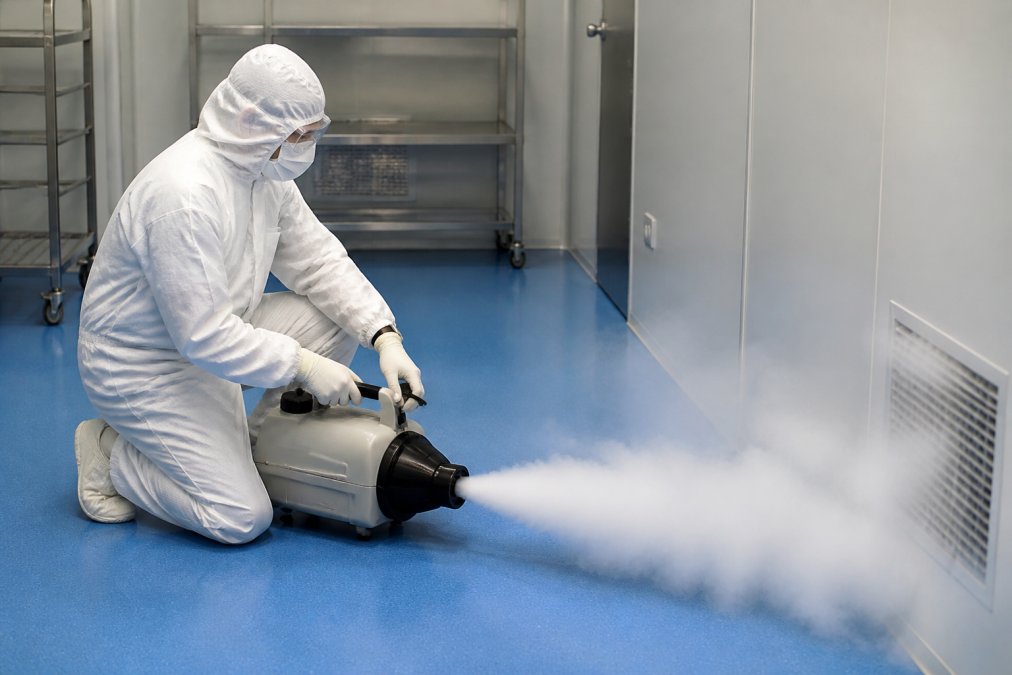
A cleanroom fogger is a precision instrument that generates visible aerosol particles to demonstrate airflow patterns within ISO-classified buffer rooms and anteroom spaces. Unlike generic smoke generators, pharmaceutical-grade foggers must produce neutral, non-toxic aerosol that doesn’t interfere with sterile compounding operations or contaminate work surfaces.
The 2026 USP 797 revisions require documented proof that your cleanroom’s airflow patterns meet design specifications. This isn’t optional compliance theater, it’s the difference between detecting a filter breach during validation versus discovering it during a regulatory audit. Applied Physics has supported pharmaceutical facilities through cleanroom validation since 1992, providing both the equipment and technical guidance needed to meet these increasingly rigorous standards.
Fogger validation serves three critical purposes: confirming HEPA filter integrity, verifying laminar airflow direction and velocity, and documenting pressure differentials between rooms. Without proper validation documentation, your facility cannot prove that sterile compounding areas maintain the contamination control necessary for patient safety.
Environmental monitoring for sterile compounding facilities combines viable air sampling, surface sampling, and airflow visualization into a comprehensive contamination control program. The 2026 USP 797 standards mandate that facilities establish baseline environmental data before compounding begins and maintain ongoing monitoring throughout operations.
Viable air sampling captures microorganisms on growth media to detect bacterial and fungal contamination. Active air sampling uses impactors or impingers to draw air through collection media, while passive air sampling relies on settle plates placed in the compounding area. Most USP 797-compliant facilities use both methods, active sampling provides quantitative data during operations, while passive sampling documents contamination during non-operational periods.
Surface sampling involves contact plates and swabs to verify that work surfaces, equipment, and personnel meet cleanliness standards. The buffer room requires sampling at multiple locations: work surfaces, equipment contact points, and areas where personnel move through the space. Documentation of sampling locations, timing, and results forms the backbone of your environmental monitoring program.
The 2026 updates specify that environmental monitoring data must be reviewed monthly and trended over time. A single positive result doesn’t necessarily indicate a problem, but a trend showing increasing microbial counts signals that something in your compounding process or facility maintenance needs attention. Applied Physics aerosol generators create the precise particle clouds needed to validate that your environmental monitoring equipment actually detects contamination when it occurs.
ISO 14644 defines air classification standards that USP 797 incorporates into its requirements. The classification system measures the number of particles of specific sizes present in a cubic meter of air. Buffer rooms typically require ISO Class 5 air (formerly called Class 100), which allows no more than 3,520 particles per cubic meter of 0.5 micrometers or larger.
Anteroom spaces require ISO Class 7 air, permitting up to 352,000 particles per cubic meter at the same size threshold. The difference between Class 5 and Class 7 is substantial, but both require active contamination control through HEPA filtration and proper airflow management. Particle counters measure actual air quality, while cleanroom foggers visualize the airflow patterns that maintain those particle counts.
Particulate matter in compounding areas comes from multiple sources: personnel shedding skin cells and fibers, equipment off-gassing, and air infiltration through doors and penetrations. The only way to maintain ISO Class 5 air is through continuous laminar airflow from HEPA-filtered supply air and proper room pressurization. Fogger validation proves that your airflow design actually achieves this continuous flushing action.
The 2026 standards introduce new particle size thresholds for monitoring, facilities must now track particles at 0.3 micrometers in addition to the traditional 0.5 and 5 micrometer measurements. This increased sensitivity catches contamination events earlier, but it also means your environmental monitoring equipment must have corresponding sensitivity. Applied Physics aerosol photometers detect particles across all required size ranges, enabling facilities to validate their monitoring systems against actual airflow conditions.
Air Changes Per Hour (ACPH) quantifies how many times the entire room volume is replaced with filtered air each hour. USP 797 buffer rooms require minimum 15 ACPH, while anteroom spaces require minimum 12 ACPH. These aren’t arbitrary numbers, they’re calculated to ensure that any airborne particles generated during compounding are rapidly removed before settling on work surfaces.
Pressure differentials maintain unidirectional airflow from clean spaces to less-clean areas. The buffer room must maintain positive pressure relative to the anteroom (typically 0.02 to 0.05 inches of water column). The anteroom must maintain positive pressure relative to the surrounding pharmacy. These pressure relationships prevent contaminated air from flowing backward into critical areas.
Validating ACPH requires measuring actual air velocity at multiple points across the room cross-section. This is where cleanroom foggers become essential, they visualize whether air is actually moving in the intended direction and at the expected velocity. A room might have the right number of air handlers, but if ducting is poorly designed or filters are partially blocked, actual ACPH could fall short of requirements.
The 2026 updates require that ACPH validation be performed quarterly, not just during initial qualification. This means your facility needs reliable, repeatable methods for demonstrating airflow performance. Applied Physics ultrapure water foggers generate consistent, neutral aerosol that doesn’t degrade over time, making them ideal for quarterly re-validation studies where you need reproducible results.
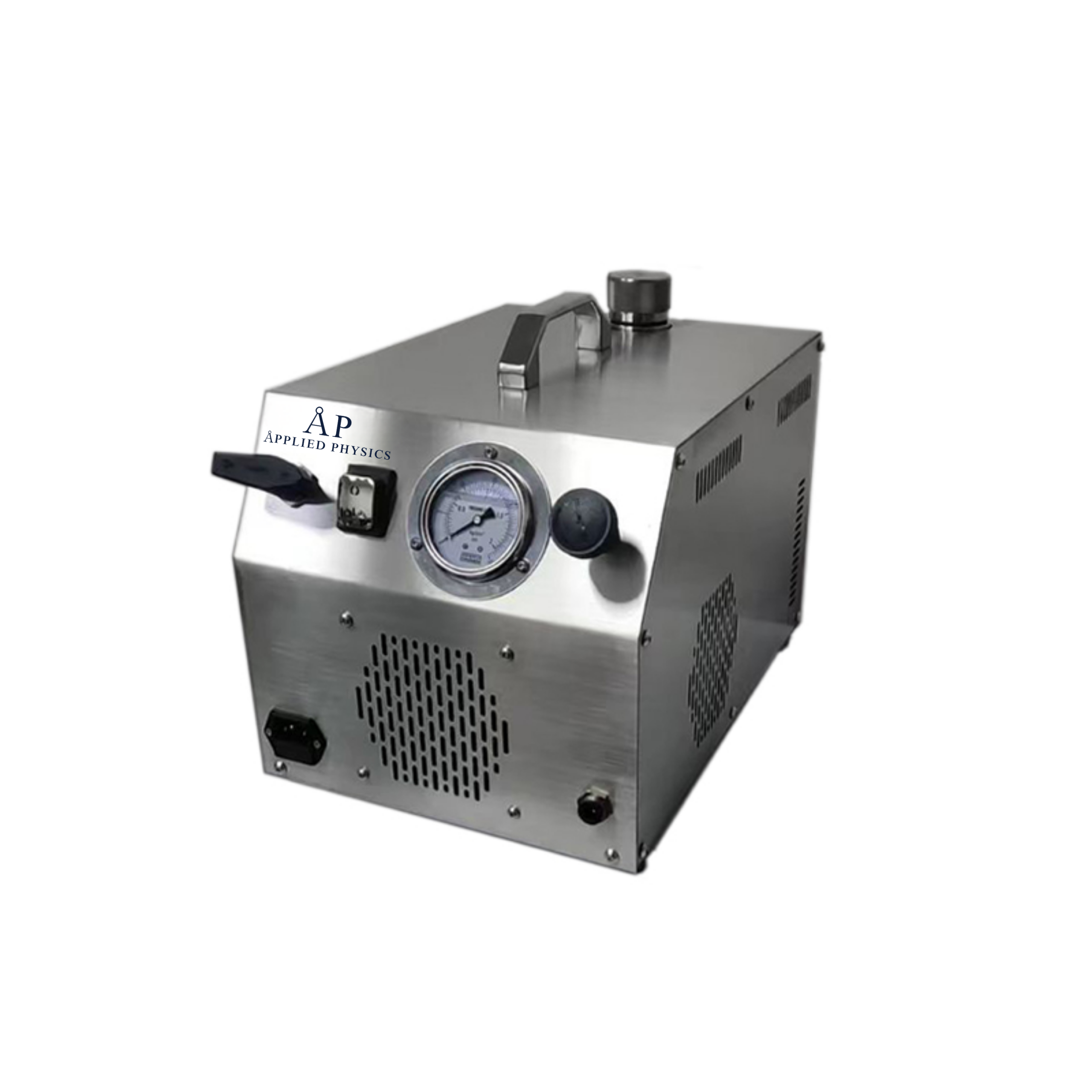
Personnel represent the largest contamination source in sterile compounding areas. The 2026 USP 797 standards require that all personnel entering the buffer room wear low-lint garb including sterile gown, sterile gloves, head covering, and foot coverings. The anteroom requires non-sterile low-lint garb including gown, head covering, and foot coverings.
Garbing protocols must be documented and personnel must demonstrate competency before being allowed to compound. This includes proper donning and doffing procedures, hand hygiene, and understanding of aseptic technique. Personnel must also receive training specific to your facility‘s cleanroom design and contamination control procedures.
The distinction between Category 1, Category 2, and Category 3 Compounded Sterile Preparations (CSPs) affects personnel requirements. Category 1 CSPs involve simple manipulations of commercially available sterile products, these can be performed in a properly designed buffer room. Category 2 and 3 CSPs involve more complex manipulations and require higher levels of environmental control and personnel training.
Environmental monitoring during personnel movement through the cleanroom demonstrates whether garbing and aseptic technique are adequate. If viable air sampling shows high microbial counts when personnel are working, the issue typically traces back to garbing integrity or technique rather than facility design. Applied Physics aerosol visualization helps identify whether personnel movement is disrupting laminar airflow patterns or creating turbulent zones where contamination can accumulate.
Surface sampling verifies that work surfaces, equipment, and environmental surfaces remain within acceptable contamination limits. Contact plates pressed against surfaces for 5-10 seconds collect microorganisms, which are then incubated to count viable organisms. Most USP 797 facilities establish alert and action levels for surface sampling, alert levels trigger investigation, while action levels require immediate corrective action.
Active air sampling during compounding operations captures particles and microorganisms in real time. Impactor samplers draw air at a known flow rate through collection media, depositing particles by size. Results are quantified as colony-forming units (CFU) per cubic meter, which are then compared to ISO 14644 particle count data and facility-specific action levels.
Passive air sampling using settle plates provides a simpler, lower-cost method for monitoring non-operational periods. Plates are exposed in the buffer room for a defined period (typically 4 hours), then incubated to count organisms. While less sensitive than active sampling, settle plates effectively detect gross contamination and are useful for trend analysis over time.
The 2026 standards require that sampling procedures be documented in Standard Operating Procedures (SOPs) with specific locations, frequencies, and acceptance criteria. Your facility must maintain at least 12 months of historical sampling data and demonstrate that results remain within established limits. Deviations must be investigated and documented, with corrective actions tracked to completion.
Cleanroom facility design directly impacts your ability to maintain ISO Class 5 air in the buffer room. The layout must support unidirectional personnel flow: from the pharmacy into the anteroom, then into the buffer room. Reverse flow or cross-traffic dramatically increases contamination risk and makes airflow validation nearly impossible.
The buffer room must have dedicated HEPA-filtered supply air, with supply diffusers positioned to create laminar airflow across work surfaces. Return air grilles should be positioned low on the walls to draw contaminated air away from the compounding area. The anteroom requires separate supply and return air, with lower air velocity than the buffer room.
Penetrations for utilities, equipment, and supplies must be sealed to prevent unfiltered air infiltration. Any opening in the cleanroom envelope, whether for pipes, electrical conduits, or equipment, becomes a potential contamination pathway if not properly sealed. The 2026 standards require that all penetrations be documented and regularly inspected for seal integrity.
Pharmacy workflow should minimize personnel entries into the buffer room and reduce the time spent in the anteroom. Batch compounding reduces entries compared to individual order compounding. Staging areas outside the cleanroom allow personnel to organize materials before entering, reducing fumbling and movement inside the controlled environment.
Applied Physics has worked with pharmacy design teams to optimize cleanroom layouts for both contamination control and workflow efficiency. The combination of proper design and validated airflow ensures that your facility can maintain compliance while supporting the compounding volume your pharmacy requires.
A Segregated Compounding Area (SCA) is a designated space within a pharmacy that meets specific ISO air classification and environmental control standards but doesn’t require the full infrastructure of a dedicated cleanroom. The 2026 USP 797 updates expanded the definition of acceptable SCAs, allowing smaller pharmacies to establish compliant compounding areas more cost-effectively than traditional cleanrooms.
SCAs must achieve ISO Class 5 air during compounding operations through portable or fixed HEPA filtration units. The space must be sealed from the surrounding pharmacy to prevent air infiltration and cross-contamination. Personnel must still follow garbing protocols and aseptic technique requirements identical to those in traditional cleanrooms.
Environmental monitoring requirements for SCAs are identical to traditional cleanrooms, viable air sampling, surface sampling, and documentation of results. The primary difference is that SCAs typically have lower air change rates and simpler HVAC designs compared to dedicated cleanrooms. This simplicity can actually make validation more straightforward, since there are fewer variables to control.
The 2026 standards specify that SCAs must be re-validated quarterly, similar to traditional cleanrooms. This means facilities with SCAs need reliable equipment for repeated validation studies. An SCA that drifts out of compliance can be corrected more quickly than a traditional cleanroom, but only if you detect the problem through regular validation.
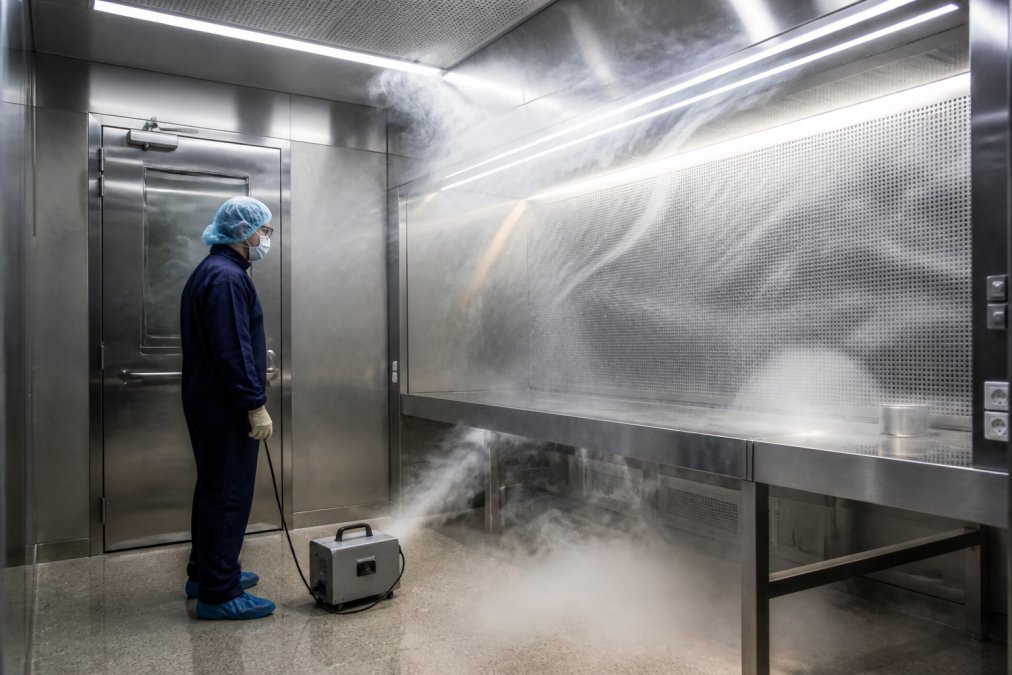
USP 797 airflow pattern testing demonstrates that your cleanroom’s actual airflow matches the design specifications. This testing is performed using a cleanroom fogger to visualize particle movement and measure airflow velocity at multiple points across the room.
Smoke visualization testing uses aerosol particles to show airflow direction and identify any turbulent zones or dead spots where particles might accumulate. The fogger generates a visible cloud that flows with the air currents, allowing technicians to observe whether the airflow pattern matches the design intent. Photographs and video documentation create a permanent record of the validation.
Airflow velocity testing measures actual air speed at the supply diffuser and across the work surface. Most USP 797 buffer rooms require supply velocity of 0.3 to 0.5 meters per second at the work surface, creating laminar flow across the compounding area. Velocity is measured using anemometers positioned at multiple grid points to ensure uniform flow.
Pressure differential testing confirms that the buffer room maintains positive pressure relative to the anteroom and surrounding pharmacy. Manometers or electronic pressure transducers measure the pressure difference across room boundaries. The 2026 standards require documentation that pressure differentials are maintained during actual compounding operations, not just during idle conditions.
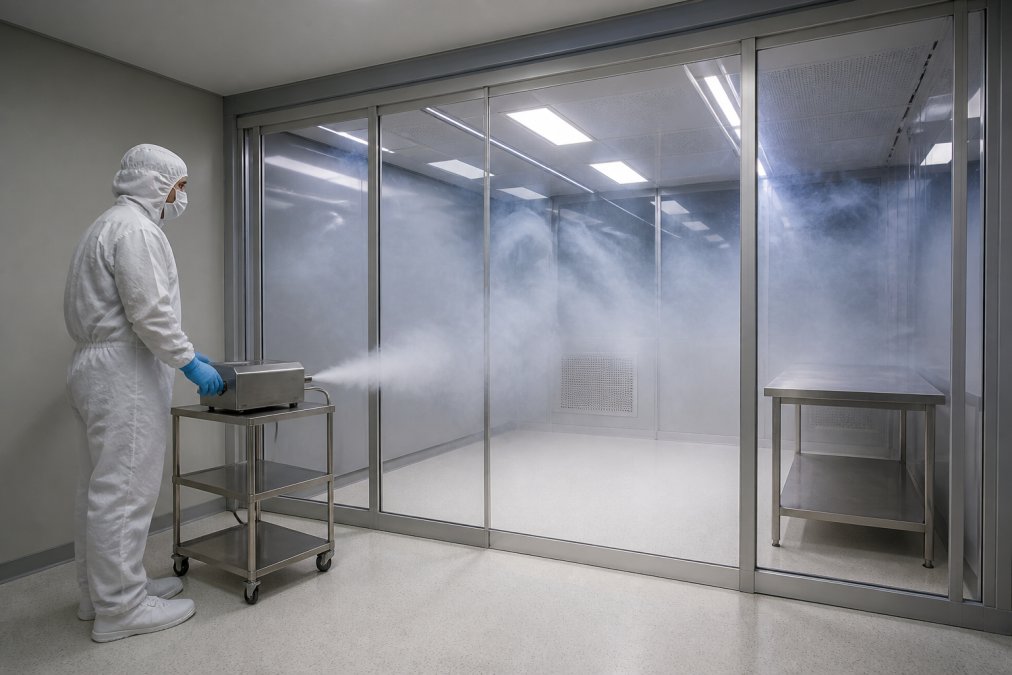
Applied Physics aerosol generators are specifically designed for USP 797 validation. The BAG-4B and BAG-6D models generate consistent, neutral aerosol that visualizes airflow without interfering with compounding operations or contaminating equipment.
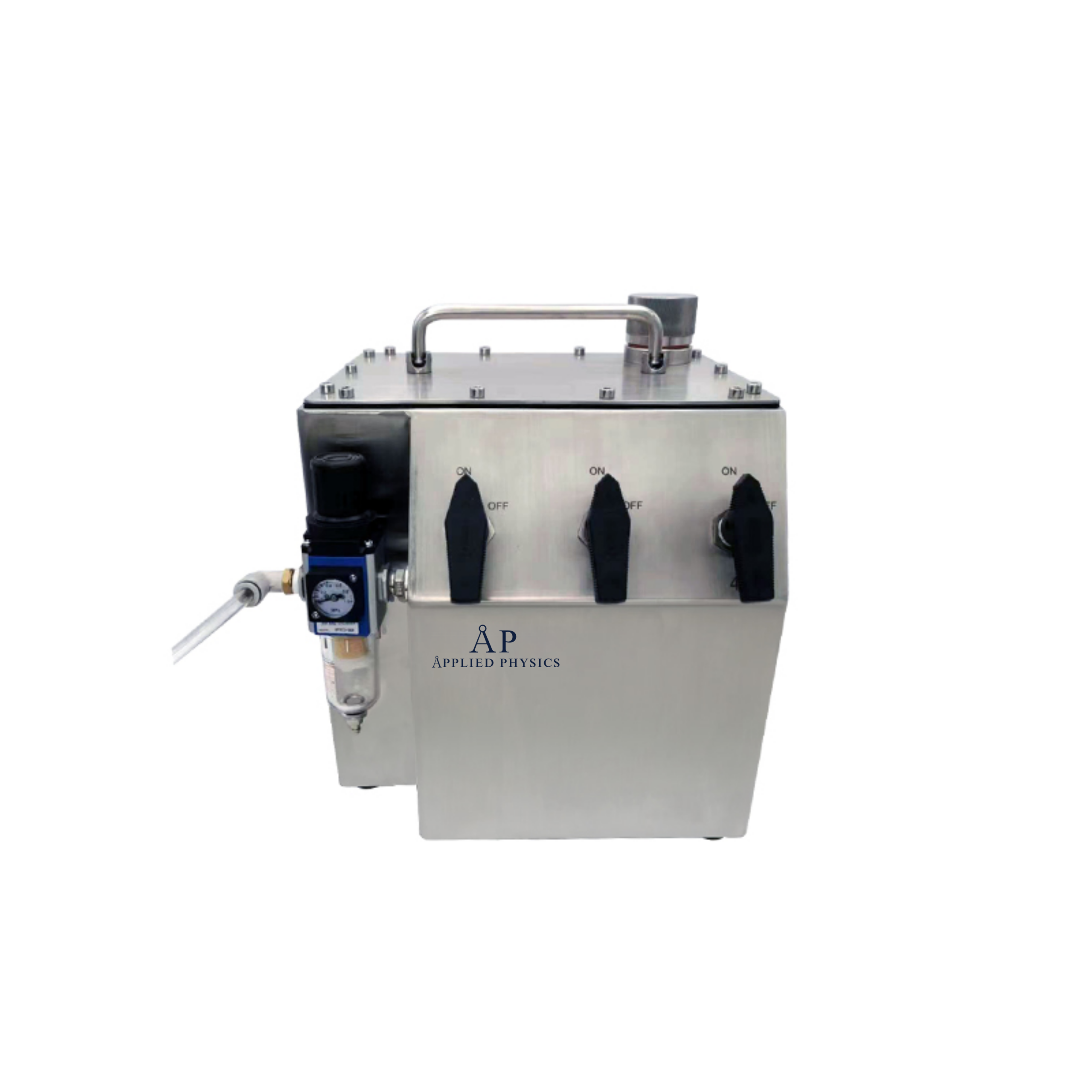
An ultrapure water fogger generates aerosol using deionized or distilled water, making it the standard choice for pharmaceutical cleanroom validation under USP 797. Unlike traditional smoke generators that use mineral oil, propylene glycol, or other residual-leaving agents, water foggers evaporate completely, leaving no deposits on equipment, surfaces, or HEPA filters, a critical requirement for cleanroom validation where any residue could compromise sterility or contaminate compounding surfaces.
Two primary technologies are used for ultrapure water aerosol generation in pharmaceutical cleanrooms:
Ultrasonic Foggers: These devices use high-frequency vibration (typically 110-120 kHz) to break water into fine droplets. A piezoelectric element vibrates at ultrasonic frequency, creating standing waves on the water surface that eject droplets into the air. Ultrasonic foggers are compact, portable, and relatively inexpensive ($500-$2,000), making them attractive for smaller facilities or those with limited validation frequency. However, they have several limitations for USP 797 validation:
Ultrasonic foggers are acceptable for basic airflow visualization but are not ideal for quantitative velocity measurements or detailed airflow pattern documentation.
Cold Aerosol Generators (Condensation Nuclei Generators): These devices generate aerosol by evaporating a liquid (typically ultrapure water or a water-based solution) in a heated chamber, then cooling the vapor to create condensation nuclei. The resulting aerosol has a narrow particle size distribution (typically 0.3-1.0 micrometers), which more accurately represents the particles that environmental monitoring equipment is designed to detect. Cold aerosol generators are the preferred choice for USP 797 validation because:
Cold aerosol generators are more expensive ($3,000-$8,000) and require more technical expertise to operate, but they provide the precision and consistency needed for rigorous 2026 compliance validation.
Fogger selection depends on several factors specific to your facility and compounding operations:
Cleanroom Size and Airflow Characteristics: Larger buffer rooms with higher air change rates require foggers that can generate sufficient aerosol concentration to remain visible throughout the room. A 200 square-foot buffer room with 15 ACPH requires more aerosol output than a 100 square-foot room with the same air change rate. Cold aerosol generators typically produce higher, more consistent output than ultrasonic foggers, making them better suited for larger spaces or higher ACPH rates.
Validation Frequency: Facilities that perform quarterly validation studies (as required by 2026 standards) benefit from the consistency and reliability of cold aerosol generators. If your validation frequency is lower, an ultrasonic fogger may be adequate, but the 2026 requirement for quarterly re-validation makes cold aerosol generators a more practical long-term investment.
Environmental Monitoring Equipment: Your facility’s particle counters and air sampling equipment are calibrated to detect particles within specific size ranges. If your environmental monitoring equipment is optimized for submicron particles (0.3-0.5 micrometers), a cold aerosol generator that produces particles in this size range will provide validation aerosol that more closely matches what your monitoring equipment actually detects. This alignment strengthens your validation documentation and demonstrates to auditors that your validation methodology is scientifically sound.
Personnel Training and Technical Support: Cold aerosol generators require more technical knowledge to operate and maintain. Your facility must have personnel trained in aerosol generation principles, equipment maintenance, and troubleshooting. If your facility lacks this expertise, you may need to contract with a third-party validation service, which affects the total cost of ownership.
Regulatory Inspection History: If your facility has received regulatory findings related to validation procedures or documentation, investing in a cold aerosol generator and comprehensive validation protocols demonstrates a commitment to rigorous compliance. Inspectors recognize that facilities using precision equipment and documented procedures take validation seriously.
Once you have selected a fogger, understanding its operational parameters is essential for consistent, reproducible validation studies.
Water Quality Requirements: Ultrapure water foggers require water with minimal dissolved minerals and contaminants. Specifications typically include:
Distilled water from a laboratory still or deionized water from a point-of-use system typically meets these specifications. Tap water, even if filtered, usually contains too many minerals and will leave residues in the fogger and on cleanroom surfaces. Some facilities use water that has been passed through a 0.2 micrometer filter to remove any particulate matter.
Aerosol Output Characteristics: Cold aerosol generators should produce aerosol with the following characteristics:
Operating Conditions: Fogger performance is affected by ambient conditions:
How you introduce aerosol into the cleanroom directly affects the quality of your validation data.
Supply Air Introduction: For buffer room validation, aerosol is typically introduced at or near the supply air diffuser. This allows the aerosol to be distributed by the HVAC system throughout the room, providing a realistic representation of how particles would move in actual compounding operations. The fogger should be positioned upstream of the HEPA filter (in the ductwork) or at the diffuser itself, depending on your facility design.
Return Air Monitoring: Some validation protocols introduce aerosol at the supply diffuser and measure how quickly it is removed through the return air grilles. This provides quantitative data on air change effectiveness. Particle counters positioned at return air grilles can measure the concentration of aerosol being exhausted, providing a measure of how effectively the room removes contamination.
Anteroom and Transition Zone Validation: For anteroom validation, aerosol may be introduced at the room entrance to verify that airflow prevents backflow into the buffer room. This is particularly important for validating that the anteroom maintains positive pressure and that personnel movement doesn’t disrupt the pressure differential.
Your validation report must document not only the airflow patterns observed but also the performance of the fogger itself. This documentation demonstrates that your validation data is based on properly functioning equipment.
Include in your validation report:
The most rigorous validation programs align their fogger aerosol characteristics with their environmental monitoring equipment. If your facility uses particle counters that are optimized for 0.5 micrometer particles, using a cold aerosol generator that produces particles in this size range demonstrates that your validation aerosol matches what your monitoring equipment actually detects. This alignment strengthens your argument that your validation methodology is scientifically sound and that your cleanroom actually maintains the air quality your monitoring data claims.
Similarly, if your facility uses viable air samplers (impactors or impingers), the particle size distribution of your validation aerosol should be representative of the microbial particles that these samplers are designed to capture. Ultrasonic foggers, which produce larger droplets, may not accurately represent the behavior of smaller microbial particles, whereas cold aerosol generators with submicron particle distribution provide better alignment with your actual contamination control challenge.
Fogger validation protocols establish the documented procedures for using your equipment to validate cleanroom airflow and must be formalized in Standard Operating Procedures (SOPs) before any validation study begins. The 2026 USP 797 standards require that these protocols include specific acceptance criteria, measurement locations, and personnel competency documentation, not just general guidance.
Your validation protocol must document the exact sequence of steps performed during each airflow visualization study. This includes:
Pre-Validation Setup: Verify that the fogger has been maintained according to schedule (see maintenance section below), confirm water quality meets specifications (distilled or deionized water with conductivity <10 µS/cm), and document the date, time, and personnel involved. The protocol must specify the ambient conditions under which validation will occur, most facilities validate during normal operating hours to capture real-world airflow conditions, though some prefer non-operational validation to isolate HVAC performance from personnel movement.
Fog Introduction Points: Document the exact location where fog enters the cleanroom. For buffer rooms, fog is typically introduced at the supply air diffuser to visualize how particles disperse across the work surface. For anteroom validation, fog may be introduced at the room entrance to verify that airflow prevents backflow into the buffer room. The protocol must specify the duration of fog introduction (typically 30 seconds to 2 minutes) and the visual observation period (usually 5-10 minutes to capture complete particle movement).
Measurement Grid and Acceptance Criteria: Establish a grid of measurement points across the buffer room work surface, typically spaced 12 inches apart in both directions. At each point, measure airflow velocity using a calibrated anemometer. The 2026 standards require that velocity measurements fall within 0.3 to 0.5 meters per second for laminar airflow buffer rooms, with no more than ±20% variation between grid points. Document each measurement on a grid diagram that becomes part of your validation record. If any measurement falls outside the acceptable range, the protocol must specify whether corrective action is required before compounding can resume.
Pressure Differential Verification: Measure and document pressure differentials at room boundaries using calibrated electronic manometers or differential pressure transducers. Buffer room positive pressure relative to anteroom should be 0.02 to 0.05 inches of water column. Anteroom positive pressure relative to surrounding pharmacy should be 0.01 to 0.03 inches of water column. The protocol must specify measurement timing (typically at the beginning, middle, and end of the validation study) to confirm that pressure differentials are maintained throughout the study period.
Photographic and Video Documentation: The protocol must specify that photographs be taken showing fog patterns at multiple time points during the study. Images should include directional arrows or labels indicating expected airflow direction and any areas where fog movement deviates from design intent. Video recording of at least 2-3 minutes of fog movement provides a dynamic record that static photographs cannot capture. All images and video must be dated, labeled with room identification, and stored according to your document retention policy.
Deviation Documentation: If fog patterns show unexpected behavior, such as turbulent zones, dead spots where fog accumulates, or reverse airflow, the protocol must require immediate documentation and investigation. Common causes include partially blocked return air grilles, supply diffuser misalignment, or HEPA filter degradation. The protocol should specify which deviations require immediate corrective action (and halt compounding operations) versus which allow continued operation pending investigation.
The 2026 standards explicitly require that fogger maintenance be documented and that equipment be verified to perform within specifications before each validation study. This is a critical audit point, inspectors will ask to see your maintenance logs, and missing or incomplete records raise immediate compliance concerns.
Pre-Use Verification (Before Each Validation Study): Before using your fogger, verify that it has been maintained according to schedule and that it generates consistent aerosol. This involves:
If the fogger fails any pre-use check, it must not be used for validation until the issue is corrected and documented.
Monthly Maintenance (or After Every 10 Validation Studies): Perform internal cleaning to prevent mineral accumulation:
Quarterly Calibration Verification: Every three months, verify that your fogger generates aerosol within the manufacturer’s specifications. This typically involves:
If particle size distribution or aerosol concentration drifts outside acceptable ranges, the equipment should be serviced by the manufacturer or a qualified technician before further use.
Annual Professional Service: Once per year, send your fogger to the manufacturer or a qualified service center for complete inspection and calibration. This service typically includes:
Maintenance records from professional service become part of your regulatory file and demonstrate to inspectors that you are maintaining equipment according to manufacturer recommendations.
The 2026 standards require that all maintenance activities be documented in a maintenance log that is readily available for regulatory inspection. This log should include:
Maintenance logs should be maintained in a binder or electronic system that is organized chronologically and easily accessible. During regulatory inspections, inspectors will review these logs to verify that your equipment is maintained properly and that validation studies are based on properly functioning equipment. A fogger that hasn’t been serviced in six months or shows no maintenance documentation raises immediate red flags.
Your validation protocol should be integrated with your overall validation schedule to ensure that fogger maintenance is completed before validation studies are performed. A typical annual schedule might look like:
This schedule ensures that your equipment is always in proper working condition and that your validation data is based on verified, properly maintained equipment, exactly what 2026 auditors will expect to see.
Documentation of airflow visualization studies creates the permanent record of your cleanroom’s compliance with USP 797 standards. This documentation must include photographs or video showing the fog patterns, velocity measurements at multiple points, pressure differential readings, and a summary of findings.
Each validation study must include a cover sheet that documents the date, time, personnel involved, and any deviations or observations. Photographs should clearly show the fog patterns and include labels indicating the direction of airflow and any areas of concern. Video provides a dynamic record of how fog moves through the space over time.
Velocity data should be recorded on a grid showing measurement locations and results. Pressure differentials should be documented at each boundary between rooms. Any deviations from expected values should be noted and investigated. If corrective actions were taken, documentation of those actions and follow-up validation studies should be included.
The 2026 standards require that all validation documentation be maintained for at least five years and be readily available for regulatory inspection. Many facilities maintain these records in both paper and electronic formats to ensure accessibility and prevent loss due to damage or equipment failure.
Applied Physics helps facilities establish documentation systems that meet regulatory requirements while remaining practical for routine operations. Our equipment generates validation data that integrates easily into your compliance records, and our technical guidance helps you understand what documentation inspectors will expect.
Safety protocols for fogging agents address the hazards associated with aerosol generation and exposure. Even though ultrapure water foggers are non-toxic, the process of generating fine aerosol particles creates inhalation exposure that must be controlled.
Personnel performing validation studies must wear appropriate respiratory protection if the aerosol concentration becomes high during testing. This typically means N95 or equivalent masks during active fogging, with break periods to prevent excessive inhalation exposure. The facility must establish exposure limits and monitoring procedures to ensure personnel safety.
The area around the cleanroom must be evacuated or sealed during validation studies to prevent uncontrolled aerosol release into the surrounding pharmacy. This requires coordination with other pharmacy operations and clear communication about validation schedules. Signage should indicate that validation is in progress and restrict access to the area.
Equipment used during validation studies must be cleaned and decontaminated after use to prevent cross-contamination of other areas. Reusable components like anemometer probes and pressure transducers should be cleaned with appropriate disinfectants and allowed to dry before storage.
The 2026 standards emphasize that safety is not separate from compliance, it’s integral to the validation process. Facilities that cut corners on safety protocols during validation create liability exposure and demonstrate poor understanding of contamination control principles to regulatory inspectors.
The 2026 USP 797 updates introduce several changes that directly impact cleanroom fogger requirements and validation procedures. The most significant change is the requirement that all facilities complete initial validation of airflow patterns within 90 days of the effective date, with quarterly re-validation thereafter.
The 2026 updates also introduce new environmental monitoring thresholds that are more stringent than previous requirements. Facilities must now maintain detailed trending data showing that their environmental monitoring results remain within established limits. This increased scrutiny means that validation studies must be more frequent and more comprehensive than in previous years.
Personnel training requirements have expanded under the 2026 standards. All personnel performing validation studies must complete documented training specific to USP 797 requirements and must demonstrate competency before performing independent validation work. This training must be refreshed annually.
The implementation timeline requires that facilities achieve full compliance by January 1, 2027. Facilities that were already operating under previous USP 797 standards have until that date to update their validation procedures and documentation. Facilities that are newly establishing cleanrooms must comply with the 2026 standards from the beginning.
Applied Physics has developed implementation guidance to help facilities understand the 2026 requirements and plan their validation programs. Our equipment and services are specifically designed to support the more rigorous validation procedures required under the updated standards.
The transition to 2026 USP 797 requirements represents a significant investment in cleanroom validation and environmental monitoring. Facilities that establish strong validation programs now will find compliance straightforward and manageable. Those that delay face the risk of failed inspections and potential regulatory action.
Applied Physics has supported pharmaceutical facilities through every major USP 797 update since 1992. Our cleanroom foggers, aerosol generators, and particle metrology equipment are trusted by compounding pharmacies across the country to validate their airflow patterns and maintain contamination control. Contact our team to discuss how we can help your facility achieve 2026 compliance with confidence and efficiency.
| Requirement | 2026 Standard | Validation Frequency | Documentation |
|---|---|---|---|
| ACPH (Buffer Room) | Minimum 15 air changes per hour | Quarterly | Velocity measurements at grid points |
| ISO Air Classification | Class 5 (buffer) / Class 7 (anteroom) | Quarterly | Particle count data and trends |
| Pressure Differential | 0.02-0.05 inches water column | Quarterly | Manometer readings documented |
| Viable Air Sampling | Category-dependent limits | Monthly during operations | CFU/m³ results and trends |
| Surface Sampling | Facility-specific action levels | Monthly | Contact plate and swab results |
| Airflow Visualization | Documented smoke patterns | Quarterly | Photographs and velocity data |
| Environmental Monitoring | Baseline + ongoing | Continuous | 12-month trending data required |
| Personnel Training | USP 797-specific competency | Annual refresh | Training records and assessments |
Only ultrapure water or pharmaceutical-grade aerosol generators are safe for USP 797 cleanrooms. These must produce neutral, non-reactive particles that don't contaminate sterile compounding environments. Cold-type aerosol generators like the BAG-4B and BAG-6D use Laskin nozzles to generate particles without chemical residue. The fogger must be validated for your specific ISO classification and HEPA filtration system before use in production areas.
Initial airflow pattern testing is mandatory before the cleanroom becomes operational. Re-certification must occur annually or whenever facility modifications are made, including HEPA filter replacement, equipment relocation, or structural changes. The 2026 USP 797 updates emphasize more frequent validation for high-risk compounding areas. Documentation of each test, including date, personnel, equipment used, and results, is required for regulatory audits.
Complete airflow visualization documentation must include the test date, time, personnel conducting the study, equipment specifications (fogger model, particle size, concentration), environmental conditions (temperature, humidity, pressure differentials), visual observations of flow patterns, photographic or video evidence, and a summary of any identified deficiencies. All records must be retained for at least three years and be readily available during FDA or state board inspections. This documentation proves your facility maintains proper ISO air classification and contamination control.
Yes, airflow visualization using appropriate foggers is a critical component of USP 797 compliance. It's the only reliable method to confirm that your buffer room and anteroom maintain proper directional airflow, pressure differentials, and particle control. While some facilities attempt alternative validation methods, visual airflow confirmation with neutral aerosol particles is the regulatory standard. The 2026 updates strengthen this requirement, making validated fogger equipment essential for all licensed compounding pharmacies.
Ultrapure water foggers produce particle clouds from deionized water without chemical additives, eliminating contamination risk in sterile compounding environments. They generate neutral particles that don't interact with HEPA filters or leave residue on surfaces. Standard foggers may contain surfactants or oils that compromise cleanroom integrity. For USP 797 facilities, ultrapure water foggers provide reliable, repeatable airflow visualization while maintaining the aseptic environment required for Category 1, 2, and 3 CSPs.
USP 797 requires positive pressure differentials between zones to prevent contamination ingress. The buffer room must maintain 0.02 to 0.05 inches of water column positive pressure relative to the anteroom, and the anteroom must maintain positive pressure relative to the general pharmacy area. These differentials are confirmed during airflow pattern testing using fogger visualization and pressure monitoring equipment. Proper pressure maintenance prevents uncontrolled airflow and microbial contamination, which is verified through ongoing environmental monitoring.
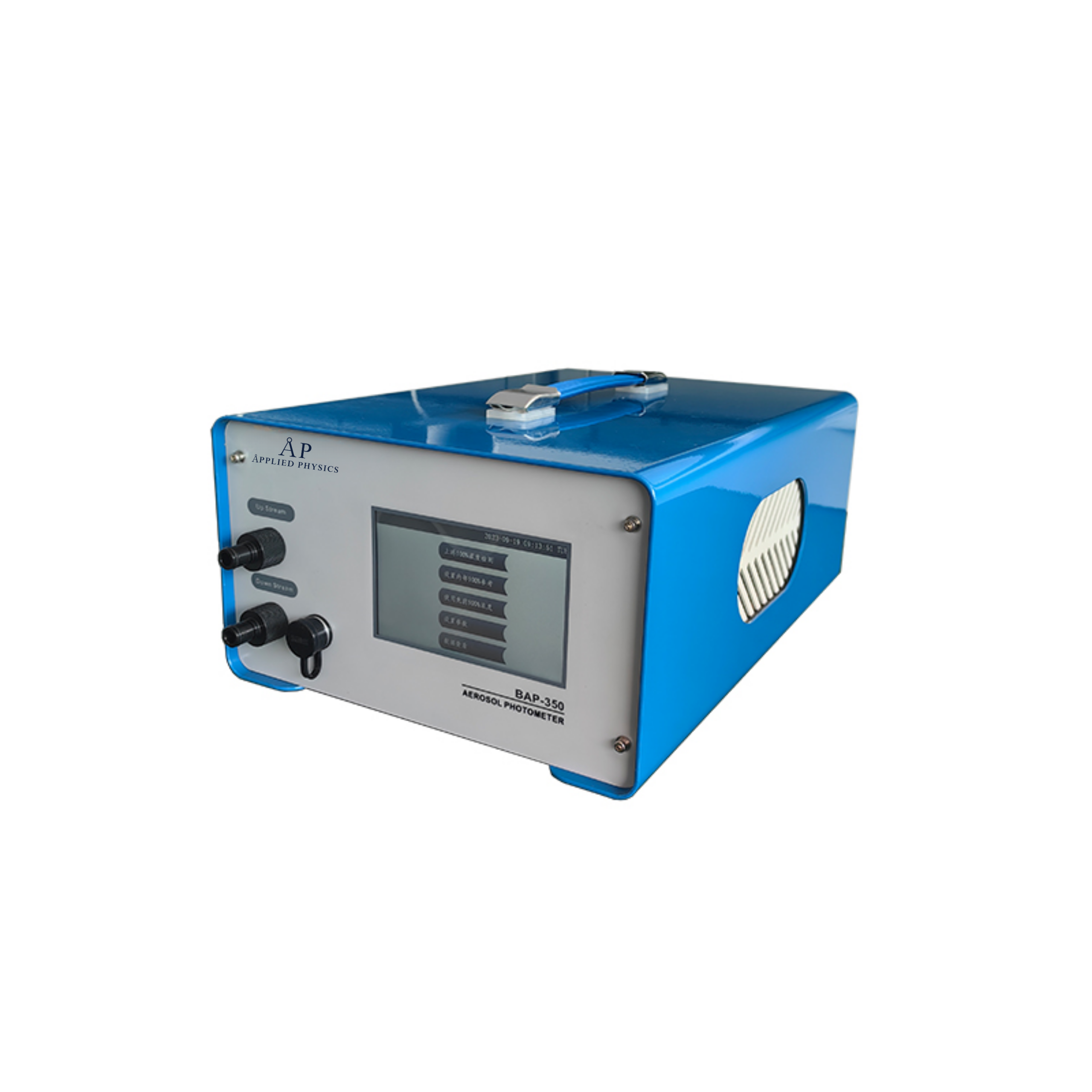
Fogger validation involves confirming particle size distribution, output concentration, neutrality, and reproducibility before use in compliance studies. Equipment like the Aerosol Photometer BAP-350 measures particle counts to verify consistent aerosol generation. Calibration logs must document equipment setup, baseline readings, and post-test verification. Validation studies are conducted by qualified personnel following documented standard operating procedures. Results are compared against baseline data to confirm the fogger produces the expected particle cloud characteristics required for accurate airflow visualization.
Identified deficiencies must be documented and corrected before the cleanroom resumes compounding operations. Common issues include inadequate ACPH, improper pressure differentials, or blocked airflow paths. Corrections might involve adjusting HVAC settings, repositioning equipment, or replacing HEPA filters. After remediation, the entire facility must be re-tested and re-certified. During this downtime, no sterile compounding can occur. This is why preventive maintenance and regular monitoring of environmental conditions are critical to avoid unplanned shutdowns.
This article was written using GrandRanker

Enter your details below to save your shopping cart for later. And, who knows, maybe we will even send you a sweet discount code :)
Allow notifications to get real-time updates about your shopping cart and who knows, you may even receive a sweet discount code 😊