
Maintaining a consistent supply of Type I ultrapure water requires absolute control over every component within the purification loop.
In ELGA LabWater systems, the ultraviolet (UV) assembly is central to organic photo-oxidation (operating at $185\text{ nm}$ to lower Total Organic Carbon) and microbial control (operating at $254\text{ nm}$).
While high-level troubleshooting often focuses on lamp performance or power supply metrics, the mechanical integrity of the entire module depends on a single component: the elastomeric O-ring that seals the synthetic quartz sleeve.
Understanding the mechanical sealing logic, material stress points, and service steps ensures your system avoids structural leaks and contamination spikes.
The Mechanics of UV Chamber Isolation
The UV radiation assembly inside an ELGA unit features a dual-chamber isolation layout. High-purity water flows through a polished stainless steel or specialized polymer chamber housing a synthetic quartz sleeve. The UV lamp sits completely dry inside this sleeve, protected from direct contact with water.
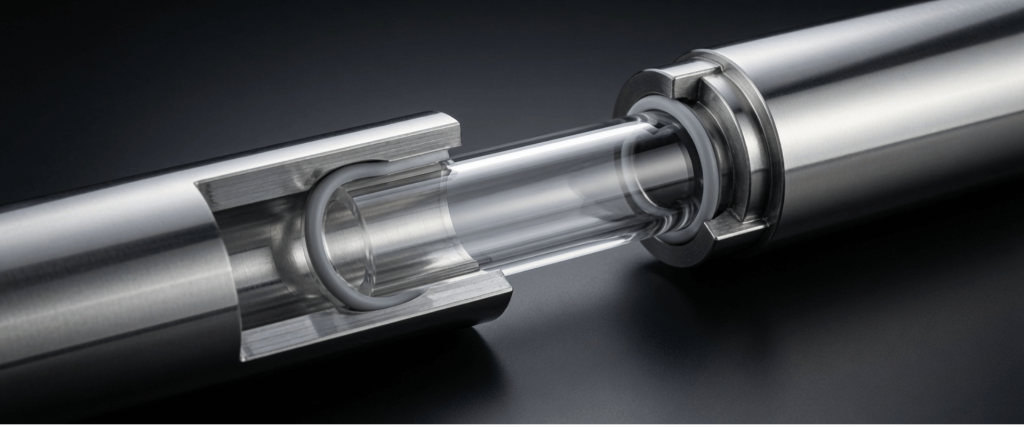
The quartz sleeve O-ring serves as the primary barrier preventing high-pressure water from bypassing the chamber boundary and flooding the sleeve interior. If the seal fails, water immediately enters the dry environment, causing several problems.
- Thermal Shock: Cold or ambient inlet water hitting the heated surface of an active UV lamp can crack the lamp envelope.
- Electrical Hazards: Direct water contact shorts out the multi-pin lamp power connectors and damages the ballast infrastructure.
- Optical Interference: Even a minor micro-leak forms a thin layer of moisture or mineral scaling inside the quartz sleeve, which scatters light and significantly reduces the UV dose reaching the water loop.
Standardized Replacement Protocol for ELGA Systems
To protect the replacement O-ring and ensure an airtight seal, follow this exact sequence during your annual UV lamp service.
1) Isolate and Depressurize
Power down the ELGA system. Turn off the raw feedwater supply valve. Open the downstream dispense valve to release any remaining hydraulic pressure inside the internal manifold.
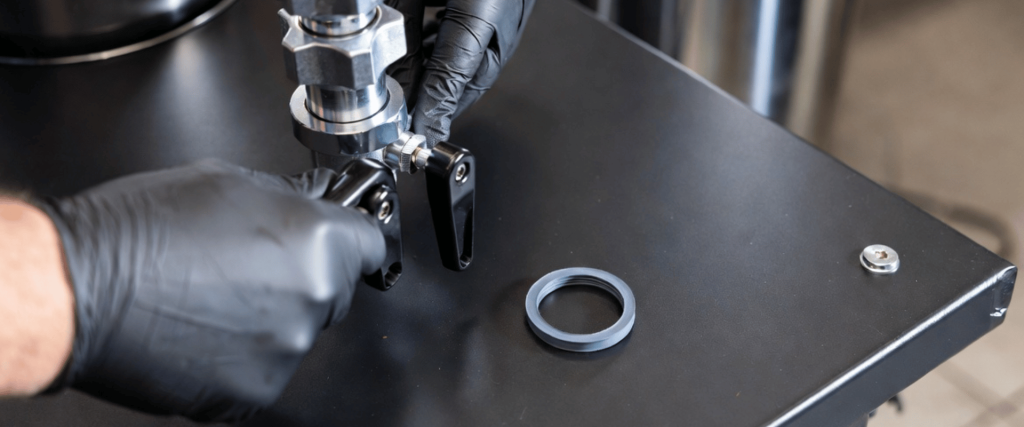
2) Access the Lamp Assembly
Remove the unit’s protective service panel. Disconnect the electrical wiring plug from the top lamp pins. Be careful not to pull on the strain-relief wires.
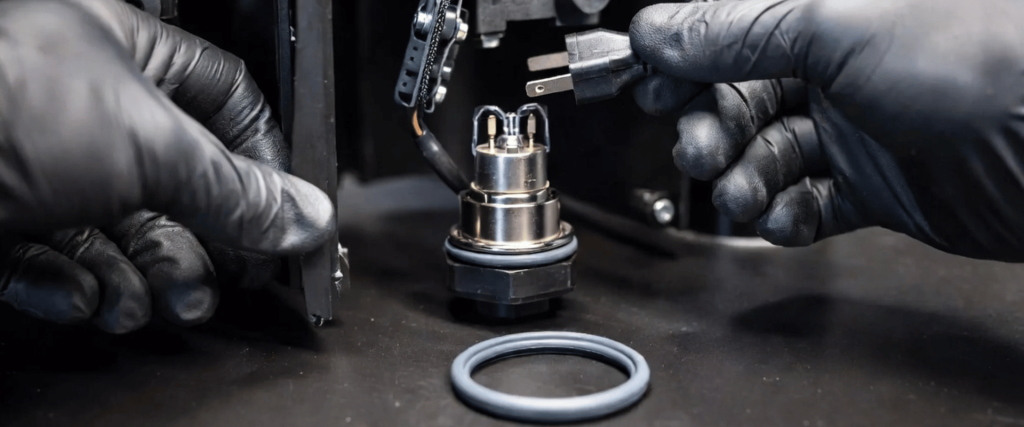
3) Extract the Sleeve and Seal
Unscrew the compression sleeve bolt. Carefully slide out the quartz sleeve and remove the old O-rings.
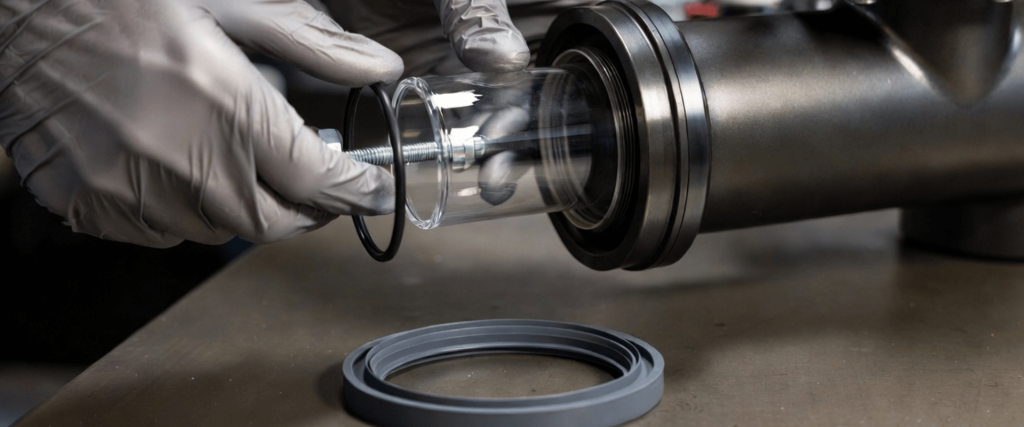
Always wear clean, powder-free nitrile gloves during this step. Skin oils left on quartz sleeves or UV lamps can create hot spots, which may permanently reduce optical transmission.
4) Inspect and Clean
Inspect the quartz tube for cloudy scale or mineral deposits. Clean the outer surface using a lint-free cloth soaked in a mild citric acid solution or denatured alcohol. After cleaning, rinse thoroughly with purified water.
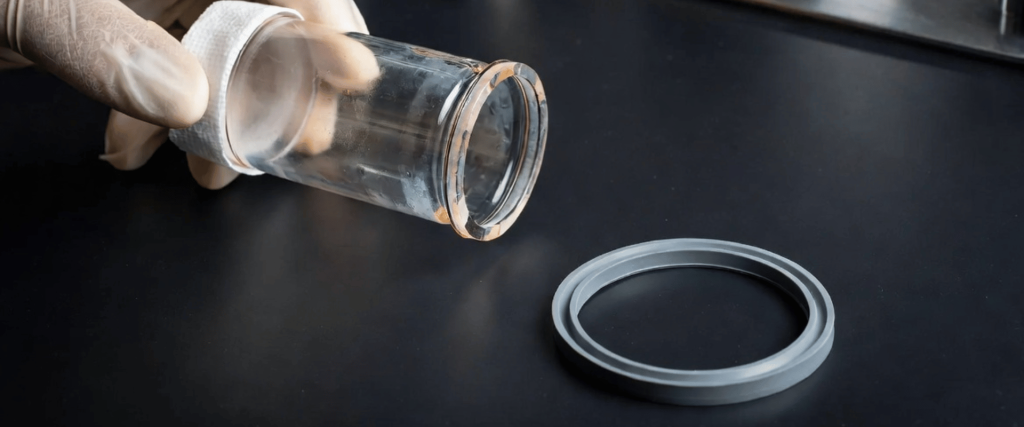
5) Seat the New O-Ring
Fit the new replacement O-ring onto the open end of the quartz sleeve. Make sure it sits flat and is not twisted.
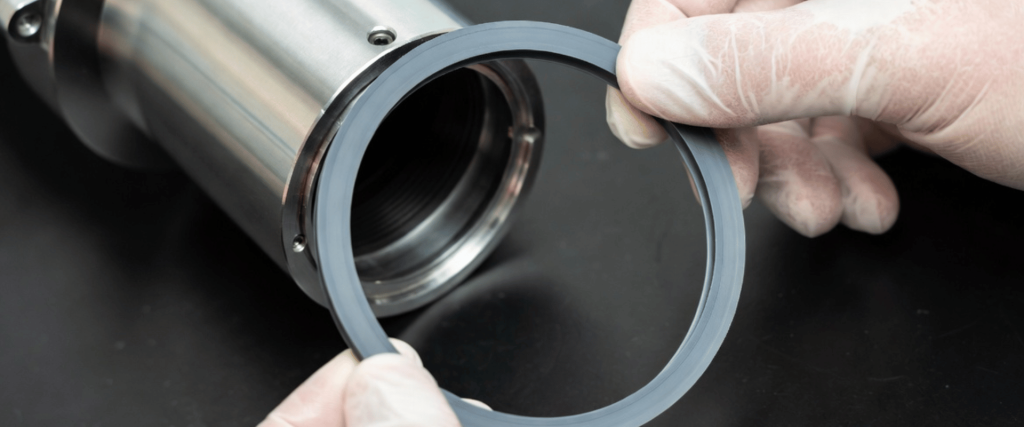
Slide the sleeve back into the chamber housing. Tighten the retention bolt so the seal compresses evenly, then reinstall the UV lamp.
Elastomer Degradation Factors: Why O-Rings Fail
O-rings inside UV sterilizers undergo severe environmental stresses that do not occur in standard plumbing joints. Understanding these variables helps maintenance teams anticipate wear cycles rather than waiting for structural failures.
Ultraviolet Light Exposure
Continuous exposure to 185 nm and 254 nm radiation causes photolytic cleavage in low-grade rubber compounds. This reaction breaks down polymer chains, leading to surface cracking, loss of elasticity, and chalking.
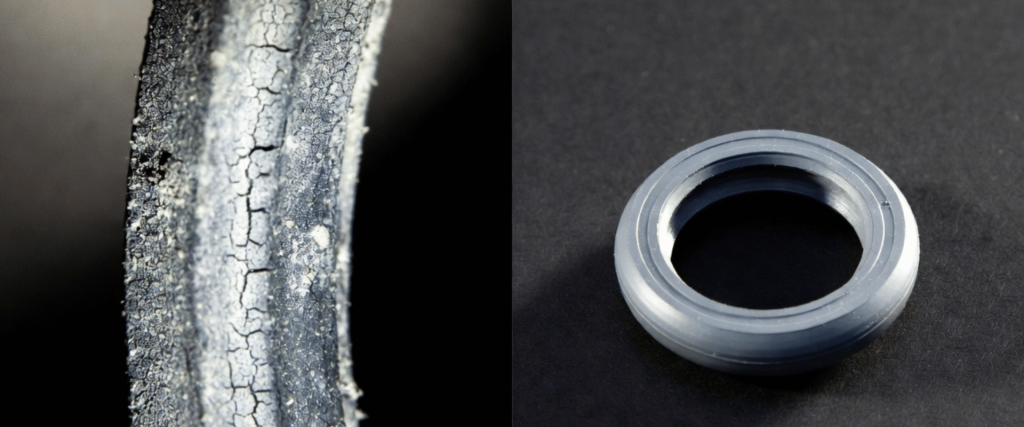
Replacement seals must utilize high-purity elastomers like EPDM or Viton (FKM) that are formulated to resist high-energy UV exposure.
Thermal Cycling
UV lamps generate significant heat during operation. The O-ring sits right at the boundary between the lamp-heated air cavity and the cooler water stream.
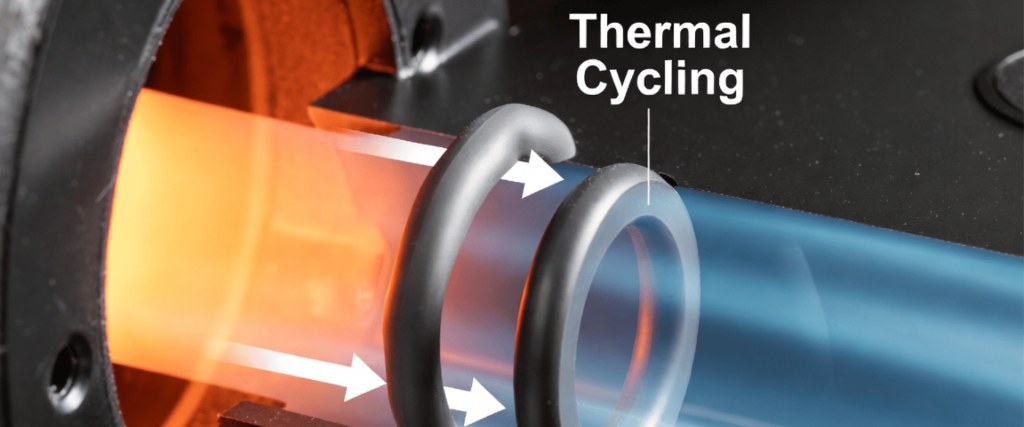
This continuous thermal expansion and contraction causes compression set, where the elastomer loses its round profile and can no longer exert enough outward force against the sealing surfaces.
Technical Specifications & System Compatibility
The table below details the operating limits and compatibility requirements for standard ELGA UV quartz sleeve sealing setups.
| Parameter / Metric | Specification Detail | Operational Impact |
|---|---|---|
| Compatible Equipment Families | PURELAB Chorus 1, 2, 3; PURELAB Option-Q; MEDICA; CENTRA | Guarantees proper seating within the proprietary ELGA UV module geometries. |
| Material Base Options | High-Purity EPDM / Fluoroelastomer Viton | Prevents premature material cracking and elastomer breakdown from continuous UV radiation. |
| Primary Wavelength Exposure | for TOC reduction / for germicidal control | Controls the chemical degradation rate of the seal material over time. |
| Maintenance Frequency | Every 12 months, concurrently with UV lamp changes | Minimizes the risk of unexpected seal failure and system downtime. |
| Lubrication Constraint | Strict restrictions on silicone oils/lubricants unless explicitly certified | Prevents organic compounds from leaching into Type I water loops. |
Preventing Chemical Leaching and Contamination
In type I analytical applications, organic contamination is measured in parts per billion (ppb). Lower-grade replacement seals can leach plasticizers and processing oils directly into the water stream when exposed to the advanced oxidation processes occurring inside the UV chamber.
When installing a fresh ELGA-compatible O-ring, avoid using generic plumbing greases. If a lubricant is needed to seat the quartz sleeve smoothly through the seal ring, use only a microscopic trace of high-purity, laboratory-grade fluorinated lubricant.
Applying too much material creates an accumulation zone where bacteria can shelter, leading to persistent biofilm issues within the purification loop.
Conclusion
The quartz sleeve O-ring is a small but critical defense line inside ELGA water purification systems.
By choosing high-purity, UV-resistant elastomer replacements and installing them at every lamp change interval, you protect expensive electrical ballasts, prevent sleeve clouding, and maintain the strict water quality standards required for sensitive laboratory applications.
Frequently Asked Questions (FAQs)
1. How do I know if my quartz sleeve O-ring is failing before a visible leak develops?
Look for trace moisture inside the quartz sleeve during routine inspections, or watch for a sudden drop in UV intensity readings on your digital interface screen. Condensation or mineral tracking on the inner wall of the quartz indicates a micro-leak across the seal face.
2. Can I reuse the existing O-ring if I am only pulling out the sleeve to clean off scale?
Re-using compressed elastomer seals is not recommended. Once compressed inside the retention assembly for months, the O-ring takes on a permanent compression set. Re-seating a deformed ring increases the chance of fluid bypass under normal operating pressures.
3. Why does the O-ring material matter for organic carbon (TOC) testing?
Standard rubber compounds break down under strong 185 nm UV light, releasing trace carbon compounds directly into the water stream. Specialized, cleanroom-grade elastomers stay stable under high radiation loads, ensuring your Type I water loops remain safely below 5 ppb TOC limits.