
Last Updated: August 3, 2026
Contamination at the nanometer scale represents one of the most persistent and costly challenges in semiconductor fabrication and pharmaceutical manufacturing. A single particle measuring 10 nanometers or smaller can compromise product yield, trigger regulatory audits, or force expensive equipment downtime. Applied Physics has spent over three decades helping facilities detect and control these invisible contaminants, and the stakes have only grown higher as process nodes shrink and purity requirements tighten.
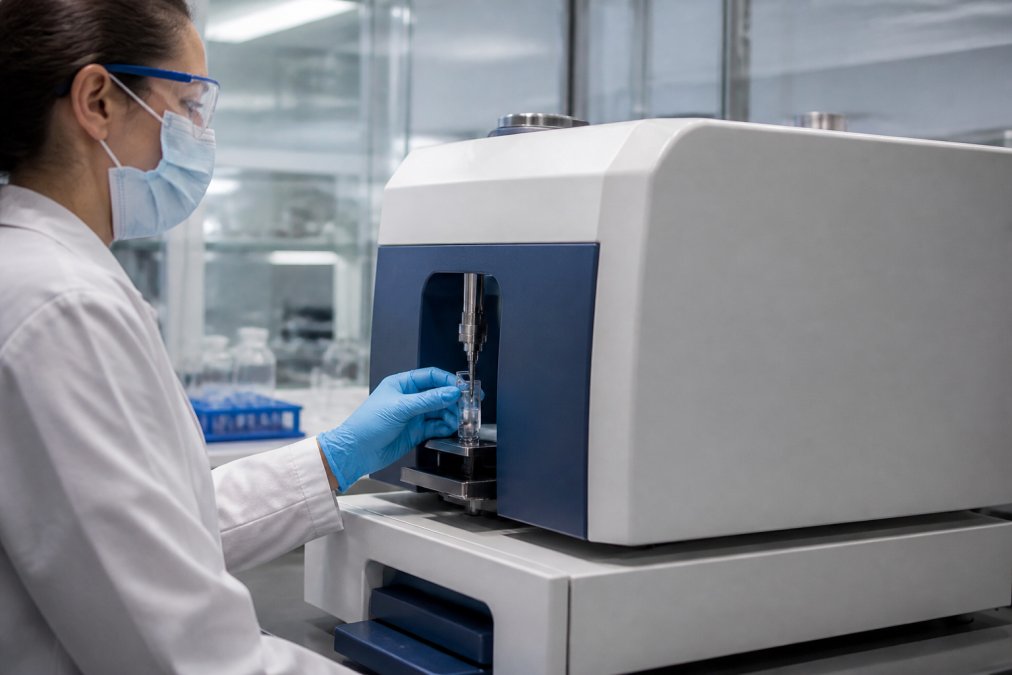
Professional illustration showing Laboratory for particle monitoring solutions
The difference between passing and failing a GMP audit often comes down to whether your facility can prove, with real-time data, that your cleanroom environment and process tools remain within specification. This guide covers the monitoring technologies that make that proof possible, from laboratory-grade analyzers to portable spot-check instruments, and examines how different monitoring approaches work, what each one actually measures, and which solution fits your specific contamination control challenge.
The landscape of nanometer scale particle monitoring solutions includes instruments spanning multiple detection ranges, sampling methods, and deployment models. Some systems focus on laboratory precision for research and calibration work. Others prioritize real-time continuous monitoring in production environments. A few are designed for portable spot checks and field validation.
The choice depends on your detection threshold, sampling location, budget, and whether you need continuous or episodic data. A facility requiring sub-10nm detection for semiconductor process tool validation needs a different instrument than a pharmacy conducting quarterly cleanroom certification.
| Solution Type | Detection Range | Best For | Sampling Method | Real-Time Capability |
|---|---|---|---|---|
| Automatic Laser Nanoparticle Analyzer | 0.5-100 nm | Sub-10nm calibration, research | Liquid or aerosol | Yes, with data logging |
| Aerosol Photometer | 0.3-10 µm | HEPA validation, cleanroom monitoring | Aerosol only | Yes, continuous |
| Scanning Mobility Particle Sizer | 0.8-1094 nm | Size distribution analysis, nanoparticle research | Aerosol only | Yes, real-time |
| Handheld Particle Counters | 0.3-25 µm | Spot checks, field validation | Aerosol only | Yes, portable |
| Naneos Partector | Ultrafine particles | Personal exposure, LDSA measurement | Aerosol only | Yes, compact |
| Palas Promo 3000 | 0.2-100 µm | Process monitoring, multi-location sampling | Aerosol or liquid | Yes, multi-channel |
Selecting the right nanometer scale particle monitoring solution requires understanding what each instrument actually measures and where it fits into a contamination control strategy. Detection limit determines whether an instrument can see the particles your process generates or your regulations require you to monitor. Measurement range matters because a tool that detects 0.3 µm particles cannot tell you whether you have a 5nm problem in your semiconductor fab.
Automatic Laser Nanoparticle Size Analyzer
Sampling methodology, whether the system measures aerosols, liquids, or both, defines where and how you can deploy it. Real-time versus episodic monitoring changes how quickly you can respond to contamination events. We also weighted practical considerations: setup time, consumable costs, calibration requirements, and data integration capabilities. An instrument with perfect specifications becomes a liability if it requires three days of setup or consumes expensive calibration aerosols monthly.
Facilities operating under GMP or ISO standards need monitoring solutions that generate auditable data trails and integrate with existing environmental monitoring systems.
The Automatic Laser Nanoparticle Size Analyzer from Applied Physics delivers the detection sensitivity required for true nanometer scale particle monitoring in research and calibration environments. This instrument measures particles from 0.5 to 100 nanometers with sufficient resolution to support semiconductor process validation and nanoparticle characterization work.
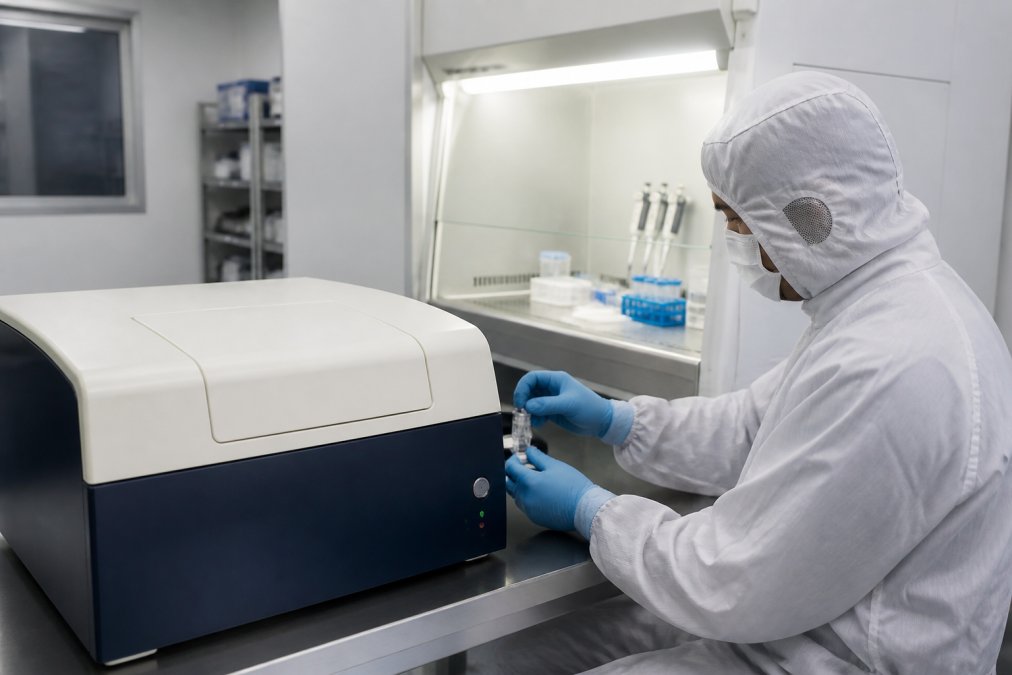
Laboratory technician operating an automatic laser nanoparticle analyzer in a cleanroom environment, with the instrument’s display visible and sample preparation area in background
(/sub-10nm-particle-detection-methods-guide/)]
The analyzer operates via laser light scattering, detecting individual particles as they pass through the measurement chamber. This approach provides real-time particle count data across size channels, enabling researchers and process engineers to characterize nanoparticle emissions from manufacturing equipment or validate calibration wafer standards. The system accepts both liquid and aerosol samples and operates from DC power without requiring 220V infrastructure, a practical advantage for labs with limited electrical capacity.
Pro Tip For semiconductor facilities validating 5nm or 3nm node processes, this analyzer becomes essential infrastructure. It’s the tool that proves your process tool doesn’t shed particles at the scale that matters for yield.
Applied Physics has engineered this system specifically for environments where sub-10nm detection isn’t optional, it’s a specification requirement. For facilities conducting nanoparticle research or supporting advanced semiconductor nodes, this represents the foundation of a credible monitoring program.
The Aerosol Photometer BAP-350 from Applied Physics solves continuous monitoring of aerosol concentration in cleanrooms, operating rooms, and HEPA-filtered environments. This instrument measures particles from 0.3 to 10 micrometers and provides real-time readouts suitable for facility certification and ongoing compliance documentation.
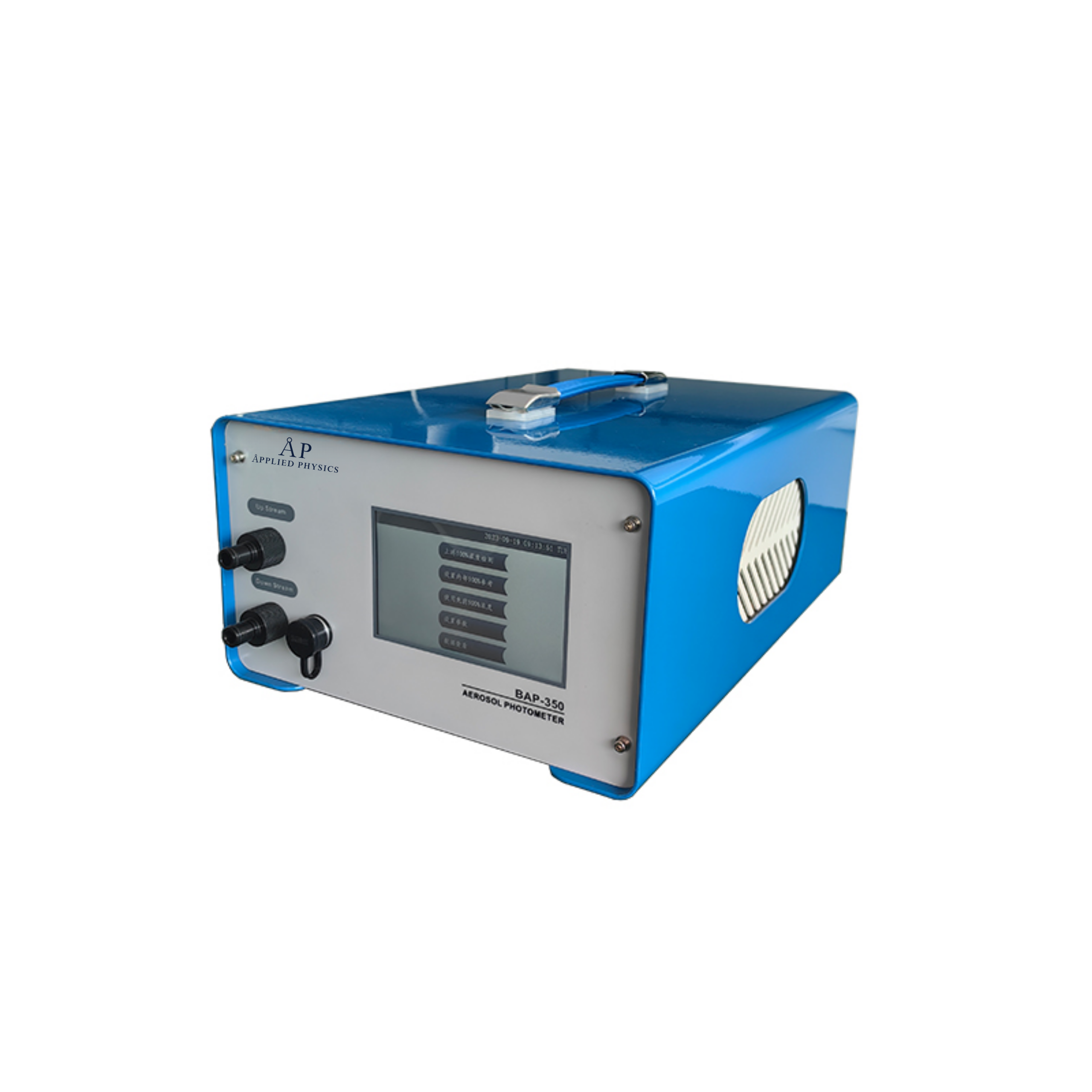
Aerosol Photometer BAP-350
The BAP-350 operates via light scattering through a fixed optical path, counting aerosol particles as air flows through the measurement chamber. Unlike discrete particle counters that require manual sampling, this photometer delivers continuous data streams, making it ideal for validating HEPA filter performance during installation or detecting contamination events in real time. The touch display provides immediate feedback on particle concentration, and the instrument stores historical data for audit trails.
Pharmaceutical compounding pharmacies and medical device manufacturers rely on instruments like the BAP-350 to demonstrate USP 797 and USP 800 compliance. The photometer’s ability to monitor multiple locations sequentially, by connecting external sampling probes, extends its utility across larger facilities without requiring separate instruments at each validation point.
Watch Out HEPA filter validation without real-time monitoring creates blind spots. A filter can fail gradually, and spot-check sampling every 6 months misses the failure window. Continuous photometry catches degradation before it becomes a compliance violation.
The BAP-350 integrates into existing cleanroom environmental monitoring systems and generates the data GMP auditors expect to see.
Monitoring solutions require calibration, and calibration requires particles. The Aerosol Generator BAG-4B (cold type) and BAG-6D (cold type) from Applied Physics generate test aerosols for validating monitoring equipment and conducting HEPA filter leak detection studies.
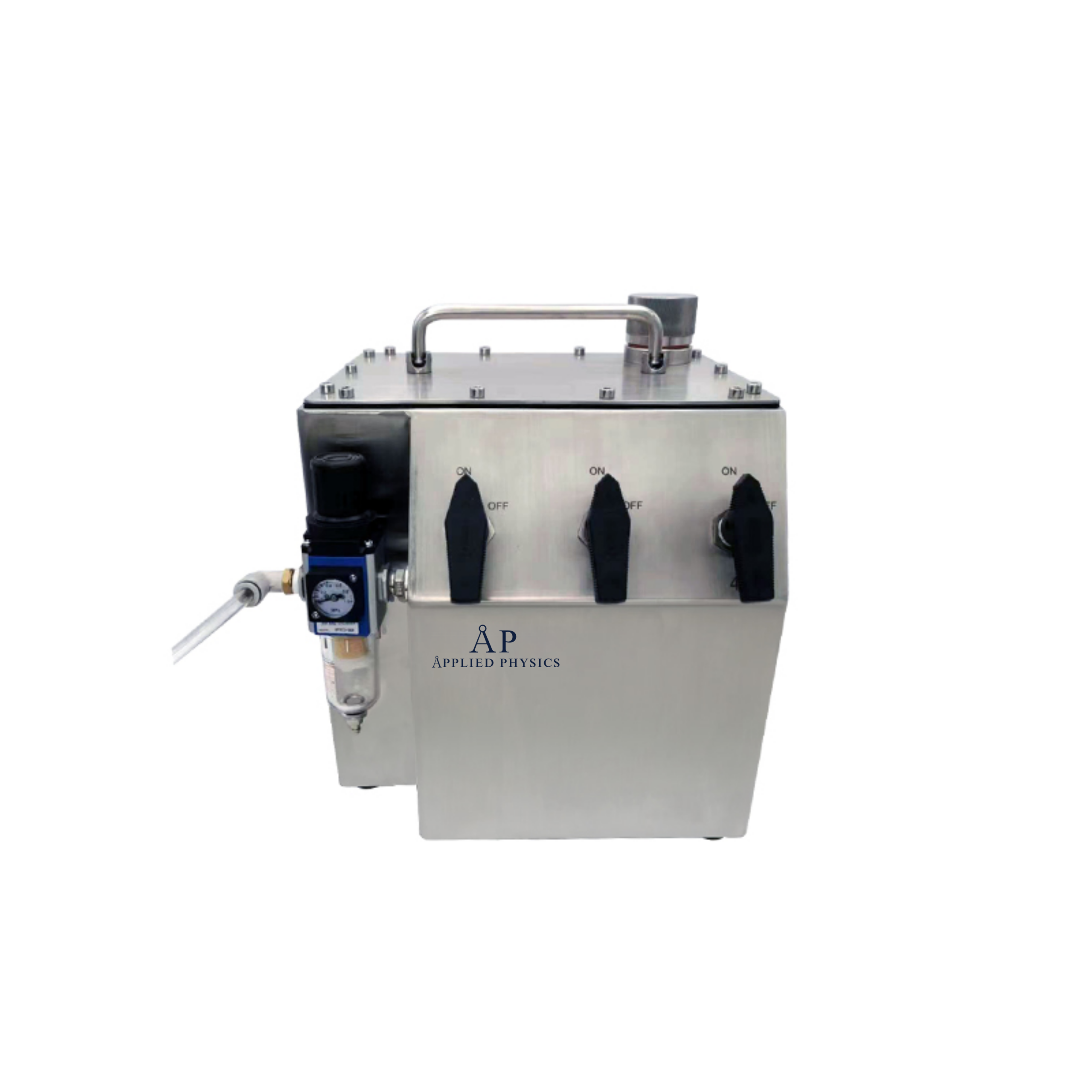
Aerosol Generator-Cold Type BAG-4B
The BAG-4B uses a Laskin nozzle to generate uniform aerosol particles from liquid suspensions, producing consistent particle sizes suitable for photometer and counter calibration. The BAG-6D extends this capability to pharmaceutical industry applications, specifically filter leak detection in cleanrooms, laminar flow tables, and biosafety cabinets. The cold-type design eliminates heat-related particle aggregation, ensuring test aerosols maintain their intended size distribution throughout the validation study.
Without reliable aerosol generation, your monitoring equipment becomes unverified. Calibration drifts, measurements become suspect, and auditors flag the data as unverifiable.
Key Takeaway Calibration aerosol generation is the unglamorous foundation of credible monitoring. Get this wrong, and your expensive monitoring equipment produces meaningless numbers.
The Palas Promo 3000 represents a different approach to nanometer scale particle monitoring solutions: scattered-light aerosol spectrometry with multiple measurement channels. This system measures particle size distribution from 0.2 micrometers to 100 micrometers across up to 128 size channels, providing granular visibility into aerosol composition.
Promo® 3000 – Palas
The Promo 3000 connects to external welas sensors via optical fiber technology, enabling quasi-simultaneous measurements at two sampling locations. This multi-channel capability makes it valuable for process monitoring applications where you need to understand whether contamination originates from a specific tool, process step, or external source. The concentration measurement range spans from less than 1 particle per cubic centimeter up to 10^6 particles per cubic centimeter, covering scenarios from ultra-clean research environments to process validation studies with intentional particle injection.
Palas equipment is widely used in semiconductor and pharmaceutical manufacturing for process measurement applications. The Promo 3000’s ability to measure both aerosol and liquid particle suspensions extends its utility beyond traditional air monitoring into ultrapure water validation and process fluid characterization.
The GRIMM Scanning Mobility Particle Sizer (SMPS) system with Vienna-type Differential Mobility Analyzers (DMAs) delivers exceptional resolution for nanometer scale particle monitoring in research and advanced manufacturing environments. This system measures particle size distribution from 0.8 nanometers to 1094 nanometers using a Faraday Cup Electrometer (FCE) detector.

Curaterrae website
The Vienna-type DMA design minimizes particle diffusional losses during measurement, a critical advantage when characterizing ultrafine particles where diffusion to chamber walls represents a significant measurement error source. The system operates with air or inert gases and requires no consumables, reducing operational costs compared to instruments requiring calibration aerosols or replacement components. Fully automated software handles measurement sequences and includes comprehensive self-test routines to verify system reliability.
GRIMM SMPS systems are the reference standard for aerosol research and nanoparticle counter calibration. The instrument’s ability to generate size-resolved particle number distributions enables detailed characterization impossible with simpler photometers or counters. For facilities where nanoparticle measurement accuracy directly impacts product yield or research credibility, the system pays for itself through reduced rework and eliminated guesswork about what particles your process actually generates.
Get Started Today →
Not every contamination control challenge requires laboratory-grade equipment or permanent installation. Handheld particle counters provide portable nanometer scale particle monitoring solutions for cleanroom spot checks, HVAC filter validation, and field troubleshooting.
The Met One 804 is a 4-channel handheld particle counter measuring particles from 0.3 to 10 micrometers. Fast sampling and simple one-touch operation make it accessible to facilities staff without specialized training. The Kanomax 3888 and 3889 offer expanded channel counts, providing more granular size distribution data. The 3889 displays simultaneous measurements at 0.3, 0.5, 1.0, 3.0, 5.0, and 10.0 micrometers, supporting detailed cleanroom classification studies.
The critical limitation of handheld counters is their detection floor: 0.3 micrometers. For true nanometer scale particle monitoring at sub-0.1 micrometer sizes, these instruments cannot see the particles you’re trying to control. They excel at validating HEPA filters, confirming cleanroom classification, and detecting gross contamination events.
The Lighthouse ApexZ3 is a premium portable counter measuring particles from 0.3 to 25 micrometers with a 1 CFM (28.3 LPM) flow rate. The large touchscreen interface and guided classification process make it particularly useful for pharmaceutical and semiconductor facilities conducting ISO classification studies. The built-in printer generates immediate reports, eliminating the need for post-test data processing.
The Naneos Partector occupies a specialized niche: personal exposure monitoring for occupational health and safety applications. This extremely compact nanoparticle detector measures Lung Deposited Surface Area (LDSA), a health-relevant metric that captures the potential respiratory impact of ultrafine particle exposure.
The Partector’s unique value lies in its focus on health outcomes rather than raw particle counts. LDSA weighting accounts for particle size, shape, and composition differences, providing occupational health professionals with exposure metrics that correlate with actual biological impact. For facilities concerned with nanoparticle emissions from manufacturing equipment, carbon nanotube production, or metal oxide processing, the Partector provides real-time personal exposure data.
The limitation of the Partector is its narrower application scope. It’s not a general-purpose nanometer scale particle monitoring solution. For semiconductor fabs, pharmaceutical cleanrooms, or general process validation work, other instruments provide more relevant data.
Monitoring equipment requires regular calibration and maintenance to remain trustworthy. Most aerosol photometers and particle counters require annual calibration against reference standards. Calibration intervals depend on instrument usage frequency and regulatory requirements; GMP facilities typically perform annual calibration.
Consumable replacement varies by instrument type. Handheld counters require occasional battery replacement and periodic sensor cleaning. Photometers may need optical window replacement if dust accumulation reduces signal clarity. Understanding these consumable costs during the purchasing decision prevents budget surprises later.
Documentation of calibration and maintenance activities becomes your audit trail. When regulators ask “How do you know your monitoring data is accurate?”, the answer is “Here’s our calibration history.”
United States regulatory frameworks define monitoring requirements for specific industries. The FDA’s guidance on aseptic processing requires environmental monitoring including particle counting in pharmaceutical manufacturing. USP 797 and USP 800 specify particle count limits for compounding pharmacies. SEMI standards govern particle monitoring in semiconductor manufacturing. ISO 14644 defines cleanroom classification based on particle concentration measurements.
These standards don’t mandate specific instruments, they mandate that you measure and document particle concentrations. Understanding your applicable regulations prevents over-specification and under-specification. Many facilities discover during audits that their monitoring solution cannot detect the particle sizes regulators care about, forcing expensive mid-cycle equipment changes.
Modern nanometer scale particle monitoring solutions increasingly integrate with facility management systems, environmental monitoring networks, and process control platforms. Real-time data enables automated responses: alerting operators when particle concentrations exceed thresholds, triggering HEPA filter replacement protocols, or halting production runs until contamination sources are identified.
Instruments with network connectivity and data logging capabilities generate the continuous audit trails that GMP facilities require. Rather than relying on technicians to manually record spot-check measurements, networked monitoring systems create permanent digital records that auditors can review. Facilities implementing true real-time monitoring discover contamination events that spot-check sampling would miss entirely.
The cost of nanometer scale particle monitoring solutions spans a wide range. Handheld counters start around $2,150 for basic models and reach $5,195 for premium portable systems. Laboratory-grade analyzers and spectrometers typically range from $20,000 to $150,000 depending on detection capabilities and measurement range.
The cost-benefit calculation depends on what contamination costs you. A semiconductor fab losing 5% of wafer starts to a contamination problem that monitoring could identify spends millions annually on yield loss. A pharmaceutical compounding pharmacy facing a compliance violation pays regulatory penalties and potential shutdown costs. For most facilities, the cost of appropriate monitoring equipment represents a fraction of the cost of a single contamination incident.
The real question isn’t whether monitoring is affordable, it’s whether you can afford not to monitor. Facilities operating without adequate nanometer scale particle monitoring solutions operate blind, making process decisions based on incomplete information and discovering problems only after they’ve caused expensive damage.
Contamination at the nanometer scale represents an invisible threat to product quality, regulatory compliance, and operational efficiency. Applied Physics has provided precision monitoring solutions for over 30 years, helping facilities detect and control particles at the scale that actually impacts their processes. Whether you need sub-10nm detection for advanced semiconductor nodes, real-time HEPA validation for pharmaceutical cleanrooms, or portable spot-check capability for field troubleshooting, Applied Physics offers monitoring solutions engineered for critical manufacturing environments. Contact Applied Physics to discuss your specific contamination control requirements and discover how real-time particle monitoring transforms process control from reactive troubleshooting into proactive risk management.
True nanometer scale monitoring depends on the instrument. Laboratory systems like the Applied Physics Automatic Laser Nanoparticle Size Analyzer detect particles below 10 nm. GRIMM Scanning Mobility Particle Sizers measure from 0.8 to 1094 nm using Vienna-type Differential Mobility Analyzers. Handheld portable counters typically detect down to 0.3 micrometers, which is 300 nm, too large for true nanometer monitoring. For sub-10nm work, you need dedicated laboratory instruments with appropriate calibration standards.
Modern real-time nanoparticle detection tools connect via Ethernet, USB, or wireless protocols to facility management systems. Systems like the Palas Promo 3000 can store data locally for weeks and integrate into company networks for automated data transfer. Applied Physics equipment supports sensor integration into process tool monitoring. IoT-enabled systems allow continuous streaming to SCADA platforms, enabling alerts when particle concentration exceeds process limits. Integration requires network infrastructure planning and data validation protocols aligned with your existing fab architecture.
USP 797 requires environmental monitoring of viable and non-viable particles in compounding areas. Best practices include establishing baseline particle counts before and after HEPA filter certification, conducting monthly spot checks with calibrated particle counters, and documenting all results. For cleanroom validation, use aerosol generators (like Applied Physics BAG-4B or BAG-6D) to challenge HEPA filters and verify airflow patterns. Maintain calibration records for all instruments. Develop alert thresholds below USP limits, and establish procedures for responding when counts exceed thresholds. Re-validate after any maintenance or environmental changes.
Current systems may miss yield-impacting particles in the ultrafine range (below 100 nm). Semiconductor nodes at 5 nm and below require detection of sub-10nm particles that conventional handheld counters cannot see. Pharma cleanrooms validated only at 0.3 micrometers may have undetected contamination affecting sterility. Nanometer scale monitoring reveals actual contamination sources, enabling targeted corrective actions rather than blanket environmental controls. Applied Physics calibration wafer standards and aerosol generators provide traceability to ISO standards, ensuring validation audits pass regulatory scrutiny.
Handheld portable counters (Met One 804, Kanomax 3888) start around $2,150 to $2,600 for single-unit purchase. Laboratory spectrometers and mobility particle sizers (Palas Promo 3000, GRIMM systems) are quote-based, typically ranging $15,000 to $50,000+ depending on configuration. Applied Physics calibration wafer standards range by size (100 mm to 300 mm diameter). The investment difference reflects detection capability: portables offer field mobility for spot checks; lab systems provide particle size distribution, concentration data, and traceable calibration for compliance documentation. Smaller pharma operations may justify portables for routine checks, while semiconductor fabs require lab-grade systems for process control.

Enter your details below to save your shopping cart for later. And, who knows, maybe we will even send you a sweet discount code :)
Allow notifications to get real-time updates about your shopping cart and who knows, you may even receive a sweet discount code 😊