
In Surface Mount Technology (SMT), even a sub-millimeter placement error can ruin an entire printed circuit board (PCB).
Manual assembly relies heavily on human eyesight and steady hands, which naturally decline with fatigue.
Fully automatic chip mounters (pick-and-place machines) resolve this by integrating optical inspection, data verification, and mechanical precision directly into the assembly workflow.
The Step-by-Step Process of Preventing Production Defects
Automatic chip mounters eliminate errors by performing dynamic checks at every stage of the component-handling cycle.
1) Pre-Pick Verification (Prevents Wrong Parts)
Before the machine head even moves, smart feeder systems read data matrix barcodes or RFID tags on the component reels.
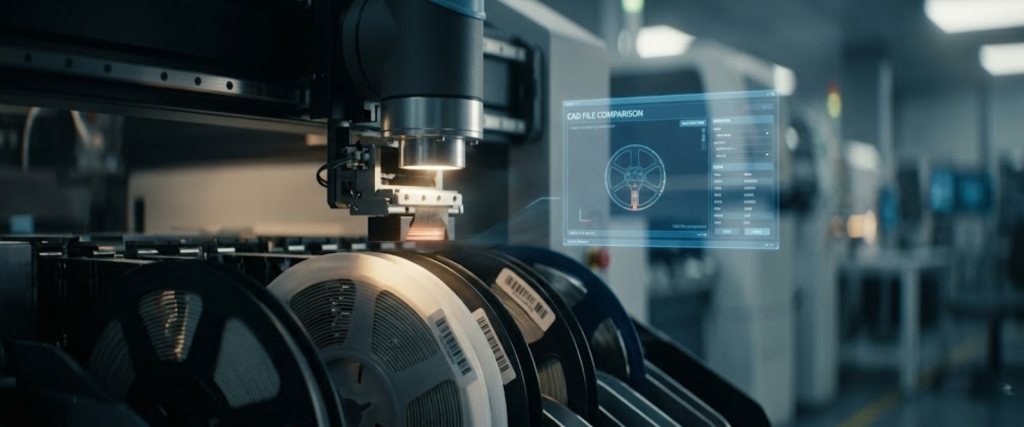
The machine cross-references this data with the active Gerber/CAD file. If an operator accidentally loads the wrong components onto the feeder bank, the line locks immediately, avoiding wrong-part placement defects.
2) Intelligent Vacuum Sensing (Prevents Missing Components)
During the pickup phase, the mounter uses specialized vacuum nozzles to lift microchips from their carrier tapes. Built-in digital pressure sensors instantly measure the vacuum seal level.
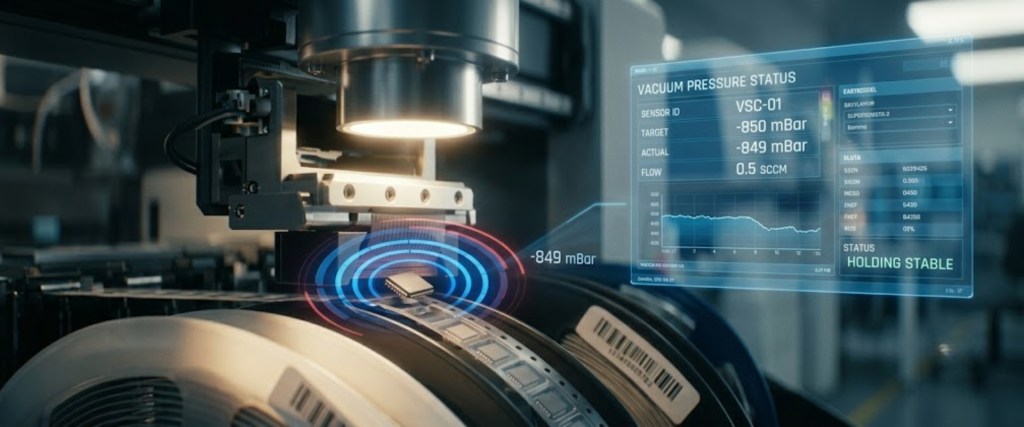
If a nozzle fails to lift a component or drops it mid-transit, the system detects the pressure variance, rejects the error, and schedules an immediate re-pick without stopping the entire line.
3) Flight Optical Alignment (Prevents Misalignment & Rotation Errors)
As the placement head travels toward the PCB, high-speed upward-looking cameras scan the component from underneath. The software instantly analyzes the component’s exact physical outline, detecting bent pins, shifts, or incorrect orientation.
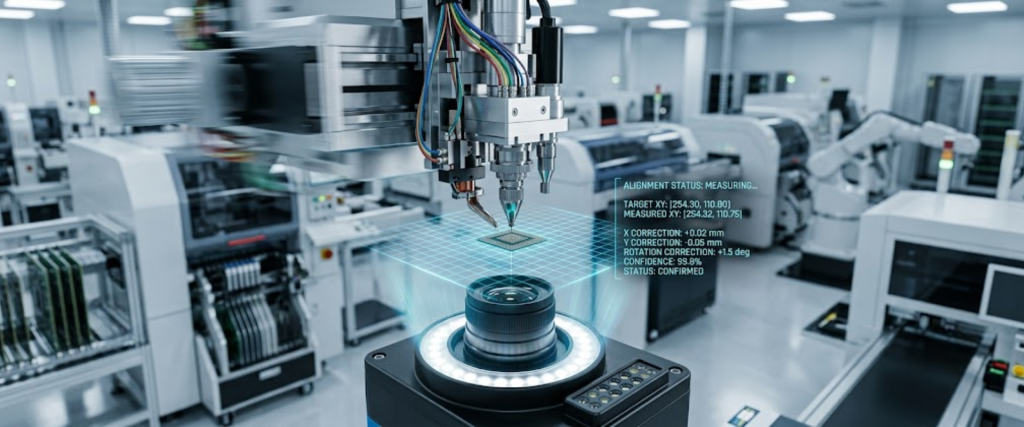
The system calculates the positional offset in milliseconds and adjusts the rotational angle ($\theta$) and coordinates ($X/Y$) just before contact with the board.
4) Fiducial Referencing (Prevents Board Positioning Shifting)
PCBs can warp slightly or sit imperfectly inside transport conveyors. To fix this, automatic mounters use top-down vision cameras to locate fiducial marks (global target points printed on the PCB surface).
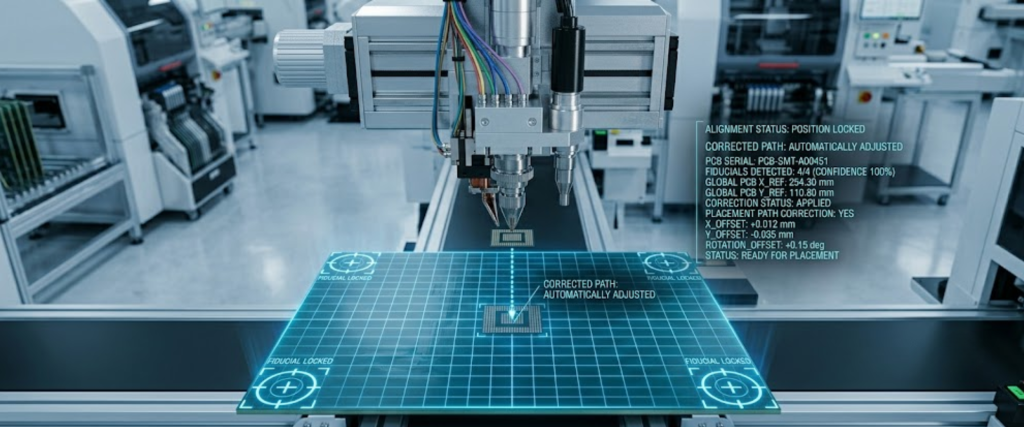
By locking onto these targets, the machine maps the exact layout of the physical board, compensating for any stretch or warp before placing sensitive chips.
Technical Comparison: Error Prevention Breakdown
The table below outlines how automated systems systematically counter traditional assembly failures.
| Assembly Line Error | Root Cause (Manual/Semi-Auto) | How Automatic Mounters Correct It |
|---|---|---|
| Tombstoning & Skewing | Uneven component placement on solder pads. | Dynamic optical alignment aligns pins precisely to the paste layout. |
| Component Cracking | Excess downward pressure during manual seating. | Programmable Z-axis force sensors apply exact component placement pressure. |
| Missing Parts | Human oversight during fast shifts. | Real-time vacuum pressure check verifies component presence on every stroke. |
| Wrong Component Value | Mixed-up reels or trays during setup. | Barcode/RFID validation locks the machine if specifications do not match. |
Maintaining High-Yield Efficiency
By handling verification inside the machine cycle, automated chip mounters keep defect rates down to mere parts-per-million (PPM).
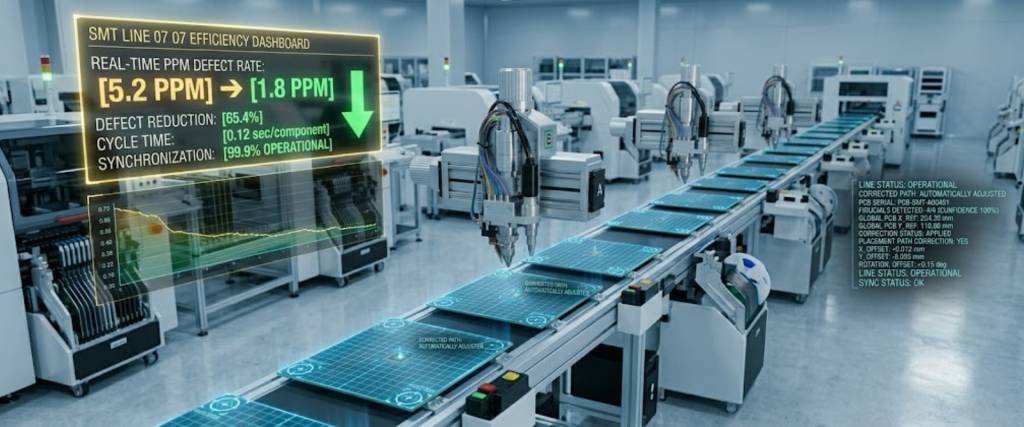
Catching deviations before components touch the solder paste removes the need for manual rework, saving raw materials and ensuring reliable electrical connections.
Conclusion
Transitioning to fully automatic chip mounters changes PCB assembly from a high-risk manual task into a highly controlled, predictable process.
By identifying errors in real time before components ever touch the solder paste, these machines protect your production yields, eliminate costly manual rework, and ensure every board meets strict operational standards.
Frequently Asked Questions (FAQs)
1. What is the main cause of component misalignment in manual assembly?
Human fatigue and limited eyesight are the primary causes. As shifts progress, manual operators struggle to perfectly center micro-components on tiny solder pads, leading to shifting or skewing defects.
2. How does an automatic mounter know if a component is missing?
The machine utilizes built-in vacuum pressure sensors inside the pickup nozzles. If a nozzle drops a component or fails to lift it from the feeder tape, the sensor instantly detects a change in air pressure and triggers a re-pick.
3. Can fully automatic chip mounters work with warped PCBs?
Yes. The mounter uses top-down vision systems to scan target points called fiducial marks on the PCB surface. The software uses these marks to map out the exact physical layout of the board, automatically adjusting for slight warping or stretching.
4. What is tombstoning, and how do automated machines prevent it?
Tombstoning happens when a component lifts vertically off one pad during soldering. Automatic mounters prevent this by using optical alignment cameras to ensure both pins touch the solder paste with perfectly equal placement and pressure.
5. Do real-time optical checks slow down the production line?
No. Modern pick-and-place machines perform alignment on-the-fly. High-speed cameras take photos and calculate coordinate corrections in milliseconds while the placement head is traveling toward the board, maintaining maximum speed.