
Maintaining an ISO-compliant sterile environment requires strict operational discipline.
Even in facilities equipped with high-efficiency particulate air (HEPA) filtration systems, human error remains the leading cause of contamination.
Cleanroom foggers are utilized to visualize airflow patterns, revealing exactly how specific operator actions introduce and trap airborne particles in critical workspaces.
Staff Mistakes That Cause Contamination
1) Rapid or Erratic Physical Movements
Moving quickly or making sudden gestures creates turbulent air eddies.
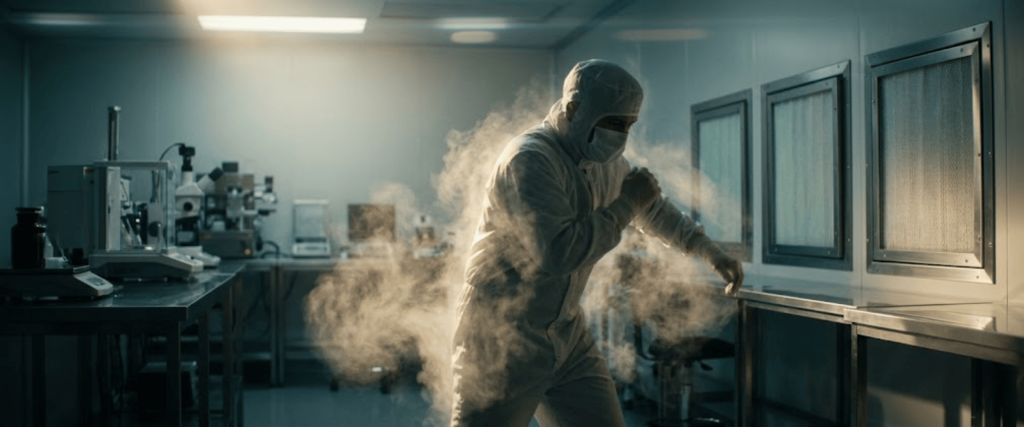
This turbulence lifts heavier particulates from the floor or off unsterilized equipment surfaces and carries them into the clean workspace, breaking the protective barrier of uniform air currents.
2) Blocking Critical Laminar Airflow Pathways
Staff frequently position their bodies, clipboards, or raw materials directly between the clean air supply vents and the sterile working surface.
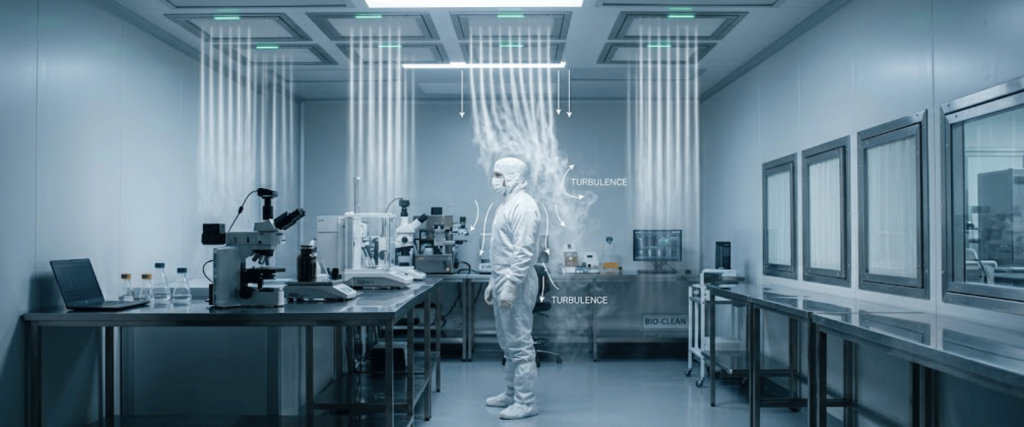
This obstruction cuts off the continuous wash of HEPA-filtered air, creating stagnant zones where airborne microbes can settle.
3) Improper Gowning Sequence and Surface Contact
Exposing skin during garment changes or touching the exterior of sterile gowns transfers skin flakes and oils onto the clothing.
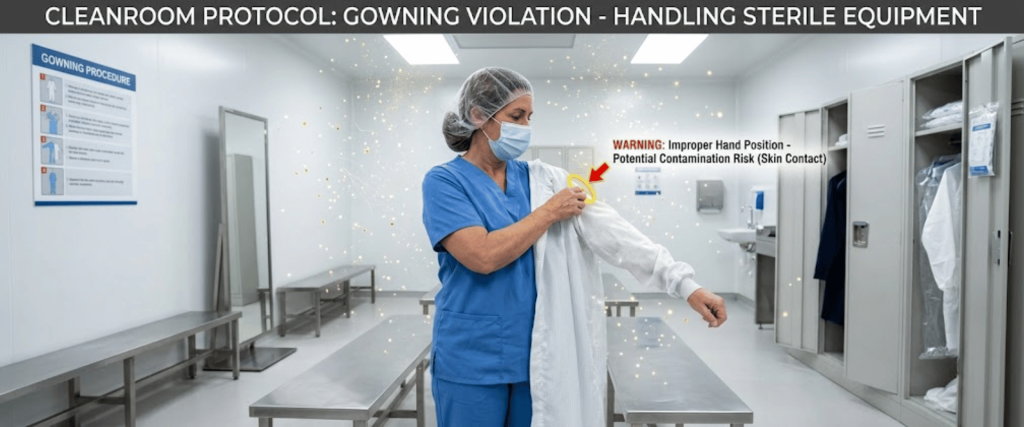
Once inside the room, staff who adjust their face masks, touch safety goggles, or lean against walls transfer the particles they collect onto clean surfaces.
4) Skipping Routine Airflow Smoke Studies
Failing to track structural air movements during actual working conditions leaves quality control teams blind to microscopic blind spots.
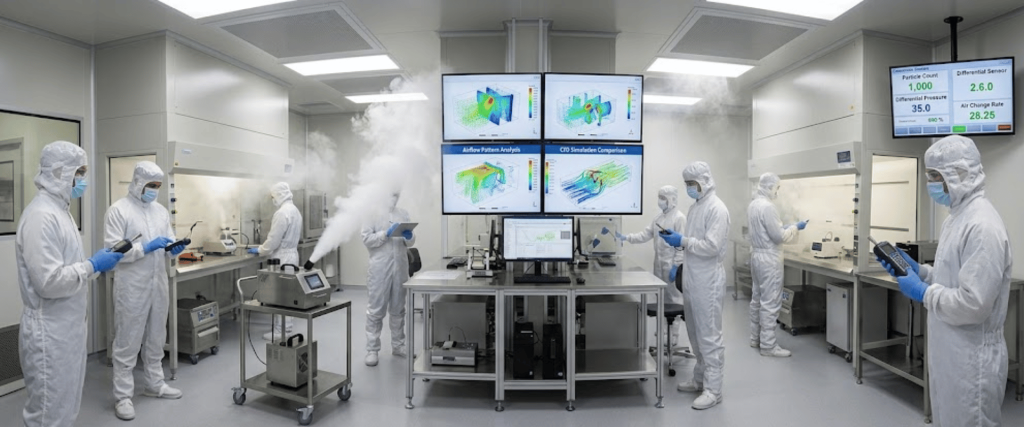
Without using a cleanroom fogger to run regular visualization tests, facilities cannot see how changes in staff positioning alter the room’s pressure boundaries.
5) Touching Face and Adjusting Gear
Adjusting masks, safety glasses, or hoods inside the cleanroom transfers facial oils and skin microbes directly onto sterile gloves.
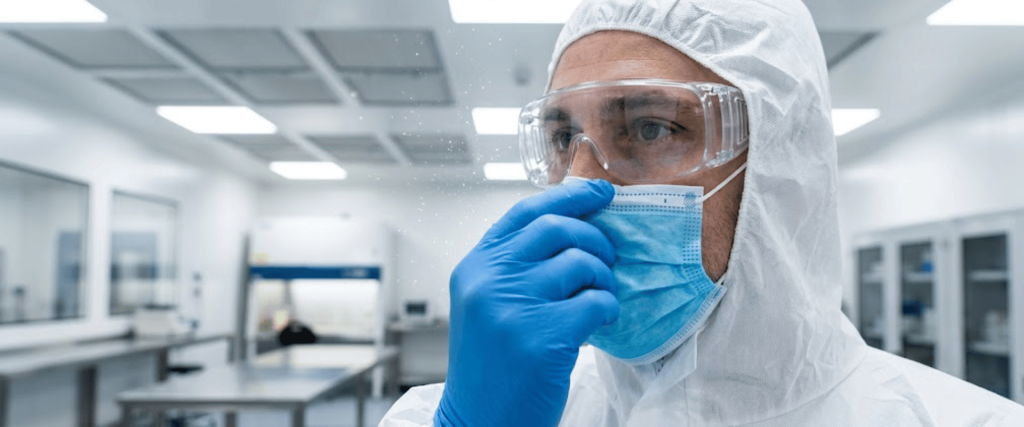
Once gloves are contaminated, every touched surface becomes a hazard.
6) Neglecting Regular Glove Sanitization
Gloves accumulate micro-particles during active shifts.
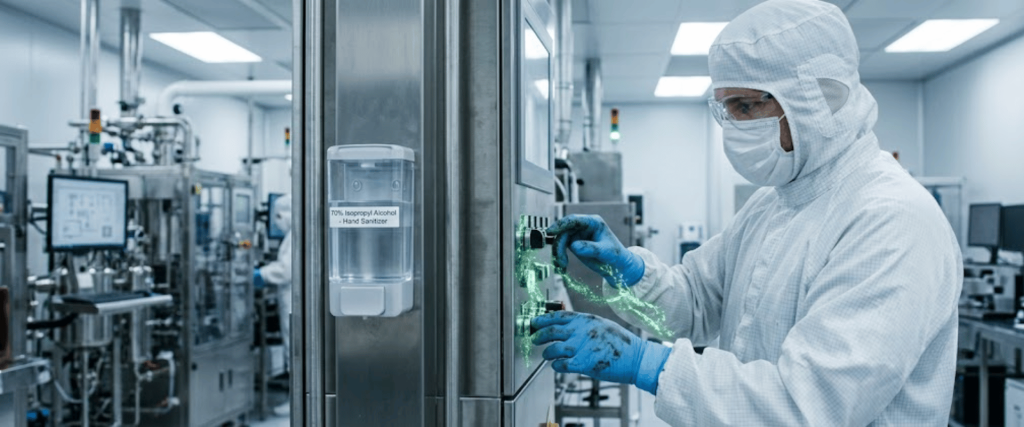
Failing to re-sanitize gloves with Isopropyl Alcohol (IPA) regularly or immediately after touching equipment handles, monitors, and door frames spreads contaminants to the product line.
7) Speaking Directly Over Sterile Work Fields
Talking, whispering, or clearing the throat releases respiratory droplets.

Even with high-quality face masks, speaking directly over an open sterile field forces micro-moisture through the fabric and onto clean components.
8) Leaning Against Walls and Equipment Benches
Resting or leaning against walls, chairs, and workstations causes fabric friction.
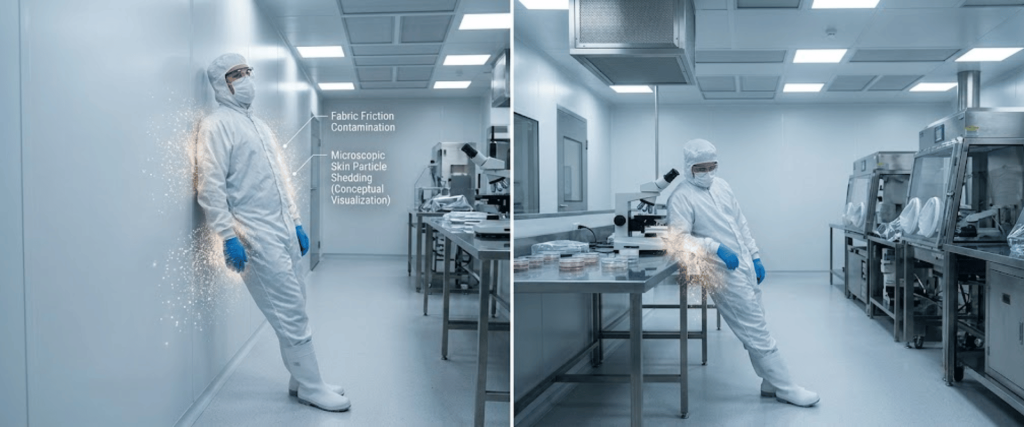
This friction forces trapped skin cells and fibers out through the gown material, depositing them directly onto clean surfaces.
Conclusion
Sterility depends entirely on the daily discipline of the cleanroom staff. Eliminating these common operational mistakes through continuous training ensures the environment remains within ISO compliance limits and reduces batch rejection rates.
Frequently Asked Questions (FAQs)
1. Why are fast movements dangerous in a cleanroom?
Fast movements disrupt uniform laminar airflow, creating tiny air vortices that lift floor contaminants up into critical work zones.
2. How does talking compromise cleanroom sterility?
Talking releases microscopic moisture droplets that can penetrate standard face masks, introducing oral microbes into sterile fields.
3. Can staff wear personal jewelry inside the cleanroom?
No. Jewelry traps hidden dirt, tears protective gloves, and sheds micro-particles into the controlled clean area.
4. What should an operator do if they touch their face mask?
The operator must immediately sanitize their hands with cleanroom-approved alcohol or completely replace their gloves before resuming operations.